Photo: Wikipedia
Demographics of Jerome County
Affluence Level in Jerome County
A middle-class area roughly in line with national averages across income, home values, education, and employment.
People of Jerome County
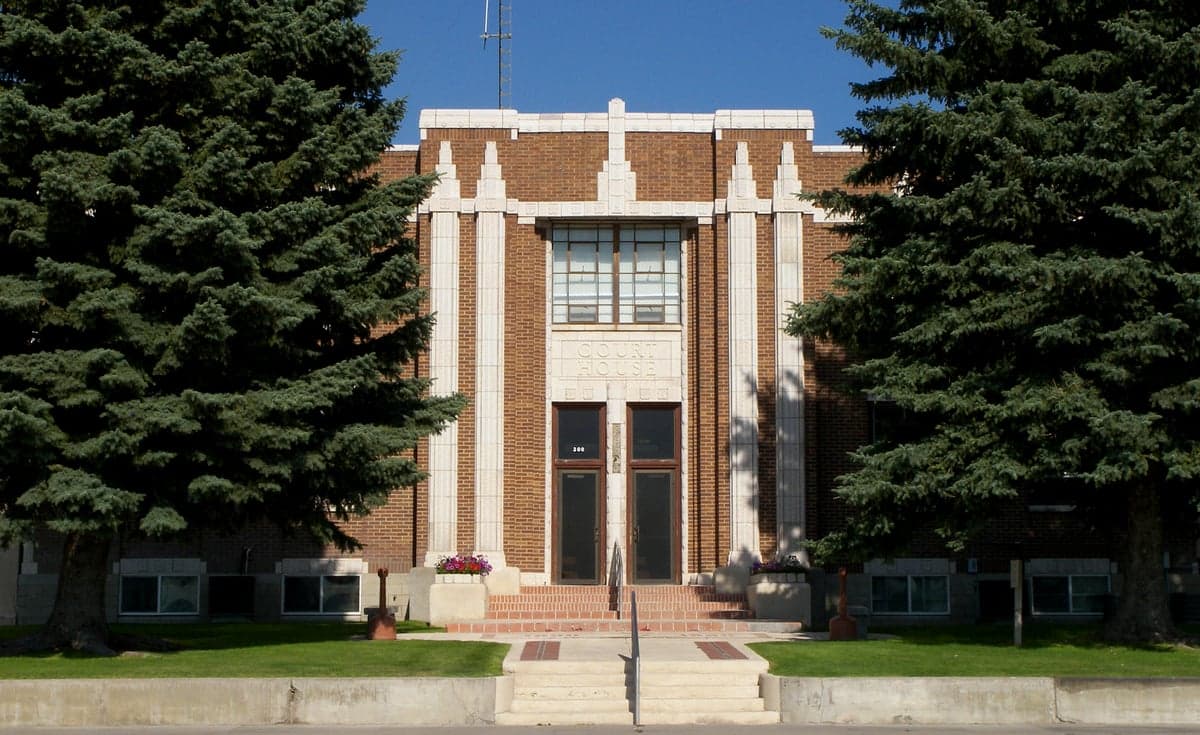
Jerome County, Idaho, is a predominantly white and Hispanic, working-class agricultural community of 24,788 residents, characterized by a strong rural identity, a high foreign-born population of 14.6%, and a notably low college attainment rate of 13.4%. The county’s people are overwhelmingly concentrated in the city of Jerome and the smaller towns of Eden and Hazelton, with a cultural fabric woven from the labor of sugar beet fields, dairy operations, and food processing plants. Distinctive markers include a deeply rooted Latter-day Saint (Mormon) pioneer heritage, a large and growing Mexican-American community that has reshaped the local economy and schools, and a political and social conservatism that permeates daily life.
Settlement & growth (pre-1960)
Before American settlement, the Jerome County area was part of the traditional territory of the Shoshone and Bannock peoples, who followed bison herds and seasonal resources along the Snake River. The region saw no permanent European settlement until the late 19th century, as it was arid sagebrush steppe, bypassed by the Oregon Trail and early mining booms. The first non-Native presence was transient: fur trappers and Mormon missionaries passing through in the 1830s and 1840s, but no permanent communities formed.
The county’s true settlement began with the Carey Act of 1894 and the subsequent construction of the Milner Dam and the North Side Irrigation Project, which turned the desert into farmland. The town of Jerome was founded in 1907 as a railroad stop and service center for the new irrigated farms. The first major wave of settlers were Anglo-American homesteaders, many of them Latter-day Saint families from Utah and southeastern Idaho, drawn by the promise of irrigated farmland. They established the towns of Eden (1910) and Hazelton (1911) as agricultural service hubs. These early settlers were predominantly of English, Danish, and Welsh descent, and they built a society centered on the LDS Church, cooperative irrigation companies, and sugar beet cooperatives.
A second, smaller wave arrived during the Great Depression and Dust Bowl of the 1930s, when displaced farmers from the Great Plains—often called "Okies"—moved into the Magic Valley region, including Jerome County, seeking work in the expanding sugar beet and potato fields. These migrants were largely of Scots-Irish and German stock and blended into the existing Anglo-Mormon population.
The most transformative pre-1960 population shift began during World War II and the post-war era, when the agricultural industry—particularly the Amalgamated Sugar Company in Jerome—actively recruited Mexican laborers through the Bracero Program (1942-1964). These workers, initially seasonal, began settling permanently in the county, forming the nucleus of what would become a large Hispanic community. By 1960, Jerome County’s population was still overwhelmingly white (over 95%), but the Hispanic presence was established in the labor camps and barrios on the outskirts of Jerome and Hazelton.
Modern era (post-1965)
The 1965 Hart-Cellar Act, combined with the end of the Bracero Program, fundamentally reshaped Jerome County’s demographics. Family reunification provisions allowed Mexican-American braceros and their descendants to sponsor relatives, leading to a steady chain migration from rural states in Mexico—particularly Jalisco, Michoacán, and Zacatecas. This wave settled directly into the agricultural workforce, and by the 1980s, Hispanic residents had formed a visible community in Jerome, concentrated in the southern and western parts of town, and in the unincorporated farming areas around Eden and Hazelton.
Domestic migration during this period was minimal. Jerome County did not experience the Sun Belt boom of Boise or the Coeur d’Alene area. Instead, the county saw a slow out-migration of young Anglo residents seeking urban opportunities, offset by a high birth rate among both white and Hispanic families. The Hispanic share of the population grew from roughly 5% in 1970 to 38.5% by the 2020s, while the white share declined from over 90% to 57.5%. This shift was driven almost entirely by natural increase and continued immigration, not by white flight. The county’s foreign-born population now stands at 14.6%, nearly all of Mexican origin, with negligible Asian (0.1%), Black (0.1%), or Indian-subcontinent (0.0%) populations.
The modern economy has diversified slightly beyond raw agriculture. The Jerome area now hosts food processing plants (potatoes, cheese, dairy), a state prison, and a growing logistics sector tied to Interstate 84. However, the workforce remains heavily blue-collar, reflected in the low college attainment rate of 13.4%. The Hispanic community has moved from exclusively field labor into processing plants, construction, and service industries, and second- and third-generation Mexican-Americans are increasingly visible in local government, schools, and small business ownership. The Anglo community remains centered on the LDS Church, farming, and small-town civic life, with a notable conservative political culture that spans both white and Hispanic residents.
The future
Jerome County is projected to continue its slow but steady population growth, driven primarily by Hispanic natural increase and continued immigration from Mexico. The county is not homogenizing into a single culture; rather, it is evolving into a bi-cultural community where Anglo-Mormon and Mexican-American identities coexist, often with significant overlap in values around family, work, and religion. The Hispanic population is not tribalizing into isolated enclaves—residential segregation is moderate, and intermarriage rates are rising, especially among younger generations. However, the white population is aging and declining in relative share, while the Hispanic population is younger and growing, meaning the county will likely become majority-Hispanic within the next 20-30 years.
In-migration from outside the region is expected to remain low, as Jerome County lacks the amenities, job diversity, or housing stock to attract coastal or urban refugees. The cultural identity of the county is being absorbed into a pragmatic, working-class conservatism that transcends ethnicity, rather than being replaced by a new identity. The next decade will likely see more Hispanic representation in elected office, continued bilingualism in schools and businesses, and a gradual blending of Anglo and Mexican traditions in food, holidays, and community life.
For someone moving in now, Jerome County offers a stable, family-oriented, deeply conservative community where agricultural rhythms still set the pace of life. The population is becoming more Hispanic and more bilingual, but the core values of hard work, religious faith, and self-reliance remain constant across both major groups. It is not a place of rapid change or cultural conflict, but of slow, organic demographic transition.

* Values derived from national, state, county, city and local statistics and may differ in a specific area. Last updated: 2026-05-12T15:22:45.000Z
Narrative content on this page is AI-generated and may contain mistakes. Verify any details that matter before acting on them.
ReloMaps may earn a commission from affiliate links at no extra cost to you.

