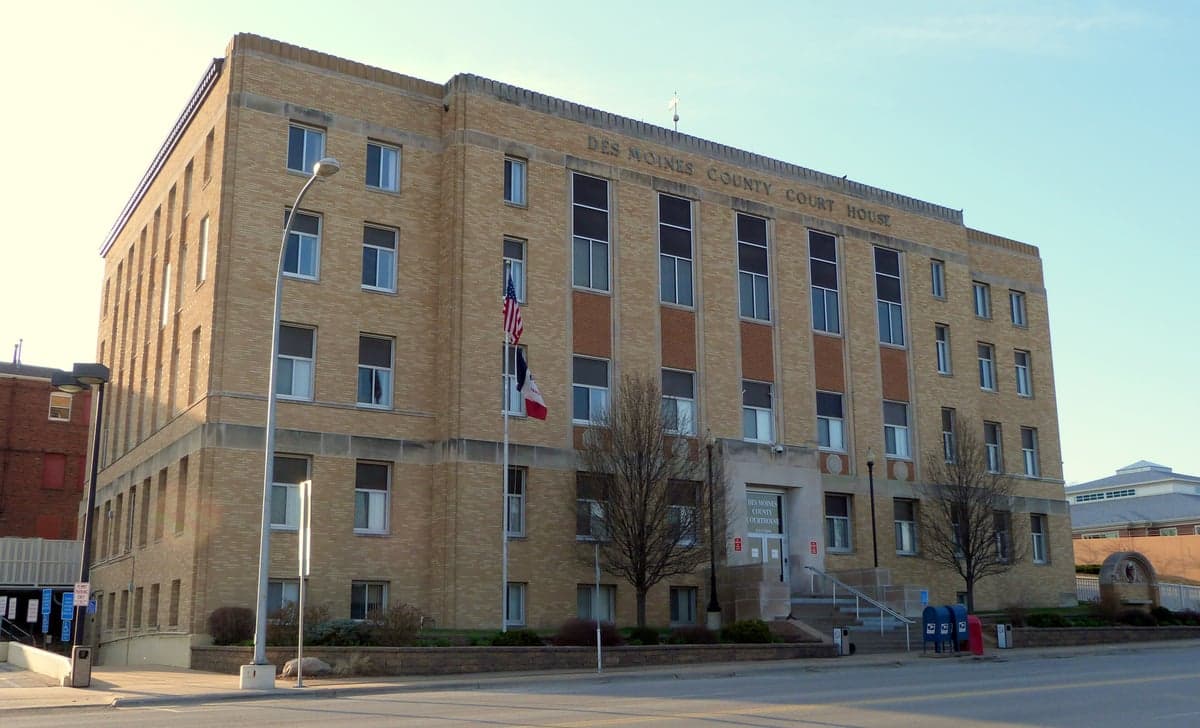
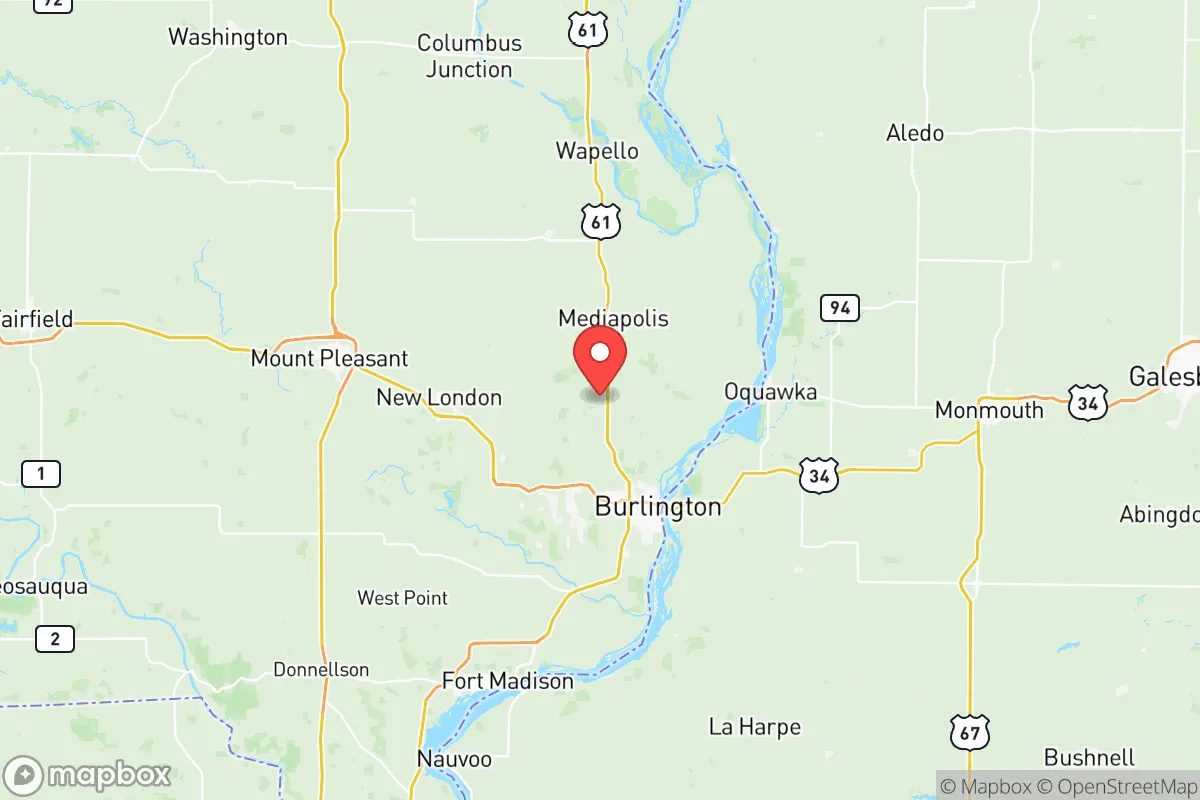
Photo: Wikipedia
Quality of Life in Des Moines County
A livable area that tracks near national norms for affordability, walkability, and neighborhood health.
What does Quality of Life tell us?
Quality of Life measures an area by evaluating factors like cost of living, nearby amenities, country club access, airport proximity, socioeconomic signals and neighborhood character. For large states, this is a general average — quality of life can vary dramatically between metro areas, suburbs, and rural communities within the same state.
What does this tell us?
Quality of Life measures an area by evaluating factors like cost of living, nearby amenities, country club access, airport proximity, socioeconomic signals and neighborhood character. For large states, this is a general average — quality of life can vary dramatically between metro areas, suburbs, and rural communities within the same state.
Cost of Living
34% below national average
155%
The Real Cost of Living in Des Moines County for 2026
| Tier | Individual | Family (4) |
|---|---|---|
| Survival | $14k | $27k |
| Comfortable | $27k | $39k |
| Luxury | $110k+ | $170k+ |
| Elite (Top 5%) | $132k+ | $204k+ |
Quality-of-Life Analysis
Des Moines County, Iowa, offers a broad quality-of-life spectrum that ranges from the Mississippi River urbanity of Burlington to the quiet, unincorporated crossroads of Huron and Dodgeville. With a cost of living index of 66 (well below the national 100), a median home value of $137,000, and an average commute of just 18.6 minutes, the county attracts everyone from remote workers seeking affordable riverfront living to agricultural families rooted in century-old farmsteads. The character shifts noticeably as you move from the county seat’s historic downtown to the cornfield-lined two-lanes of its rural townships.
Largest town(s) & population centers
Burlington, the county seat and only city over 20,000 residents, is the undisputed hub. Daily life here centers on the Snake Alley historic district, the Burlington Riverfront, and a walkable downtown with local coffee shops, antique stores, and the Capitol Theater. The city is home to major employers like Burlington Medical Supplies and Sheaffer Pen, and offers the region’s best healthcare at Great River Medical Center. Residents enjoy the Burlington Bees minor-league baseball at Community Field and the Des Moines County Heritage Center. Housing stock is a mix of Victorian-era homes near the river and newer subdivisions on the west side. The median rent of $908 makes it one of the most affordable river cities in Iowa, drawing young professionals and retirees alike. West Burlington, a smaller adjacent city of about 3,000, offers a more suburban feel with big-box retail along Agency Road and the Southeastern Community College campus, appealing to families seeking newer construction and shorter commutes to Burlington’s job centers.
Smaller towns & rural pockets
Outside the Burlington metro, the county’s smaller communities each have distinct identities. Mediapolis (pop. ~1,500) anchors the county’s northwest with a strong school system and a compact downtown featuring a grocery co-op and the Mediapolis Public Library. Danville (pop. ~900) sits along Highway 34 and is known for its annual Danville Fall Festival and proximity to the Big Hollow Recreation Area, a 600-acre park with hiking and fishing. Middletown (pop. ~400) is a quiet bedroom community just south of Burlington, popular with commuters who want a rural feel with a 10-minute drive to work. Further out, the unincorporated hamlets of Huron, Dodgeville, and Augusta consist of little more than a few homes, a church, and grain elevators — places where residents often live on multi-acre parcels and commute to Burlington or West Burlington for employment. The county’s far eastern edge along the Mississippi includes the tiny village of Kingston, where river views and floodplain farming define daily life.
Cost & lifestyle range
The cost of living varies noticeably across the county. At the low end, rural properties in townships like Union or Yellow Spring can be found for under $100,000, with older farmhouses on acreage often selling for $80,000–$120,000. These areas offer the lowest property taxes in the county and a lifestyle centered on hunting, gardening, and long drives to any retail. At the higher end, Burlington’s North Hill historic district features restored Victorian homes valued at $200,000–$350,000, while newer subdivisions in West Burlington like Woodland Hills see homes in the $180,000–$250,000 range. Rent follows a similar spread: a two-bedroom apartment in downtown Burlington averages $750–$900, while a similar unit in West Burlington or Mediapolis runs $850–$1,000. The county’s overall COL index of 66 means a family earning $50,000 here has purchasing power equivalent to roughly $75,000 in a national-average-cost area. Utility costs are moderate, and Iowa’s state income tax (flat 3.9% as of 2026) keeps more money in residents’ pockets compared to neighboring Illinois.
Des Moines County is best suited for those who value affordability and short commutes over urban amenities. Remote workers, early retirees, and young families starting out will find the most opportunity in Burlington and West Burlington, where jobs, healthcare, and entertainment are within a 20-minute drive. Farmers, hobbyists, and those seeking true solitude will prefer the unincorporated townships and hamlets like Huron or Dodgeville, where land is cheap and neighbors are few. The county’s mix of riverfront history, agricultural roots, and low cost of living creates a rare environment where a household can own a home on a single income — a quality increasingly hard to find in the rest of the Midwest.

Crime in Des Moines County
Generally safer than 69% of comparable U.S. locations.
Violent CrimeViolent Crime Analysis
Property CrimeProperty Crime Analysis
Crime Analysis
Des Moines County, anchored by the Mississippi River city of Burlington, reports a violent crime rate of 229.1 per 100,000 residents and a property crime rate of 1163.4 per 100,000, placing it in a moderate range for a rural Iowa county. While these figures are below national averages, they are elevated compared to the safest small towns in the state, and residents in certain neighborhoods and outlying communities experience notably different levels of risk. The county’s overall safety picture is shaped by its mix of a small urban core, agricultural towns, and the presence of a progressive-leaning judicial district that has drawn scrutiny from conservative watchdogs.
Crime in context
Des Moines County’s violent crime rate of 229.1 per 100,000 is roughly 38% lower than the national average of about 370 per 100,000, but it is nearly double the rate of the safest Iowa counties, such as Sioux County (around 80 per 100,000). Property crime at 1163.4 per 100,000 is about 30% below the national average of roughly 1,950 per 100,000, yet it remains higher than in peer counties like Lee County (around 1,000 per 100,000) and significantly above the rates in smaller, more rural counties such as Van Buren. The city of Burlington, the county seat and largest population center, accounts for the majority of reported incidents, while the smaller towns of West Burlington, Mediapolis, and Danville generally report lower per-capita crime. The county falls under the 8th Judicial District, where local district attorneys have been criticized by some residents for pursuing diversion programs and reduced sentencing for nonviolent offenders, a trend that aligns with broader progressive prosecutorial policies in Iowa’s urban corridors.
What residents experience
For most residents, property crime is the more tangible concern. Burglary and theft from vehicles are the most common complaints, particularly in Burlington’s central neighborhoods near the downtown riverfront and along the Highway 61 corridor. In contrast, the residential subdivisions of West Burlington and the rural areas around Mediapolis see far fewer incidents, with many residents reporting that unlocked cars and sheds are rarely targeted. Violent crime is concentrated in specific Burlington blocks, especially around the intersection of Roosevelt Avenue and Jefferson Street, where drug-related assaults and occasional robberies occur. The county’s progressive district attorney has emphasized restorative justice programs, which has led to shorter sentences for property crime offenders and a higher rate of pretrial release. Critics argue this approach has contributed to a small but persistent cohort of repeat offenders cycling through Burlington’s municipal court, while supporters point to a stable overall violent crime rate that has not spiked as in some neighboring counties.
Neighborhood-level variation is pronounced. The safest areas are the bedroom communities of West Burlington and Danville, where crime rates are roughly one-third of Burlington’s. The most challenging areas are Burlington’s near-east side and the older housing stock along the Mississippi levee, where poverty and vacant properties correlate with higher incident reports. The county sheriff’s office maintains a visible presence in unincorporated areas, and the Burlington Police Department has implemented a community policing model that has improved response times but has not fully addressed resident concerns about repeat offenders. For those considering relocation, the safest bets are the outlying towns of Mediapolis and Danville, while Burlington’s historic district offers walkability but requires vigilance regarding property security.
* Values derived from national, state, county, city and local statistics and may differ in a specific area. Last updated: 2026-05-28T01:27:25.000Z
Narrative content on this page is AI-generated and may contain mistakes. Verify any details that matter before acting on them.
ReloMaps may earn a commission from affiliate links at no extra cost to you.

