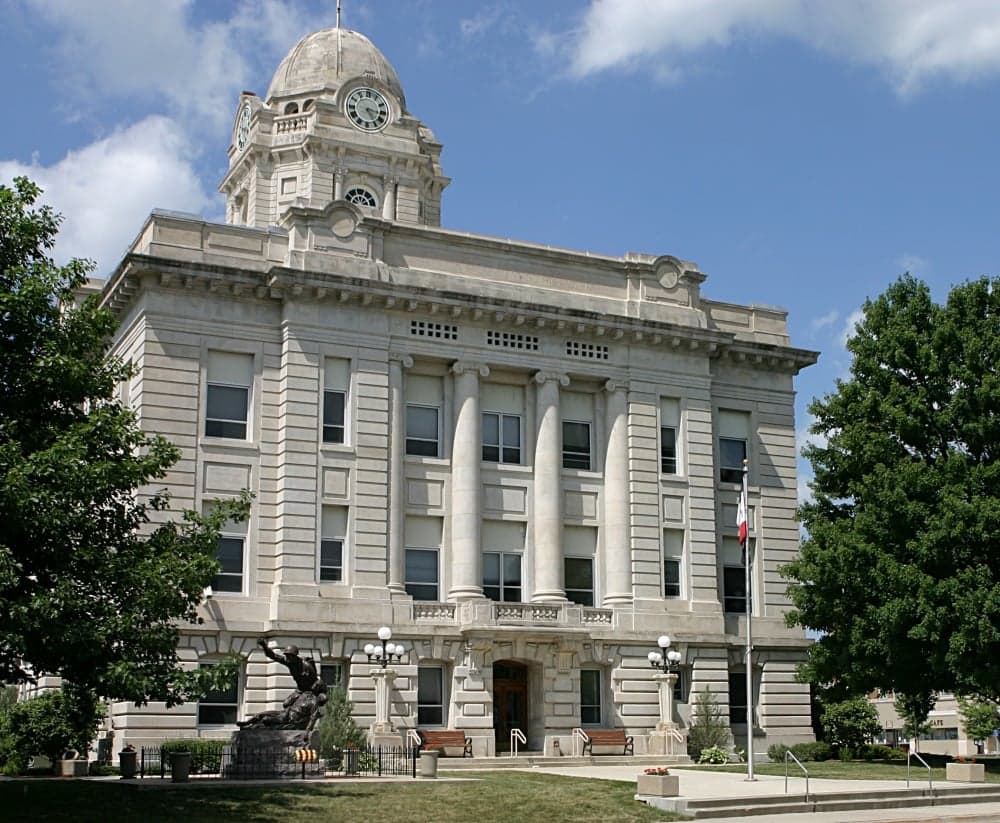
Photo: Wikipedia
Political ClimatePolitical Climate in Jasper County
Showing district-level results — no local-only data available.
Local Political AnalysisPolitical Analysis of Jasper County
Jasper County, Iowa, has long been a reliably conservative area, but it’s not as deep red as the rest of the state. With a Cook PVI of R+4, it’s a couple of notches to the left of Iowa’s overall R+6 rating, which tells you there’s a real split here. The county has been trending redder over the last decade, but it’s still a place where you can feel the tug-of-war between traditional values and the creeping influence of progressive ideas from the cities. If you’re looking for a place where folks mostly mind their own business and want government to stay out of their lives, this is still a solid bet—but you’ve got to know where the fault lines are.
How it compares
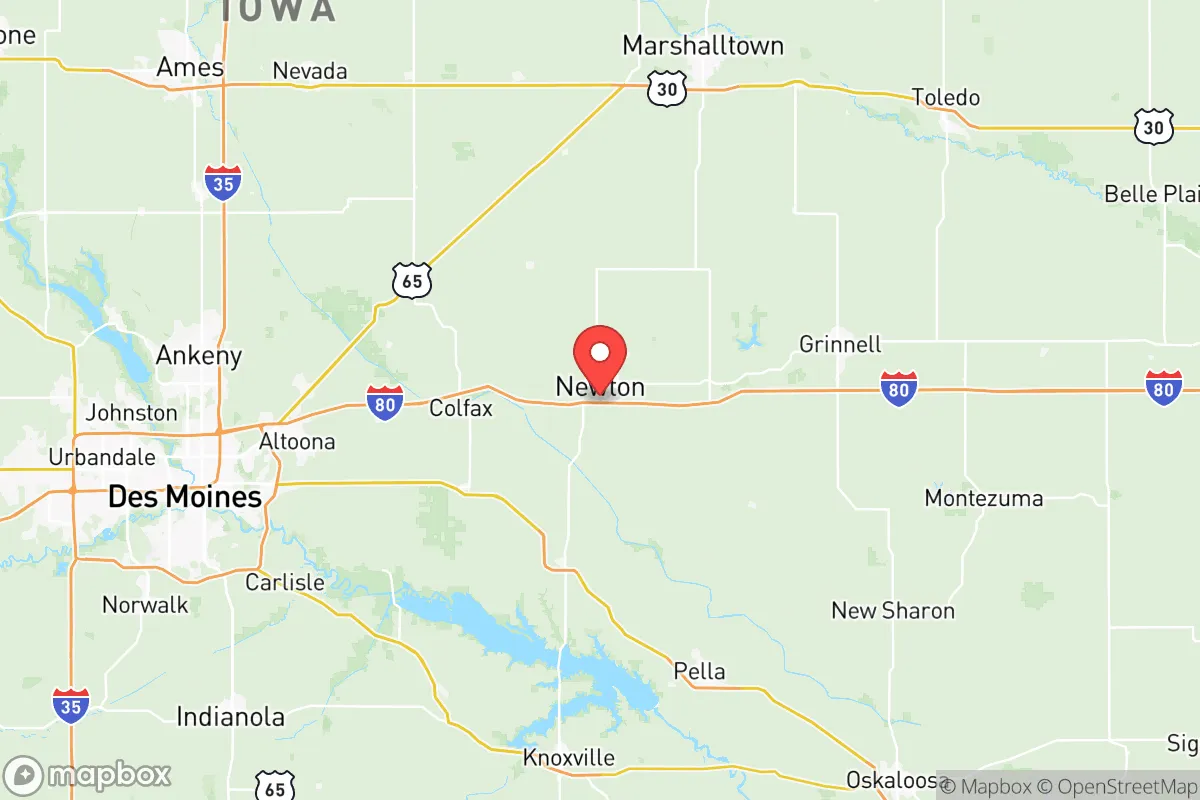
The biggest difference between Jasper County and the rest of Iowa is the internal divide. The county seat, Newton, is the real wildcard. It’s the largest town, and it leans noticeably more moderate, with some precincts around the old Maytag plant and the hospital complex swinging blue in recent elections. Meanwhile, the smaller towns like Colfax, Monroe, and Prairie City are rock-ribbed Republican strongholds—you’ll see Trump signs on every other lawn. The rural townships, especially those south of I-80, vote red by margins that would make a statewide candidate blush. The swing precincts are mostly in the suburban fringe of Newton, where younger families and newcomers from the Des Moines metro have started to shift the balance. Statewide, Iowa’s R+6 is driven by the deep-red western and northern counties, but Jasper County’s R+4 reflects a more competitive, ground-level fight. It’s not a blue county by any stretch, but it’s not a lock for the GOP either, which means local races here are often decided by a few hundred votes.
What this means for residents
For a conservative-minded resident, the trend is a little concerning. The influx of people from Polk County—fleeing higher taxes and crime in Des Moines—has brought some of that urban mindset with them. You’re seeing more calls for “equity” initiatives in the Newton school district and a louder push for bike lanes and density zoning that feels out of place in a county where most folks still have a grain bin in the backyard. The county supervisors have held the line on property taxes and resisted mask mandates, but the pressure is building. The real red flag is the cultural shift: the local library board has faced debates over drag queen story hours, and the county’s Democratic Party has gotten more organized, running candidates in every race. If you value limited government and personal freedom—like the right to carry without a permit or to opt your kids out of woke curriculum—you’ll want to keep an eye on the school board and city council elections in Newton. The rural towns are safe for now, but the countywide trajectory is a slow drift leftward.
On the ground, the cultural distinctions are clear. In Colfax, the VFW hall is still the social hub, and the Fourth of July parade is all about tractors and veterans. In Newton, you’ll find a farmers market that’s more about organic kale than sweet corn, and the local coffee shop has a pride flag in the window. The county’s policy battles are mostly about land use—farmers fighting solar panel arrays on prime soil—and school curriculum, with parents pushing back against critical race theory. The bottom line: Jasper County is still a good place for someone who wants a low-tax, high-freedom lifestyle, but you’ve got to pick your town carefully. The rural precincts are holding strong, but the county seat is where the fight for the soul of the area is happening. If the trend continues, Jasper County could look a lot more like Johnson County in twenty years—and that’s a future worth paying attention to.

State Political ClimatePolitical Climate in Iowa
State Political AnalysisPolitical Environment in the State
Iowa has been a reliably Republican state for the past decade, with a Cook PVI of R+6, but it wasn’t always this way. As recently as 2012, the state was a true battleground, splitting its electoral votes and sending a mix of Democrats and Republicans to Congress. Over the last 10-15 years, a steady rightward shift has solidified, driven by rural and exurban voters abandoning the Democratic Party over cultural and economic issues, while the state’s few urban centers have become more Democratic but lost relative population. The result is a state where Republicans now control the governorship, both legislative chambers, and four of six U.S. House seats, with a political culture that increasingly values limited government, gun rights, and local control.
Urban vs. rural divide
The political map of Iowa is a textbook case of the urban-rural split. The two major metros—Des Moines and Iowa City—are the only real blue dots. Des Moines and its inner suburbs like West Des Moines lean Democratic, driven by a growing professional class, insurance and finance workers, and younger voters. Iowa City, home to the University of Iowa, is the state’s most liberal enclave, regularly electing progressive Democrats and pushing for sanctuary city policies. But outside these bubbles, the state is deeply red. The rural northwest, including towns like Sioux Center and Orange City, is among the most conservative areas in the Midwest, with strong Dutch Reformed communities that vote 80%+ Republican. The southeast, once a Democratic stronghold for unionized manufacturing workers, has flipped hard—counties like Wapello (Ottumwa) and Lee (Fort Madison) that voted for Obama in 2008 now go Republican by double digits. The suburbs around Des Moines, like Ankeny and Waukee, are the real battlegrounds—they’ve trended right in recent cycles, with Ankeny flipping from a toss-up to reliably Republican in local races, driven by families fleeing urban school policies and taxes.
Policy environment
Iowa’s policy environment is a clear win for conservatives who value limited government and personal responsibility. The state has a flat income tax of 3.9% (phased down from 8.5% in 2018) and is on track to eliminate the income tax entirely by 2027 under Governor Kim Reynolds’ leadership. Property taxes are relatively low, especially in rural counties, and there is no inheritance tax. Education policy is a major draw: Iowa has a robust school choice program, including Education Savings Accounts (ESAs) that let parents use state funds for private or homeschool expenses, signed into law in 2023. The state also passed a “Parents’ Bill of Rights” in 2021, requiring schools to notify parents of curriculum changes and medical services. On healthcare, Iowa has not expanded Medicaid in a way that creates long-term dependency, and the state has resisted federal vaccine mandates and lockdowns. Election laws are secure: voter ID is required, and the state purges non-voters from rolls regularly. The only real concern for liberty-minded folks is the state’s alcohol control system—Iowa still runs state-owned liquor stores, though privatization efforts are gaining steam.
Trajectory & freedom
Iowa is becoming more free, not less, and that’s the main story for anyone considering a move. The last five years have seen a flurry of legislation expanding personal liberty. Gun rights: Iowa became a permitless carry state in 2021, meaning law-abiding adults can carry concealed without a license or training requirement. The state also passed a “Stand Your Ground” law in 2017. Parental rights: the 2023 “Parents’ Bill of Rights” and a 2022 law banning instruction on sexual orientation and gender identity in K-3 (SF 496) have been controversial but popular with conservatives who want schools focused on academics, not activism. Medical autonomy: Iowa banned abortion at roughly six weeks in 2023 (HF 732), with no exceptions for rape or incest, reflecting a strong pro-life stance. Property rights: the state has limited eminent domain for carbon pipeline projects, a major win for landowners fighting the Summit Carbon Solutions pipeline. The only backward step is the state’s continued monopoly on liquor sales, but even that is being chipped away—a 2024 bill allowed grocery stores to sell full-strength beer and wine. Overall, the trend is toward less government interference in daily life.
Civil unrest & political movements
Iowa is not a hotbed of civil unrest, but there have been flashpoints. The 2020 Black Lives Matter protests in Des Moines and Iowa City were relatively small compared to coastal cities, but they did lead to some property damage and a few arrests. The bigger political movement in recent years has been the parental rights uprising—starting in 2021, thousands of parents packed school board meetings in Ankeny, Waukee, and Johnston to protest mask mandates, critical race theory, and LGBTQ curriculum. This grassroots energy directly led to the 2023 school choice law and the ban on K-3 gender instruction. On the left, the “Iowa City Antifa” group has been active but fringe, mostly limited to graffiti and counter-protests at conservative events. Immigration politics are relatively quiet—Iowa has no sanctuary cities, and the state passed a law in 2024 requiring local law enforcement to cooperate with ICE. The biggest controversy has been the carbon pipeline fight: landowners in counties like Palo Alto and Humboldt have formed armed patrols and organized protests against eminent domain for CO2 pipelines, a rare instance of rural conservatives and environmentalists aligning. Election integrity is a settled issue here—the 2020 and 2022 elections were clean, with no major fraud allegations, and the state’s voter ID law is widely accepted.
Projection
Over the next 5-10 years, Iowa will likely become more Republican and more conservative. Demographic trends favor the GOP: the urban cores of Des Moines and Iowa City are growing slowly, while the rural and suburban areas are holding steady or growing faster. In-migration is coming from blue states like California and Illinois, but these newcomers tend to be conservative-leaning families looking for lower taxes and better schools—they’re not turning Iowa blue. The state’s population is aging, but younger conservatives are moving in from the coasts for jobs in manufacturing and agriculture. The only wildcard is the University of Iowa and Iowa State University—if they continue to attract out-of-state progressive students who stay after graduation, that could slowly shift Iowa City and Ames leftward. But for now, the state legislature is likely to stay Republican for the foreseeable future, with potential for a supermajority by 2030. The income tax elimination will lock in a low-tax environment, and school choice will continue to expand. Expect more fights over land use (pipelines, wind turbines) and local control, but the overall direction is clear: Iowa is becoming a model for red-state governance.
For a new resident, the bottom line is this: Iowa offers a stable, predictable political environment where your rights are expanding, not contracting. You won’t face the chaos of coastal cities—no mask mandates, no vaccine passports, no CRT in schools, and no sanctuary city policies. The taxes are low and getting lower, the schools are responsive to parents, and the gun laws are among the most permissive in the Midwest. If you’re a conservative single or parent looking for a place where the government stays out of your way and your kids can get a solid education without ideological indoctrination, Iowa is a strong bet. Just be prepared for cold winters and a lot of cornfields—but that’s a small price to pay for freedom.
* Values derived from national, state, county, city and local statistics and may differ in a specific area. Last updated: 2026-05-14T19:12:13.000Z
Narrative content on this page is AI-generated and may contain mistakes. Verify any details that matter before acting on them.
ReloMaps may earn a commission from affiliate links at no extra cost to you.

