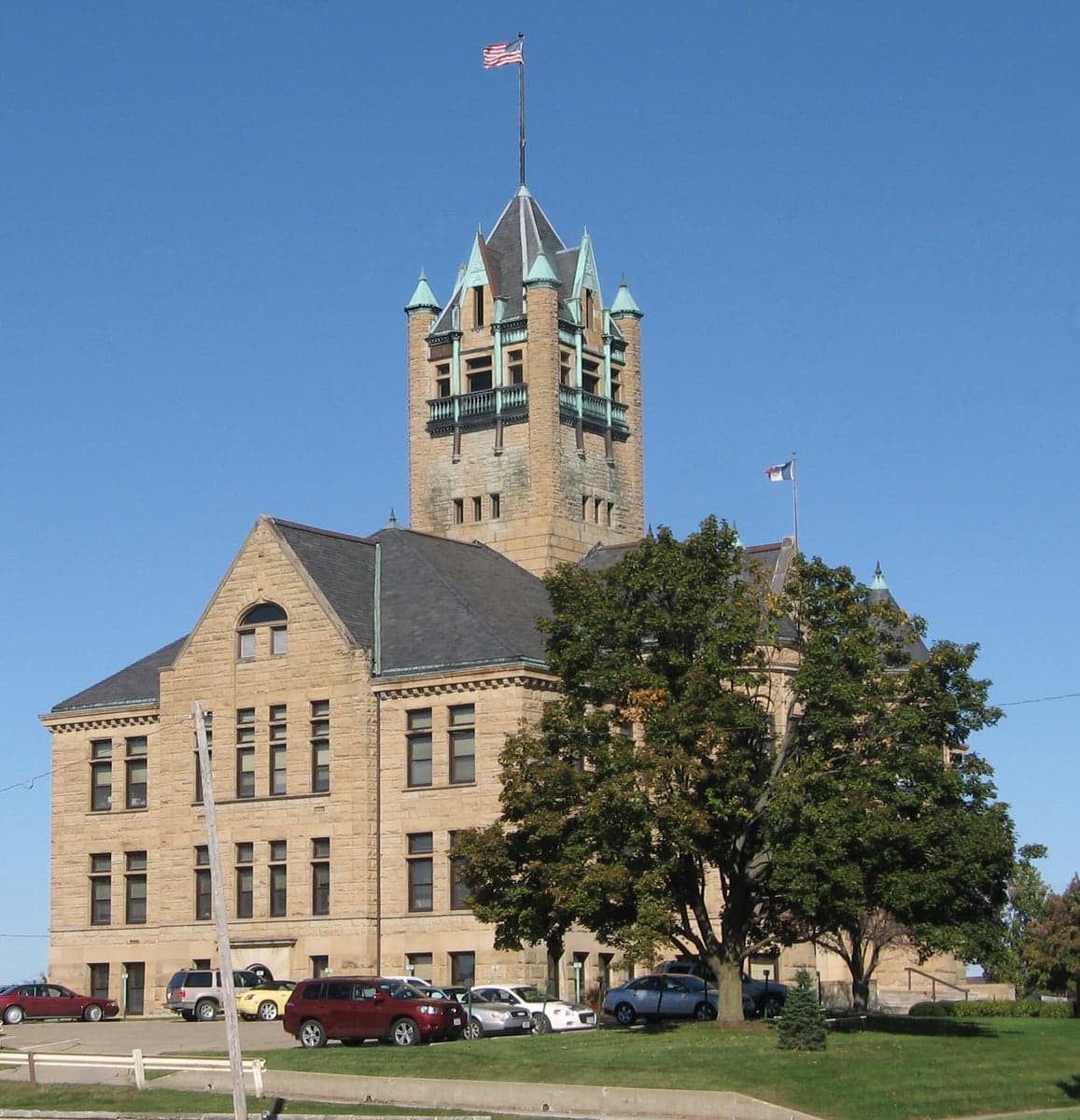
Photo: Wikipedia
Political ClimatePolitical Climate in Johnson County
Showing district-level results — no local-only data available.
Local Political AnalysisPolitical Analysis of Johnson County
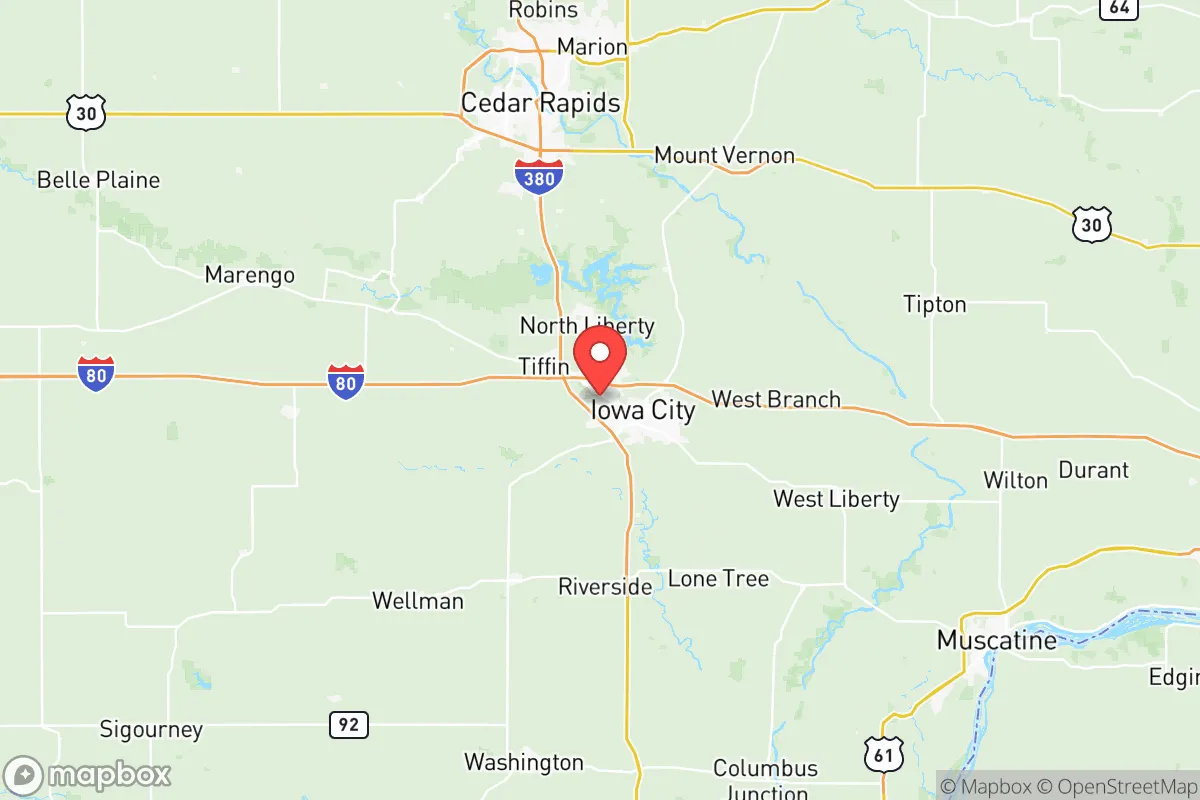
Johnson County’s political lean is a tale of two worlds. The Cook PVI sits at R+4, meaning it’s four points more Republican than the national average, but that number masks a deep urban-rural split. Iowa City and its immediate suburbs—Coralville, North Liberty, Tiffin—vote reliably blue, while the county’s rural townships and smaller communities like Solon, Lone Tree, and Hills lean red. Over the past decade, the progressive tilt in the urban core has intensified, driven by University of Iowa growth and an influx of out-of-state transplants. That shift has pushed the county’s overall trajectory leftward, even as the surrounding state of Iowa holds a Cook PVI of R+6, making it six points more Republican than the nation. The gap between Johnson County and the rest of Iowa is widening, and it’s not hard to see why.
How it compares
Compared to the state as a whole, Johnson County is a blue island in a red sea. Statewide, Iowa leans R+6, meaning Republicans hold a comfortable advantage in most races. But inside Johnson County, the Democratic stronghold of Iowa City—home to roughly 40% of the county’s population—flips the script. In the 2024 presidential election, Iowa City precincts gave Democrats margins of 30 to 50 points, while rural precincts like Sharon Township and Washington Township went Republican by similar spreads. The swing precincts are in the growing suburbs: North Liberty and Tiffin, where new housing developments attract a mix of young families and remote workers. Those areas are more competitive, often splitting tickets. But the overall county vote still leans left because the urban core turns out in higher numbers. The state’s R+6 rating reflects the rest of Iowa’s conservative bent, but Johnson County’s R+4 is misleading—it’s only that “moderate” because the rural vote offsets the deep-blue city. In reality, the county’s politics are polarized, not moderate.
What this means for residents
For a conservative-leaning resident, living in Johnson County means watching local government steadily expand its reach into areas that used to be left to families and communities. The county board and Iowa City council have pushed progressive policies on housing mandates, zoning overrides, and public spending that often feel like top-down control. Property taxes have climbed to fund initiatives that many rural residents see as unnecessary—like bike lane expansions and diversity programs that don’t reflect local values. The school district, too, has adopted curriculum changes that raise eyebrows among parents who want less government involvement in what their kids learn. If you value personal freedoms and limited government, the trend here is concerning. The urban majority votes for more regulation, more spending, and more social engineering, while rural voices get drowned out. It’s a classic case of a city imposing its will on the countryside, and it’s only getting worse as Iowa City grows.
Culturally, the divide is stark. Iowa City feels like a different state—coffee shops, art walks, and university events dominate the scene. Drive 15 minutes south to Hills or north to Solon, and you’re in farm country where people wave from pickup trucks and the biggest event is the county fair. Policy-wise, the county has enacted stricter rental inspection codes and a higher minimum wage than the state mandates, which small business owners say hurts their bottom line. The state legislature in Des Moines has pushed back with preemption laws, but the local progressive machine keeps finding workarounds. For a conservative, the best advice is to get involved in township-level politics and the county GOP—those are the last lines of defense. Otherwise, you’ll watch Johnson County drift further from the Iowa values that built it.

State Political ClimatePolitical Climate in Iowa
State Political AnalysisPolitical Environment in the State
Iowa has shifted from a classic purple swing state to a solidly Republican-leaning one, carrying a Cook PVI of R+6 after trending rightward for nearly two decades. The state backed Donald Trump by 8 points in 2020 and 13 points in 2024, a dramatic departure from 2000 and 2004 when it was decided by less than 1 point each time. The dominant coalition today is a mix of rural conservatives, evangelical Christians, and working-class voters in smaller industrial cities, while the Des Moines metro and college towns like Iowa City and Ames remain the primary Democratic strongholds.
Urban vs. rural divide
The political map of Iowa is a textbook case of the urban-rural split. The Des Moines metro area, including Polk County and parts of Dallas and Warren counties, is the engine of Democratic votes — Polk County went for Biden by 18 points in 2020, and Dallas County, once reliably red, has become a competitive suburban battleground. On the other side, the rural northwest and southwest corners of the state are deeply Republican; counties like Sioux, Lyon, and Plymouth routinely deliver 75-80% of the vote for GOP candidates. The real story is in the small cities: Cedar Rapids, Council Bluffs, and Dubuque have all trended rightward as union manufacturing jobs declined and cultural issues took precedence. The Mississippi River counties, once a Democratic stronghold thanks to unionized factory workers, have flipped hard — Dubuque County went from Obama +14 in 2012 to Trump +4 in 2024. The only reliably blue islands outside Des Moines are Johnson County (home to the University of Iowa in Iowa City) and Story County (Iowa State in Ames), where student populations and academic faculty drive progressive turnout.
Policy environment
Iowa’s policy environment has shifted aggressively conservative over the past five years. The state enacted a flat 3.8% income tax in 2023, down from a top rate of 8.98% in 2018, with a path to a flat 3.5% by 2026 — a major draw for high-earners and business owners. Property taxes remain relatively low, with a statewide average effective rate of 1.4%, though local levies vary. On education, Governor Kim Reynolds signed a universal school voucher program in 2023, allowing any Iowa family to use public funds for private or homeschool expenses, a move that has accelerated the decline of rural public school enrollment. Healthcare policy is mixed: Iowa expanded Medicaid under the Affordable Care Act in 2014, but the state has since imposed work requirements for able-bodied adults, and the private option model has reduced the traditional fee-for-service system. Election laws tightened significantly in 2021 with Senate File 413, which reduced early voting days, shortened the absentee ballot request window, and banned ballot drop boxes — changes that critics say suppress turnout but supporters argue restore integrity. The state also passed a constitutional amendment in 2024 affirming that the right to bear arms is a fundamental right, subjecting any gun restriction to strict scrutiny.
Trajectory & freedom
On balance, Iowa is becoming more free in the sense of limited government and personal autonomy, particularly for conservatives. The 2021 permitless carry law (House File 756) allows any law-abiding adult to carry a concealed firearm without a permit, and the 2024 Second Amendment Amendment locks that in. Parental rights expanded with the 2023 law requiring schools to notify parents of any student requests to change gender identity or pronouns, and banning instruction on sexual orientation and gender identity through sixth grade. Medical freedom took a hit with the 2023 six-week abortion ban (the "fetal heartbeat" law), which restricts women's choices but aligns with the state's pro-life majority. On the economic freedom front, the state repealed its inheritance tax in 2021 and has no estate tax, making it attractive for wealth transfer. However, there are concerning trends: the state's occupational licensing requirements remain among the most burdensome in the Midwest, and the 2024 law banning local rent control (Senate File 2340) limits municipal autonomy but protects property rights. The biggest freedom concern is the growing reliance on property taxes to fund schools after the voucher expansion, which could squeeze homeowners in the long run.
Civil unrest & political movements
Iowa has seen relatively little civil unrest compared to coastal states, but there have been flashpoints. The 2020 Black Lives Matter protests in Des Moines and Iowa City were largely peaceful, though a few nights of property damage in downtown Des Moines led to a strong police response and a subsequent push for police reform that fizzled in the legislature. The most organized political movements are on the right: the Iowa Firearms Coalition is a powerful lobbying force that has driven every major gun rights expansion, and the Family Leader, a Christian conservative group, has shaped the parental rights and abortion legislation. On the left, the Iowa Citizens for Community Improvement has been active in opposing factory farm expansion and advocating for tenant rights, but their influence is limited. Immigration politics are relatively quiet — Iowa has no sanctuary cities, and the 2024 law requiring local law enforcement to cooperate with ICE (Senate File 481) passed easily. Election integrity remains a hot topic: the 2020 audit of the presidential results in Iowa found no widespread fraud, but the 2021 voting law was driven by lingering distrust. A new resident would notice the absence of visible political street conflict — most political energy is channeled into caucuses, county fairs, and school board meetings rather than protests.
Projection
Over the next 5-10 years, Iowa is likely to become more Republican and more conservative, driven by two demographic trends. First, the rural population is aging and shrinking, but the remaining voters are becoming even more Republican — counties that were 70% Trump in 2020 will likely hit 80% by 2030. Second, the Des Moines metro is growing, but the new arrivals are split: some are out-of-state professionals from Illinois and California who lean left, but many are conservative families fleeing high-tax states, settling in suburbs like Ankeny, Waukee, and Norwalk. The net effect is that the urban vote will grow but not enough to offset the rural rightward shift. The University of Iowa and Iowa State will remain liberal enclaves, but their political influence is contained. The biggest wildcard is the school voucher program: if it accelerates the decline of rural public schools, it could hollow out the social fabric of small towns, potentially depressing turnout in those areas. Expect the state to continue cutting taxes, further restricting abortion access, and expanding gun rights. A new resident moving in now should expect a state that is reliably red, culturally traditional, and increasingly skeptical of federal overreach — a place where personal responsibility and local control are the dominant values.
Bottom line for a new resident: If you're a conservative looking for a state where your values are reflected in law, your taxes are low and falling, and your kids can attend school without ideological battles, Iowa is a strong bet. The political climate is stable, the government is limited, and the trajectory is toward more freedom in the areas that matter most to conservatives. Just be prepared for cold winters and a slower pace of life — the trade-off for living in a place that largely leaves you alone.
* Values derived from national, state, county, city and local statistics and may differ in a specific area. Last updated: 2026-05-15T02:25:23.000Z
Narrative content on this page is AI-generated and may contain mistakes. Verify any details that matter before acting on them.
ReloMaps may earn a commission from affiliate links at no extra cost to you.

