Photo: Wikipedia
Find The Best Places To Live
in Norwalk
PRO TIP! You can paste a Zillow or Redfin link to get info on that property.
What It's Like Living in Norwalk, IA
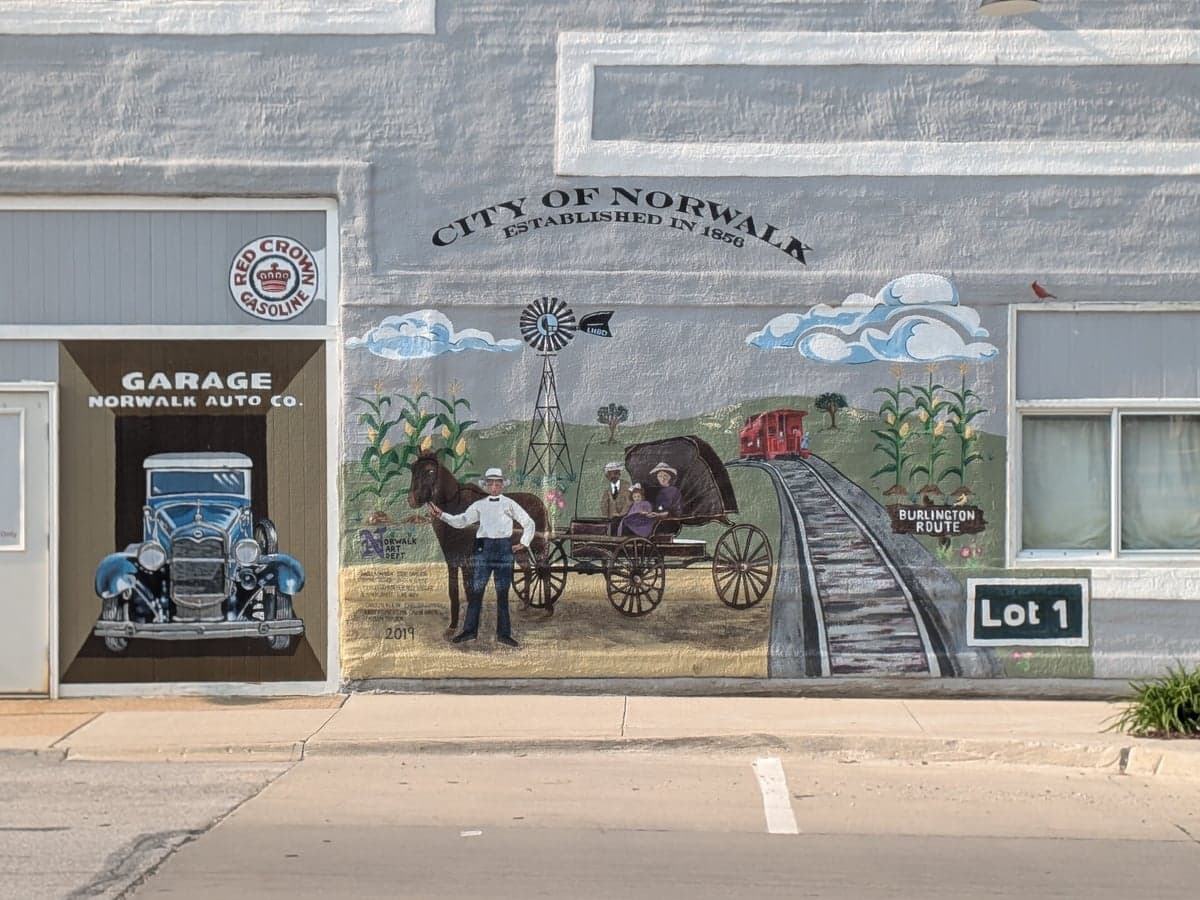
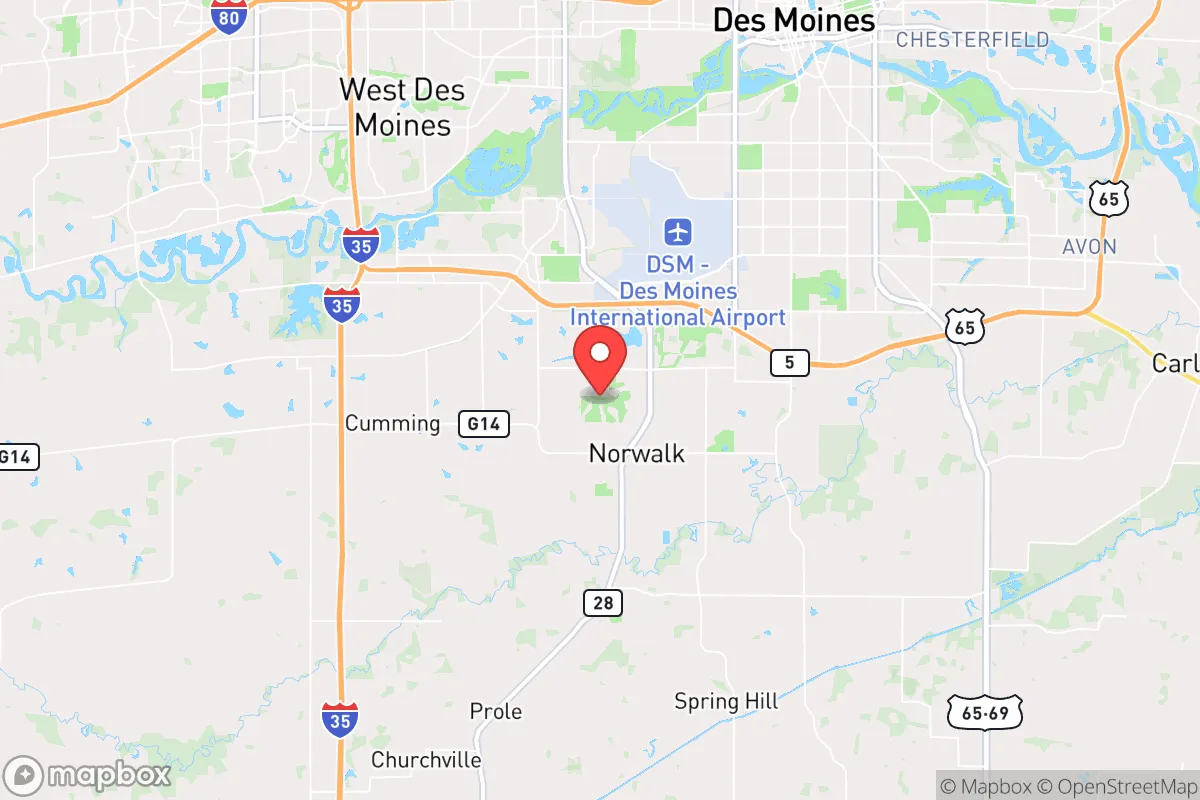
Norwalk, Iowa, feels like one of those places where everybody knows your name—or at least your last name—but in a way that’s welcoming rather than claustrophobic. It’s a fast-growing suburb of Des Moines that still holds onto its small-town Iowa roots, with a population just over 13,600 and a median age of 36.5, meaning you’ll find plenty of young families and established professionals alike. The vibe here is quietly ambitious: people work hard in the city but come home to a place where the high school football game on Friday night is still the main event.
Daily Rhythm and Who Fits In
Most residents work in Des Moines or nearby Ankeny, with an average commute of about 21 minutes—short enough that you’re not wasting your life in the car, but long enough to feel like you’ve left the office behind. The median household income sits at $94,583, which goes a long way here thanks to a cost of living index of 84 (well below the national average of 100). That means a family can afford a nice home—median value $275,700—and still have room in the budget for a boat, a camper, or season tickets to the Iowa State Fair. The kind of person who fits in here tends to be practical, community-oriented, and maybe a little bit outdoorsy. You’ll see a lot of pickup trucks in driveways, but also plenty of Subarus with bike racks. It’s a mix of tradespeople, healthcare workers, and remote professionals who value space and safety over urban nightlife.
Sports, Community, and Friday Night Lights
High school sports are the heartbeat of Norwalk. The Norwalk Warriors—especially football, wrestling, and girls’ basketball—draw big crowds, and the community treats game nights like a social obligation. You don’t have to have a kid on the team to show up; it’s just what you do. The local sports bars, like Smokey D’s BBQ or The Garage Pizza, are packed after games with parents and alumni catching up. There’s no pro team in town, but Des Moines’ minor-league hockey (the Iowa Wild) and baseball (the Iowa Cubs) are a 20-minute drive away, and the Iowa Hawkeyes in Iowa City are a 90-minute trip for a Saturday pilgrimage. For a town this size, the athletic culture is surprisingly intense—it’s a point of pride, not just a pastime.
What’s There to Do: Parks, Festivals, and Local Hangouts
Weekends in Norwalk revolve around outdoor life and community events. Norwalk City Park is the hub, with ball fields, a splash pad, and trails that connect to the larger Summerset Trail system—great for biking or a long walk without traffic noise. The annual Norwalk Fun Days festival in June brings a parade, carnival rides, and a fireworks show that feels like the whole town turns out. For a quieter evening, locals head to Meadow Park or the Norwalk Aquatic Center in summer. Dining is more about comfort than culinary adventure: B & B Grocery is the go-to for a quick sandwich, and El Mariachi serves reliable Mexican food that families have been eating at for years. If you want a craft beer or live music, you’ll drive into Des Moines’ East Village or the Court Avenue district—that’s the trade-off for living in a quieter suburb.
Pros and Cons of Living Here
- Pro: Safety is a huge draw. The violent crime rate is just 49.7 per 100,000 residents—roughly a third of the national average. People don’t lock their doors as obsessively here.
- Pro: The schools are a central part of community life. Norwalk Community School District is well-regarded, and the bond referendums for new facilities usually pass easily because education is a shared priority.
- Pro: You get a lot of house for your money. A $275,700 median home value buys a newer 3- or 4-bedroom with a yard in a subdivision, which is tough to find in pricier suburbs like West Des Moines.
- Con: Growth is happening fast, and some longtime residents grumble about traffic on Highway 28 during rush hour and the loss of open farmland to new housing developments.
- Con: Entertainment options are limited. If you’re single and under 30 without kids, you might find the social scene thin—most nightlife requires a 15-minute drive into the city.
- Con: Winters are real. Iowa gets cold, gray, and snowy from December through February, and the seasonal rhythm can feel isolating if you’re not into ice fishing or indoor rec leagues.
Cultural Quirks and Local Identity
Norwalk has a subtle but distinct identity: it’s not trying to be Des Moines’ coolest suburb, and it’s okay with that. People here take pride in being from Norwalk, not just living near the city. The high school’s “Warrior” mascot is taken seriously—you’ll see it on bumper stickers and yard signs. There’s also a strong sense of self-reliance; you’ll find more backyard gardens and home workshops than you might in a typical subdivision. The biggest cultural quirk might be the way residents talk about “town” versus “the city”—Norwalk is the town, Des Moines is the city, and the distinction matters. It’s a place where a 40-year-old with a 401(k) and a fishing rod feels perfectly at home, and where a young couple starting a family can buy a house without feeling house-poor. That trade-off—less hustle, more space—is exactly what draws people here, and it’s why most stay.

Similar towns to Norwalk

* Values derived from national, state, county, city and local statistics and may differ in a specific area. Last updated: 2026-04-29T21:58:29.000Z
Narrative content on this page is AI-generated and may contain mistakes. Verify any details that matter before acting on them.
ReloMaps may earn a commission from affiliate links at no extra cost to you.

