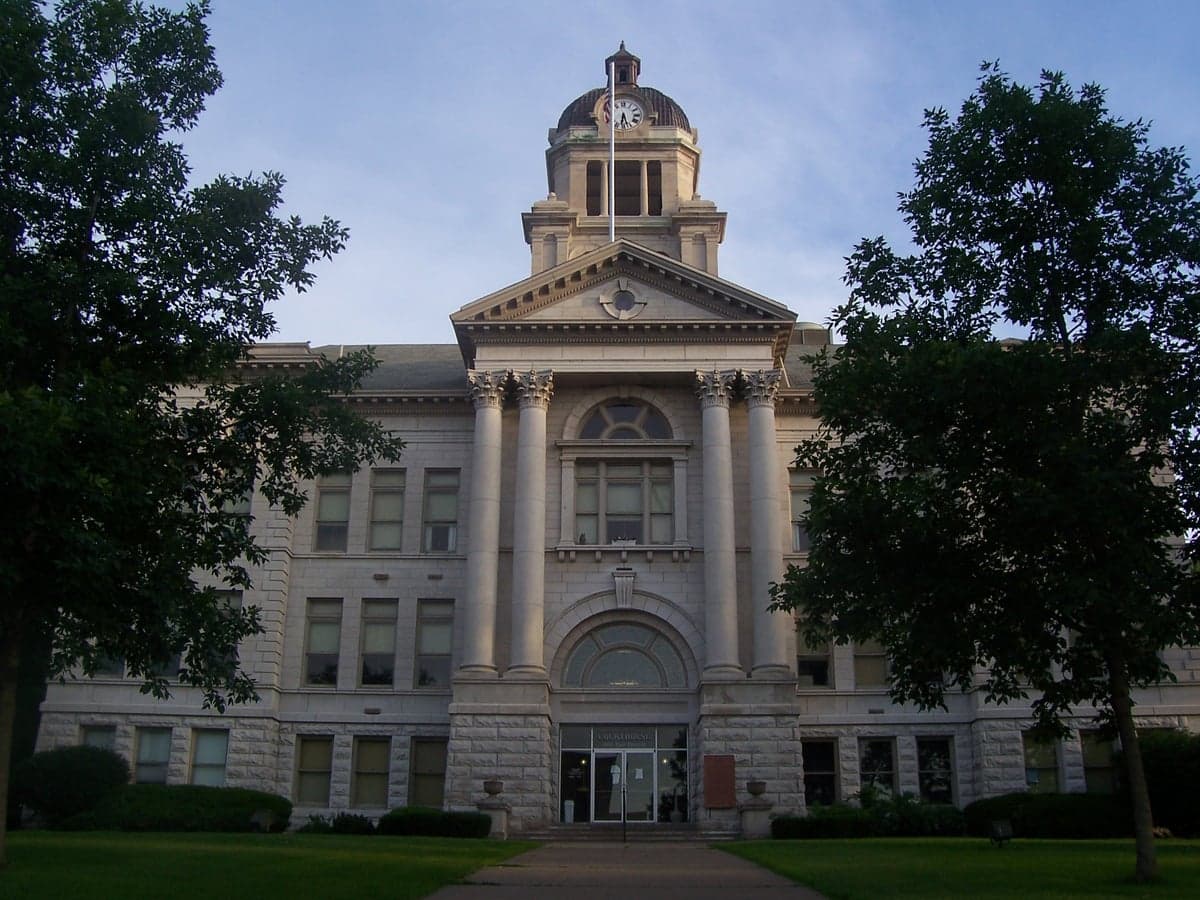
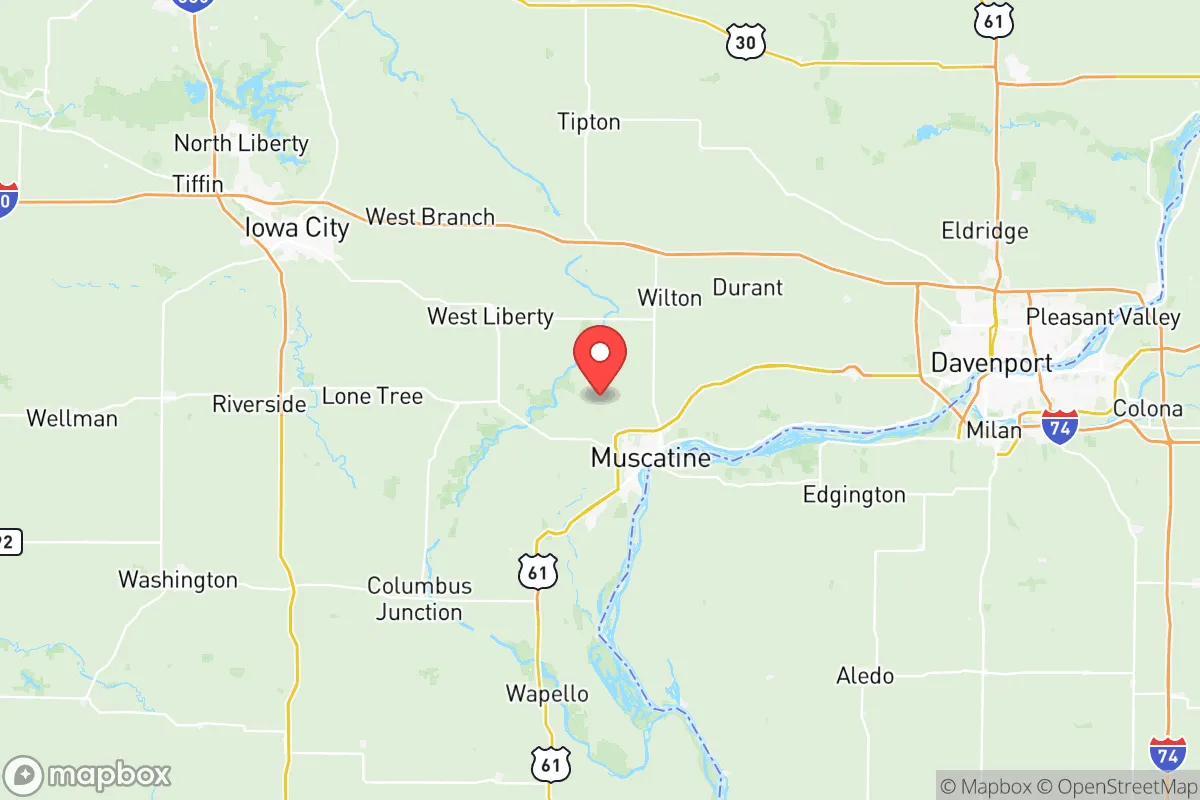
Photo: Wikipedia
Quality of Life in Muscatine County
A livable area that tracks near national norms for affordability, walkability, and neighborhood health.
What does Quality of Life tell us?
Quality of Life measures an area by evaluating factors like cost of living, nearby amenities, country club access, airport proximity, socioeconomic signals and neighborhood character. For large states, this is a general average — quality of life can vary dramatically between metro areas, suburbs, and rural communities within the same state.
What does this tell us?
Quality of Life measures an area by evaluating factors like cost of living, nearby amenities, country club access, airport proximity, socioeconomic signals and neighborhood character. For large states, this is a general average — quality of life can vary dramatically between metro areas, suburbs, and rural communities within the same state.
Cost of Living
26% below national average
141%
The Real Cost of Living in Muscatine County for 2026
| Tier | Individual | Family (4) |
|---|---|---|
| Survival | $15k | $29k |
| Comfortable | $33k | $49k |
| Luxury | $108k+ | $167k+ |
| Elite (Top 5%) | $127k+ | $197k+ |
Quality-of-Life Analysis
Muscatine County, Iowa, offers a quality-of-life spectrum that ranges from the Mississippi River-focused urbanity of its county seat to the quiet, agricultural rhythms of its unincorporated hamlets, drawing everyone from manufacturing workers and river industry professionals to retirees seeking low-cost acreage and young families priced out of the Quad Cities. With a cost-of-living index of 74—well below the national average of 100—and a median home value of $172,400, the county provides tangible financial breathing room that varies noticeably depending on whether you choose a walkable riverfront neighborhood or a gravel-road farmstead. The average commute of just over 19 minutes further reinforces the county’s appeal as a place where daily life moves at a manageable, unhurried pace.
Largest town(s) & population centers
Muscatine, the county seat and home to roughly 24,000 residents, is the undisputed hub. Daily life here centers on the Mississippi River—the downtown riverfront park, the historic Musser Mansion, and the industrial presence of companies like HNI Corporation (office furniture) and Grain Processing Corporation (GPC) shape the local economy and character. Residents enjoy a compact, walkable core with restaurants, a farmers market, and the Muscatine Art Center, while the nearby Kent Stein Park and Saulsbury Bridge Recreation Area provide outdoor access. The housing stock is a mix of early-20th-century bungalows near downtown and newer subdivisions on the west side, with median home values around $172,400 and median rents at $966—both significantly below state averages. The town’s school system, Muscatine Community School District, serves about 5,500 students and includes the Muscatine High School Muskies. For those who want river views and a job within a 10-minute drive, Muscatine is the clear choice.
Smaller towns & rural pockets
Outside the county seat, a string of smaller communities offers distinctly different lifestyles. West Liberty (pop. ~3,800) is a vibrant, majority-Latino town with a strong agricultural processing base—West Liberty Foods operates a major turkey plant here—and a celebrated annual West Liberty Heritage Days. Its downtown is compact but lively, with taquerias and panaderías lining the main street. Wilton (pop. ~2,800) leans more suburban and family-oriented, with a well-regarded school system and a quiet, tree-lined residential feel; it’s a popular choice for commuters to Muscatine or the Quad Cities. Durant (pop. ~1,800) straddles the Cedar County line and offers a slower pace, with a historic downtown and easy access to the Cedar Valley Nature Trail. Nichols (pop. ~370) and Stockton (pop. ~200) are true rural hamlets—unincorporated or nearly so—where life revolves around grain elevators, volunteer fire departments, and county roads. Atalissa (pop. ~110) is the smallest incorporated place, essentially a crossroads with a handful of homes and a post office. These smaller towns offer home prices often 15–25% below the county median, with many fixer-uppers available for under $100,000.
Cost & lifestyle range
The cost-of-living spread across Muscatine County is significant. At the upper end, newer subdivisions on Muscatine’s west side (near Highway 38 and Mulberry Avenue) feature homes in the $250,000–$350,000 range, with larger lots and proximity to the Muscatine Mall and Trinity Muscatine Hospital. At the lower end, a three-bedroom farmhouse on a gravel road near Moscow (unincorporated, pop. ~250) or Fruitland (unincorporated, pop. ~1,000) might sell for $80,000–$120,000, though buyers should budget for well and septic maintenance. Rent follows a similar gradient: a two-bedroom apartment in downtown Muscatine averages $966, while a similar unit in Wilton or Durant might rent for $750–$850. Amenities also vary: Muscatine has a full-service hospital, a YMCA, and a regional airport (MUT), while smaller towns rely on volunteer EMS and the county’s Muscatine County Sheriff’s Office for law enforcement. Internet access is generally good in towns (fiber available in Muscatine and West Liberty) but can be spotty in rural pockets—Starlink is a common workaround.
This county works best for people who value financial predictability over urban excitement. The manufacturing and agricultural base provides stable employment, the commute is short, and the housing market remains accessible even for first-time buyers. Retirees often choose Muscatine for its riverfront amenities and medical access, while younger families gravitate toward Wilton or Durant for the schools and lower home prices. Those seeking true solitude and acreage will find it in the unincorporated areas around Sweetland Center or Montpelier, where neighbors are measured in miles rather than feet. Muscatine County is not a place for nightlife or cultural density, but for anyone who wants a solid, affordable, and unhurried Midwestern life, it delivers consistently across its varied landscapes.

Crime in Muscatine County
Generally safer than 69% of comparable U.S. locations.
Violent CrimeViolent Crime Analysis
Property CrimeProperty Crime Analysis
Crime Analysis
Muscatine County, Iowa, reports a violent crime rate of 229.1 per 100,000 residents and a property crime rate of 1,163.4 per 100,000, placing it in a middle tier for safety within the state. While not among Iowa’s most dangerous counties, these figures exceed the national averages for both violent and property crime, signaling that residents and newcomers should take standard precautions. The county’s safety picture is shaped by its mix of small industrial cities like Muscatine and rural towns such as Wilton and West Liberty, where crime patterns differ noticeably.
Crime in context
Muscatine County’s violent crime rate of 229.1 per 100,000 is roughly 35% higher than the national average of about 170 per 100,000 and significantly above Iowa’s statewide rate of approximately 200 per 100,000. Property crime in the county, at 1,163.4 per 100,000, also exceeds the national average of roughly 1,000 per 100,000 and is notably higher than the Iowa state average of around 950 per 100,000. These numbers place Muscatine County among the higher-crime counties in eastern Iowa, comparable to Scott County (Davenport) but lower than Des Moines County (Burlington). The county’s largest city, Muscatine, drives a disproportionate share of these figures, while smaller communities like Stockton and Atalissa report far fewer incidents per capita.
What residents experience
Residents in Muscatine County most frequently encounter property crimes—theft, burglary, and motor vehicle theft—which account for over 80% of all reported offenses. The city of Muscatine itself sees the bulk of these incidents, particularly in areas near the Mississippi River industrial corridor and along Highway 61. Violent crime, though less common, is concentrated in Muscatine’s downtown and older residential neighborhoods, with aggravated assault making up the majority of cases. In contrast, towns like Wilton and West Liberty report property crime rates roughly half the county average, though West Liberty has seen occasional spikes in drug-related offenses. The county’s judicial system, overseen by the Iowa District Court for the 7th Judicial District, has drawn criticism from some residents for what they perceive as lenient sentencing in property crime cases, a concern that echoes broader frustrations with progressive-leaning prosecutorial policies in some Iowa counties. This perceived softness on repeat offenders, particularly in Muscatine city courts, contributes to a sense among locals that property crime is under-policed and under-punished.
Neighborhood-level variation
Safety varies considerably across Muscatine County. The city of Muscatine’s west side, near the Musser Park area, and the rural outskirts around Letts and Fruitland are generally considered safer, with violent crime rates below 100 per 100,000. Conversely, the central and east-side neighborhoods of Muscatine, especially around the Mississippi Drive corridor and near the former Monsanto plant, report higher concentrations of both violent and property crime. In Wilton, the small-town atmosphere keeps crime low, but residents note that unlocked vehicles and outbuildings are frequent targets. West Liberty, with its growing immigrant population, has seen property crime rise slightly since 2020, though violent crime remains rare. For newcomers, the safest bets are the smaller towns and rural subdivisions, while the city of Muscatine demands more vigilance, particularly after dark and in areas with higher rental density.
* Values derived from national, state, county, city and local statistics and may differ in a specific area. Last updated: 2026-05-12T11:13:28.000Z
Narrative content on this page is AI-generated and may contain mistakes. Verify any details that matter before acting on them.
ReloMaps may earn a commission from affiliate links at no extra cost to you.

