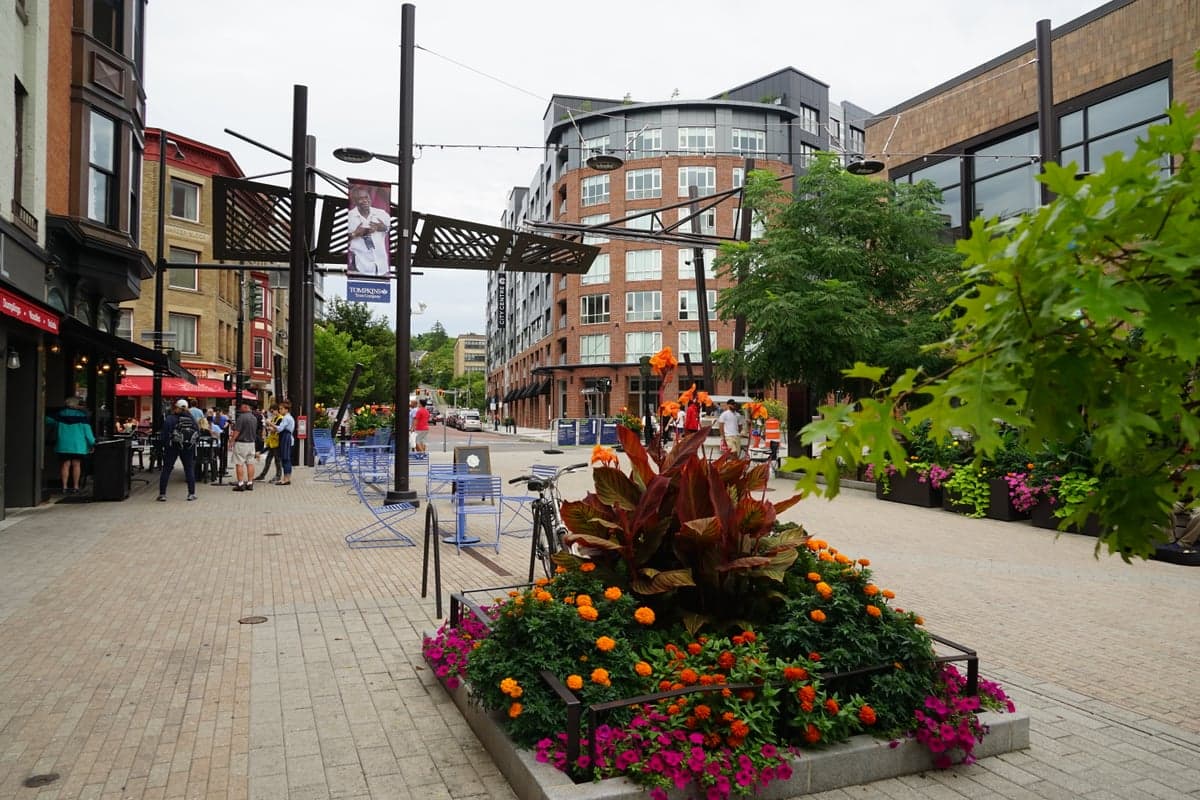
Photo: Wikipedia
Quality of Life in Ithaca, NY
Above-average quality of iife. The area offers a reasonable cost of living, decent mobility, and a mix of neighborhood amenities.
What does Quality of Life tell us?
Quality of Life blends cost of living, nearby amenities, socioeconomic signals, and neighborhood character. City-level scores represent the whole municipality; individual neighborhoods can differ.
What does this tell us?
Quality of Life blends cost of living, nearby amenities, socioeconomic signals, and neighborhood character. City-level scores represent the whole municipality; individual neighborhoods can differ.
Cost of Living
21% above national average
The Real Cost of Living in Ithaca, NY for 2026
| Tier | Individual | Family (4) |
|---|---|---|
| Survival | $23k | $43k |
| Comfortable | $64k | $94k |
| Luxury | $88k+ | $136k+ |
| Elite (Top 5%) | $145k+ | $225k+ |
52%
The Area Signal
A metric tracking the socioeconomic signals of the area.
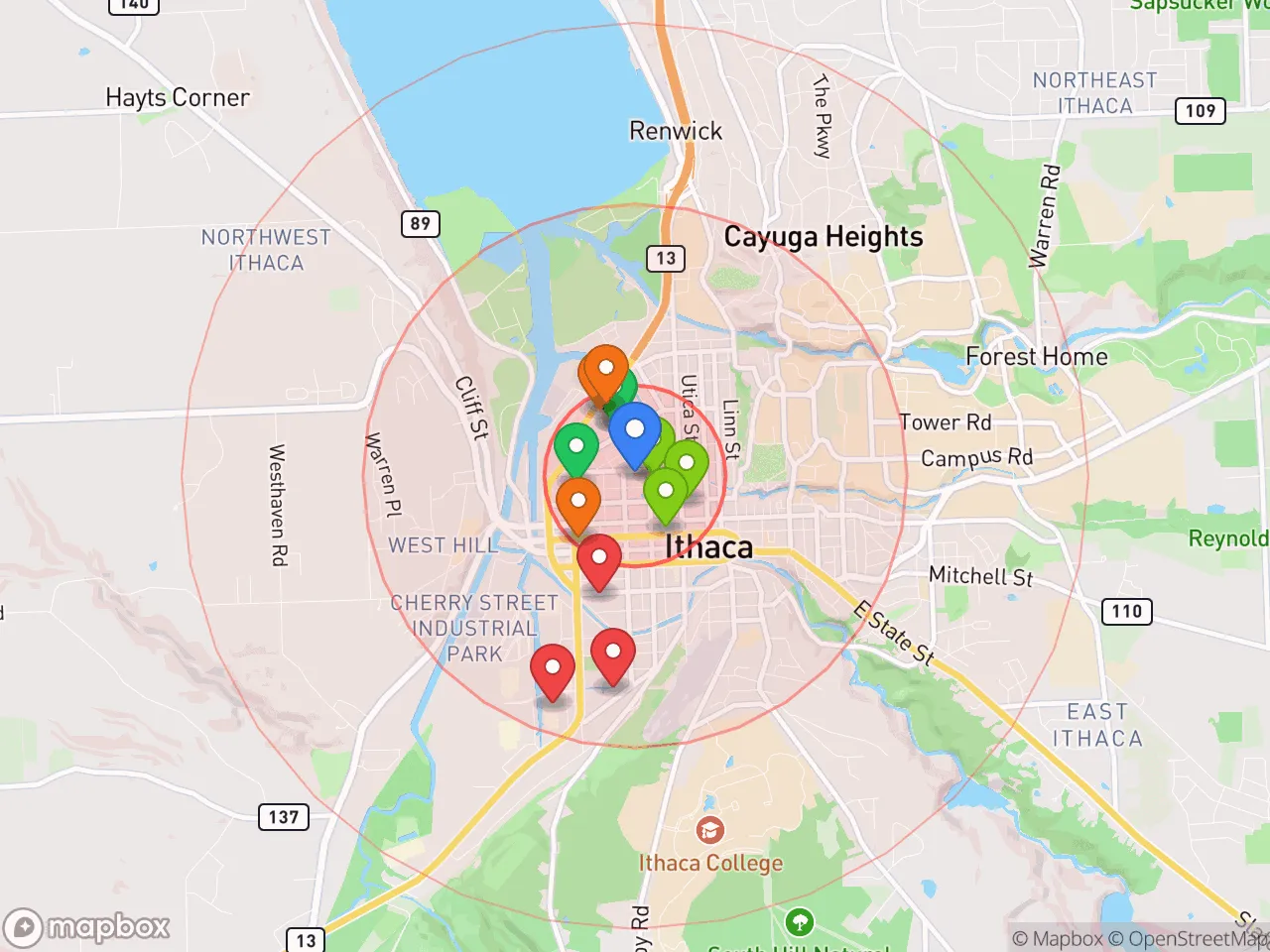
Hobbies
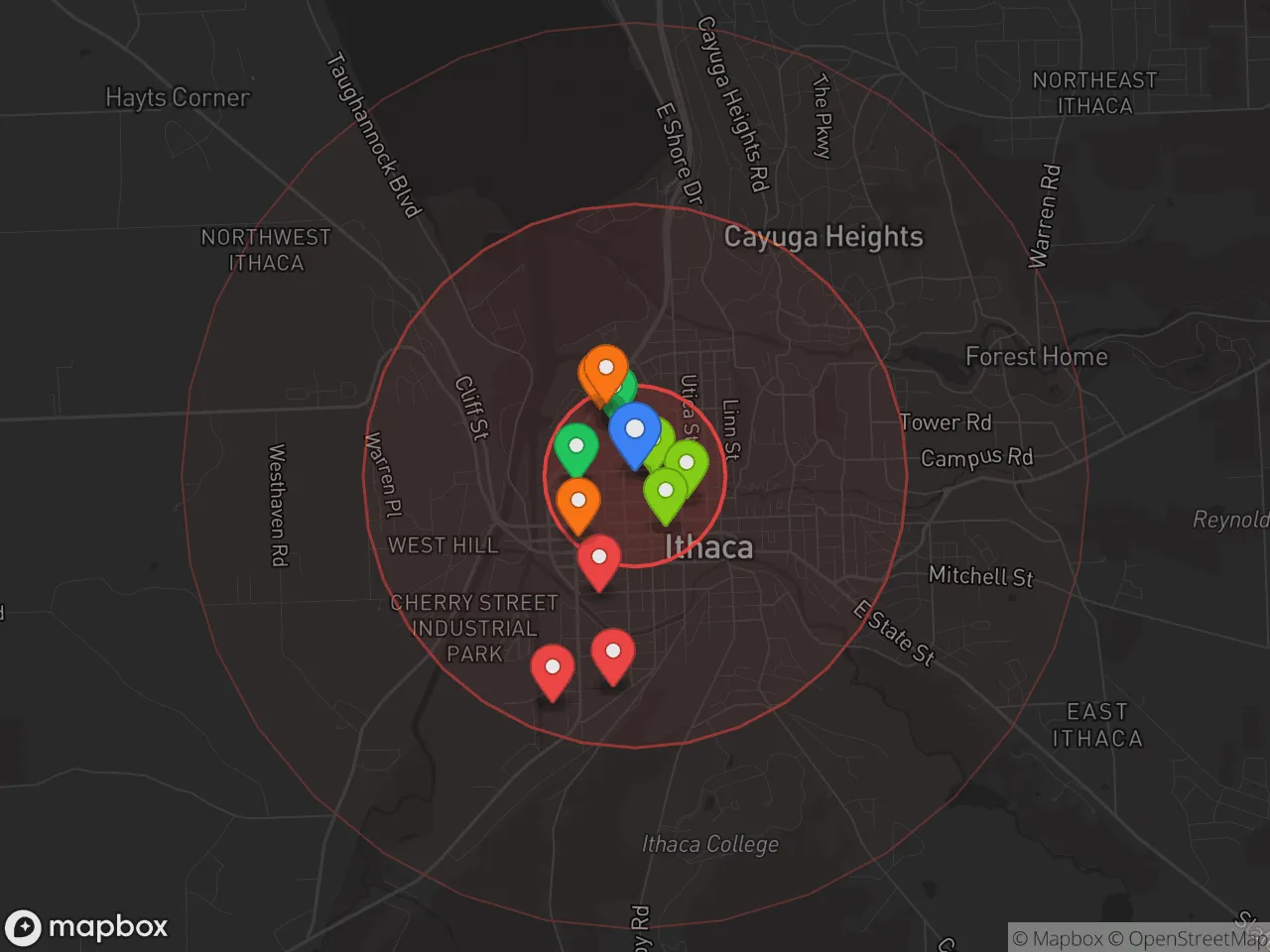
Explore the areaGroceries
6 within 10 miles
Gas
20 within 10 miles
Hospital
3 within 20 miles
Airport
EWR — Newark Liberty International
Post Office
USPS — Ithaca, NY
Critical Amenities
Quality-of-Life Analysis
Ithaca, New York, presents a distinctive quality-of-life profile shaped by its dual identity as a small upstate city and a globally recognized university town anchored by Cornell University and Ithaca College. The area’s affluence is notably higher than the surrounding region, driven largely by the academic and research sectors, which attract a highly educated, progressive, and relatively young population. This creates a community where intellectual curiosity, environmental stewardship, and a strong local food culture are central to daily life, but where the cost of living and housing market present significant barriers for many.
Cost of living and housing affordability compared to nearby areas
Ithaca’s cost of living index stands at 121, meaning it is 21% more expensive than the national average and significantly pricier than most other communities in the Southern Tier and Finger Lakes regions. The primary driver is housing: the median home value is $330,100, which is roughly double the median for Tompkins County outside the city and more than triple the median in neighboring counties like Cortland or Chemung. Median rent sits at $1,441, a figure that strains budgets for many service workers and graduate students. While this is still below major metro areas like New York City or Boston, it creates a sharp affordability divide between those employed by the universities or in tech and those working in retail, hospitality, or agriculture. The average commute is a short 19.3 minutes, a benefit of the city’s compact geography, but the lack of affordable housing within that radius pushes many workers to longer drives from more distant, cheaper towns.
What daily life is like for families and professionals in Ithaca
Daily life in Ithaca revolves around a rich mix of natural amenities and intellectual offerings. The city is famous for its gorges and waterfalls, with over 150 parks and the 38-mile Cayuga Waterfront Trail providing year-round recreation. The Ithaca Farmers Market, operating since 1973, is a central social and economic hub, reflecting the area’s strong farm-to-table ethos. For families, the Ithaca City School District is highly rated, with a graduation rate above 90%, and the Tompkins County Public Library offers extensive programming. The downtown Commons area hosts independent bookstores, music venues, and restaurants that cater to a diverse, food-conscious crowd. However, the rhythm of life is heavily influenced by the academic calendar: the population swells by roughly 20,000 students during the school year, making summer a quieter, more relaxed season. Retail options are limited compared to a mid-sized city, and major shopping destinations require a 30- to 45-minute drive to Cortland or Binghamton.
Who will thrive in Ithaca and who might struggle
Ithaca is best suited for people who prioritize intellectual community, outdoor access, and progressive values over career diversity or low housing costs. Professionals in higher education, research, healthcare (Cayuga Medical Center is a major employer), and tech startups will find a supportive ecosystem. Families who value strong public schools and a safe, walkable environment will also thrive, provided they can secure housing. Conversely, those seeking a vibrant nightlife, a wide range of corporate jobs, or affordable homeownership on a single moderate income may struggle. The city’s political and social culture is overwhelmingly liberal, which can feel isolating for conservatives. Ultimately, Ithaca offers a high quality of life for those who fit its niche, but the high cost of living and limited economic diversity mean it is not a universally accessible or practical choice.

Crime in Ithaca, NY
Lower crime rates than 75% of comparable U.S. locations.
Violent CrimeViolent Crime Analysis
Property CrimeProperty Crime Analysis
Crime Analysis
Ithaca, New York, presents a mixed safety profile that diverges sharply from national averages. The city’s violent crime rate of 141 incidents per 100,000 residents is well below the U.S. average of roughly 380 per 100,000, but its property crime rate of 2,569.9 per 100,000 is significantly higher than the national figure of approximately 1,950 per 100,000. This combination of low violent crime and elevated property crime creates a distinct safety landscape shaped in part by the area’s progressive judicial and prosecutorial policies.
Crime in context
Ithaca’s violent crime rate is about 63% lower than the national average, placing it among safer small cities for personal safety. However, its property crime rate is roughly 32% higher than the U.S. rate and nearly double the New York state average of 1,300 per 100,000. The city’s location within Tompkins County, a liberal enclave with a progressive district attorney’s office, has led to policies emphasizing diversion programs and reduced incarceration for non-violent offenses. Critics argue these approaches contribute to the elevated property crime numbers, as repeat offenders face fewer consequences. For context, nearby Elmira (Chemung County) reports a property crime rate of 2,100 per 100,000 under a more traditional prosecutorial approach, while Syracuse (Onondaga County) records 3,200 per 100,000 with a mixed judicial philosophy.
What residents experience
Daily life in Ithaca involves a tangible concern about property theft. Bicycle theft, car break-ins, and package theft are common complaints, particularly near Cornell University and Ithaca College campuses. The Ithaca Police Department reported that larceny-theft accounts for over 70% of all property crimes, with many incidents occurring in commercial districts like the Ithaca Commons and Collegetown. Residents often invest in security cameras, bike locks, and neighborhood watch participation. Violent crime is rare but not absent; aggravated assault makes up the majority of violent incidents, typically occurring in late-night settings near bars or in domestic situations. The Tompkins County District Attorney’s office has faced criticism for plea deals that reduce felony charges to misdemeanors, a pattern some residents link to a perception that property crime carries minimal consequences.
Neighborhood-level variation
Safety varies notably by neighborhood. Fall Creek and South Hill, residential areas with strong community ties, report lower property crime rates—around 1,800 per 100,000—while the West End and areas near the Ithaca Commons see rates exceeding 3,000 per 100,000. The city’s downtown core, with its concentration of bars and transient populations, experiences the highest number of police calls. Suburban areas like Cayuga Heights and Lansing, which have their own police forces, report property crime rates below 1,500 per 100,000. For those considering relocation, neighborhoods east of Cayuga Lake or north of the city center generally offer lower crime risk, though they require a car for commuting. The progressive judicial environment remains a constant factor citywide, meaning property crime concerns persist regardless of specific address.
* Values derived from national, state, county, city and local statistics and may differ in a specific area. Last updated: 2026-04-23T02:47:19.000Z
Narrative content on this page is AI-generated and may contain mistakes. Verify any details that matter before acting on them.
ReloMaps may earn a commission from affiliate links at no extra cost to you.

