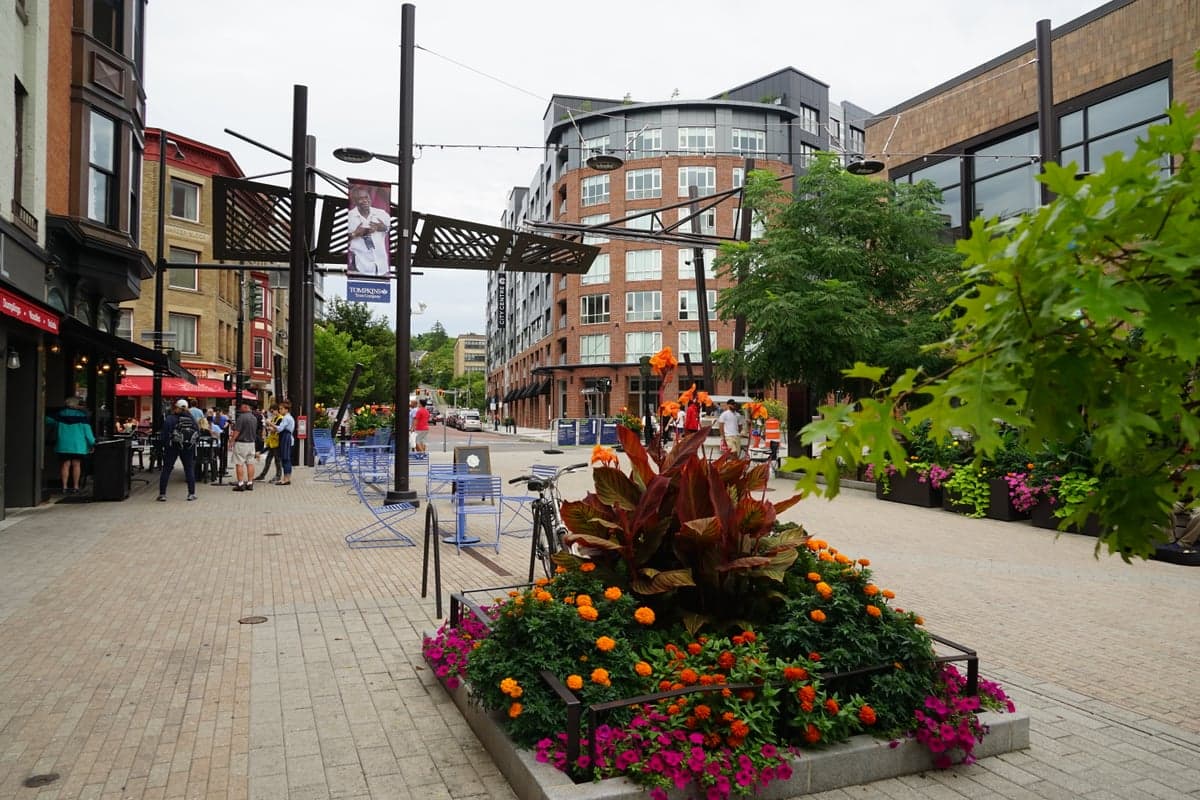
Photo: Wikipedia
Political ClimatePolitical Climate in Ithaca, NY
District shown is the primary district for this city’s centroid. Cities may span multiple districts.
Local Political AnalysisPolitical Analysis of Ithaca, NY
Look, I’ve lived in and around Ithaca long enough to remember when this town was a lot more live-and-let-live. Today, the political climate here is overwhelmingly progressive, and it’s been trending that way for decades. The Cook PVI rating of D+1 might sound moderate, but that number doesn’t capture the real story on the ground. In practice, Ithaca is a deep-blue island in a sea of red upstate New York, and the local government has increasingly embraced policies that feel less like community-building and more like top-down social engineering. The trajectory is clear: more regulation, higher taxes, and a growing list of things you can’t do on your own property without a permit or a lecture.
How it compares
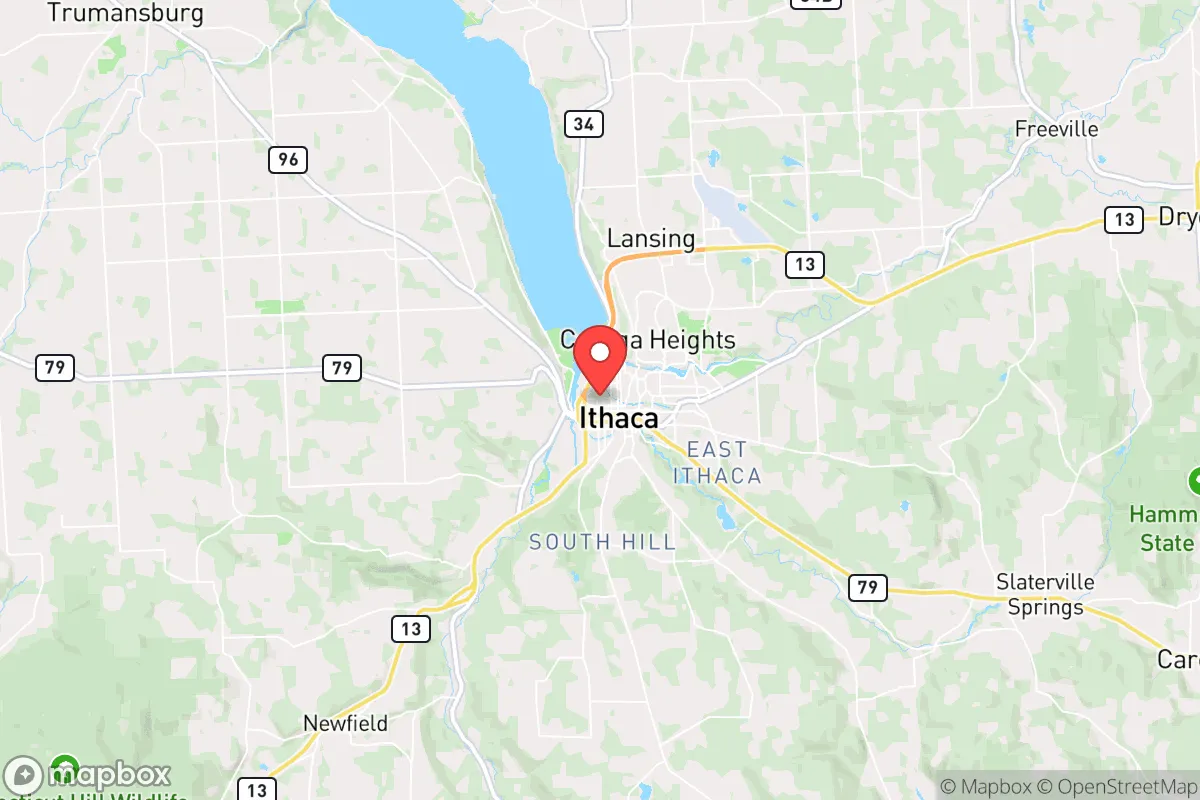
To really understand Ithaca, you have to look at what’s around it. Drive 20 minutes north to Trumansburg, or 30 minutes south to Watkins Glen, and you’re in towns where people still wave at each other and the county board isn’t trying to ban natural gas hookups in new homes. Even Cortland, just 30 minutes east, feels like a different world—more pragmatic, less ideological. The contrast is stark: Ithaca’s city council has passed ordinances on everything from plastic bag bans to “sanctuary city” policies, while surrounding towns like Dryden and Lansing are still debating whether to allow short-term rentals. It’s like living in a college-town laboratory where the experiments keep getting more ambitious, and the rest of the county just watches and shakes its head.
What this means for residents
For a conservative or even a moderate, daily life in Ithaca comes with a growing list of frustrations. Property taxes are among the highest in the state, and the city keeps adding new fees and mandates—like the paid parking program that hit downtown workers hard, or the push for “equity” training requirements for small business owners. The school board has shifted hard left, with curriculum changes that prioritize social justice over reading and math, and parents who speak up at meetings are often dismissed as out of touch. If you value personal freedom—like the right to heat your home with propane, or to build a shed without three layers of permits—Ithaca is becoming a harder place to call home. The local government seems to believe it knows better than you do about how to live your life, and that trust gap is widening every year.
One of the biggest cultural distinctions here is the sheer weight of institutional power. Cornell University and Ithaca College aren’t just employers; they’re political machines that shape everything from housing policy to local elections. Their students and faculty dominate the voting rolls, which means the city’s priorities often reflect a transient, academic worldview rather than the needs of families who’ve been here for generations. You’ll see it in the push for “housing first” policies that ignore property rights, or in the city’s willingness to spend millions on bike lanes while rural roads outside town crumble. The long-term outlook? Unless there’s a serious course correction—like a tax revolt or a shift in the state legislature—I expect Ithaca to keep doubling down on progressive governance. For those of us who remember when this was a quiet, affordable lake town, it feels less like home every year.

State Political ClimatePolitical Climate in New York
State Political AnalysisPolitical Environment in the State
New York State has shifted from a classic purple battleground to a solidly blue stronghold over the past two decades, with Democrats now holding a supermajority in the State Assembly and a functional supermajority in the Senate. The state hasn't voted Republican in a presidential race since 1984, and the margin has only widened—Joe Biden carried it by 23 points in 2020, up from Hillary Clinton's 22-point win in 2016. But that top-line number hides a brutal internal war: the five boroughs of New York City and a handful of downstate suburbs now dictate policy for the entire state, while vast swaths of Upstate New York feel increasingly voiceless and overtaxed.
Urban vs. rural divide
The political map of New York is a tale of two planets. New York City alone accounts for roughly 43% of the state's population and delivers a Democratic margin so large it drowns out the rest of the state. Manhattan, Brooklyn, and the Bronx routinely vote 80-85% Democratic, while Queens and Staten Island are slightly more competitive but still reliably blue. The immediate suburbs—Nassau County on Long Island and Westchester County just north of the city—have trended bluer over the last decade, with Nassau flipping from a swing county to a solid Democratic one in 2020. Further out, places like Suffolk County (eastern Long Island) and Orange County (the Hudson Valley) remain purple but are drifting left as New York City transplants move in. Meanwhile, the vast majority of Upstate New York—from Buffalo and Rochester in the west to Syracuse and Albany in the east—is deeply red in its rural and exurban townships. Erie County (Buffalo) is a Democratic stronghold thanks to the city itself, but the surrounding counties like Genesee, Wyoming, and Livingston vote Republican by 20-30 points. The North Country, including St. Lawrence County and the Adirondack region, is reliably red. The divide is so stark that many Upstate conservatives feel they live in a different country, governed by a legislature that doesn't represent their values on guns, taxes, or education.
Policy environment
New York's policy environment is a case study in progressive governance, and it's a major reason conservatives look elsewhere. The state has the highest combined state and local tax burden in the nation, with income tax rates topping out at 10.9% and property taxes among the highest in the country. The regulatory climate is dense: the state's Scaffold Law, for example, is a 19th-century relic that drives up construction costs, and the Climate Leadership and Community Protection Act (CLCPA) mandates a 85% reduction in greenhouse gas emissions by 2050, which has already driven up energy costs and driven out manufacturing. On education, New York has some of the most restrictive school choice policies in the nation—no vouchers, no education savings accounts, and charter schools capped at 460 statewide. The state's "Raise the Age" law, which raised the age of criminal responsibility to 18, and the 2019 bail reform law (which eliminated cash bail for most misdemeanors and non-violent felonies) have been lightning rods for criticism, with many Upstate sheriffs and district attorneys blaming them for a rise in property crime and recidivism. On healthcare, New York has a robust Medicaid program and a state-run health insurance exchange, but the cost of living and insurance premiums remain high. Election laws are among the most progressive: no-excuse absentee voting, early voting, automatic voter registration, and same-day registration are all in place. For a conservative, the policy environment feels like a one-way ratchet toward bigger government, higher taxes, and less local control.
Trajectory & freedom
Over the last five years, New York has become less free by almost any measure, especially for conservatives. The 2022 passage of the "Clean Slate Act" automatically seals criminal records after a certain period, which critics argue undermines public safety and employer background checks. The 2019 bail reform law, mentioned above, has been amended multiple times but still remains far more lenient than most states. On gun rights, New York has been a national leader in restrictions: the SAFE Act of 2013 banned assault weapons and high-capacity magazines, and the 2022 "Concealed Carry Improvement Act" (passed after the Supreme Court's Bruen decision) made it a crime to carry a firearm in "sensitive locations" like Times Square, subways, and even private businesses unless the owner explicitly posts a sign allowing it. The law also requires a "good moral character" review for permits, which many see as a subjective veto. On parental rights, the state has moved aggressively: the 2022 "Gender Expression Non-Discrimination Act" (GENDA) and subsequent guidance from the State Education Department mandate that schools allow students to use bathrooms and locker rooms matching their gender identity, and that schools not notify parents of a child's gender identity change without the child's consent. This has sparked massive backlash in conservative districts like Williamson and Orleans County, where parents have sued the state. On medical autonomy, New York expanded abortion access in 2019 with the Reproductive Health Act, which codified abortion up to viability and allowed non-physicians to perform the procedure. Property rights have been weakened by the state's rent stabilization laws, which cap rent increases and make it nearly impossible for landlords to evict tenants, even for non-payment, in New York City and some suburbs. The trend is clear: the state is using its power to override local and parental authority on nearly every front.
Civil unrest & political movements
New York has been a flashpoint for political activism on both sides. The 2020 Black Lives Matter protests in New York City were among the largest in the nation, with widespread property damage and a subsequent push to "defund the police" that led to a $1 billion cut to the NYPD budget (later partially restored). The state's sanctuary policies—New York is a "sanctuary state" under the 2017 "New York State DREAM Act" and subsequent executive orders—limit cooperation between local law enforcement and federal immigration authorities. This has created tension in Upstate communities like Utica and Buffalo, where refugee resettlement has been significant. On the right, the "New York State Rifle & Pistol Association" has been the lead plaintiff in multiple Supreme Court cases, including Bruen, and the state's gun laws remain a constant source of litigation. There have been scattered secession movements—the "Break Up New York" campaign in 2021 proposed splitting the state into three parts, and there's a long-running "New York State of Mind" movement in the Southern Tier that talks about joining Pennsylvania. Election integrity has been a hot-button issue: the 2020 election saw widespread use of mail-in ballots due to COVID, and the state's 2022 redistricting was struck down by the courts as an illegal partisan gerrymander, leading to a court-drawn map that gave Republicans a net gain of three congressional seats. A new resident would notice the constant political tension, especially in the suburbs, where school board meetings have become battlegrounds over curriculum, library books, and transgender policies.
Projection
Over the next 5-10 years, New York is likely to become even more progressive, driven by demographic trends. New York City continues to attract young, left-leaning transplants from around the world, while Upstate's population is aging and shrinking. The 2020 Census cost New York a congressional seat, and the trend is expected to continue. The state's high taxes and regulatory burden are pushing out both businesses and middle-class families—New York lost a net 300,000 residents to other states between 2020 and 2023, with Florida, Texas, and the Carolinas being the top destinations. This out-migration is disproportionately conservative and middle-class, which only deepens the state's blue hue. The state's fiscal situation is precarious: the state budget has grown by over 30% in the last five years, and the state's debt is among the highest in the nation. A future fiscal crisis could force tax hikes or service cuts, but given the political dynamics, it's more likely that taxes will rise further. On the cultural front, expect continued battles over parental rights, school curriculum, and gun laws. The state's Democratic supermajority is unlikely to be broken, and any Republican gains will be limited to a few swing districts in the Hudson Valley and Long Island. For a conservative moving in now, the realistic expectation is that the state will continue to move left on nearly every issue, and that local resistance—while spirited—will be increasingly overridden by state preemption.
For a conservative considering a move to New York, the bottom line is this: you will be paying some of the highest taxes in the nation, living under some of the strictest gun laws, and raising your kids in a school system that actively undermines parental authority. The state's political trajectory is firmly leftward, and the urban downstate majority will continue to dictate policy for the entire state. If you're looking for a place where your vote matters and your values are respected, New York is a tough sell. But if you have a specific job or family tie that keeps you here, your best bet is to find a red pocket—places like Orleans County, Wyoming County, or the Southern Tier—where local culture and community can buffer the state's progressive tide. Just know that the state government in Albany will keep pushing, and you'll need to stay engaged to protect what's yours.
* Values derived from national, state, county, city and local statistics and may differ in a specific area. Last updated: 2026-04-23T02:47:19.000Z
Narrative content on this page is AI-generated and may contain mistakes. Verify any details that matter before acting on them.
ReloMaps may earn a commission from affiliate links at no extra cost to you.

