Quality of Life in Jackson, MS
A high quality of life with strong walkability, manageable living costs, healthy neighborhood signals, and solid amenity access.
What does Quality of Life tell us?
Quality of Life blends cost of living, nearby amenities, socioeconomic signals, and neighborhood character. City-level scores represent the whole municipality; individual neighborhoods can differ.
What does this tell us?
Quality of Life blends cost of living, nearby amenities, socioeconomic signals, and neighborhood character. City-level scores represent the whole municipality; individual neighborhoods can differ.
Cost of Living
32% below national average
The Real Cost of Living in Jackson, MS for 2026
| Tier | Individual | Family (4) |
|---|---|---|
| Survival | $16k | $31k |
| Comfortable | $27k | $39k |
| Luxury | $78k+ | $121k+ |
| Elite (Top 5%) | $110k+ | $171k+ |
111%
The Area Signal
A metric tracking the socioeconomic signals of the area.
Hobbies
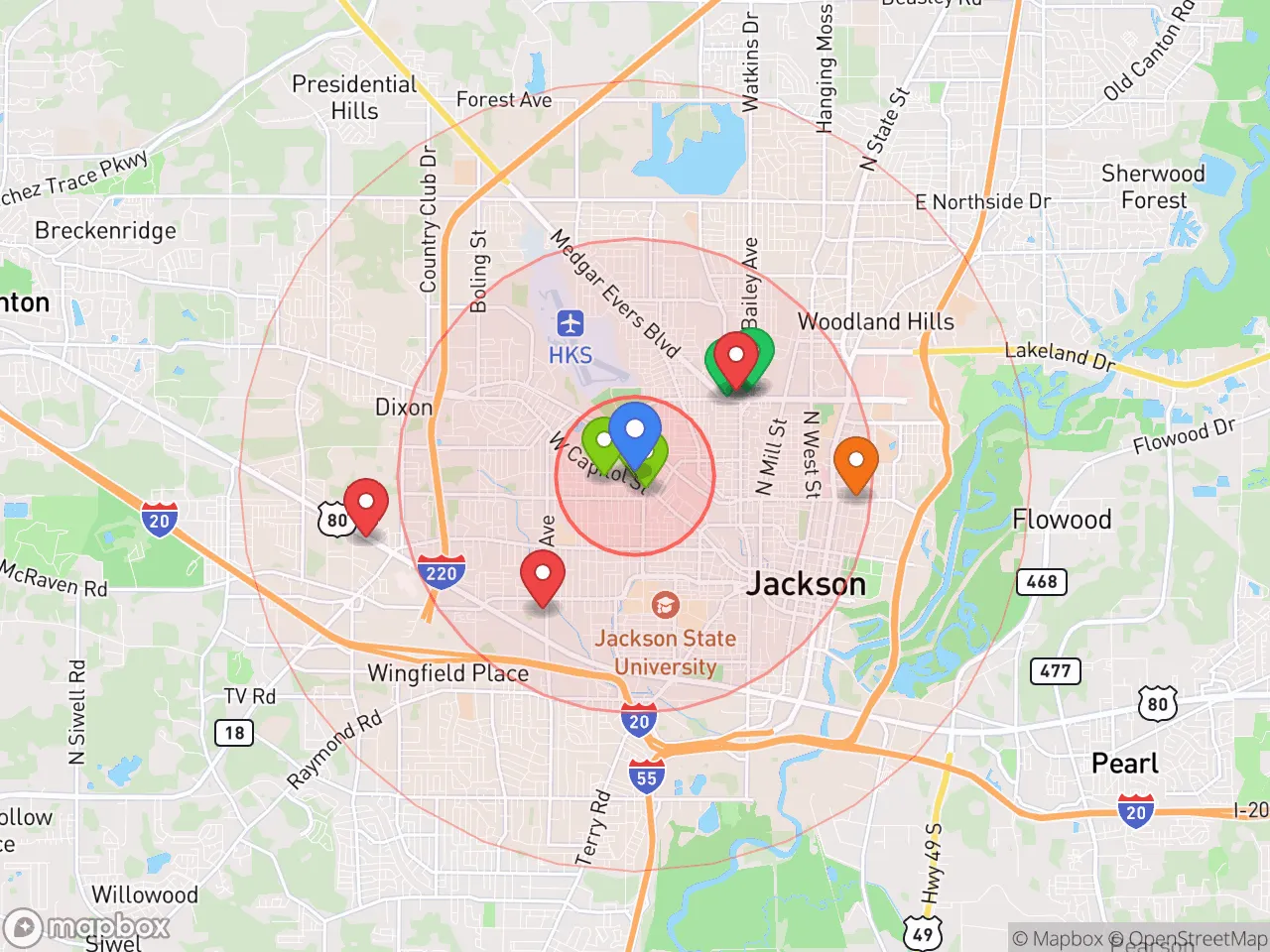
Explore the areaGroceries
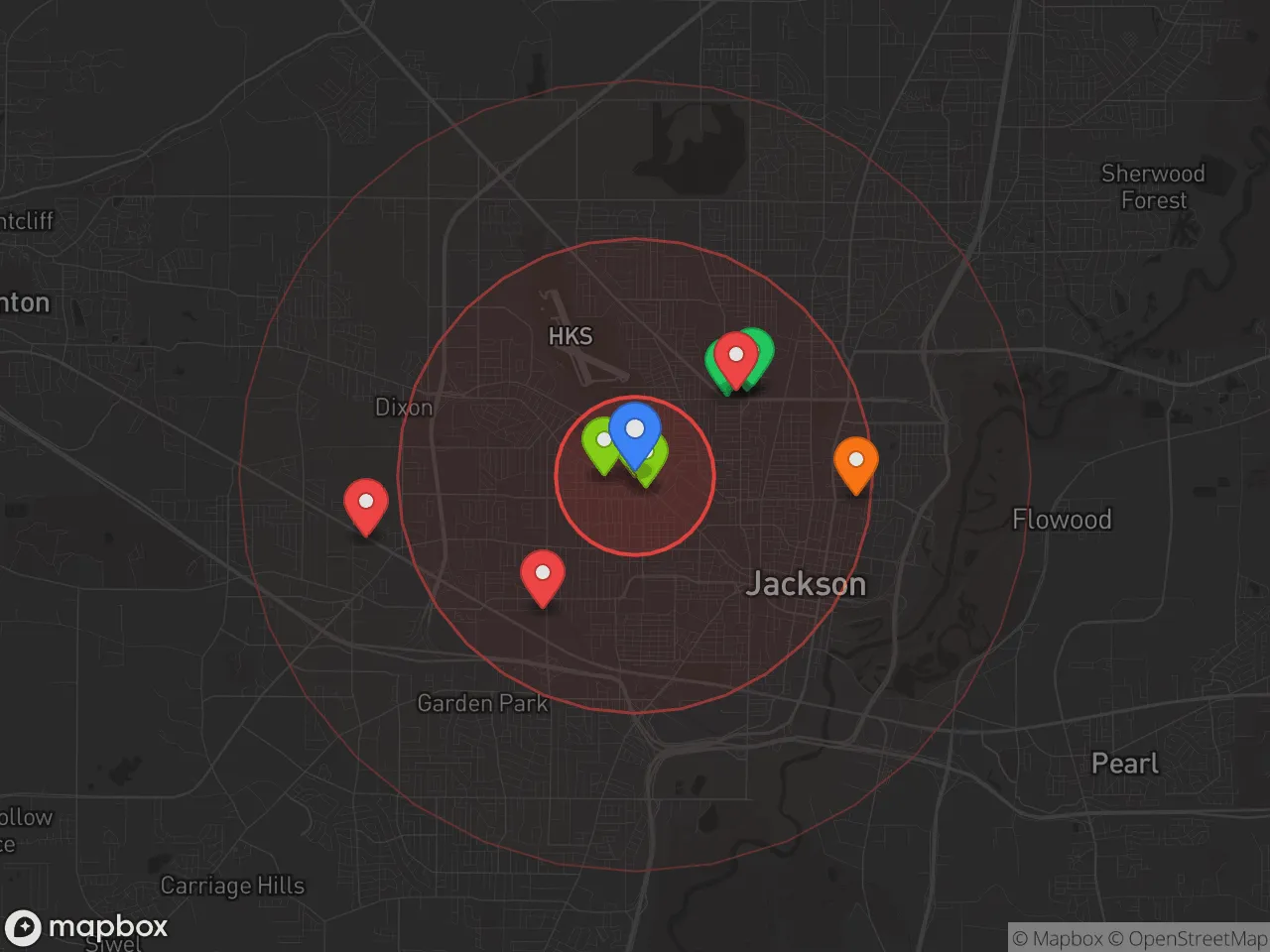
5 within 10 miles
Gas
20 within 10 miles
Hospital
20 within 20 miles
Airport
BNA — Nashville International
Post Office
USPS — Jackson, MS
Critical Amenities
Quality-of-Life Analysis
Jackson, Mississippi, presents a unique quality-of-life profile defined by deep affordability and a predominantly African American population, with over 80% of residents identifying as Black or African American. The city’s median household income hovers around $40,000, significantly below the national median, reflecting a working-class and middle-income demographic that includes a strong presence of state government employees, healthcare workers at the University of Mississippi Medical Center, and professionals tied to Jackson State University. While the city faces systemic economic challenges, its low cost of living and cultural density attract residents who prioritize community roots and urban accessibility over high-end amenities.
How Jackson’s cost of living and housing compare to nearby suburbs
Jackson’s cost of living index sits at 68—32% below the U.S. average—making it one of the most affordable state capitals in the country. The median home value is $108,200, roughly one-third of the national median, while median rent is $1,018, well below the national average of about $1,400. These figures stand in stark contrast to nearby suburbs like Madison and Ridgeland, where median home values exceed $250,000 and rents often surpass $1,400. The average commute time in Jackson is 20.2 minutes, significantly shorter than the national average of 26 minutes, which reduces transportation costs and frees up time for daily life. However, property taxes in Hinds County are relatively high—around 1.5% of assessed value—partially offsetting the low home prices. For renters and first-time buyers, Jackson offers a rare opportunity to own a home on a modest salary, but the trade-off includes older housing stock and limited new construction compared to the booming suburbs.
What daily life is like for families: schools, amenities, and local rhythm
Daily life in Jackson revolves around a mix of historic neighborhoods, state government offices, and a modest but resilient local economy. The Jackson Public School District serves most families, though it has faced chronic underfunding and low graduation rates—around 75% compared to the state average of 88%. Many middle-class families opt for private schools such as St. Andrew’s Episcopal School or Jackson Academy, or move to the higher-rated Madison County School District. Amenities include the LeFleur’s Bluff State Park for outdoor recreation, the Mississippi Museum of Art, and the historic Fondren district, which offers local restaurants and live music venues. The city’s rhythm is slower than major metros, with a strong church-centered social life and a calendar punctuated by events like the Mississippi State Fair and the Mal’s St. Paddy’s Day Parade. Healthcare access is concentrated around the University of Mississippi Medical Center, the state’s only Level 1 trauma center, though residents in outlying neighborhoods may face longer drives for primary care. Grocery access is uneven, with several food deserts in the city’s core, making car ownership essential for most households.
Jackson is best suited for individuals and families who value deep affordability, cultural authenticity, and a slower pace of life, and who are comfortable navigating a city with significant infrastructure and public-service challenges. It appeals strongly to state employees, healthcare professionals, and educators tied to local institutions, as well as to retirees and remote workers seeking a low-cost base. Those who thrive here tend to be resourceful, community-oriented, and tolerant of the city’s aging infrastructure and limited retail options. For newcomers expecting suburban polish or rapid economic growth, the suburbs of Madison or Flowood may be a better fit, but for anyone seeking a genuinely affordable urban environment with a rich Black cultural heritage and a short commute, Jackson offers a compelling—if imperfect—quality of life.

Crime in Jackson, MS
Higher crime rates than 64% of comparable U.S. locations.
Violent CrimeViolent Crime Analysis
Property CrimeProperty Crime Analysis
Crime Analysis
Jackson, Mississippi, faces significant public safety challenges, with violent and property crime rates that substantially exceed both state and national averages. The city's crime statistics reflect a complex interplay of socioeconomic factors and, notably, the impact of progressive criminal justice policies that critics argue prioritize offender rehabilitation over public safety. For potential residents, understanding these dynamics is crucial for making an informed decision about living in the capital city.
Crime in context
Jackson's violent crime rate of 400.1 incidents per 100,000 residents is more than double the national average of roughly 380 per 100,000, while its property crime rate of 1,514.8 per 100,000 far exceeds the U.S. average of approximately 1,954 per 100,000. These figures place Jackson among the most dangerous cities in Mississippi, which itself has one of the highest violent crime rates in the nation. The city's challenges are compounded by a justice system that has seen a shift toward progressive policies, including reduced cash bail requirements and diversion programs for repeat offenders. Critics point to these reforms as a direct contributor to recidivism, as offenders are returned to the streets more quickly, undermining deterrence and victim justice. The Hinds County District Attorney's office, which oversees Jackson, has been a focal point of this debate, with some arguing that lenient sentencing and plea deals have emboldened criminal activity.
What residents experience
Daily life for Jackson residents involves heightened vigilance, particularly regarding property crimes like vehicle theft, burglary, and larceny, which account for the bulk of the city's high property crime rate. Violent crimes, including aggravated assault and robbery, are concentrated in specific areas but can occur citywide. The Jackson Police Department has struggled with staffing shortages and budget constraints, limiting its ability to respond quickly to all calls. Residents often report that car break-ins and home burglaries are common, with many opting for security systems, neighborhood watch programs, and even private security patrols. The perception of a soft-on-crime judicial approach—where offenders face minimal consequences—further erodes trust in the system and fuels a sense of insecurity among law-abiding citizens.
Neighborhood-level variation is stark. Affluent areas like Belhaven and Fondren experience lower crime rates due to higher property values, active community policing, and private security investments. In contrast, neighborhoods in south and west Jackson, such as Georgetown and West Jackson, see significantly higher rates of violent crime and property offenses. Suburban communities like Ridgeland and Madison, just north of Jackson, offer dramatically lower crime rates and are often recommended for families seeking safety while maintaining proximity to the capital. For those considering Jackson, thorough research into specific neighborhoods and a realistic assessment of the local justice system's impact on public safety are essential.
* Values derived from national, state, county, city and local statistics and may differ in a specific area. Last updated: 2026-04-24T06:30:35.000Z
Narrative content on this page is AI-generated and may contain mistakes. Verify any details that matter before acting on them.
ReloMaps may earn a commission from affiliate links at no extra cost to you.

