Political ClimatePolitical Climate in Jackson, MS
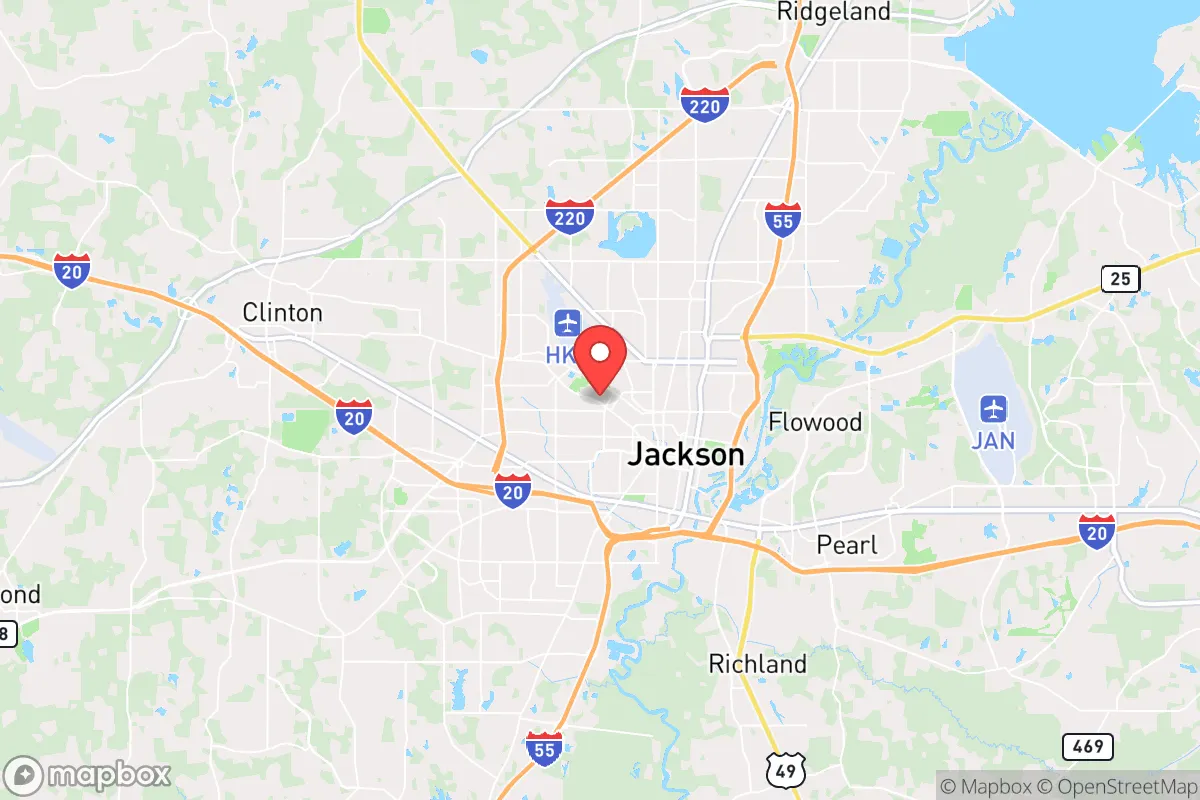
District shown is the primary district for this city’s centroid. Cities may span multiple districts.
Local Political AnalysisPolitical Analysis of Jackson, MS
Jackson, Mississippi, is a deep blue island in a deep red state, with a Cook PVI of D+11 that makes it one of the most reliably Democratic cities in the South. But if you've lived here as long as I have, you know that label doesn't tell the whole story. The city's politics have shifted hard left over the past two decades, and not in a way that's made life better for most folks. What used to be a moderate, church-going, family-first community has become a place where progressive policies on taxes, policing, and public spending have left a lot of longtime residents feeling like they're living in a different country.
How it compares
Drive 15 minutes north to Madison or Ridgeland, and you'll find a completely different world. Those suburbs vote reliably Republican, with lower crime rates, better-funded schools, and a tax burden that actually feels like you're getting something for your money. The contrast is stark: Jackson's city council has pushed through tax increases and spending on social programs that sound good on paper but have done little to stop the population drain. Meanwhile, Rankin County to the east has held the line on property taxes and kept law enforcement well-funded. If you're looking for a place where your personal freedoms—like keeping more of what you earn or choosing where your kids go to school—are respected, you're better off in those surrounding towns. Jackson's leadership seems to think more government is the answer to every problem, and the results speak for themselves.
What this means for residents
For the people still living inside Jackson city limits, the political climate means you're dealing with a city government that's increasingly comfortable telling you how to live. There's been a push for more regulations on small businesses, higher fees for basic services, and a police department that's been defunded in spirit if not in name—response times are up, and violent crime is a constant worry. The school district, once a point of pride, has been taken over by the state twice because of mismanagement. If you value local control and personal responsibility, it's frustrating to watch. The city's leaders talk a big game about equity and inclusion, but what that often means in practice is higher taxes for everyone and fewer choices for families. A lot of folks I know have simply given up and moved to the suburbs, where the government assumes you can run your own life.
One thing that sets Jackson apart culturally is its deep history in the civil rights movement, and that legacy is still felt in every election. But there's a difference between honoring that history and using it as a blank check for policies that don't work. The city's current trajectory—toward more government control, less police presence, and a tax base that's shrinking because people are leaving—isn't sustainable. If you're thinking about moving here, I'd say look at the numbers and talk to people who've been here a while. The political climate in Jackson is friendly if you agree with the progressive agenda, but if you value your freedoms and want a government that stays out of your way, you'll find a better fit in the surrounding counties.

State Political ClimatePolitical Climate in Mississippi
State Political AnalysisPolitical Environment in the State
Mississippi has long been one of the most reliably conservative states in the nation, with a Republican lean that has only deepened over the past two decades. The state has not voted for a Democratic presidential candidate since 1976, and in 2024, Donald Trump carried it by over 17 points. The dominant coalition is a mix of rural white evangelicals, suburban families in the Jackson metro exurbs, and Gulf Coast retirees, all of whom have pushed the state legislature into a solidly conservative posture. Over the last 10-20 years, the shift has been dramatic: Democrats once held a majority in the state House as recently as 2010, but today Republicans hold supermajorities in both chambers, and every statewide office is held by the GOP.
Urban vs. rural divide
The political map of Mississippi is a textbook study in the urban-rural split. The state’s only reliably blue stronghold is the Jackson metro area, specifically Hinds County, which has voted Democratic by wide margins for decades. However, that influence is shrinking as Jackson’s population declines and the surrounding suburbs of Madison and Ridgeland have become deeply red. Madison County, in fact, is one of the wealthiest and most Republican counties in the state, often voting +30 points or more for GOP candidates. On the Gulf Coast, Biloxi and Gulfport lean Republican but are more competitive due to a mix of military families, casino workers, and a growing Hispanic population. The Delta region, including Greenville and Clarksdale, remains Democratic due to high African American populations, but turnout there is low and declining. The northeastern hill country around Tupelo and Oxford is reliably red, though Oxford’s university population (Ole Miss) occasionally produces pockets of liberal sentiment. The real engine of Republican dominance is the vast rural expanse: counties like DeSoto (just south of Memphis), Rankin, and Lamar routinely deliver margins of 70-80% for GOP candidates.
Policy environment
Mississippi’s policy environment is among the most conservative in the country, and it has been trending further right in recent years. The state has no income tax on wages, having phased it out entirely as of 2026, leaving only a 7% corporate tax and a 7% sales tax on most goods. Property taxes are among the lowest in the nation, with a median effective rate of just 0.65%. The regulatory posture is aggressively pro-business: Mississippi is a right-to-work state, has no state-level minimum wage above the federal $7.25, and has some of the weakest environmental regulations in the country. On education, the state has expanded school choice significantly, with the 2024 Mississippi School Choice Act creating education savings accounts (ESAs) worth roughly $6,500 per child, usable for private school tuition, homeschooling, or tutoring. Healthcare policy remains a flashpoint: Mississippi has not expanded Medicaid under the Affordable Care Act, leaving roughly 200,000 low-income adults in a coverage gap. Election laws are strict: voter ID is required, early voting was only introduced in 2024 (and only for in-person absentee without an excuse), and same-day registration is not allowed. The state also passed a 2023 law banning private funding of election administration, a response to the Zuckerberg-funded 2020 election grants that many conservatives viewed as corrupting.
Trajectory & freedom
On the freedom front, Mississippi has been moving decisively in the direction of expanding personal liberty, particularly for gun owners, parents, and taxpayers. The state enacted constitutional carry in 2016, allowing permitless carry of firearms, and in 2023 passed a law prohibiting local governments from enforcing any federal gun restrictions that conflict with state law—a direct nullification play. On parental rights, the 2023 Mississippi Parental Rights Act requires schools to notify parents before any medical or mental health screening of a student, and the 2024 “Parents’ Bill of Rights” gives parents the explicit right to review curriculum and opt their children out of any instruction they find objectionable. Medical freedom saw a win with the 2022 law banning COVID-19 vaccine mandates by private employers, though it was later struck down in court. On the concerning side, the state has not moved to legalize medical marijuana (a 2020 ballot initiative was struck down by the state Supreme Court on a technicality), and a 2023 attempt to legalize it legislatively failed. Property rights are strong: Mississippi has no statewide zoning, and the 2021 “Private Property Protection Act” limits the use of eminent domain for economic development. The overall trajectory is toward more individual freedom, but the state remains cautious on drug policy and medical choice.
Civil unrest & political movements
Mississippi has not seen the kind of large-scale civil unrest that has plagued other states. The 2020 Black Lives Matter protests in Jackson were relatively small and peaceful compared to Portland or Seattle, and the state’s decentralized population means flashpoints are rare. The most visible political movements are on the right: the Mississippi Republican Party has been dominated by the conservative “Mississippi Freedom Caucus” in the legislature, which has pushed for further tax cuts, school choice expansion, and restrictions on transgender athletes and medical care for minors. The 2023 law banning gender-affirming care for minors passed with overwhelming bipartisan support. Immigration politics are less heated than in border states, but the 2024 “Mississippi Border Security Act” requires local law enforcement to cooperate with ICE and prohibits sanctuary city policies. Election integrity remains a live issue: the 2023 law requiring hand-counting of ballots in all precincts (later amended to allow machine counting with a hand audit) was a direct response to conservative concerns about voting machine security. The state has also seen a small but vocal secessionist movement, though it has no real political traction. A new resident would notice that political signs and bumper stickers are overwhelmingly conservative, and that public discourse is generally civil but deeply partisan.
Projection
Over the next 5-10 years, Mississippi is likely to become even more conservative. The primary driver is demographic: the state’s population is aging and white, with the Black population (roughly 38%) declining as younger Black residents move to Atlanta, Houston, or other metros. In-migration is modest but growing, with retirees from the Midwest and Gulf Coast moving to Ocean Springs and Bay St. Louis, and remote workers from California and New York settling in Oxford and Starkville. These newcomers tend to be conservative-leaning, drawn by low taxes and a slower pace of life. The state’s Republican supermajority is unlikely to be threatened, and further policy moves are expected: a full elimination of the corporate income tax, expansion of ESAs to all students, and possibly a constitutional amendment to require a supermajority for any tax increase. The wild card is the Delta, where population loss could lead to a reduction in federal funding and a further hollowing out of Democratic strongholds. For a new resident, the Mississippi of 2035 will likely look much like today, only more so: lower taxes, fewer regulations, and a political culture that values personal liberty over government intervention.
For someone moving to Mississippi, the bottom line is this: you are choosing a state that prioritizes individual freedom, low taxes, and limited government, and that trajectory is accelerating. You will find a political environment that is overwhelmingly conservative, with little threat of progressive policy shifts at the state level. The trade-offs are real—weak public services, poor healthcare access in rural areas, and a public education system that ranks near the bottom nationally—but for those who value personal autonomy and fiscal conservatism, Mississippi offers a rare degree of political stability. If you are a parent, the school choice options are expanding rapidly. If you are a gun owner, your rights are among the strongest in the country. If you are a business owner, the regulatory climate is welcoming. Just be prepared for the heat, the mosquitoes, and the fact that your neighbors will almost certainly agree with you politically.
* Values derived from national, state, county, city and local statistics and may differ in a specific area. Last updated: 2026-04-24T06:30:35.000Z
Narrative content on this page is AI-generated and may contain mistakes. Verify any details that matter before acting on them.
ReloMaps may earn a commission from affiliate links at no extra cost to you.

