 Popular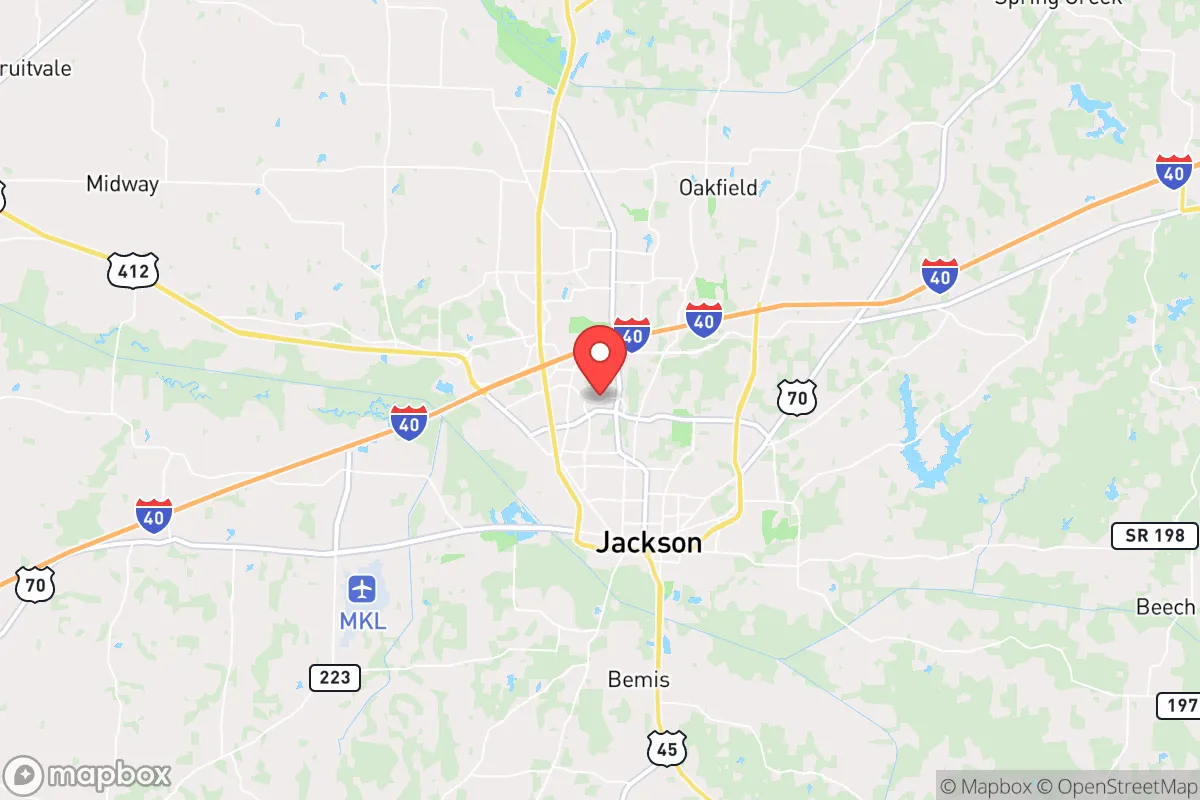
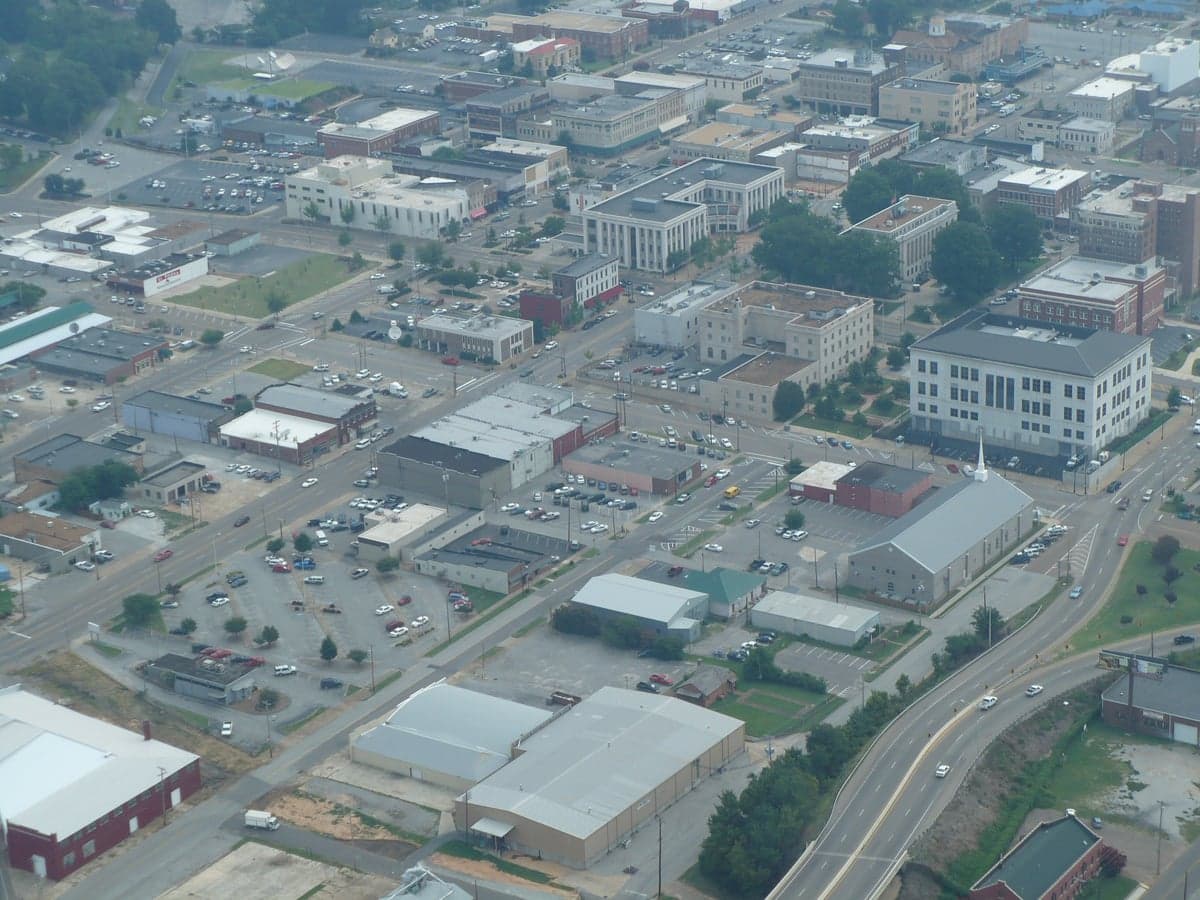
Photo: Wikipedia
Strategic Assessment of Jackson, TN
Workable tactical position. Some exposure to population density or targets, but generally defensible in a crisis.
What does the Strategic Assessment tell us?
Our Strategic Assessment grades tactical survivability of an area. Major population centers, military targets, fallout zones, natural disasters, and border exposure all drive risk — lower exposure means a more defensible position in a crisis.
This is heavily inspired by Joel Skousen's Strategic Relocation book. Highly recommended you checkout the book ($)What does this tell us?
Our Strategic Assessment grades tactical survivability of an area. Major population centers, military targets, fallout zones, natural disasters, and border exposure all drive risk — lower exposure means a more defensible position in a crisis.
This is heavily inspired by Joel Skousen's Strategic Relocation book. Highly recommended you checkout the book ($)Strategic Pillars

Key Distances
Regional Safe Places
Below is our recommended "safe zones" in Tennessee and the surrounding area based on our strategic heuristics. For most people, it's unrealistic to live in a “safe zone” full-time due to work, family or other personal reasons. They tend to be more rural. However, many of these areas are perfect for second homes and retreat properties that double as a vacation home or even a short-term rental.
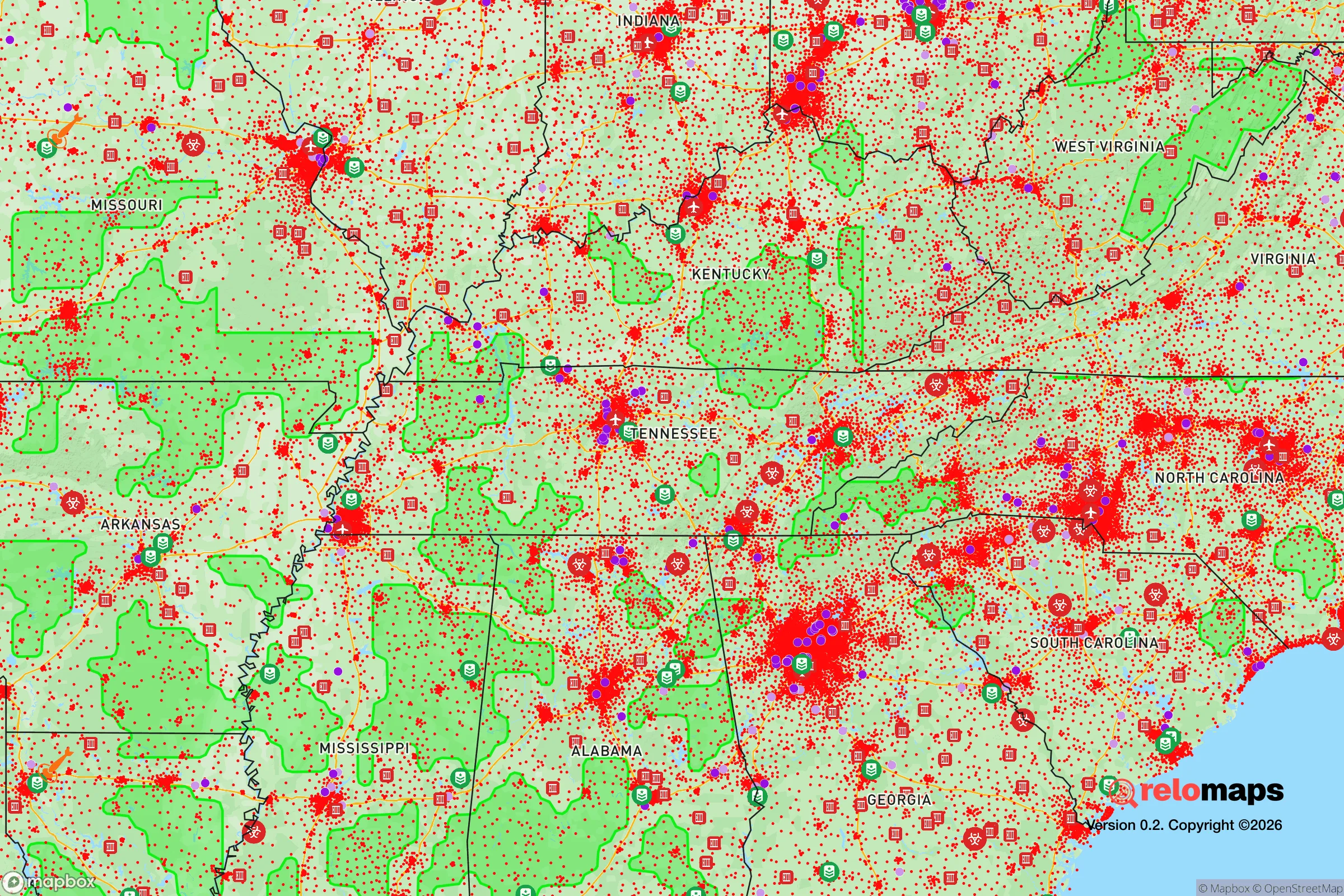
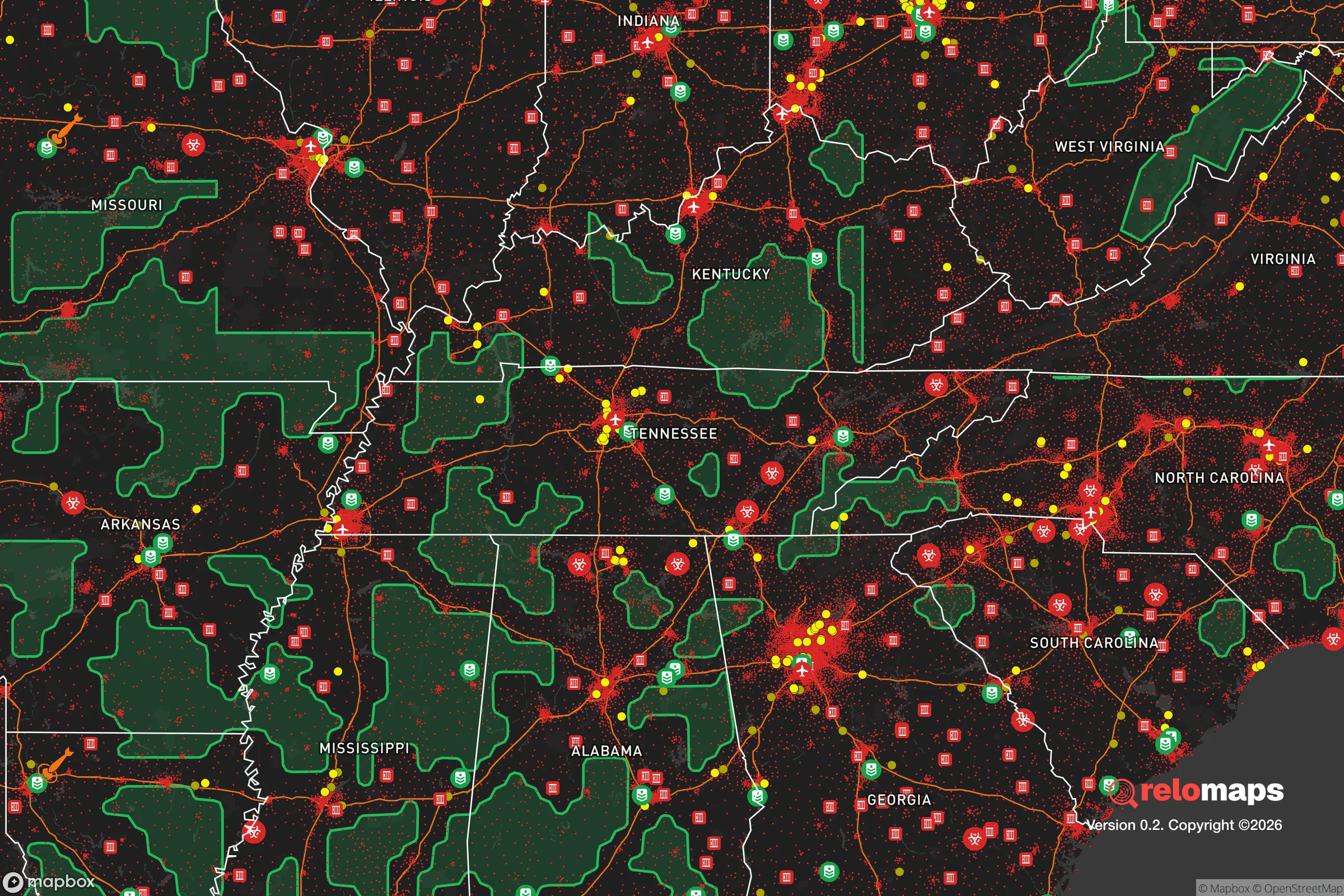


Important Note: For informational purposes only. This does not mean nothing bad ever happens in the green zones. Please use common sense. This is based on public data and modeled with AI. We tried to take a conservative approach but mistakes happen. We update this regularly as new information becomes available.
Solar Generator Recommendations
Backup power matters more here than in safer locations. We've picked three solar generators across budgets and capacity tiers — start with the budget unit if you only need a few essentials, or step up if you want to run a fridge and HVAC for days at a time.

Jackery Portable Power Station Explorer 300
Budget OptionPower on the Go: Weighing only 11 lbs, it's convenient to set up and store with book-sized foldable solar panels

BLUETTI Portable Power Station AC180
Designed for both indoor and outdoor scenarios, AC180 is highly capable as it has a robost capacity and continuous output power.

EF ECOFLOW DELTA Pro Ultra Power Station
Upgraded PickEcoFlow DELTA Pro Ultra is a whole-home energy system designed to grow with your family. Integrated with the Smart Home Panel 2, it scales to meet your evolving energy needs — keeping your home powered, intelligent, and secure through every stage of life.
We earn a commission, at no additional cost to you.
Strategic Assessment Analysis
Jackson, Tennessee, sits in a strategic sweet spot that resilience-minded relocators should take seriously. Located roughly 80 miles east of Memphis and 120 miles west of Nashville, this city of around 68,000 offers a buffer from the immediate chaos of major urban centers while still providing access to their resources when needed. The area’s position along Interstate 40 gives it a critical east-west corridor advantage, but its real value lies in what’s not there: no major military installations, no obvious high-value terrorist targets, and no dense population clusters that would make it a primary zone for civil unrest or fallout. For someone thinking about long-term stability in an unstable world, Jackson checks several boxes that many other midsized Southern cities simply don’t.
Geographic position and natural advantages for long-term stability
Jackson’s location in western Tennessee places it in a region with relatively low seismic risk, minimal hurricane exposure (it’s far enough inland to avoid the worst of Gulf storms), and no significant floodplain issues for most of the city proper. The surrounding Madison County is gently rolling farmland, not mountainous terrain, which means road access remains viable even after major weather events. The area sits atop the Mississippi Embayment aquifer system, providing abundant groundwater—a critical factor for anyone concerned about municipal water system failures. The climate is temperate, with four distinct seasons, but winters are mild enough that prolonged power outages won’t turn deadly from cold alone. For a prepper mindset, this means you can realistically sustain yourself without relying on extreme gear or specialized knowledge. The natural environment supports gardening, small livestock, and rainwater catchment without the challenges of arid Western states or the humidity extremes of the Deep South. Jackson’s position also places it roughly equidistant from the Tennessee River to the east and the Mississippi River to the west, offering secondary water sources and potential evacuation routes if needed.
Risks, exposures, and proximity to fallout-relevant landmarks
No area is without vulnerabilities, and Jackson has a few that demand honest assessment. The most obvious concern is its proximity to Memphis, a city with chronic crime problems, periodic civil unrest, and a population density that could become a liability during a national crisis. Memphis sits just 80 miles west, close enough that refugees or cascading disruptions could reach Jackson within a couple of hours. Similarly, Nashville’s metropolitan area is close enough that a major event there—whether natural disaster, terrorist attack, or civil breakdown—would send ripple effects east along I-40. Jackson itself has no nuclear power plants within its immediate vicinity (the closest is the Watts Bar plant near Knoxville, over 200 miles east), but the presence of the Memphis Defense Depot and various industrial facilities along the Mississippi River corridor means that a targeted attack on critical infrastructure could disrupt supply chains and create secondary hazards. The city also sits within the New Madrid Seismic Zone’s extended risk area; while a major earthquake there is low-probability, the consequences would be catastrophic for the entire region, including Jackson. For the strategic relocator, the key takeaway is that Jackson offers a buffer, not a bunker—you’re far enough from primary targets to avoid the worst, but close enough to feel the shockwaves.
Practical resilience for a relocator: food, water, energy, and defensibility
For someone serious about self-sufficiency, Jackson’s practical assets are mixed but workable. The surrounding agricultural land is some of the most productive in the state, with soybeans, corn, and cotton dominating the landscape. This means local food production capacity is high, and farmers’ markets and bulk food suppliers are accessible even in normal times. Water is the stronger card: the Memphis Sand aquifer, which extends under Jackson, provides some of the cleanest groundwater in the country, and private wells are feasible in the outlying areas. Municipal water comes from the same aquifer, so even if treatment plants go down, the raw water quality is high enough to be usable with basic filtration. Energy infrastructure is less robust. Jackson is served by the Tennessee Valley Authority, which is reliable under normal conditions but vulnerable to cyberattack or grid-wide failure. Natural gas lines run through the area, but propane and backup generation are the realistic options for off-grid capability. Defensibility is where Jackson falls short compared to more remote locations. The terrain is flat, with no natural chokepoints or high ground. The city’s layout is typical suburban sprawl, with multiple entry points and a road network that’s hard to secure. For a single individual or family, the better play is to locate on the outskirts—north toward the Hatchie River bottoms or south toward the Carroll County line—where you get more acreage, fewer neighbors, and better options for perimeter security. The local law enforcement presence is adequate for normal times, but during a breakdown, you’re largely on your own, as the Madison County Sheriff’s Office and Jackson Police Department are sized for a population of 100,000, not a crisis scenario.
The overall strategic picture for Jackson is one of calculated trade-offs. It’s not a remote mountain redoubt, and it won’t be the last place standing after a major national collapse. But for someone looking to relocate now—while the window is still open—Jackson offers a realistic balance of affordability, resource availability, and distance from the most obvious flashpoints. The housing market remains reasonable compared to national averages, with median home prices around $200,000 as of 2025, and property taxes are low by Tennessee standards. The local economy is diversified enough (healthcare, manufacturing, logistics) that it won’t crater overnight. The political climate leans conservative, which aligns with the values of most prepper-minded relocators, and the community culture is generally self-reliant and neighborly. Jackson won’t win any awards for being the most prepared or defensible location in America, but for a single person or family wanting to get out of a high-risk urban area without going completely off-grid, it’s a solid intermediate step. The key is to treat it as a base of operations, not a final fortress—and to have your exit plan ready for the day when the buffer isn’t enough.

* Values derived from national, state, county, city and local statistics and may differ in a specific area. Last updated: 2026-05-02T22:10:32.000Z
Narrative content on this page is AI-generated and may contain mistakes. Verify any details that matter before acting on them.
ReloMaps may earn a commission from affiliate links at no extra cost to you.

