 Popular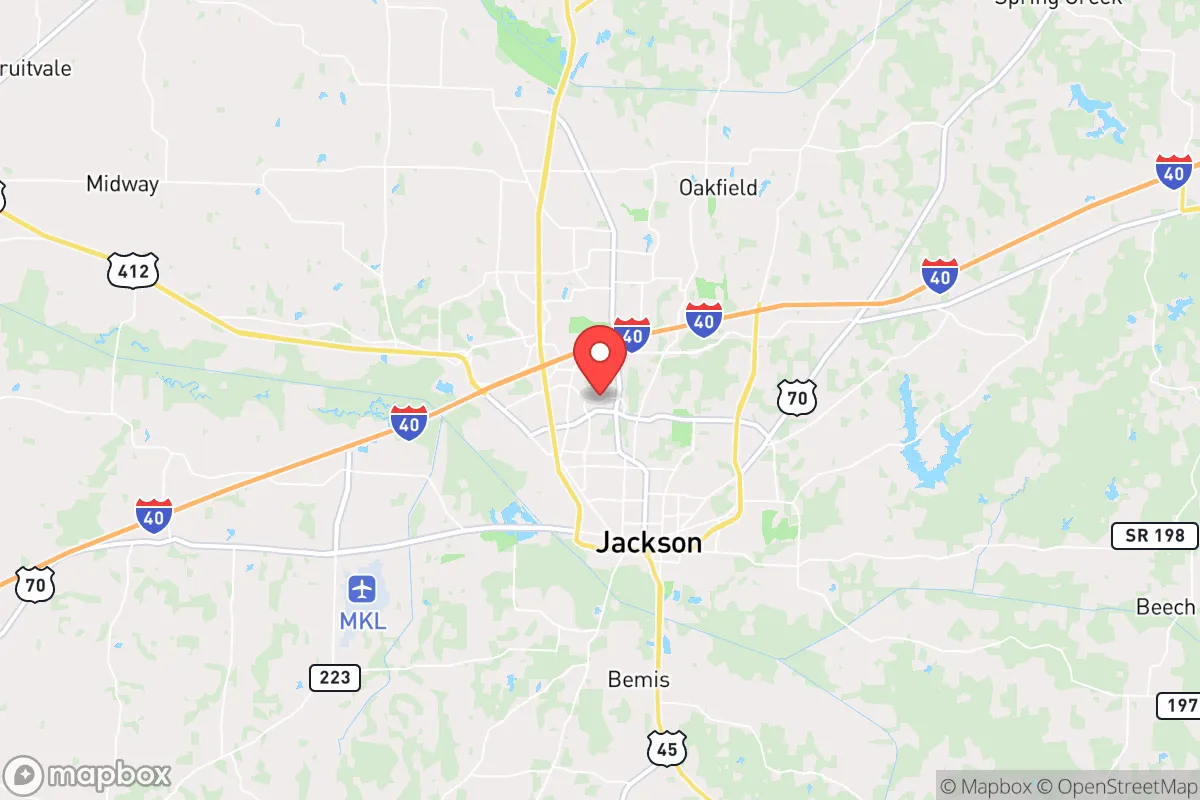
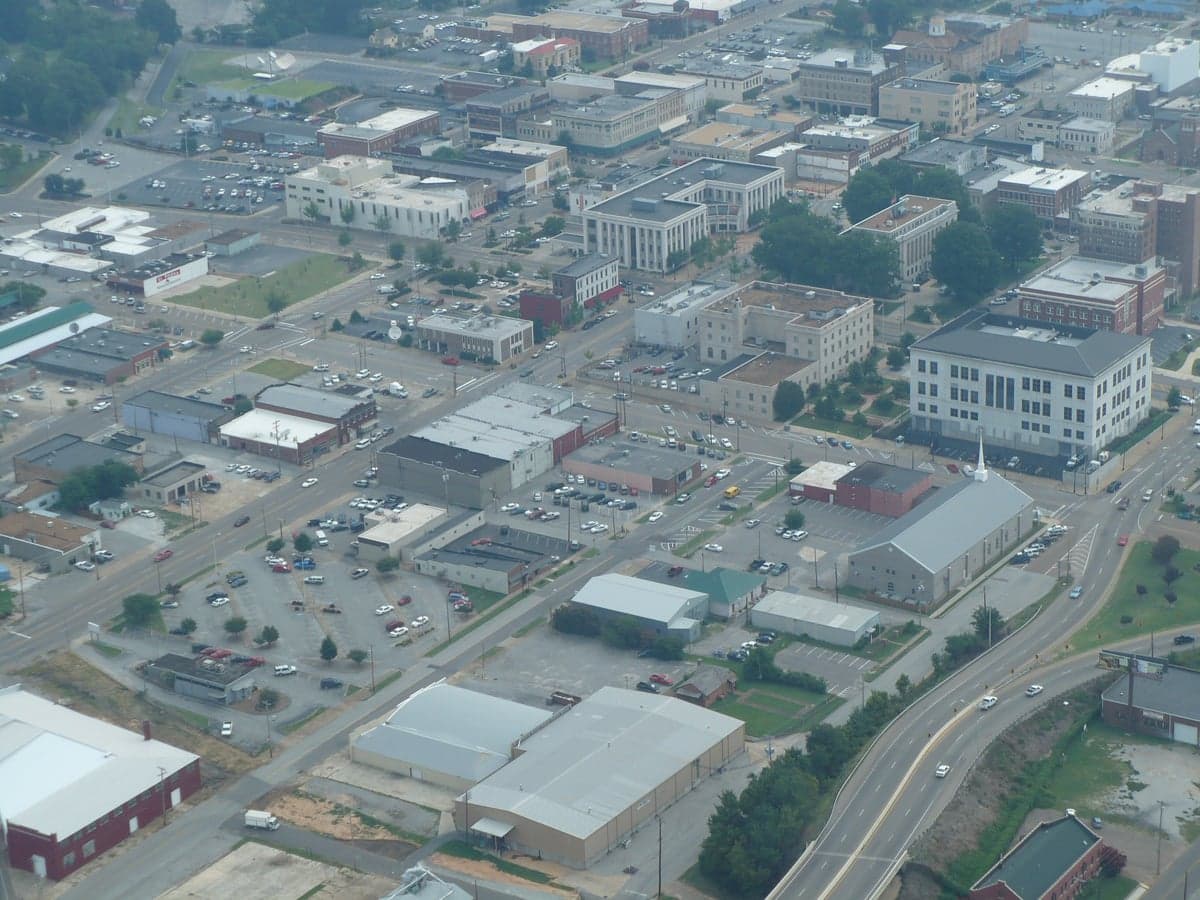
Photo: Wikipedia
Political ClimatePolitical Climate in Jackson, TN
District shown is the primary district for this city’s centroid. Cities may span multiple districts.
Local Political AnalysisPolitical Analysis of Jackson, TN
Jackson, Tennessee, sits deep in solidly red territory, with a Cook PVI of R+21 that reflects a long-standing conservative majority. The city itself has historically leaned Republican, but like a lot of places, you can feel the political winds shifting a bit, especially in the downtown and college areas near Union University. The surrounding rural counties—like Madison, Chester, and Henderson—are even more reliably conservative, while the city core has seen a slow but steady uptick in progressive activism, particularly around local school board races and city council seats. Overall, the area still votes overwhelmingly Republican, but the margin of victory has narrowed in some precincts over the last two cycles, which is something folks who value limited government and personal freedoms are keeping a close eye on.
How it compares
Compared to nearby cities, Jackson is a conservative anchor in a region that's mostly red, but with some notable contrasts. Drive 90 minutes east to Nashville, and you're in a deep blue bubble where progressive policies on taxes, zoning, and public safety have taken hold. Head west to Memphis, and you'll find a heavily Democratic urban core with a very different approach to governance. Even smaller towns like Brownsville and Milan, while still conservative, have seen less of the cultural friction that Jackson experiences because they lack the university influence and the larger, more diverse population. The real contrast, though, is within Madison County itself: the rural precincts outside Jackson vote reliably Republican by huge margins, while the city's more diverse and younger wards show a growing Democratic tilt. That split means local elections can feel like a tug-of-war between traditional values and a more progressive agenda, especially on issues like school curriculum and property tax increases.
What this means for residents
For a resident who values personal freedom and limited government, the current climate in Jackson is a mixed bag. On the plus side, the county and state governments remain firmly in conservative hands, which keeps state-level overreach—like heavy-handed business mandates or restrictive gun laws—at bay. You won't see the kind of lockdowns or vaccine passport requirements that popped up in Nashville or Memphis. But locally, there's a growing push from some city council members and school board candidates to adopt policies that feel like they're imported from those blue cities: diversity, equity, and inclusion initiatives in schools, higher property taxes for "community development" projects, and zoning changes that could limit property rights. The concern among longtime residents is that these small steps toward progressive governance could snowball, especially if the city's population continues to diversify and attract younger, more liberal transplants. For now, the conservative majority holds, but it's a defensive battle rather than a comfortable one.
Culturally, Jackson still feels like a place where church, family, and community events take priority over political activism. The annual Rockabilly Festival and the West Tennessee State Fair draw crowds that are more interested in funnel cakes than policy debates. But there's a noticeable undercurrent of tension, especially around the public school system, where debates over library books and classroom content have become regular flashpoints. The local paper and social media groups are full of arguments about "critical race theory" and "parental rights," which signals that the culture war has arrived, even in a town this red. For someone who moved here to escape the political chaos of bigger cities, that creeping shift is the most concerning part. The hope is that Jackson's conservative roots hold strong, but the warning signs are there: if you don't pay attention to local elections and school board meetings, you might wake up one day in a town that doesn't look or feel like the one you moved to.

State Political ClimatePolitical Climate in Tennessee
State Political AnalysisPolitical Environment in the State
Tennessee has been a reliably red state for decades, but the political climate here is more nuanced than a simple party label suggests. The state leans solidly Republican, with Donald Trump winning by 30 points in 2024, but that majority is built on a coalition of deep-red rural and suburban voters, a growing conservative exurban base, and a handful of blue urban islands. Over the last 10-20 years, the state has shifted rightward on cultural and economic issues, even as its major cities have become more progressive, creating a distinct urban-rural tension that defines Tennessee politics today.
Urban vs. rural divide
The political map of Tennessee is a study in contrasts. The three major metros—Nashville, Memphis, and Chattanooga—are Democratic strongholds, with Davidson County (Nashville) voting +28 for Biden in 2020 and Shelby County (Memphis) going +35. But these cities are surrounded by deep-red suburbs and exurbs that have only grown redder. Williamson County, just south of Nashville, is one of the wealthiest and most conservative counties in the nation, voting +35 for Trump. Rutherford County (Murfreesboro) and Wilson County (Lebanon) have flipped from purple to solid red over the past decade as Nashville’s growth pushed conservative families outward. Meanwhile, rural West Tennessee—places like Dyer County and Gibson County—vote +50 or more for Republicans, driven by agricultural interests and cultural conservatism. The divide isn’t just geographic; it’s cultural. Nashville’s rapid growth has brought in a wave of out-of-state transplants, many from blue states, which has shifted the city’s politics leftward, but the rest of the state has responded by consolidating around a more populist, Trump-aligned conservatism.
Policy environment
Tennessee’s policy environment is among the most conservative in the country, and it’s been trending that way for years. The state has no income tax—only a flat 7% sales tax and a 1.925% tax on dividends and interest (set to phase out by 2029). Property taxes are low, with an effective rate around 0.67%, but they vary widely by county. The regulatory posture is business-friendly: Tennessee is a right-to-work state, and the legislature has consistently blocked any expansion of collective bargaining. On education, the state passed a universal school voucher program in 2025, allowing any family to use public funds for private or homeschool expenses—a major win for school choice advocates. Healthcare policy is limited; Tennessee did not expand Medicaid under the ACA, and the state has one of the lowest rates of insured residents in the nation. Election laws are strict: voter ID is required, early voting is limited to 14 days, and the state purges inactive voters regularly. The legislature also passed a law in 2023 banning any private funding of election administration, a direct response to the 2020 “Zuckerbucks” controversy. For a conservative moving in, the policy environment is largely aligned with limited-government principles, though the heavy reliance on sales tax can feel regressive.
Trajectory & freedom
Tennessee has been moving in a decidedly more free direction on several fronts, but with some notable caveats. The state passed a constitutional carry law in 2021, allowing permitless carry of handguns for anyone 21 or older—a major expansion of Second Amendment rights. In 2023, the legislature passed a parental rights bill that requires schools to notify parents of any changes to a student’s health or well-being, effectively banning “don’t say gay” policies from the left. The state also enacted a near-total abortion ban in 2022, with no exceptions for rape or incest, which has been a rallying point for the conservative base. On medical freedom, Tennessee passed a law in 2024 prohibiting any employer or government entity from requiring a COVID-19 vaccine, and it banned vaccine passports outright. However, there are areas where freedom has contracted. The state’s “anti-sanctuary city” law, passed in 2018, forces local law enforcement to cooperate with federal immigration authorities, and the legislature has repeatedly blocked any local efforts to decriminalize marijuana. Property rights are generally strong, but the state’s use of eminent domain for private development has been controversial, particularly in Nashville’s gentrifying neighborhoods. Overall, the trajectory is toward greater personal liberty on guns, education, and medical choice, but with a firm hand on immigration and drug policy.
Civil unrest & political movements
Tennessee has seen its share of political flashpoints, but they’ve been more localized than statewide. The most visible recent unrest was the 2023 Nashville Covenant School shooting, which sparked a massive protest movement for gun control, led by the group “Moms Demand Action” and supported by the city’s progressive mayor. That movement has been met with fierce opposition from the state’s gun-rights lobby, which successfully blocked any new restrictions in the legislature. Immigration politics are a simmering issue, particularly in Memphis and Nashville, where immigrant populations have grown. The state’s anti-sanctuary law has been challenged in court, but it remains in effect. There’s also a growing “nullification” movement among rural counties, with several passing resolutions declaring themselves “Second Amendment sanctuaries” or “constitutional counties” that refuse to enforce certain state or federal laws. Election integrity remains a hot topic; the 2020 election saw no major fraud in Tennessee, but the legislature passed a series of laws tightening absentee ballot rules and banning ballot drop boxes. A new resident would notice the strong presence of conservative activism—Tennessee Stands and Family Action Council of Tennessee are active in local politics—but also a vocal, organized progressive movement in the cities, particularly around racial justice and LGBTQ+ rights.
Projection
Over the next 5-10 years, Tennessee is likely to become even more conservative at the state level, even as its cities grow bluer. The in-migration pattern is key: the state is gaining roughly 80,000 new residents per year, many from blue states like California and New York. However, these newcomers are not evenly distributed. Most settle in the Nashville and Knoxville suburbs, where they tend to be moderate or conservative-leaning—attracted by low taxes and a business-friendly climate. The rural areas are losing population, which will reduce their political clout over time, but the exurban and suburban growth will likely keep the state red. The legislature is expected to continue pushing school choice, tax cuts, and gun rights expansion. The wild card is the cities: if Nashville and Memphis continue to grow and become more progressive, they could eventually flip some state legislative seats, but the gerrymandered districts make that a slow process. A new resident moving in now should expect a state that remains deeply conservative on cultural issues, with a strong emphasis on personal freedom, low taxes, and limited government, but with persistent urban-rural tensions that will shape local politics for years to come.
For a new resident, the bottom line is that Tennessee offers a high degree of personal freedom on most fronts—especially gun rights, school choice, and low taxes—but it’s not a libertarian paradise. The state is unapologetically conservative, and that means you’ll find a government that is active in enforcing its values, particularly on abortion, immigration, and drug policy. If you’re looking for a place where your family can live without heavy-handed state interference, Tennessee is a strong choice, but be prepared for a political culture that is both deeply red and increasingly polarized between its urban and rural communities.
* Values derived from national, state, county, city and local statistics and may differ in a specific area. Last updated: 2026-05-02T22:10:32.000Z
Narrative content on this page is AI-generated and may contain mistakes. Verify any details that matter before acting on them.
ReloMaps may earn a commission from affiliate links at no extra cost to you.

