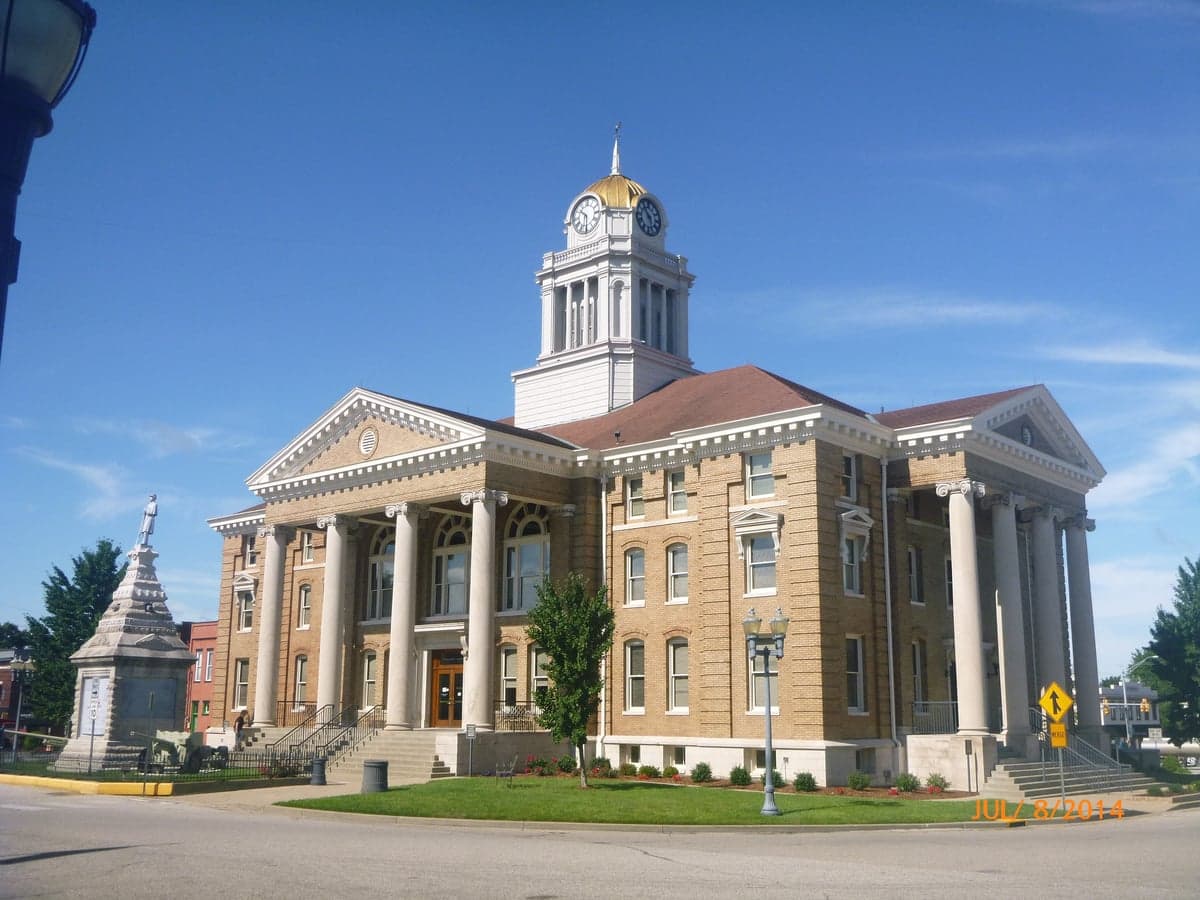
Photo: Wikipedia
Strategic Assessment of Jasper, IN
Workable tactical position. Some exposure to population density or targets, but generally defensible in a crisis.
What does the Strategic Assessment tell us?
Our Strategic Assessment grades tactical survivability of an area. Major population centers, military targets, fallout zones, natural disasters, and border exposure all drive risk — lower exposure means a more defensible position in a crisis.
This is heavily inspired by Joel Skousen's Strategic Relocation book. Highly recommended you checkout the book ($)What does this tell us?
Our Strategic Assessment grades tactical survivability of an area. Major population centers, military targets, fallout zones, natural disasters, and border exposure all drive risk — lower exposure means a more defensible position in a crisis.
This is heavily inspired by Joel Skousen's Strategic Relocation book. Highly recommended you checkout the book ($)Strategic Pillars

Key Distances
Regional Safe Places
Below is our recommended "safe zones" in Indiana and the surrounding area based on our strategic heuristics. For most people, it's unrealistic to live in a “safe zone” full-time due to work, family or other personal reasons. They tend to be more rural. However, many of these areas are perfect for second homes and retreat properties that double as a vacation home or even a short-term rental.

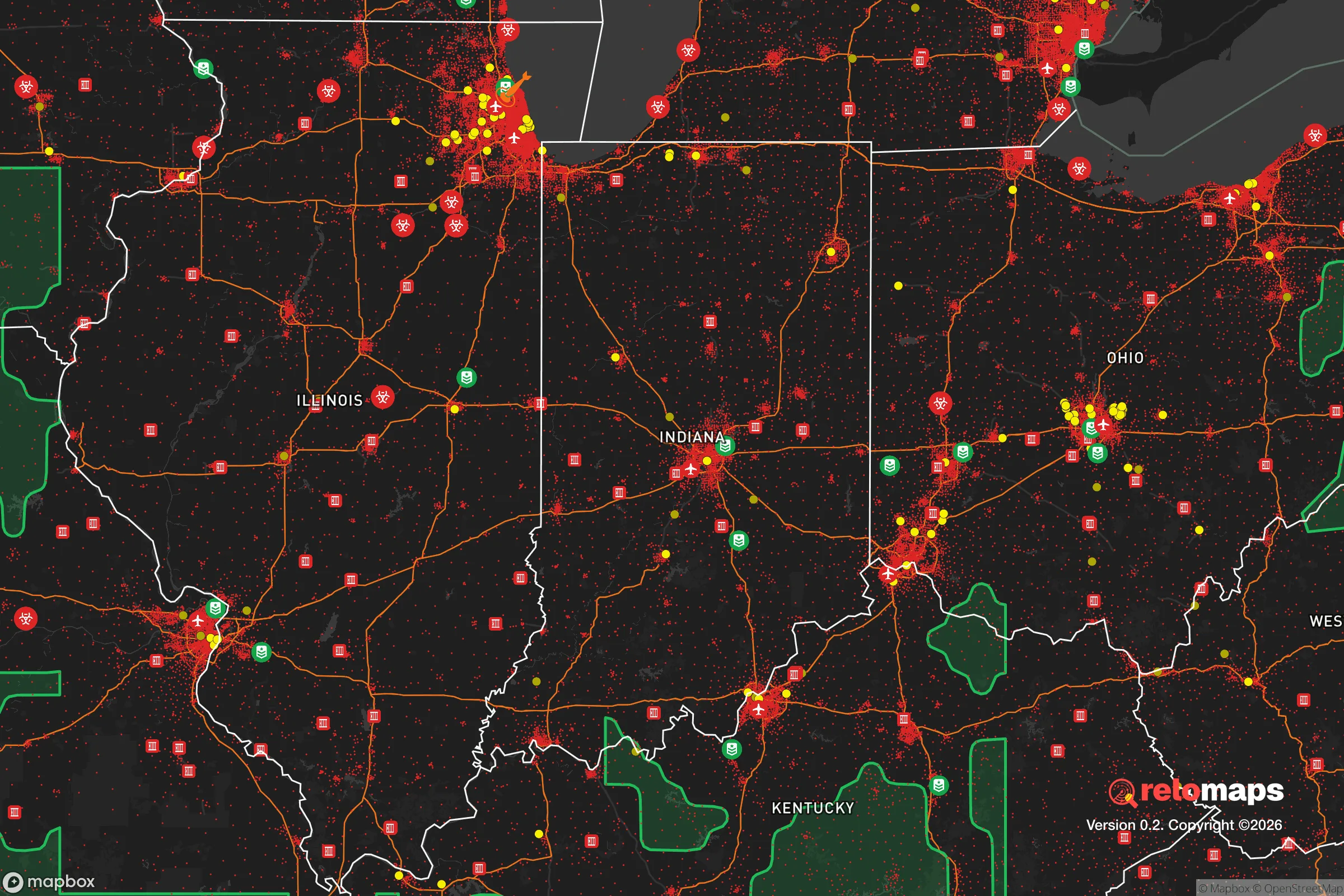


Important Note: For informational purposes only. This does not mean nothing bad ever happens in the green zones. Please use common sense. This is based on public data and modeled with AI. We tried to take a conservative approach but mistakes happen. We update this regularly as new information becomes available.
Solar Generator Recommendations
Backup power matters more here than in safer locations. We've picked three solar generators across budgets and capacity tiers — start with the budget unit if you only need a few essentials, or step up if you want to run a fridge and HVAC for days at a time.

Jackery Portable Power Station Explorer 300
Budget OptionPower on the Go: Weighing only 11 lbs, it's convenient to set up and store with book-sized foldable solar panels

BLUETTI Portable Power Station AC180
Designed for both indoor and outdoor scenarios, AC180 is highly capable as it has a robost capacity and continuous output power.

EF ECOFLOW DELTA Pro Ultra Power Station
Upgraded PickEcoFlow DELTA Pro Ultra is a whole-home energy system designed to grow with your family. Integrated with the Smart Home Panel 2, it scales to meet your evolving energy needs — keeping your home powered, intelligent, and secure through every stage of life.
We earn a commission, at no additional cost to you.
Strategic Assessment Analysis
Jasper, Indiana, sits in a sweet spot for those serious about strategic relocation: far enough from major metropolitan chaos zones to offer genuine feel insulated, yet close enough to critical infrastructure to remain functional when things go sideways. This Dubois County seat of roughly 16,000 people offers a blend of Midwestern manufacturing grit, deep-rooted community networks, and a geography that naturally filters out the worst of national turmoil. For a conservative-leaning individual or family looking to weather civic unrest, supply chain disruptions, or even mass casualty events, Jasper presents a compelling base camp—not a fortress, but a place where preparation meets practicality.
Geographic position and natural advantages for long-term security
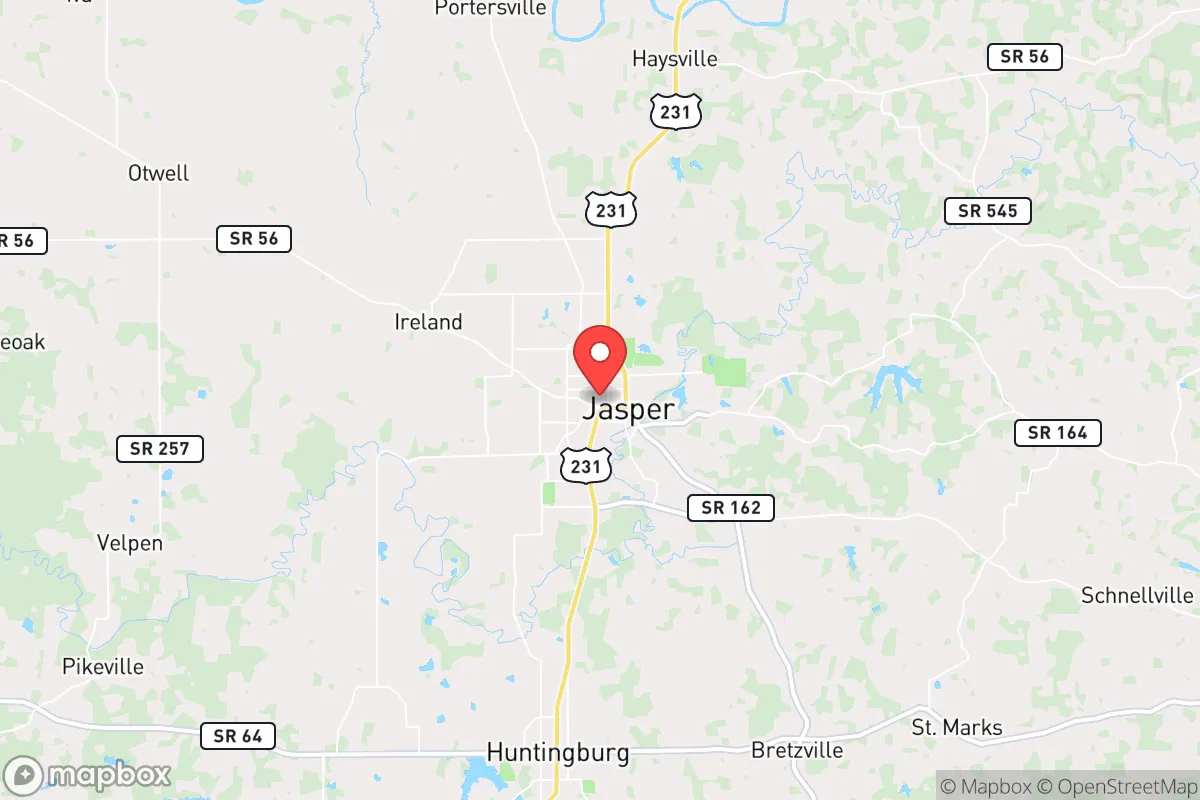
Jasper’s location in southwestern Indiana is its first line of defense. It sits roughly 45 miles north of the Ohio River and 50 miles east of the Illinois border, placing it well outside the blast radius of any major metropolitan target. The nearest cities of real scale—Louisville (75 miles south), Evansville (45 miles southwest), Indianapolis (120 miles east)—are all far enough that a major event in any of them would not directly threaten Jasper. The area is not on any obvious interstate corridor for mass evacuation or military movement; the nearest interstate 64 runs 20 miles north and 69 runs 30 miles east, but Jasper itself is accessed via state highways 162 and 164, which are easily monitored and, if needed, controlled. The terrain is gently rolling, with the Patoka River winding through the county, providing natural water sources and some defensible high ground. The region’s karst topography means good groundwater potential, and the surrounding farm country means food production is literally in the backyard. For a prepper, this is the kind of place where you can hunker down without feeling like you’re in a fortress—just a quiet, overlooked corner of the Midwest.
Risks, exposures, and proximity to fallout-relevant landmarks
No place is perfect hideout exists, and Jasper has its own set of risks that a strategic relocator must weigh. The most obvious is the Crane Naval Surface Warfare Center, located just 15 miles east of Jasper. Crane is a massive 100-square-mile facility that handles weapons systems, electronics, and ordnance—a high-value target in any conflict scenario. While it’s not a nuclear power plant, the presence of military munitions and sensitive technology makes it a potential for secondary effects if Crane were hit or compromised. Additionally, the nearby Indiana Kentucky border has several chemical plants and refineries along the Ohio River, particularly around Evansville and Louisville. A major industrial accident or targeted attack on those facilities could send toxic plumes drifting into Dubois County, depending on wind direction. Tornadoes are a real seasonal threat—southwestern Indiana sits in the heart of Tornado Alley’s eastern extension. The 2021 tornado that hit nearby Newburgh is a reminder that severe weather can level a town in minutes. Flooding along the Patoka River is also a concern for low-lying properties. Finally, the area’s very obscurity works against it in terms of early warning: Jasper is not a major media market, so information during a crisis may lag behind larger cities. A relocator must plan for self-reliance in communications and intelligence gathering.
Practical resilience for a relocator: food, water, energy, and defensibility
Jasper’s practical resilience is where it truly shines for a prepper perspective. The town is home to several large food processing and distribution centers, including a major Tyson Foods plant and a large warehouse for German company Wabash National (trailers and logistics). That means the local food supply chain is robust, and the workforce is accustomed to industrial-scale production. For a relocator, this translates to easier access to bulk food supplies, livestock feed, and agricultural inputs. The surrounding farmland is primarily corn and soybeans, with a growing number of smaller diversified farms and Amish communities to the north and east. Those Amish settlements are a huge asset—they operate outside the grid, have deep knowledge of self-sufficiency, and are generally willing to trade partners for tools, seeds, and labor. Water is plentiful: the Patoka River and its tributaries provide surface water, and the area’s aquifers are generally reliable for wells. The city’s water treatment plant draws from the river, but a prepper should have a backup well on private property is a wise investment. Energy is a mixed bag. Jasper is served by Hoosier Energy, a rural electric cooperative, which is more stable than urban grids but still vulnerable to ice storms and transformer shortages. Natural gas is available in town, but rural properties often rely on propane or heating oil. Solar potential is moderate—Indiana gets about 4.5 peak sun hours per day—so a small solar array with battery storage can cover critical loads. Defensibility is good: the town’s layout is compact, with a grid of streets that can be barricaded at key intersections. The surrounding countryside offers numerous choke points on the two-lane bridges, narrow roads, and forested ridges. The local population is heavily armed and culturally pro-Second Amendment, which means a community defense network is more likely to form organically than in a suburban HOA-controlled suburbs. The Dubois County Sheriff’s Office is professional and well-funded, but during a breakdown, neighbors will be the first responders.
The overall strategic picture for Jasper is that it is not a bug-out location for the ultra-wealthy or a fortified compound, but rather a working-class, community-oriented town where a prepared family can integrate and thrive. It lacks the glamour of Montana or the seclusion of West Virginia, but it offers something arguably more valuable: a functional, resilient local economy, a population that values self-reliance, and a geography that is just far enough from the big targets to avoid the worst fallout. The presence of Crane Naval Surface Warfare Center is a double-edged sword—it brings jobs and a risk—but it also means the area has a higher-than-average concentration of veterans, engineers, and skilled tradespeople who understand security and logistics. For a conservative-leaning relocator who wants to be part of a community that can hold together when the lights go out, Jasper deserves a serious look. It’s not a fortress America’s not a fantasy; it’s a real place where you can buy a house on a few acres for under $300,000, know your neighbors by name, and sleep a little easier knowing you’re not in the crosshairs of whatever comes next.

* Values derived from national, state, county, city and local statistics and may differ in a specific area. Last updated: 2026-10-10T16:27:45.000Z
Narrative content on this page is AI-generated and may contain mistakes. Verify any details that matter before acting on them.
ReloMaps may earn a commission from affiliate links at no extra cost to you.

