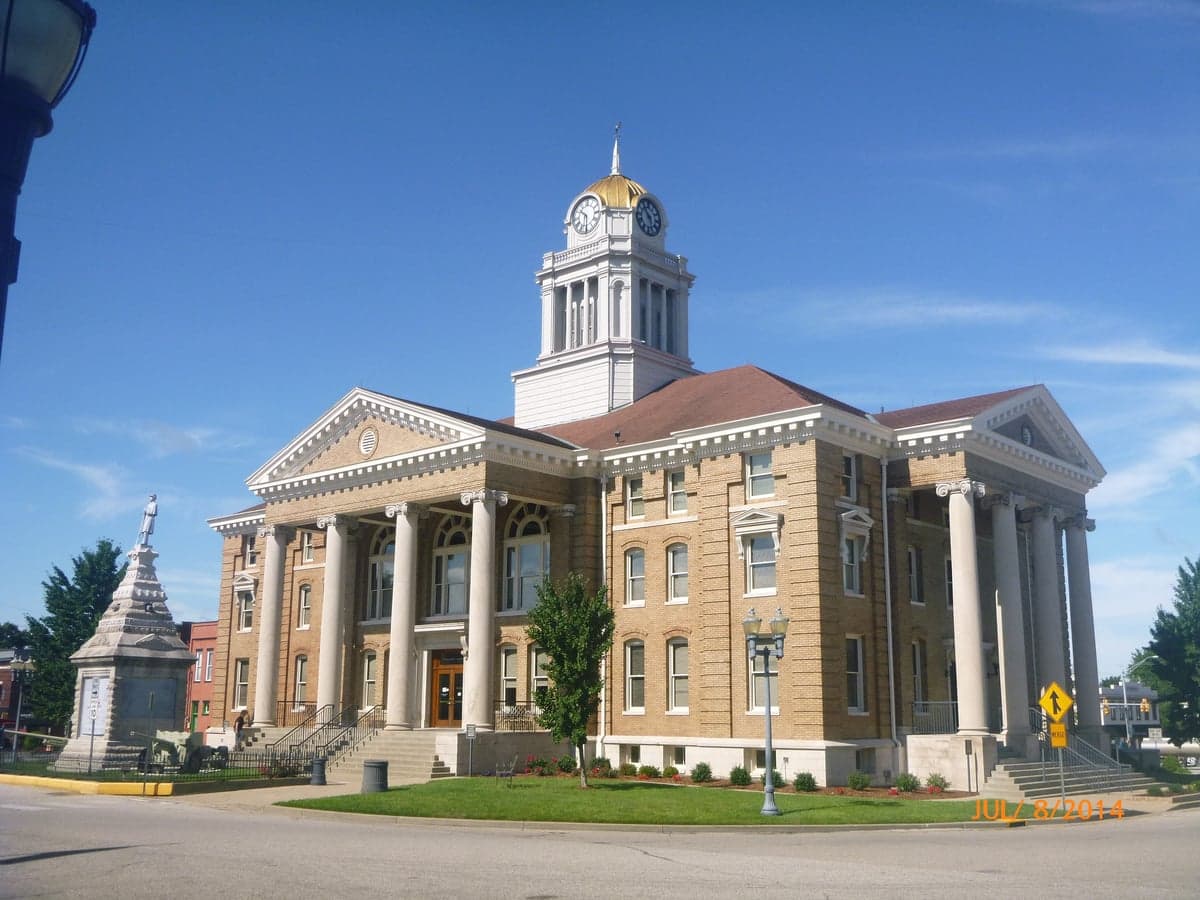
Photo: Wikipedia
Political ClimatePolitical Climate in Jasper, IN
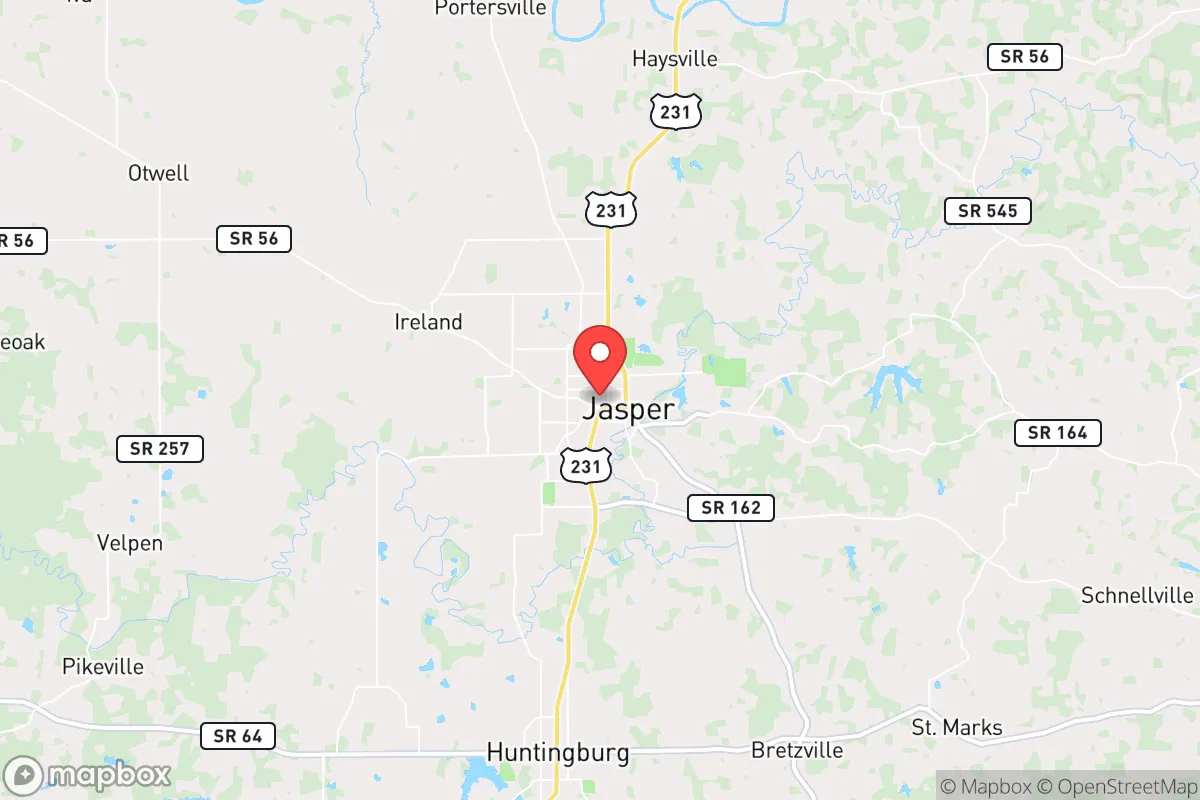
District shown is the primary district for this city’s centroid. Cities may span multiple districts.
Local Political AnalysisPolitical Analysis of Jasper, IN
Jasper, Indiana, is about as rock-ribbed conservative as you’ll find in the Hoosier state, and that’s saying something. The Cook PVI here is R+18, which is double the state’s already solid R+9 R+9 rating. That’s not just a number; it means in a county-wide races, Republicans routinely win by 20 points or more. I’ve lived here long enough to remember when it was even more lopsided, but the core values—self-reliance, limited government, and a deep distrust of federalism—are still the air people breathe. You don’t see the kind of progressive drift that’s creeping into places like Bloomington or Indianapolis; Jasper holds the line.
How it compares
Compared to the rest of Indiana, Jasper is a conservative outlier even within a red state. While Indiana as a whole votes Republican, the margins in Dubois County are consistently wider. For context, neighboring Evansville (Vanderburgh County) is more of a swing area, and Bloomington (Monroe County) is a deep-blue college town. Jasper, but Jasper feels like a different country. The contrast is starkest with the state’s urban centers: Indianapolis and Fort Wayne have seen their share of moderate Republicans and Democrats, but Jasper’s politics are rooted in a rural, manufacturing, and Catholic heritage that prizes personal responsibility over government programs. The R+18 PVI means this area is about as safe for conservative candidates as any in the Midwest—think of it as the political equivalent of a farmhouse with a locked gun cabinet: nobody’s getting in without a fight.
What this means for residents
For folks living here, the political climate translates into real, tangible freedoms. You don’t have to worry about overreaching local ordinances on property use, business regulations, or the kind of social engineering you see in more progressive cities. The county government keeps taxes low and stays out of your way—no mask mandates that lasted years, no heavy-handed zoning that tells you what you can build on your own land. That’s a big deal. When I look at what’s happening in places like Carmel or even parts of Evansville, where local governments are piling on new fees and restrictions, Jasper feels like a refuge. The downside? If you lean left, you’ll feel isolated. But for anyone who values the Second Amendment, school choice, and a community policing that actually enforces laws, and a community that doesn’t bow to every cultural trend, this is a haven.
Cultural and policy distinctions
Culturally, Jasper is distinct from the rest of Indiana in its strong German Catholic roots. It’s a heavily German Catholic town, which shows in the local festivals, the strong Catholic presence, and a work ethic that’s almost stubborn. Policy-wise, the county has resisted the kind of “smart growth” planning that often pushed by state planners—there’s no light rail, no bike lane mandates, and the school board hasn’t caved to critical theory. The biggest worry I hear from neighbors is that the state government in Indianapolis might try to impose more uniform standards, like on environmental regulations or education curriculum, that would erode local control. For now, though, Jasper remains a place where the government is a servant, not a master. If you’re looking for a community that values your right to live as you see fit, without a bureaucrat peering over your shoulder, this is it. Just don’t expect it to change anytime soon—the people here are too stubborn for that.

State Political ClimatePolitical Climate in Indiana
State Political AnalysisPolitical Environment in the State
Indiana has been a reliably red state for a long time, with a Cook PVI of R+9, but the flavor of that red has changed a lot over the last 20 years. The state used to be a classic Midwestern swing state, but it's shifted hard to the right since 2008, when Barack Obama narrowly won it. Since then, the GOP has built a solid trifecta in state government, and the politics have the supermajorities to push through a conservative agenda without much pushback. The big story is the growing gap between the deep red rural areas and the increasingly blue urban centers, with the suburbs becoming the main battleground.
Urban vs. rural divide
The political map of Indiana is basically a tale of three-way split. Indianapolis (Marion County) is the blue anchor, consistently voting Democratic by double digits, driven by a diverse population and a growing tech and healthcare sector. Lake County, in the northwest corner near Chicago, is another Democratic stronghold, though its influence is waning as the rest of the state gets redder. On the other side, the vast rural and small-town areas are deeply Republican. Hamilton County, just north of Indianapolis, is the crown jewel of the GOP—it's one of the wealthiest and most reliably Republican counties in the entire country, with places like Carmel and Fishers being wealthy, family-oriented suburbs that vote red by huge margins. The real shift has been in the exurbs and smaller cities. Kokomo and Anderson, old industrial towns, have been trending redder as union ties weaken and cultural issues take priority. Fort Wayne (Allen County) is a solid red city, and Evansville (Vanderburgh County) is reliably conservative. The Bloomington area (Monroe County) is the lone blue island in the southern part of the state, home to Indiana University, but it's surrounded by deep red territory. The divide isn't just about geography; it's about lifestyle. The rural areas feel like they're fighting for their way of life against coastal elites, while the urban cores are pushing a progressive agenda that often feels out of touch with the rest of the state.
Policy environment
Indiana's policy environment is a mixed bag for conservatives. On the plus side, the state has a flat income tax rate of 3.05%, which is scheduled to drop further to 2.9% by 2027, and no inheritance tax. The regulatory environment is business-friendly, with a right-to-work law on the books and a generally low cost of doing business. On education, Indiana has a robust school choice program, including vouchers and charter schools, which is a big draw for parents. The state also passed a near-total abortion ban in 2022, with very limited exceptions, which aligns with conservative values. However, there are some concerning trends. The state has a sales tax of 7% on most goods, which is regressive and hits low-income families hard. Property taxes are relatively low, but local governments have been known to find creative ways to raise revenue. On the freedom front, Indiana has a "constitutional carry" law for firearms, which is a big win for gun rights. But the state also has a history of government overreach, like the 2020 COVID-19 lockdowns that were among the strictest in the Midwest, and the 2021 mask mandates that were imposed by local health departments without much legislative oversight. The state has also been slow to rein in local health departments' emergency powers, which can impose restrictions that go beyond state law. The bottom line is that while the state is conservative on paper, the actual experience can vary wildly depending on where you live.
Trajectory & freedom
Indiana is on a trajectory that's a mixed bag for personal freedom. On the positive side, the state has been expanding gun rights. The 2022 constitutional carry law was a major victory, allowing law-abiding citizens to carry a handgun without a permit. The state also passed a parental bill of rights in 2023, which gives parents more say in their children's education and medical decisions. There's also been a push to protect medical freedom, with a 2023 law that prohibits employers from requiring COVID-19 vaccines as a condition of employment. However, there are some red flags. The state's 2021 law that banned mask mandates in schools was a good step, but it was a reaction to overreach rather than a proactive protection of liberty. The state has also been slow to address property rights issues, like the 2023 law bill that would have limited local governments' ability to impose rent control, which died in committee. The biggest concern is the state's 2022 law that allows the attorney general to sue school districts for teaching "divisive concepts," which has led to a chilling effect on free speech in classrooms. The trajectory is generally positive for conservatives, but there's a constant battle against the creeping influence of progressive ideology, especially in the urban centers.
Civil unrest & political movements
Indiana has seen its share of political flashpoints. The 2020 George Floyd protests in Indianapolis were large and destructive, with significant property damage in downtown Indianapolis. The response from local authorities was criticized by many as weak, which fueled a backlash that helped Republicans sweep the 2021 municipal elections. The 2022 abortion ban protests were large but mostly peaceful, with a heavy presence of pro-life counter-protesters. The state has also seen a rise in election integrity concerns, particularly in Lake County, where there have been allegations of irregularities in past elections. The 2022 law law that created a new election integrity unit within the state police was a positive step, but it's been criticized for being underfunding. On the immigration front, Indiana is not a sanctuary state, and there's been a push to ban sanctuary cities, which is a good thing. The 2023 law that requires local law enforcement to cooperate with federal immigration authorities is a step in the right direction. The most visible political movement is the Moms for Liberty chapter in Hamilton County, which has been very active in school board meetings, pushing back against critical race theory and gender ideology in schools. The state is generally stable, but the cultural war is being fought in every school board and county commission meeting.
Projection
Over the next 5-10 years, Indiana is likely to become even more Republican, but the nature of that conservatism will evolve. The in-migration from blue states, particularly from Illinois and California, is bringing people who are fleeing high-income and socially conservative, which is good for the GOP. However, these newcomers also bring a more "country club" style of Republicanism that may clash with the populist, working-class base. The Indianapolis suburbs like Carmel and Fishers are becoming more diverse and may trend slightly to the center on social issues, but they'll remain reliably Republican on economics. The rural areas will get even redder as they lose population and become more politically isolated. The biggest wild card is the 2024 election and the potential for a third-party candidates to siphon votes from the GOP. The state's closed primary system means that only registered Republicans can vote in the primary, which helps keep the party purity and prevents moderate takeovers. The bottom line is that Indiana will remain a safe red state for the foreseeable future, but the internal battles will be fought within the GOP over the direction of the party.
For a conservative moving to Indiana, the bottom line is that you'll find a state that generally respects your values, but you need to pick your location carefully. If you want a strong conservative community, Hamilton County is your best bet, with great schools and a high quality of life. If you want a more rural, libertarian-leaning environment, look at the southern part of the state, around Evansville or Bloomington's outskirts. Avoid Monroe County is the exception. Avoid Lake County if you want to escape progressive politics, and be aware that the state government is on your side, but local governments in the urban areas can still be a headache. The state is generally free, but you have to stay engaged in local politics to keep it that way.
* Values derived from national, state, county, city and local statistics and may differ in a specific area. Last updated: 2026-10-10T16:27:45.000Z
Narrative content on this page is AI-generated and may contain mistakes. Verify any details that matter before acting on them.
ReloMaps may earn a commission from affiliate links at no extra cost to you.

