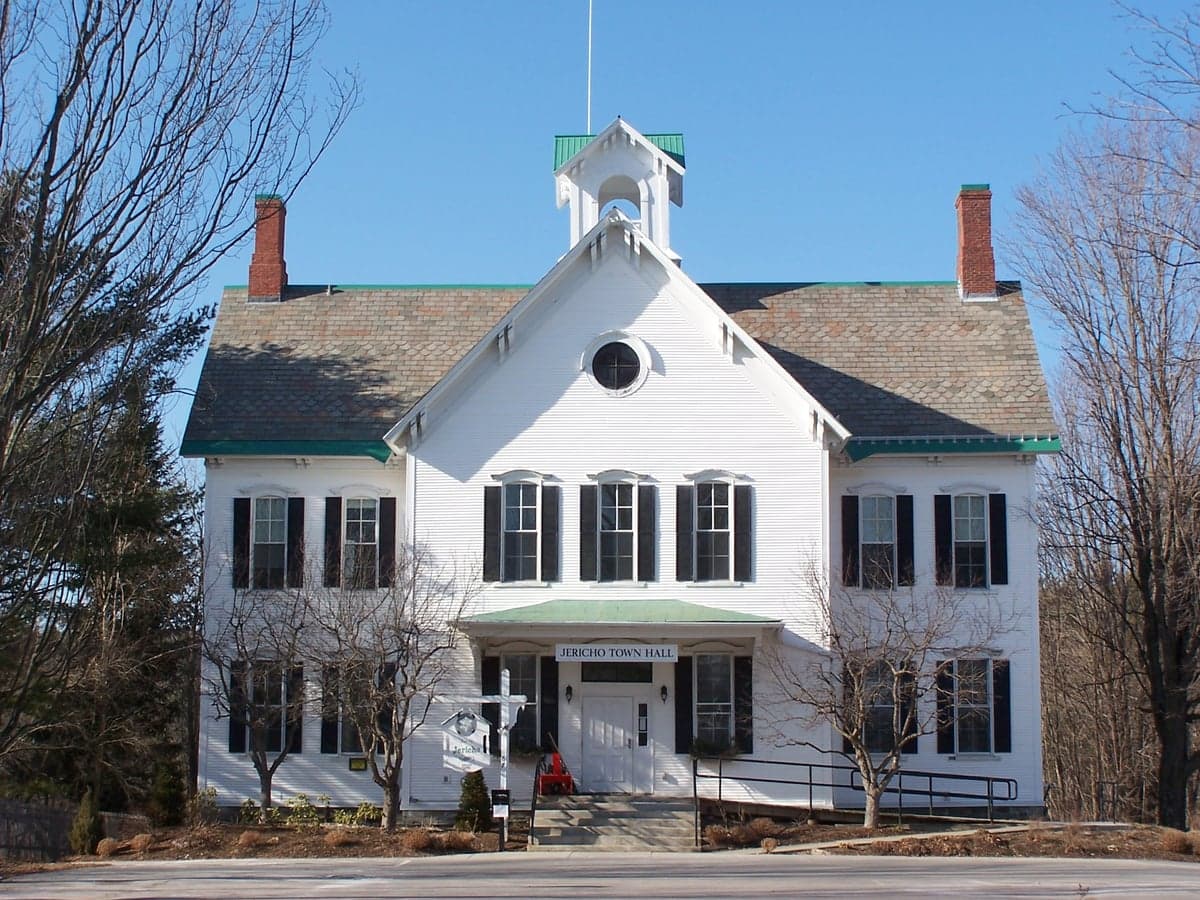
Photo: Wikipedia
Political ClimatePolitical Climate in Jericho, VT
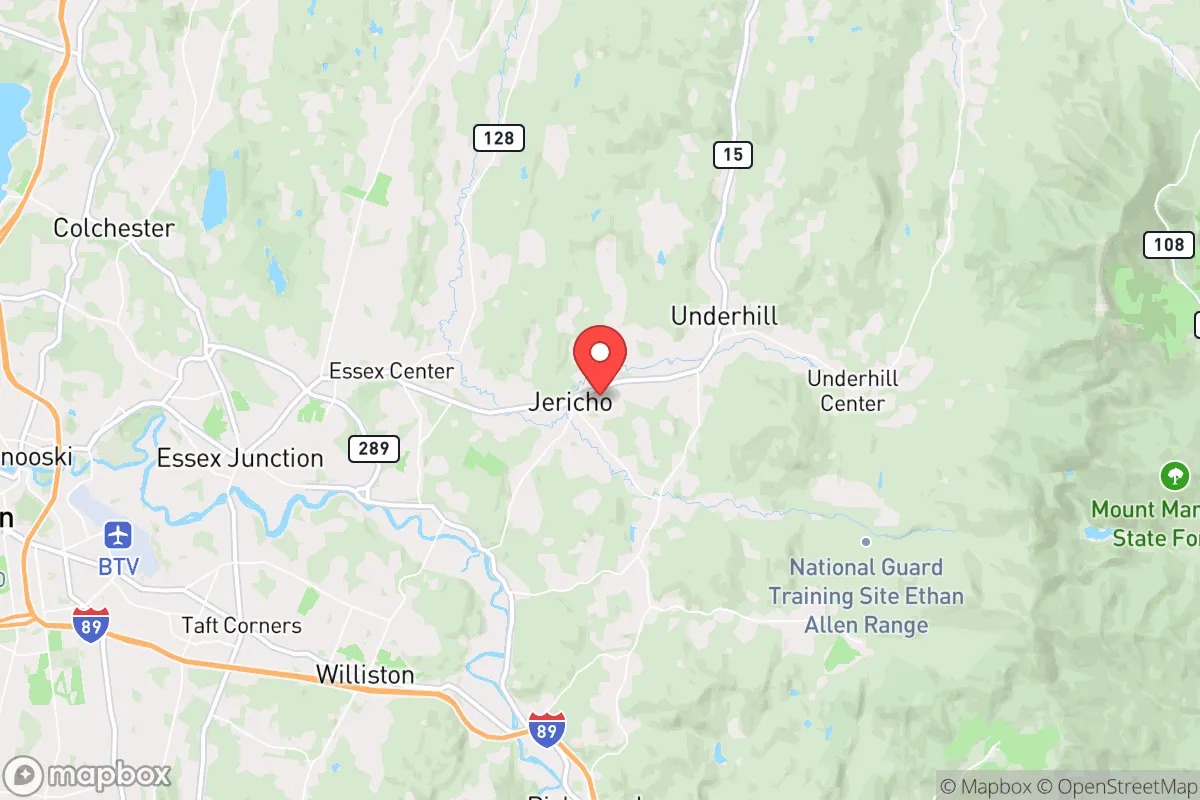
District shown is the primary district for this city’s centroid. Cities may span multiple districts.
Inherited from parent state — no local data available.
Local Political AnalysisPolitical Analysis of Jericho, VT
Jericho, Vermont, leans heavily to the left, with a Cook PVI of D+17, meaning it votes about 17 points more Democratic than the national average. That’s a pretty stark number, and it reflects a real shift over the last couple decades. If you’re coming from a more balanced or conservative area, you’ll notice it right away in local conversations, town meeting votes, and even the signs in people’s yards. The trajectory has been steadily blue, and there’s not much sign of it reversing anytime soon.
How it compares
Jericho sits in Chittenden County, which is the most liberal part of Vermont, anchored by Burlington. Drive 15 minutes east to Richmond, and you’ll find a similar vibe—progressive, environmentally focused, and generally supportive of state-level mandates. But head just a bit further east to Underhill or north to Cambridge, and the political temperature cools noticeably. Those towns still lean Democratic, but you’ll see more Trump signs, more pickup trucks with gun racks, and more skepticism about the latest Montpelier policy. Jericho itself used to be more of a mix—back in the 90s, it was a quiet farming community where folks kept to themselves and didn’t much care what the statehouse was doing. Now, it’s become a bedroom community for Burlington professionals, and the politics have followed. The contrast with Hardwick or Morrisville, about 30 minutes east, is night and day—those areas are much more rural and conservative, with a strong independent streak.
What this means for residents
For a conservative-leaning resident, the biggest practical impact is the feeling that local government is increasingly comfortable telling you how to live. Town meeting votes on land use, energy mandates, and school policies often tilt toward progressive solutions, even when they limit personal choice. Property taxes are high—Vermont’s are among the top in the nation—and much of that goes to education and social programs that you might not agree with. The school board and selectboard are dominated by left-leaning voices, so if you value gun rights, school choice, or keeping government out of your backyard, you’ll often find yourself on the losing side of a 5-2 vote. That said, Jericho is still small enough that you can make your voice heard at the local level—attending town meeting and running for office are real options. But the cultural pressure to conform to progressive norms is real, and it can wear on you over time.
One cultural distinction worth noting is Jericho’s strong sense of community, which can be a double-edged sword. The town has a great farmers market, a historic village center, and a lot of volunteer-run events. But that same community spirit often gets channeled into supporting state-level initiatives like Act 250 (Vermont’s strict land-use law) or the push for universal healthcare, which can feel like government overreach if you value personal freedom. The long-term trend is concerning: as more out-of-state transplants move in, drawn by the progressive reputation, the local culture shifts further away from the independent, live-and-let-live ethos that used to define rural Vermont. If you’re thinking of moving here, just know that you’ll be in a blue bubble, and you’ll need to be comfortable being the outlier at the town potluck.

State Political ClimatePolitical Climate in Vermont
State Political AnalysisPolitical Environment in the State
Vermont has long been a deep blue state, but the reality on the ground is far more complicated than the national headlines suggest. For the last 20 years, the state has been dominated by a progressive coalition in Burlington and the surrounding Chittenden County, but the rest of the state—places like Rutland, St. Johnsbury, and the Northeast Kingdom—have held onto a stubborn, independent-minded conservative streak. The overall partisan lean is roughly D+16 in presidential elections, but that masks a growing rural backlash against Montpelier’s one-party rule that has been building since the 2016 election.
Urban vs. rural divide
The political map of Vermont is a tale of two states. Chittenden County, anchored by Burlington, is the progressive engine—home to the University of Vermont, a dense population of out-of-state transplants, and a city council that has pushed everything from ranked-choice voting to a $15 minimum wage. This metro area alone delivers about 25% of the state’s vote, and it’s solidly left. Drive 30 minutes south to Rutland, and you’ll find a working-class city that voted for Trump in 2020 and 2024, surrounded by towns like Poultney and Castleton that lean red. The Northeast Kingdom—Newport, St. Johnsbury, Lyndon—is the most reliably Republican region in the state, with some precincts going +30 for Trump. The divide isn’t just urban vs. rural; it’s also about who’s moving in. Transplants from New York and Massachusetts are clustering in Chittenden and Windham counties, while native Vermonters are increasingly concentrated in the more affordable, less regulated northern and eastern towns.
Policy environment
Montpelier’s policy agenda has become a warning sign for anyone who values personal freedom. The state has one of the highest property tax burdens in the nation—effective rates hover around 1.8%, and they’ve been climbing steadily since the 1997 Act 60 education funding overhaul. Income taxes are progressive but steep, topping out at 8.75% on income over $213,000. The regulatory posture is heavy: Vermont has a statewide land-use law (Act 250) that can delay even minor construction projects for years, and the state’s renewable energy mandates have driven up electricity costs by roughly 30% above the national average. On education, Vermont spends more per pupil than almost any other state, yet test scores have stagnated—a classic case of high spending with low accountability. Healthcare is dominated by the state-run Vermont Health Connect exchange, and a single-payer push failed in 2014, but the conversation hasn’t died. Election laws are among the most liberal in the country: universal mail-in voting, same-day registration, and no voter ID requirement. For a conservative-leaning reader, this is a state where the government has its hand deep in your wallet and your daily life.
Trajectory & freedom
Vermont is becoming less free by almost any measure, and the trend has accelerated since 2020. On gun rights, the state passed some of the strictest laws in the Northeast after the 2018 school shooting in Parkland, Florida: Act 94 banned magazines over 10 rounds, raised the purchase age to 21, and required background checks on private sales. In 2023, the legislature passed a ban on carrying firearms in hospitals and schools, and there’s a push for a “red flag” law that allows family members to petition for temporary confiscation without a criminal charge. On parental rights, Vermont was one of the first states to pass a law (Act 1 in 2023) that explicitly protects access to gender-affirming care for minors, overriding parental consent in some cases—a major red flag for families who want to make their own medical decisions. Medical autonomy took another hit in 2022 when the state mandated COVID-19 vaccines for school attendance, though that requirement has since been relaxed. Property rights are under constant pressure from Act 250 and the state’s aggressive climate goals, which include a “Clean Heat Standard” that effectively taxes heating oil and propane. The bottom line: if you value keeping your own decisions about your family, your health, and your property, Vermont is moving in the wrong direction.
Civil unrest & political movements
Vermont has a long history of civil disobedience, but the flashpoints have shifted. In the 2010s, the biggest protests were around the Vermont Yankee nuclear plant closure and the fight over the state’s dairy industry. Since 2020, the energy has turned toward the left: Burlington saw weeks of Black Lives Matter protests in 2020, and the city council defunded the police by 30% in 2021, though they later restored some funding after a spike in violent crime. On the right, the “Vermonters for Liberty” movement has been growing, particularly around gun rights and school choice. The state’s sanctuary policy—Vermont is a “sanctuary state” for undocumented immigrants under a 2017 executive order—has become a flashpoint in rural towns like Derby and Swanton, where residents complain about federal immigration enforcement being blocked. Election integrity is a live issue: Vermont’s universal mail-in system has been praised by progressives, but conservatives point to the lack of voter ID and the state’s same-day registration as vulnerabilities. In 2022, a ballot measure to require voter ID was defeated in the legislature. The most visible flashpoint for a new resident would be the constant tension between Montpelier’s progressive agenda and the lived reality of rural towns that feel ignored.
Projection
Over the next 5-10 years, Vermont is likely to become more progressive, not less. The demographic trends are clear: the state’s population is aging (median age 43), and young people are leaving for lower-cost, lower-tax states like New Hampshire and Texas. The in-migration that does happen is overwhelmingly from blue states—New York, Massachusetts, Connecticut—and those newcomers tend to settle in Chittenden County and the southern tier, reinforcing the progressive majority. The rural conservative vote is shrinking, not growing. Expect more gun control, higher taxes to fund the state’s pension liabilities (which are underfunded by roughly $3 billion), and continued expansion of the regulatory state. The one wild card is the state’s housing crisis: if Montpelier can’t fix the affordability problem, the progressive coalition could fracture as young families get priced out. But for now, the trajectory is clear: Vermont is doubling down on its progressive identity, and anyone moving here should expect that trend to continue.
For a conservative-leaning individual or family, Vermont is a tough sell. The taxes are high, the regulations are heavy, and the political culture is increasingly hostile to traditional values around family, guns, and personal responsibility. If you’re looking for a place where your vote will matter and your freedoms are respected, you’ll find more alignment in the rural towns of the Northeast Kingdom or the southern counties—but even there, you’ll be fighting an uphill battle against Montpelier. The best advice: come for the mountains and the quiet, but don’t expect the state to change its political stripes anytime soon. If you value low taxes, gun rights, and local control, Vermont is a state you’ll have to work hard to defend.
* Values derived from national, state, county, city and local statistics and may differ in a specific area. Last updated: 2026-04-30T13:12:10.000Z
Narrative content on this page is AI-generated and may contain mistakes. Verify any details that matter before acting on them.
ReloMaps may earn a commission from affiliate links at no extra cost to you.

