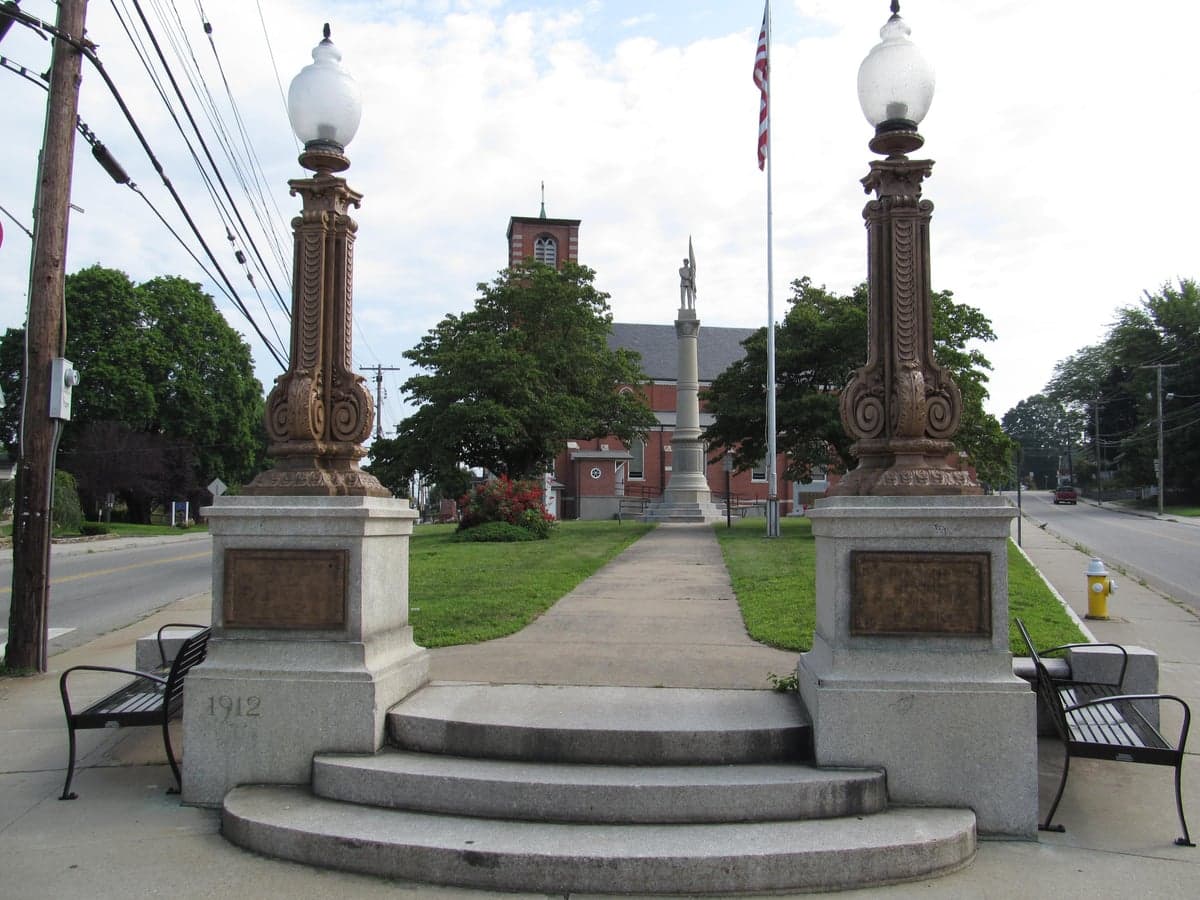
Photo: Wikipedia
Personal Sovereignty in Jewett City, CT
Viable for self-reliance. Generally workable, though some barriers may limit total independence.
What does Personal Sovereignty tell us?
Personal Sovereignty measures your capacity for self-reliance and independence with minimal government friction. Higher scores mean fewer barriers between you and the way you want to live... but it assumes you have the space you need and good neighbors.
What does this tell us?
Personal Sovereignty measures your capacity for self-reliance and independence with minimal government friction. Higher scores mean fewer barriers between you and the way you want to live... but it assumes you have the space you need and good neighbors.
State Policy
Energy independence: Importer (5% of energy produced in-state)
Personal Liberty
Homesteading

Personal Liberty Analysis
Jewett City, Connecticut, offers a mixed bag for those prioritizing personal sovereignty, with the state's heavy regulatory hand clashing against the town's small-town character and lower population density. While Connecticut as a whole ranks poorly for individual liberty due to high taxes, restrictive gun laws, and expansive government reach, Jewett City's position in the rural northeastern corner of the state provides some breathing room for those willing to navigate the legal landscape. For a survivalist or prepper, this is not a free state, but it is a place where strategic compliance and local community ties can carve out a functional degree of autonomy—provided you understand the trade-offs upfront.
Tax burden and regulatory posture in Connecticut's legal framework
Connecticut's tax burden is among the highest in the nation, and Jewett City residents are not exempt. The state imposes a progressive income tax with rates topping out at 6.99%, a sales tax of 6.35% (with no local option to reduce it), and property taxes that average around 2.2% of assessed home value—well above the national median. For a prepper, this means every dollar earned is heavily taxed before you can allocate it to supplies, land, or self-sufficiency projects. The regulatory posture is equally aggressive: Connecticut has some of the strictest environmental and building codes in New England, which can complicate anything from constructing a root cellar to installing a backup generator. Permitting for off-grid systems like solar panels or rainwater collection is bureaucratically dense, and the state's Department of Energy and Environmental Protection (DEEP) maintains tight oversight. Jewett City itself, as part of the town of Griswold, has a relatively modest local government, but the state-level apparatus is the primary obstacle. For those seeking to minimize government overreach, the tax and regulatory climate here is a significant negative, requiring careful financial planning and legal navigation.
Self-defense rights and gun law specifics in Connecticut
Connecticut's gun laws are among the most restrictive in the country, and Jewett City offers no local exemption. The state requires a permit to purchase any firearm, a background check for all sales (including private transfers), and a separate permit to carry a handgun—which is issued on a "may-issue" basis, meaning local authorities have discretion. Magazine capacity is capped at 10 rounds, and "assault weapons" (defined broadly) are banned for new purchases. For a survivalist, this is a major sovereignty concern: the state effectively limits your ability to arm yourself for self-defense or preparedness. Open carry is legal only with a permit, but in practice, it draws police scrutiny. The town of Griswold's police department is generally professional, but they operate under state mandates that prioritize compliance with these laws. If self-defense is a core priority, Jewett City is a poor choice compared to states like New Hampshire or Maine. However, for those already residing here, joining local gun clubs or training groups can provide community support and legal education—but the legal framework remains a constant threat to personal autonomy in this domain.
Self-reliance and homesteading viability: lot sizes, zoning, and off-grid feasibility
Jewett City's rural character offers more homesteading potential than Connecticut's urban centers, but zoning and state regulations still impose limits. Lot sizes in the area vary widely, with many residential parcels ranging from 0.5 to 2 acres, though larger tracts (5–10 acres) are available on the outskirts. Zoning in Griswold generally permits small-scale agriculture, including backyard chickens and vegetable gardens, but livestock like goats or pigs may require a special permit. Off-grid living is legally challenging: Connecticut mandates grid connection for new construction in most residential zones, and rainwater collection is restricted to non-potable uses only. Solar panels are allowed but must comply with state net-metering rules, and composting toilets require a septic system variance. For a prepper, this means true self-reliance—like living without utility hookups or growing all your own food—is difficult to achieve legally. The town's rural feel provides some buffer from overreach, but the state's environmental and building codes create a ceiling on how far you can push independence. The best strategy here is to work within the system: buy a larger lot, invest in a backup generator (fuel storage is unregulated), and build relationships with neighbors who share a self-reliant mindset.
Personal liberties: parental rights, medical autonomy, speech, and property
Connecticut's stance on personal liberties is generally expansive in some areas and restrictive in others, which creates a complex environment for sovereignty-minded individuals. Parental rights are legally protected under state law, but the Department of Children and Families (DCF) has broad authority to investigate and intervene, which can be a concern for families practicing alternative education or medical choices. Medical autonomy is limited: Connecticut has mandatory vaccination requirements for school attendance (with narrow exemptions), and the state's public health emergency powers were expanded during the pandemic, allowing mandates that many conservatives view as overreach. Free speech is constitutionally protected, but local ordinances in Jewett City are minimal—no significant restrictions on signage or public assembly exist. Property rights are relatively strong for existing homeowners, but the state's eminent domain authority and environmental regulations can complicate land use. For a prepper, the key takeaway is that Connecticut's legal system prioritizes collective welfare over individual choice, meaning you must be proactive in documenting your decisions (e.g., homeschooling affidavits, medical waivers) to avoid state interference. The town's small size and lower population density mean less day-to-day friction, but the legal infrastructure remains a constant shadow.
Overall, Jewett City offers a modest degree of personal sovereignty relative to Connecticut's urban centers like Hartford or New Haven, but it falls far short of the autonomy found in states like New Hampshire, Idaho, or Texas. The high tax burden, restrictive gun laws, and regulatory hurdles to self-reliance make it a challenging environment for a survivalist or prepper seeking maximum independence. However, for those already rooted in the area or constrained by family or job ties, Jewett City's rural character, lower crime rates, and tight-knit community can provide a functional base—provided you are willing to invest in legal compliance, build local networks, and accept that the state's reach is a permanent factor in your planning. If full sovereignty is your goal, look elsewhere; if strategic adaptation within a restrictive system is acceptable, Jewett City can work with careful effort.

* Values derived from national, state, county, city and local statistics and may differ in a specific area. Last updated: 2026-04-19T07:50:33.000Z
Narrative content on this page is AI-generated and may contain mistakes. Verify any details that matter before acting on them.
ReloMaps may earn a commission from affiliate links at no extra cost to you.

