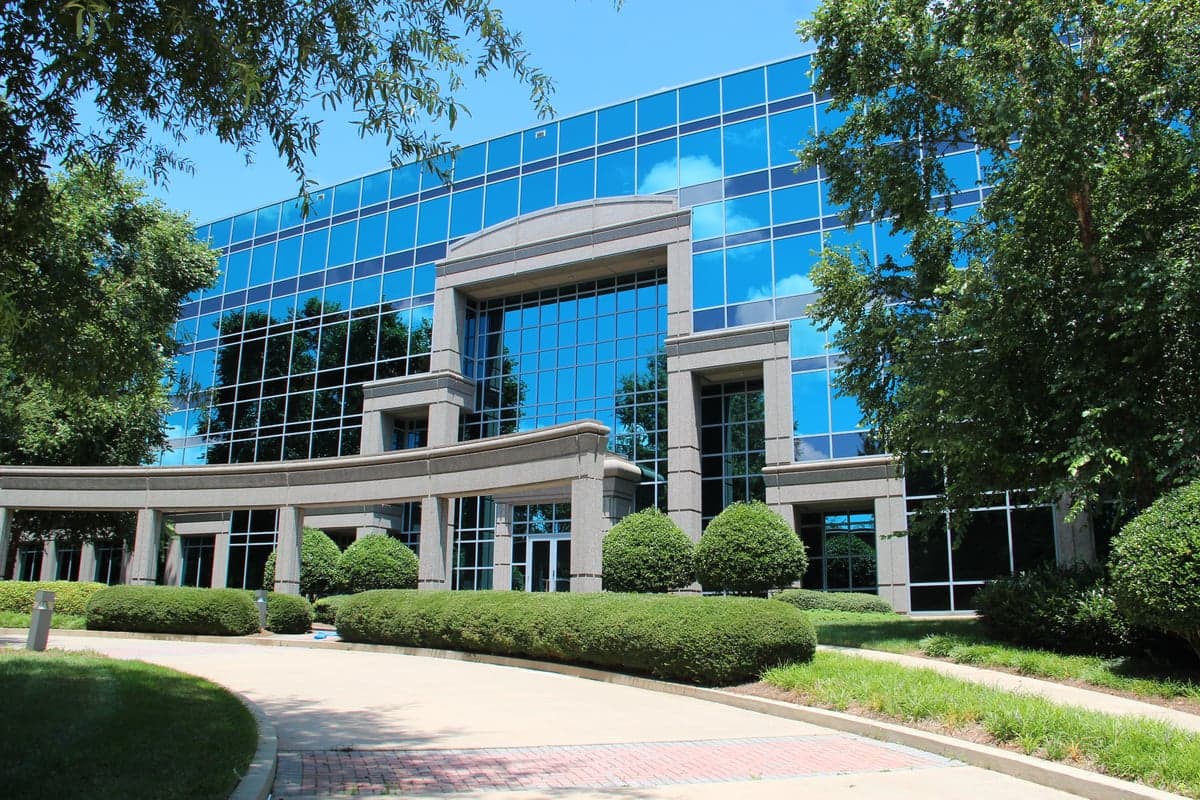
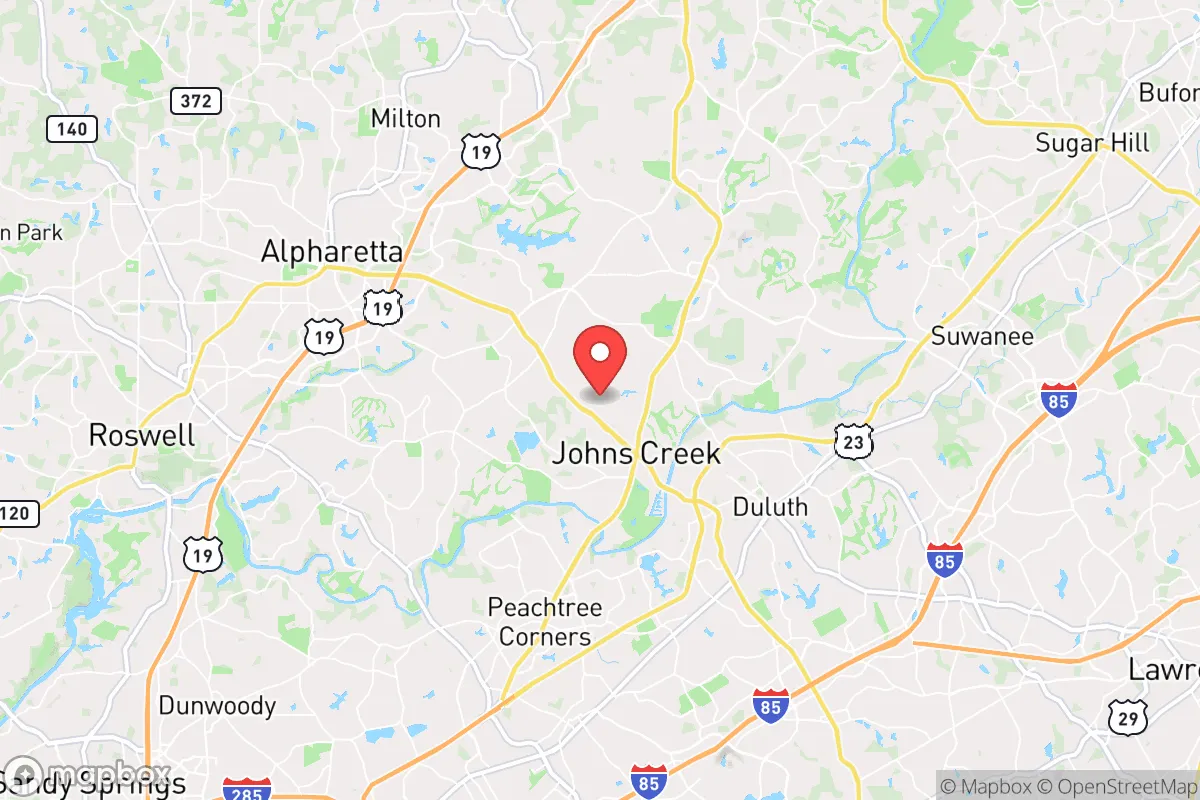
Photo: Wikipedia
Personal Sovereignty in Johns Creek, GA
Viable for self-reliance. Generally workable, though some barriers may limit total independence.
What does Personal Sovereignty tell us?
Personal Sovereignty measures your capacity for self-reliance and independence with minimal government friction. Higher scores mean fewer barriers between you and the way you want to live... but it assumes you have the space you need and good neighbors.
What does this tell us?
Personal Sovereignty measures your capacity for self-reliance and independence with minimal government friction. Higher scores mean fewer barriers between you and the way you want to live... but it assumes you have the space you need and good neighbors.
State Policy
Energy independence: Importer (12% of energy produced in-state)
Personal Liberty
Homesteading

Personal Liberty Analysis
Johns Creek, Georgia, offers a notably high degree of personal sovereignty compared to many suburban enclaves, largely because it operates within a state that has aggressively pushed back against federal overreach and mandates. While it is not a rural freehold, the city’s governance structure and Georgia’s legal framework create a buffer zone where individual autonomy—on taxes, self-defense, medical choice, and property rights—is respected more than in deep-blue jurisdictions. For a survivalist or prepper mindset, the key question is whether this autonomy is real or merely cosmetic, and the answer leans toward the former, with specific, actionable advantages for those who value self-reliance.
Tax burden and regulatory posture: how Georgia’s policies protect your income and property
Georgia’s tax and regulatory environment is a major asset for anyone seeking to minimize government intrusion into their finances. The state’s flat income tax rate of 5.39% (as of 2025) is straightforward and avoids the progressive brackets that punish higher earners. Johns Creek itself has no city income tax, and property taxes are capped by the state’s homestead exemption, which shields up to $10,000 of assessed home value from county school taxes. For a prepper, this means more capital stays in your hands for supplies, land improvements, or emergency funds. The regulatory posture is equally favorable: Georgia is a right-to-work state with minimal business licensing hurdles, and Johns Creek’s zoning code is relatively permissive for home-based enterprises, allowing you to run a small repair shop, food preservation operation, or online survival gear store without drowning in permits. The state also has no annual vehicle property tax, only a one-time title fee, which reduces recurring government grabs on your assets. Compared to states like California or New York, where tax burdens can exceed 12% of income and regulations strangle small-scale independence, Georgia’s approach is a clear win for personal sovereignty.
Self-defense and gun law specifics: what the Second Sanctuary means for your rights
Georgia is a constitutional carry state, meaning no permit is required to carry a concealed firearm for anyone legally allowed to possess one. Johns Creek, despite its affluent, suburban character, has not enacted any local ordinances that restrict this right—no magazine bans, no “sensitive place” expansions beyond state law, and no waiting periods. The city council passed a Second Amendment Sanctuary resolution in 2021, signaling that local law enforcement will not cooperate with federal overreach on gun control. For a prepper, this is critical: you can keep a defensive rifle in your vehicle, carry openly or concealed without bureaucratic hassle, and store ammunition without quantity limits. The state’s “stand your ground” law is robust, with no duty to retreat in any place you are lawfully present. Johns Creek’s police department is generally pro-2A, and the county (Fulton) has a relatively efficient firearms licensing process for those who still want a permit for reciprocity in other states. The only practical limitation is that discharging a firearm within city limits is prohibited except on a range or in self-defense, so you’ll need to drive to a nearby outdoor range (like the one in Cumming) for practice. Overall, this is one of the strongest gun-rights environments in the Southeast, and a major reason why personal sovereignty here is not just theoretical.
Self-reliance and homesteading viability: lot sizes, zoning, and off-grid feasibility
Johns Creek is a planned suburban city, so don’t expect 40-acre homesteads or unrestricted off-grid living. Most residential lots range from 0.25 to 1.5 acres, with a few larger estates in the northern parts near the Chattahoochee River. Zoning is primarily R-1 (single-family residential), which allows for vegetable gardens, small livestock like chickens (hens only, no roosters), and beekeeping with a permit. However, the city code prohibits pigs, goats, cattle, and any structure that could be deemed a “nuisance” (e.g., a large composting operation or a wind turbine). Off-grid feasibility is limited: the city requires connection to municipal water and sewer for most lots, and solar panels are allowed but must be installed on roofs and meet HOA aesthetic guidelines in many neighborhoods. For a serious prepper, this means Johns Creek is better suited as a “base camp” than a full retreat. You can grow a significant portion of your own food, store rainwater in barrels (allowed for irrigation), and maintain a deep pantry, but you won’t be able to drill a well or install a septic system without a variance. The real value is proximity to rural areas: within 30 minutes north, you’re in Forsyth and Dawson counties, where 5- to 20-acre parcels are affordable and zoning is far more permissive. Many residents use Johns Creek as a primary residence for work and schools, while maintaining a secondary property for serious homesteading. That dual-location strategy is a pragmatic way to balance suburban convenience with self-reliance.
Personal liberties: parental rights, medical autonomy, speech, and property
Georgia has been a battleground for parental rights, and the state legislature has passed several laws that strengthen a parent’s authority over their children’s education and medical decisions. In 2022, the “Parents’ Bill of Rights” (SB 449) was enacted, requiring schools to notify parents of any changes to a student’s mental, emotional, or physical health, and prohibiting instruction on sexual orientation or gender identity in K-3 classrooms. Johns Creek’s school district (Fulton County Schools) has largely complied, though some parents report that enforcement is uneven. For a conservative parent, this means you have legal backing to opt your child out of objectionable curriculum, access all educational materials, and be notified of any health-related interventions. Medical autonomy is also strong: Georgia has no vaccine mandates for adults, and while COVID-era restrictions were imposed, they were lifted early compared to other states. The state’s “Right to Try” law allows terminally ill patients access to experimental treatments, and there is no state-level prescription drug monitoring program that infringes on privacy (though a limited database exists for controlled substances). Free speech is protected by Georgia’s broad anti-SLAPP statute, which shields citizens from frivolous lawsuits over public commentary. Property rights are reinforced by the state’s “private property rights” act, which limits eminent domain abuse. In Johns Creek specifically, the city has a low rate of code enforcement complaints, meaning you can put up a fence, build a shed, or fly a political flag without immediate government interference—though HOAs in many subdivisions can be more restrictive. The key takeaway: Georgia’s state-level protections create a legal floor that Johns Creek cannot easily erode, and the city’s culture leans toward live-and-let-live conservatism.
Overall, Johns Creek offers a solid, if imperfect, environment for personal sovereignty. It is not a libertarian paradise—you still have to pay property taxes, follow building codes, and deal with HOA rules in many neighborhoods—but it sits within a state that has consistently pushed back against federal overreach on guns, taxes, medical choice, and parental rights. For a survivalist or prepper, the calculus is straightforward: use Johns Creek as a high-functioning base with good schools, low crime, and strong legal protections, while maintaining a secondary property in a less-regulated county for serious self-reliance. Compared to similar suburbs in blue states, where autonomy is being actively eroded by state-level mandates, Johns Creek is a clear winner. It’s not the frontier, but it’s a place where you can live freely, prepare quietly, and raise a family without the government breathing down your neck.

* Values derived from national, state, county, city and local statistics and may differ in a specific area. Last updated: 2026-04-23T05:07:22.000Z
Narrative content on this page is AI-generated and may contain mistakes. Verify any details that matter before acting on them.
ReloMaps may earn a commission from affiliate links at no extra cost to you.

