Photo: Wikipedia
Political ClimatePolitical Climate in Johns Creek, GA
District shown is the primary district for this city’s centroid. Cities may span multiple districts.
Local Political AnalysisPolitical Analysis of Johns Creek, GA
Johns Creek has long been a reliably conservative stronghold in north Fulton County, with a Cook PVI of R+11 that reflects its solidly Republican lean in both local and national elections. The city was carved out of unincorporated Fulton County in 2006 largely by residents who wanted more local control and less of the big-government, Atlanta-style politics creeping northward. For years, you could count on Johns Creek to vote red down the ballot, with most races decided in the GOP primary rather than the general election. But like many affluent Atlanta suburbs, there’s been a noticeable shift over the past decade—not a full flip, but a slow drift toward purple, driven by an influx of new residents from blue states and younger families who don’t share the same small-government instincts that built this community.
How it compares
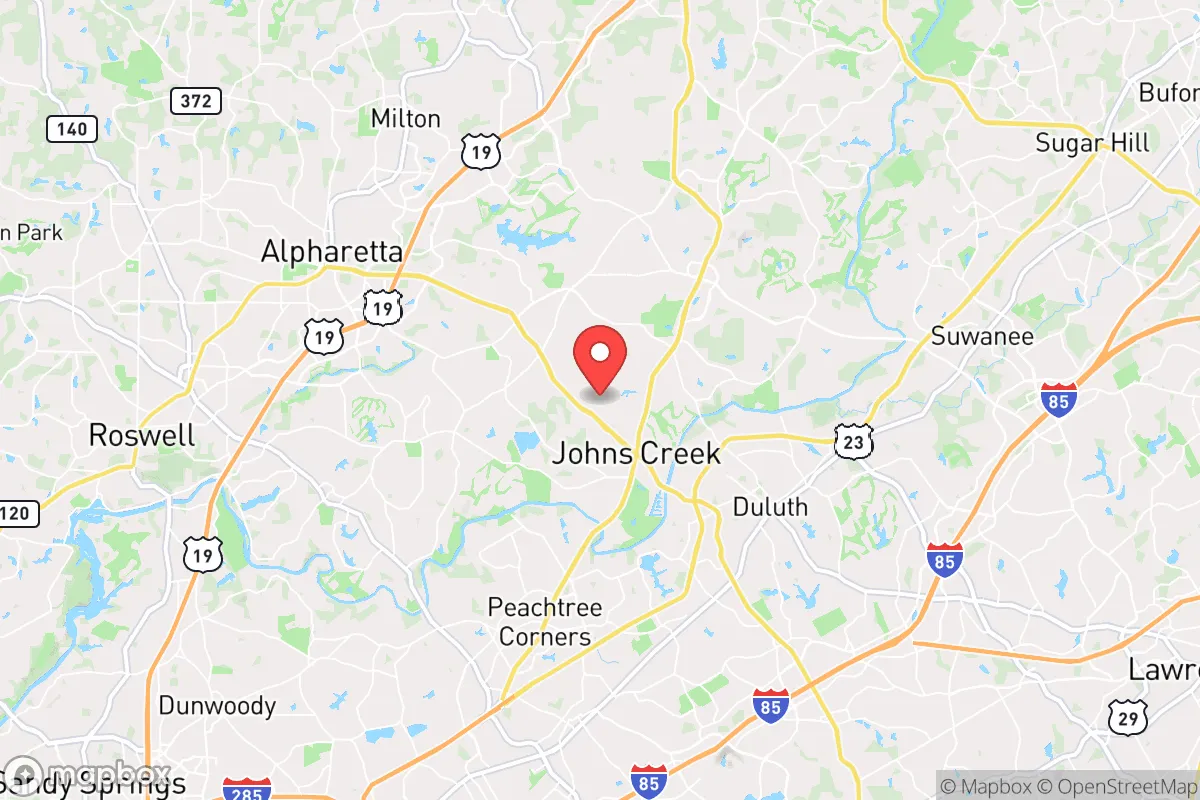
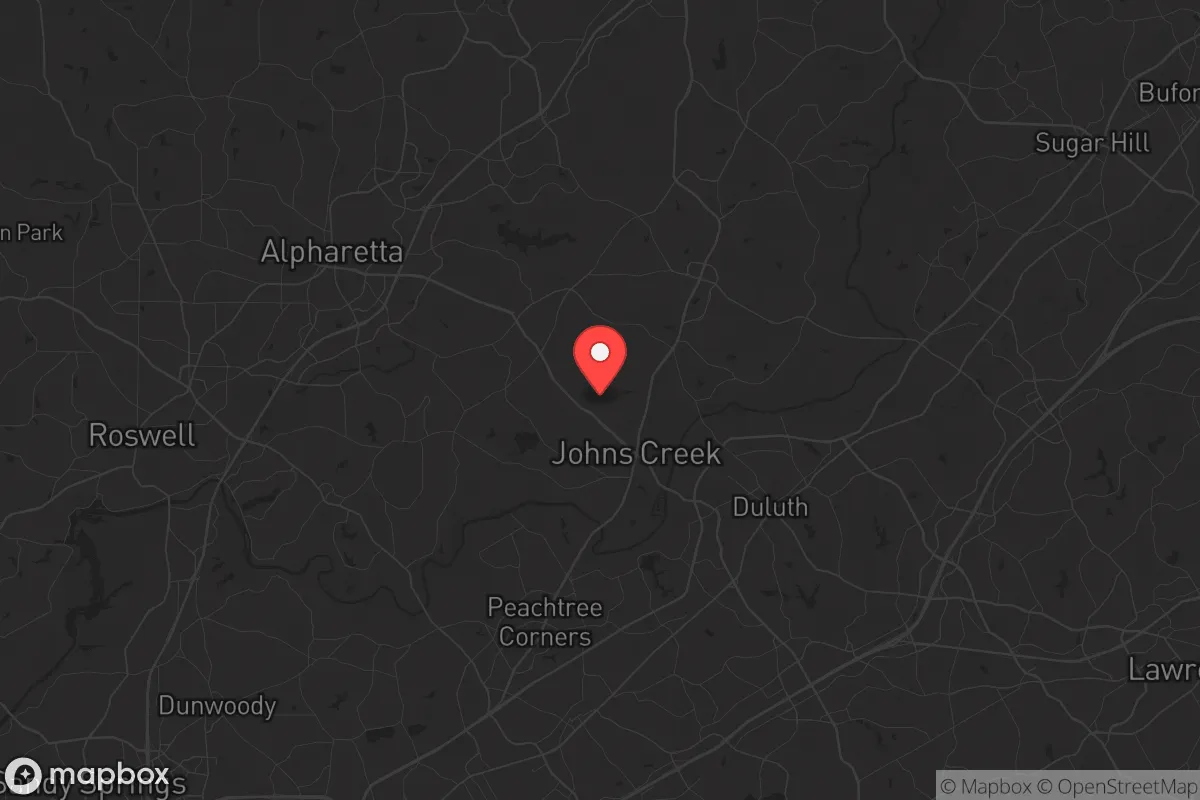
Compared to its immediate neighbors, Johns Creek stands out as a conservative island in a sea of blue. Head south into Sandy Springs or Dunwoody, and you’ll find a much more progressive electorate—those cities have trended left fast, with Democrats winning local races and pushing policies like higher taxes and more zoning restrictions. To the west, Roswell and Alpharetta are closer to Johns Creek politically but have also seen their Republican margins shrink, especially in state legislative races. Drive a few miles east into Gwinnett County’s Peachtree Corners or Duluth, and you’re in swing territory where Democrats now regularly win. The real contrast is with Atlanta proper, just 25 miles south, where progressive policies on everything from policing to property taxes are the norm. Johns Creek remains one of the few places in metro Atlanta where a conservative candidate can still win without apologizing for their principles—but that’s getting harder every cycle.
What this means for residents
For residents who value limited government and personal freedom, the political climate here is still better than most of the region, but it’s worth keeping an eye on. The city council and school board have historically kept taxes low and stayed out of people’s lives—no mask mandates that lasted forever, no heavy-handed business closures during the pandemic, and a general hands-off approach to property rights. But as the electorate shifts, you’re seeing more pressure for things like “equity” initiatives in the schools, higher impact fees on new homes, and talk of expanding public transit into the area. These aren’t existential threats yet, but they’re signs that the old Johns Creek—where your vote meant your voice was heard on keeping government small—is slowly being challenged. If you’re a conservative, the key is staying engaged in local elections, because the city’s character is decided at the precinct level, not by national trends.
One cultural distinction that still holds is Johns Creek’s strong sense of community self-reliance. Unlike some neighboring cities that have embraced regional planning boards and county-level overrides, Johns Creek has fought to keep zoning and land-use decisions local. There’s no city income tax, property taxes are reasonable for the level of services, and the police department is responsive without being overbearing. The biggest long-term concern for conservatives here isn’t a sudden leftward lurch—it’s the slow erosion of that independence as state and county governments try to impose one-size-fits-all mandates. If you’re looking for a place where your rights as a homeowner, business owner, and parent are still respected, Johns Creek is still a solid bet. Just don’t take it for granted, because the political winds are shifting, and the next few election cycles will tell us whether this community stays true to its roots or follows the rest of the metro area down the progressive path.

State Political ClimatePolitical Climate in Georgia
State Political AnalysisPolitical Environment in the State
Georgia has shifted from a reliably red state to a genuine battleground over the past two decades, but its political soul remains deeply conservative outside of a few metro corridors. The state voted for Joe Biden in 2020 by a razor-thin margin of about 0.2%, then re-elected Republican Governor Brian Kemp in 2022 by a comfortable 7.4 points, illustrating the tension between national trends and local governance. The dominant coalition is still center-right, anchored by suburban families, rural voters, and a growing exurban population, but Atlanta’s explosive growth and in-migration from blue states have made every election a nail-biter. If you’re looking at Georgia, you’re looking at a state that’s fighting to stay free while its largest city pulls hard in the other direction.
Urban vs. rural divide
The political map of Georgia is a tale of two Georgias. Metro Atlanta, particularly Fulton, DeKalb, Cobb, and Gwinnett counties, drives the state’s blue vote. Fulton County alone gave Biden over 400,000 votes in 2020, more than the entire population of many rural counties. Meanwhile, the rest of the state—places like Rome, Dalton, Valdosta, and Augusta—votes overwhelmingly Republican. The rural-urban split is stark: in 2024, rural counties like Gilmer and White voted +70 R, while Atlanta’s core went +80 D. The suburbs are the real battleground. Cherokee County, just north of Atlanta, remains a conservative stronghold, while Henry County south of the city flipped blue in 2020. The coast is mixed: Savannah’s Chatham County leans Democratic, but Brunswick and the Golden Isles are reliably red. If you’re moving to Georgia, where you land on the map determines your political reality more than almost any other factor.
Policy environment
Georgia’s state-level policy is broadly conservative, but with some notable exceptions. The state has a flat income tax rate of 5.49%, which is being phased down to 4.99% by 2029 under the Taxpayer Relief Act of 2022. Property taxes are low by national standards, and there’s no state-level estate tax. On education, Georgia has a robust school choice program: the Georgia Promise Scholarship Act (2024) provides $6,500 per student for private school tuition or homeschooling expenses, a major win for parental rights. However, the state’s healthcare environment is less free—Medicaid expansion was rejected, but the state runs a limited “Pathways to Coverage” program with work requirements. Election integrity is a hot topic: the Election Integrity Act of 2021 (SB 202) tightened voter ID requirements, limited drop boxes, and banned mobile voting, which conservatives see as necessary safeguards. Gun rights are strong—Georgia is a permitless carry state since 2022 (HB 218), and there’s no state-level red flag law. For a conservative family, the policy environment is generally favorable, but the constant pressure from Atlanta’s progressive legislature means you have to stay engaged.
Trajectory & freedom
Georgia’s trajectory on personal freedom is a mixed bag, trending in the right direction on some fronts but worrying on others. The 2022 permitless carry law (HB 218) was a major expansion of Second Amendment rights, allowing law-abiding citizens to carry concealed without a license. The 2024 Promise Scholarship Act expanded educational freedom. But there are real concerns: the state’s “heartbeat” abortion law (HB 481, 2019) was struck down by the Georgia Supreme Court in 2024, and the legislature is now fighting to reinstate it. On medical freedom, Georgia banned COVID-19 vaccine mandates for state employees and contractors (SB 1, 2023), but local governments in Atlanta still impose their own restrictions. Property rights are generally strong, but the state’s “conservation easement” laws have been abused by wealthy landowners to dodge taxes, leading to a crackdown. The biggest freedom concern is the growing influence of Atlanta’s progressive policies—things like sanctuary city ordinances and DEI mandates in schools—which the state legislature has tried to preempt with mixed success. If you value personal liberty, Georgia is still a good bet, but you need to live in a county that respects it.
Civil unrest & political movements
Georgia has seen its share of political turbulence. The 2020 election aftermath was a flashpoint, with the “Stop the Steal” movement holding rallies at the state capitol and the infamous phone call between President Trump and Secretary of State Brad Raffensperger. The 2021 Atlanta spa shootings sparked protests over hate crimes and gun control, with left-wing groups like the Atlanta Solidarity Network organizing marches. On the right, the Georgia Republican Party has been split between establishment figures like Governor Kemp and more populist factions aligned with the Georgia Freedom Caucus. Immigration politics are heated: the state passed HB 1105 in 2024, which requires local law enforcement to cooperate with ICE, but Atlanta’s mayor has resisted. There’s no serious secession talk, but nullification rhetoric around federal gun laws and vaccine mandates has surfaced in rural counties like Pickens and Fannin. A new resident would notice the political energy is real—yard signs, bumper stickers, and local activism are everywhere, especially in the suburbs.
Projection
Over the next 5-10 years, Georgia is likely to become more competitive, not less. In-migration from California, New York, and Illinois is accelerating—over 300,000 people moved to Georgia between 2020 and 2024, many settling in the Atlanta suburbs. These newcomers tend to bring their voting habits with them, which is why Gwinnett and Cobb counties flipped blue. However, the exurbs and rural areas are growing too, and they’re voting even more red. The state’s electoral map is essentially a race between Atlanta’s growth and the rest of the state’s resistance. The Georgia GOP is likely to continue pushing school choice, tax cuts, and election integrity measures, but they’ll face increasing opposition from a more diverse and urbanized electorate. If you’re moving in now, expect to see Georgia remain a swing state, with control of the legislature and governor’s mansion flipping every few cycles. The freedom you enjoy will depend heavily on local government—choose your county wisely.
For a conservative individual or family, Georgia offers a strong policy foundation—low taxes, school choice, gun rights, and election integrity—but the political winds are shifting. The state is not Texas or Florida; it’s a battleground where every election matters. If you settle in a conservative county like Cherokee, Forsyth, or Hall, you’ll find a community that shares your values. If you land in Atlanta’s core or its inner suburbs, you’ll be swimming against the current. The bottom line: Georgia is still a good place to live free, but you have to pick your spot and stay involved. The fight for the state’s soul is far from over.
* Values derived from national, state, county, city and local statistics and may differ in a specific area. Last updated: 2026-04-23T05:07:22.000Z
Narrative content on this page is AI-generated and may contain mistakes. Verify any details that matter before acting on them.
ReloMaps may earn a commission from affiliate links at no extra cost to you.

