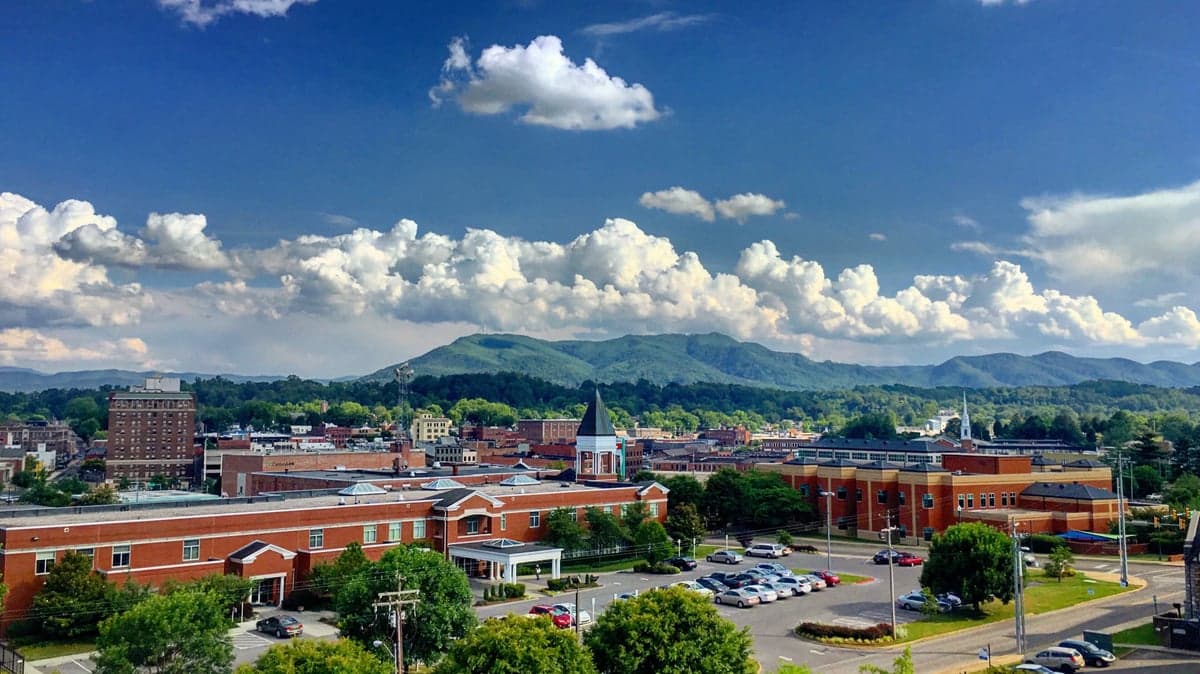
Photo: Wikipedia
Strategic Assessment of Johnson City, TN
Meaningful friction. Expect exposure to either population pressure, blast zones, or natural disaster risk. Consider buying a retreat property.
What does the Strategic Assessment tell us?
Our Strategic Assessment grades tactical survivability of an area. Major population centers, military targets, fallout zones, natural disasters, and border exposure all drive risk — lower exposure means a more defensible position in a crisis.
This is heavily inspired by Joel Skousen's Strategic Relocation book. Highly recommended you checkout the book ($)What does this tell us?
Our Strategic Assessment grades tactical survivability of an area. Major population centers, military targets, fallout zones, natural disasters, and border exposure all drive risk — lower exposure means a more defensible position in a crisis.
This is heavily inspired by Joel Skousen's Strategic Relocation book. Highly recommended you checkout the book ($)Strategic Pillars

Key Distances
Regional Safe Places
Below is our recommended "safe zones" in Tennessee and the surrounding area based on our strategic heuristics. For most people, it's unrealistic to live in a “safe zone” full-time due to work, family or other personal reasons. They tend to be more rural. However, many of these areas are perfect for second homes and retreat properties that double as a vacation home or even a short-term rental.
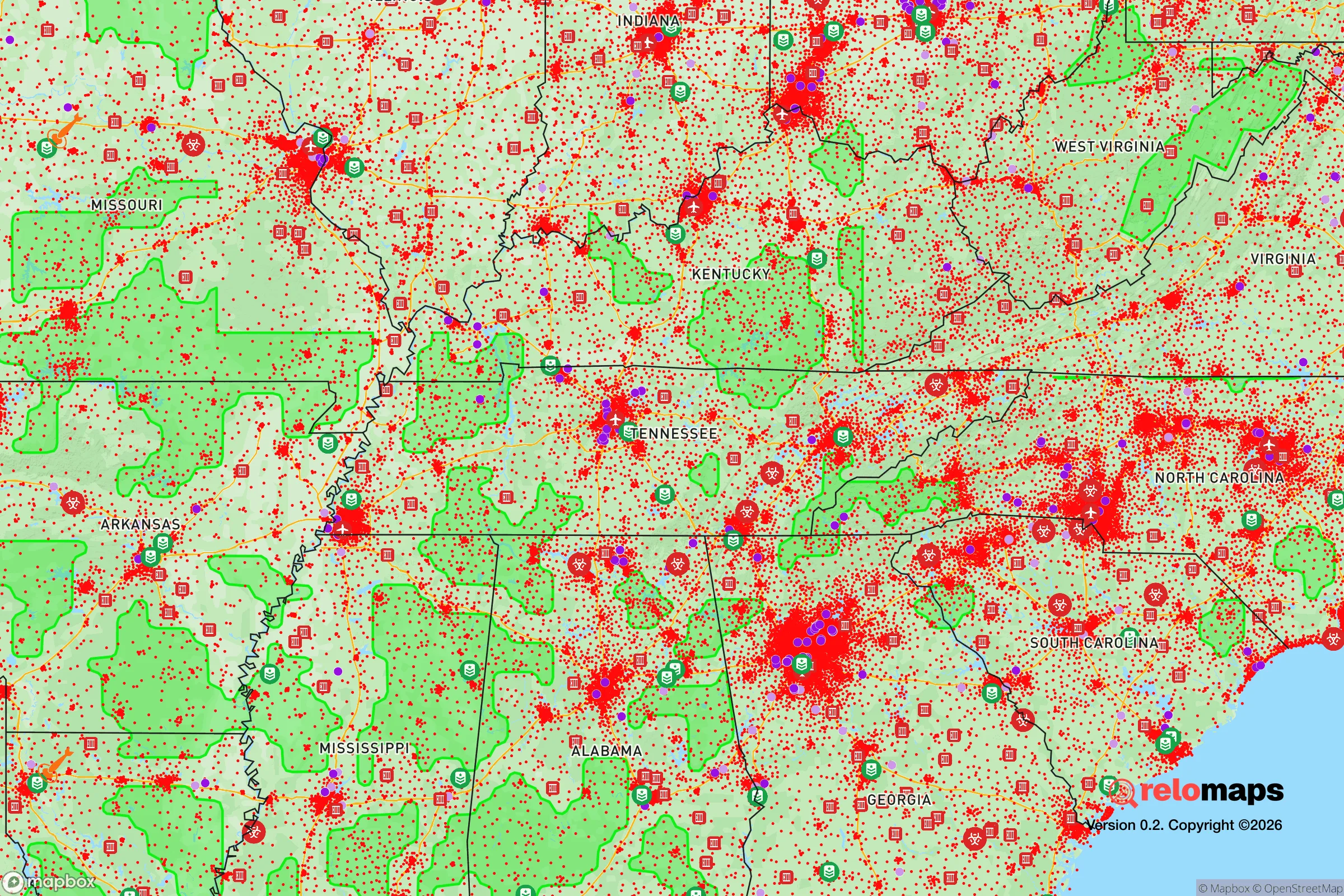
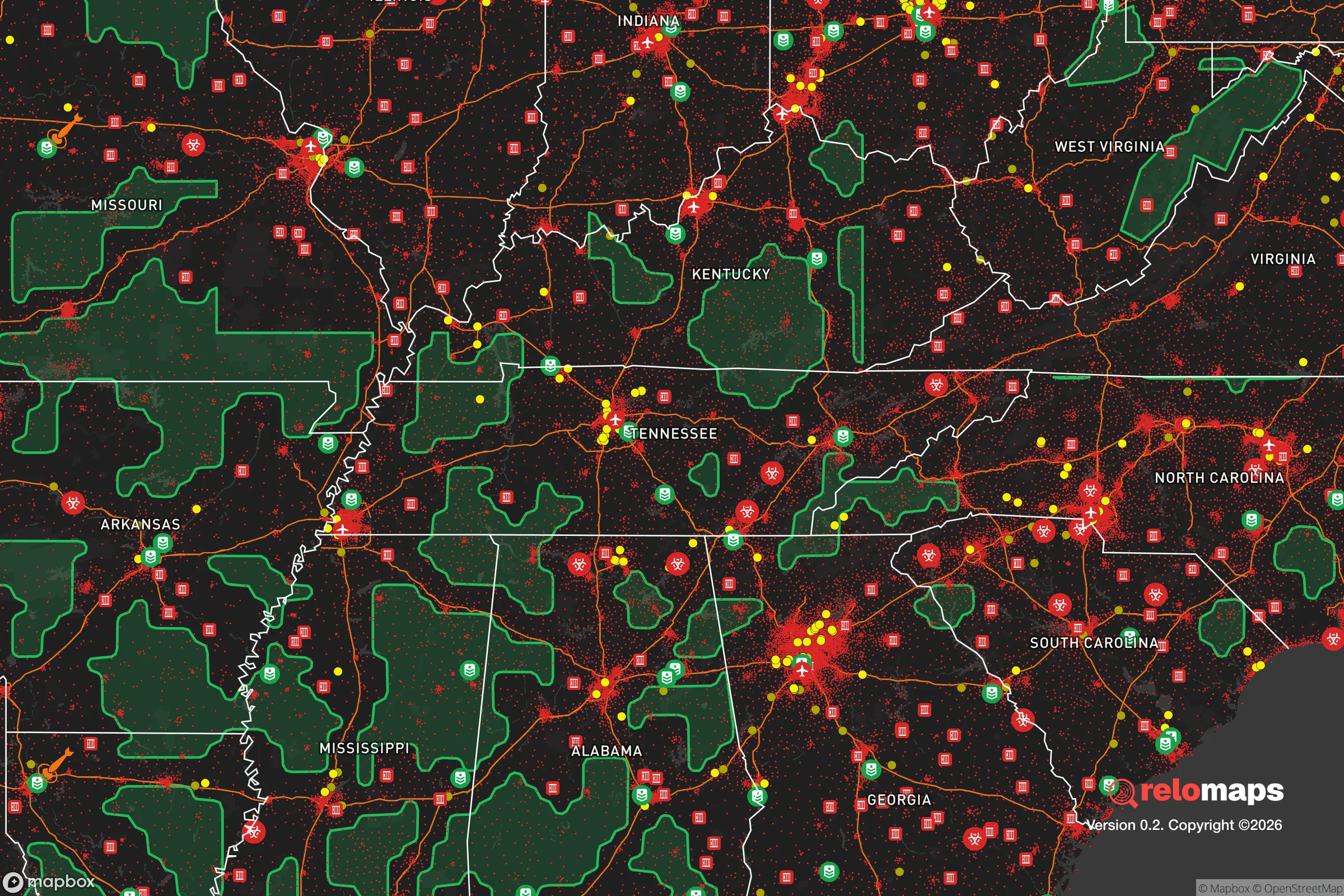


Important Note: For informational purposes only. This does not mean nothing bad ever happens in the green zones. Please use common sense. This is based on public data and modeled with AI. We tried to take a conservative approach but mistakes happen. We update this regularly as new information becomes available.
Solar Generator Recommendations
Backup power matters more here than in safer locations. We've picked three solar generators across budgets and capacity tiers — start with the budget unit if you only need a few essentials, or step up if you want to run a fridge and HVAC for days at a time.

Jackery Portable Power Station Explorer 300
Budget OptionPower on the Go: Weighing only 11 lbs, it's convenient to set up and store with book-sized foldable solar panels

BLUETTI Portable Power Station AC180
Designed for both indoor and outdoor scenarios, AC180 is highly capable as it has a robost capacity and continuous output power.

EF ECOFLOW DELTA Pro Ultra Power Station
Upgraded PickEcoFlow DELTA Pro Ultra is a whole-home energy system designed to grow with your family. Integrated with the Smart Home Panel 2, it scales to meet your evolving energy needs — keeping your home powered, intelligent, and secure through every stage of life.
We earn a commission, at no additional cost to you.
Strategic Assessment Analysis
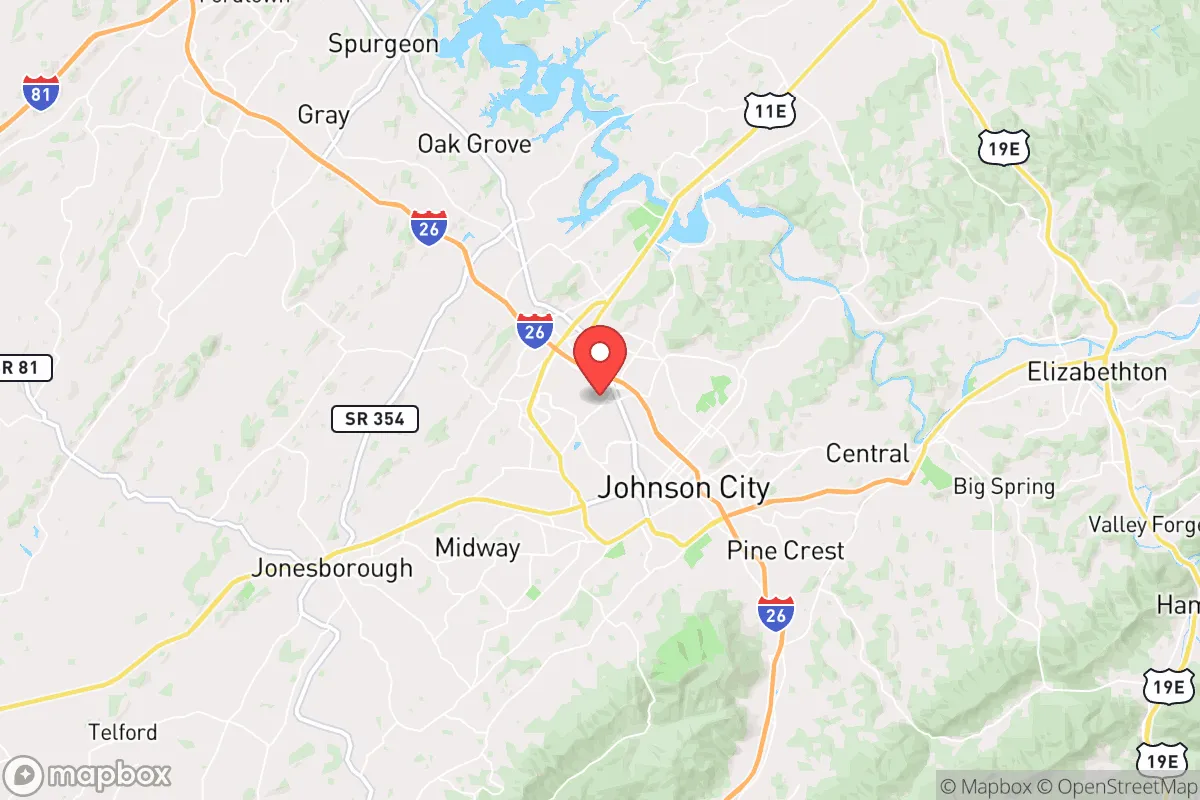
Johnson City, Tennessee, occupies a strategic sweet spot in the Appalachian highlands that makes it a serious contender for anyone thinking long-term about resilience, self-sufficiency, and distance from the chaos of major urban centers. Tucked into the Tri-Cities region (Johnson City, Kingsport, Bristol), it sits roughly 100 miles from both Knoxville and Asheville, far enough to avoid the immediate fallout of a major metropolitan collapse but close enough to access regional medical and supply networks if they remain functional. The area’s geography—nestled in the Blue Ridge foothills with the Cherokee National Forest to the east—provides natural buffers against both human-caused disruptions and the worst of climate-driven weather, while its elevation (around 1,600 feet) keeps it above the flood-prone valleys that plague lower-lying parts of the state.
Geographic position and natural advantages for long-term security
The first thing to understand about Johnson City is that its location is not an accident of history—it was deliberately sited as a rail and trade hub in a defensible valley, and that logic still holds today. The surrounding mountains create a natural funnel for travel, meaning any large-scale movement of people or goods into or out of the area can be monitored and controlled at key choke points like the I-26 corridor through the Unaka Range or the narrow passes along US-321 toward Boone. For a prepper, this is a double-edged sword: it limits your own escape routes, but it also makes the region harder for outside threats to penetrate. The Cherokee National Forest to the east and the Jefferson National Forest just across the Virginia line offer hundreds of thousands of acres of public land for hunting, foraging, and off-grid retreat if things go truly sideways. Water is abundant—the Watauga River runs through town, and the South Holston and Watauga Lakes are within 30 minutes, providing both a potable water source and a reservoir of fish and game. The climate is temperate, with four distinct seasons and enough rainfall (around 45 inches annually) to support year-round gardening without the drought risks of the western states. For a relocator looking to plant roots in a place that can sustain a family through a prolonged disruption, Johnson City’s natural endowment is hard to beat.
Risks, exposures, and proximity to fallout-relevant landmarks
No location is perfect, and Johnson City has its share of vulnerabilities that a serious prepper needs to weigh. The most obvious risk is the Oak Ridge National Laboratory, about 90 miles southwest—a major nuclear research facility that, while not a power plant, stores significant quantities of radioactive materials. In a worst-case scenario involving a terrorist attack or a cascading grid failure, Oak Ridge could become a contamination source, though the prevailing winds in this region generally blow from the west, which would push any plume away from Johnson City. Closer to home, the Tri-Cities area hosts a handful of chemical manufacturing plants and a major TVA coal ash storage site at the Kingston Fossil Plant (about 70 miles west), which has already experienced a catastrophic spill in 2008. The I-26 corridor itself is a vulnerability: it’s a major trucking route for hazardous materials, and a single tanker accident or deliberate blockage could cut off the city’s primary supply line for fuel and food. On the human threat side, Johnson City’s population of roughly 70,000 (with the metro area around 200,000) is small enough to avoid the mass migration pressures that would hit larger cities, but it’s not remote—during a national emergency, you could see a surge of refugees from Knoxville or Asheville, both of which are within a day’s walk. The local law enforcement and emergency services are competent but under-resourced for a large-scale event; the Washington County Sheriff’s Office has about 100 sworn deputies for a county of 130,000 people. If you’re planning to bug in, you need to account for the fact that the city’s hospital system (Johnson City Medical Center, a Level I trauma center) would be a magnet for the wounded and desperate, potentially drawing crowds that could overwhelm the area.
Practical resilience for a relocator: food, water, energy, and defensibility
For someone actually moving here with a prepper mindset, the day-to-day logistics of resilience are solid but require some upfront work. The local food system is a mixed bag: there are a handful of year-round farmers’ markets (the Johnson City Farmers Market runs April through November, with winter markets at the Memorial Park Community Center), and the surrounding agricultural land in Washington and Carter counties supports cattle, poultry, and row crops like corn and soybeans. But the region is not a breadbasket—most of the grocery supply still comes through the same national distribution chains that could fail in a crisis. A serious prepper should plan to establish a home garden (the growing season runs about 180 days, from mid-April to mid-October) and build relationships with local farmers for direct meat and produce purchases. Water is the strong suit: the city’s municipal supply comes from the Watauga River and is treated at the Johnson City Water Treatment Plant, which has backup generators, but a well on your own property is the gold standard here, and the water table is high enough in most parts of the county to make drilling feasible. Energy is where Johnson City shines relative to other parts of the South: the Tennessee Valley Authority (TVA) grid is one of the most stable in the country, with a mix of hydro, coal, natural gas, and nuclear (from the Watts Bar plant, about 120 miles southwest). That said, the grid is still vulnerable to EMP or cyberattack, and the mountainous terrain can cause localized outages from ice storms or wind events. Solar is viable—the region gets about 200 sunny days per year, which is average for the Southeast—and many rural properties already have propane tanks for heating and cooking. Defensibility is a matter of property choice: the best options are on the outskirts of town, in the unincorporated areas of Washington or Carter counties, where you can get acreage with a clear line of sight to the road and natural barriers like ridges or creeks. The local gun culture is strong and legal—Tennessee is a constitutional carry state, and Washington County has a sheriff who is publicly supportive of Second Amendment rights—so you won’t stand out by being armed.
The overall strategic picture for Johnson City is that of a solid B+ location for a conservative-leaning prepper who wants to be out of the blast zone but not completely isolated. It lacks the extreme remoteness of, say, the Idaho panhandle or the Montana Rockies, but it compensates with a more forgiving climate, abundant water, and a local population that is largely self-reliant and suspicious of federal overreach. The biggest risk is not the natural environment but the human one: the Tri-Cities area is growing fast (population up about 12% since 2020), and that growth is bringing more traffic, more development, and more of the same political and cultural tensions that are fracturing the rest of the country. If you move here, you need to do it soon, before the best properties are snapped up and the community’s character shifts further. For a single individual or a family willing to put in the work—digging a well, planting a garden, joining a local church or shooting club—Johnson City offers a realistic path to riding out the coming storms without having to disappear into the wilderness. It’s not a bug-out location; it’s a live-your-life-and-be-ready location, and that may be the most honest assessment you’ll get.

* Values derived from national, state, county, city and local statistics and may differ in a specific area. Last updated: 2026-05-02T03:06:26.000Z
Narrative content on this page is AI-generated and may contain mistakes. Verify any details that matter before acting on them.
ReloMaps may earn a commission from affiliate links at no extra cost to you.

