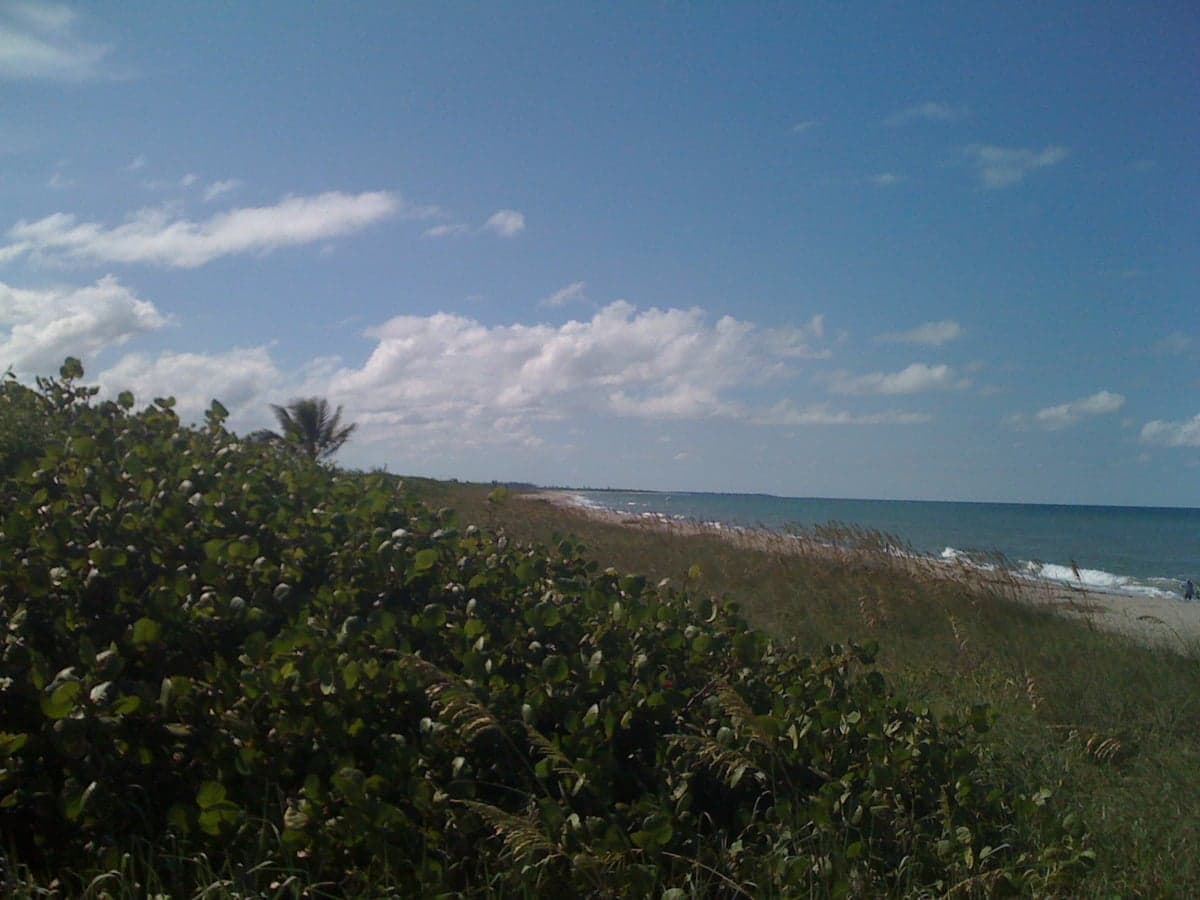
Photo: Wikipedia
Strategic Assessment of Jupiter Island, FL
Meaningful friction. Expect exposure to either population pressure, blast zones, or natural disaster risk. Consider buying a retreat property.
What does the Strategic Assessment tell us?
Our Strategic Assessment grades tactical survivability of an area. Major population centers, military targets, fallout zones, natural disasters, and border exposure all drive risk — lower exposure means a more defensible position in a crisis.
This is heavily inspired by Joel Skousen's Strategic Relocation book. Highly recommended you checkout the book ($)What does this tell us?
Our Strategic Assessment grades tactical survivability of an area. Major population centers, military targets, fallout zones, natural disasters, and border exposure all drive risk — lower exposure means a more defensible position in a crisis.
This is heavily inspired by Joel Skousen's Strategic Relocation book. Highly recommended you checkout the book ($)Strategic Pillars

Key Distances
Regional Safe Places
Below is our recommended "safe zones" in Florida and the surrounding area based on our strategic heuristics. For most people, it's unrealistic to live in a “safe zone” full-time due to work, family or other personal reasons. They tend to be more rural. However, many of these areas are perfect for second homes and retreat properties that double as a vacation home or even a short-term rental.

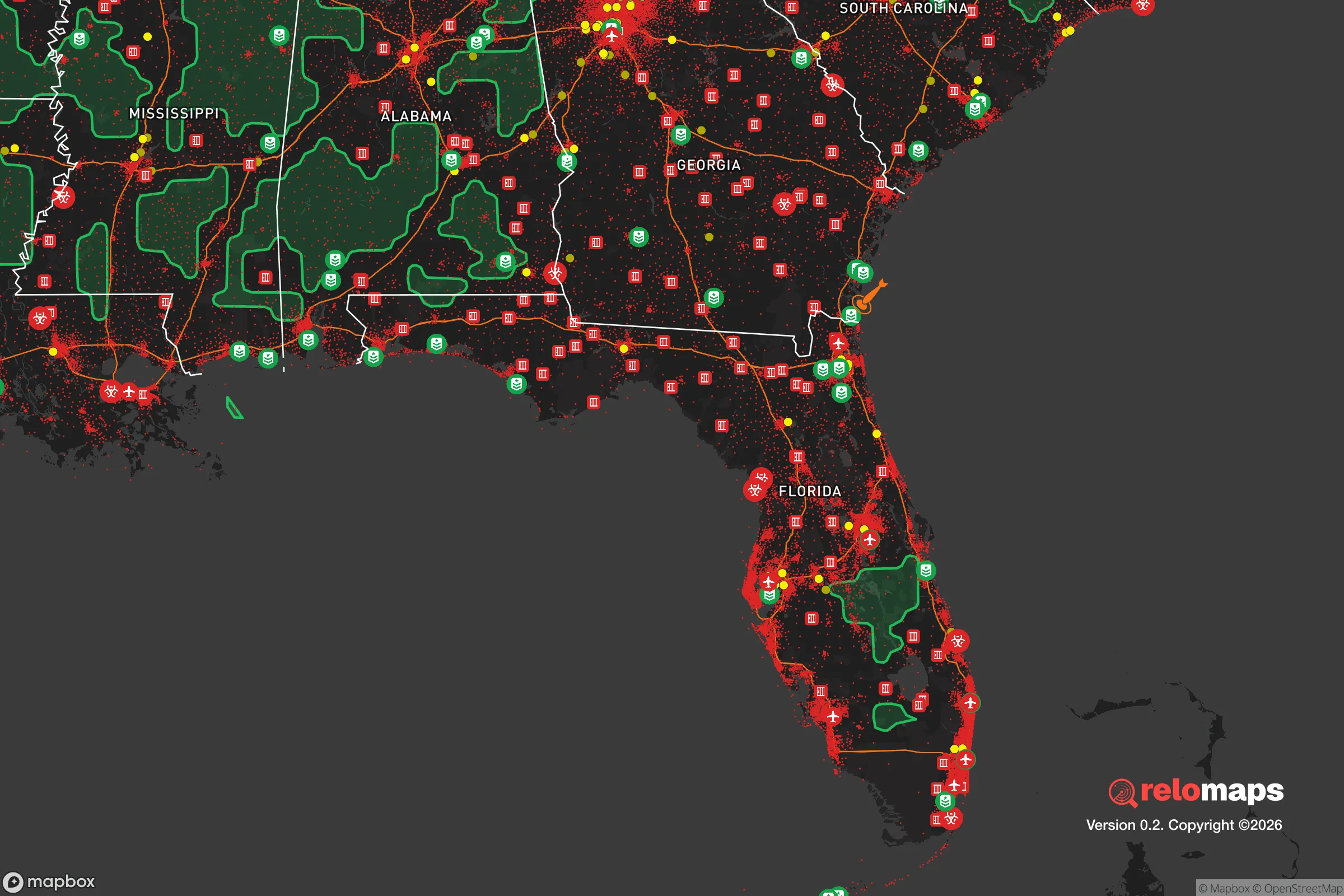


Important Note: For informational purposes only. This does not mean nothing bad ever happens in the green zones. Please use common sense. This is based on public data and modeled with AI. We tried to take a conservative approach but mistakes happen. We update this regularly as new information becomes available.
Solar Generator Recommendations
Backup power matters more here than in safer locations. We've picked three solar generators across budgets and capacity tiers — start with the budget unit if you only need a few essentials, or step up if you want to run a fridge and HVAC for days at a time.

Jackery Portable Power Station Explorer 300
Budget OptionPower on the Go: Weighing only 11 lbs, it's convenient to set up and store with book-sized foldable solar panels

BLUETTI Portable Power Station AC180
Designed for both indoor and outdoor scenarios, AC180 is highly capable as it has a robost capacity and continuous output power.

EF ECOFLOW DELTA Pro Ultra Power Station
Upgraded PickEcoFlow DELTA Pro Ultra is a whole-home energy system designed to grow with your family. Integrated with the Smart Home Panel 2, it scales to meet your evolving energy needs — keeping your home powered, intelligent, and secure through every stage of life.
We earn a commission, at no additional cost to you.
Strategic Assessment Analysis
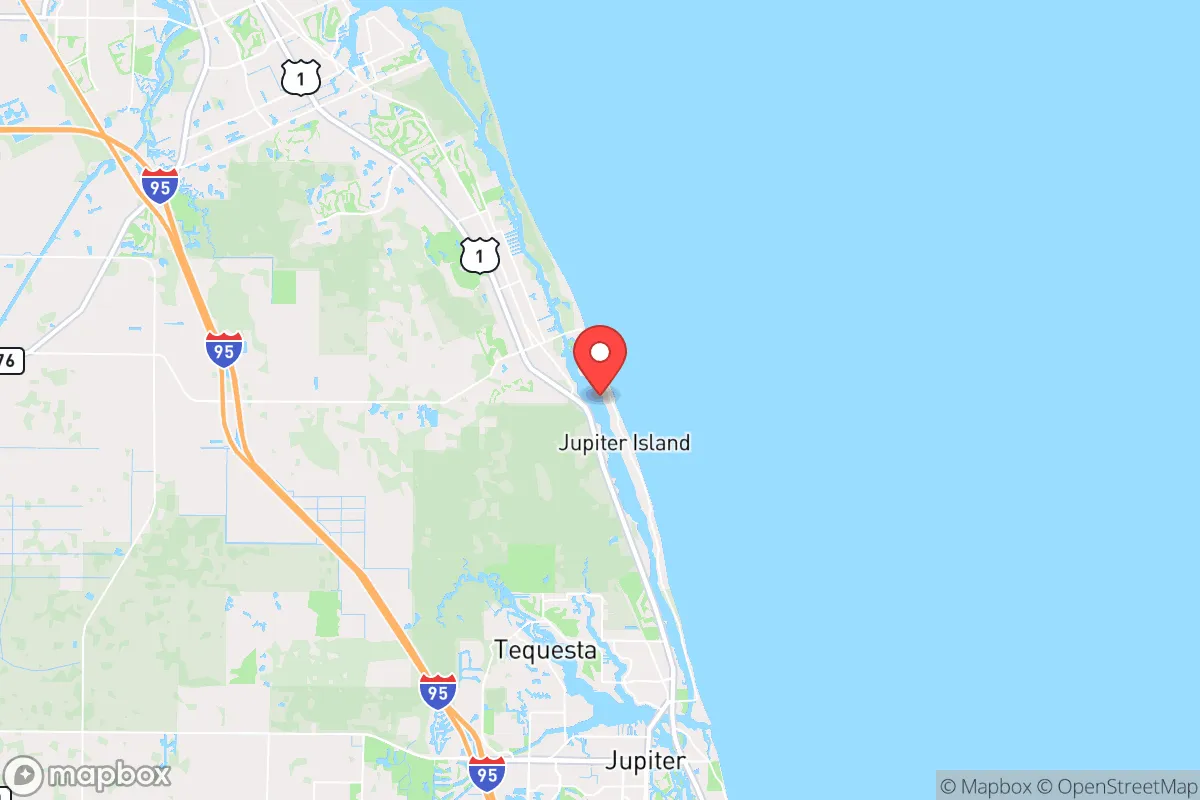
Jupiter Island, Florida, presents a unique strategic paradox for the conservative prepper: it offers exceptional natural defensibility and isolation from the chaos of mainland urban centers, yet its very affluence and coastal location create a distinct set of vulnerabilities. This narrow barrier island, stretching roughly 9 miles along the Atlantic coast in Martin and Palm Beach counties, is accessible only via two bridges from Hobe Sound and Jupiter, making it a natural chokepoint for any unwanted traffic. For the relocator prioritizing resilience, the island’s low population density—under 1,000 year-round residents—and its status as a gated, private community mean that in a crisis, you are not dealing with the masses. However, the trade-off is proximity to some of the most high-value, high-risk real estate in the country, and the island’s infrastructure is entirely dependent on mainland supply lines. This analysis will assess Jupiter Island’s strategic value for those preparing for civic unrest, mass casualty events, and large-scale disasters, with a clear-eyed view of both its strengths and its glaring weaknesses.
Geographic isolation and natural defensive advantages
Jupiter Island’s primary strategic asset is its geography. It is a true barrier island, separated from the mainland by the Intracoastal Waterway and the Indian River Lagoon. This natural moat provides a significant defensive buffer. The only vehicular access points are the two bridges: the Hobe Sound Bridge (Bridge Road) at the north end and the Jupiter Island Bridge (South Beach Road) at the south. In a scenario of civil unrest or mass evacuation, these bridges can be monitored, barricaded, or even disabled with relative ease compared to a sprawling suburban grid. The island itself is long and narrow—roughly 9 miles by less than a mile wide—which limits the number of potential approach vectors. The Atlantic Ocean to the east provides a vast, open horizon, making any maritime approach visible from miles away. The interior is dominated by the Jupiter Island National Wildlife Refuge and dense maritime hammock, offering natural cover and a low population density that makes it difficult for large groups to move undetected. For a single individual or family, this translates to a high degree of situational awareness and a manageable perimeter. The island’s elevation is also a subtle advantage: at 10 to 20 feet above sea level, it is higher than most of coastal Florida, reducing—but not eliminating—storm surge risk. The combination of limited access points, natural barriers, and low density makes Jupiter Island one of the most naturally defensible residential areas on the entire Florida coast.
Fallout proximity, storm exposure, and infrastructure fragility
The same isolation that makes Jupiter Island defensible also makes it dangerously exposed. The island is a high-value target in any scenario involving economic collapse or targeted violence. It is home to some of the wealthiest individuals in the world, including hedge fund managers, celebrities, and former political figures. In a breakdown of civil order, this concentration of wealth becomes a liability. The island’s very name could be a beacon for looters or organized groups seeking resources. Furthermore, the island sits within 30 miles of the St. Lucie Nuclear Power Plant (about 25 miles north) and the Turkey Point Nuclear Generating Station (about 100 miles south). While neither is an immediate fallout zone for a direct strike, a catastrophic failure at either plant—whether from sabotage, accident, or a hurricane—could render the island uninhabitable for weeks or months due to prevailing winds. The island is also squarely in the crosshairs of Atlantic hurricane season. While the elevation helps with surge, the narrow shape means that a Category 3 or higher storm can effectively wash over the entire island. The bridges are the only evacuation routes, and they are vulnerable to storm damage and gridlock. In a real-world test, Hurricane Irma in 2017 caused significant erosion and forced a mandatory evacuation. The island’s infrastructure is entirely dependent on mainland power, water, and sewer lines. There are no municipal wells or power plants on the island. A single bridge failure or a prolonged power outage would cut off all utilities. For the prepper, this means that self-sufficiency in water, power, and food is not optional—it is mandatory. The island’s reliance on a single point of failure for ingress and egress is its most glaring strategic weakness.
Practical resilience: food, water, energy, and defensibility for a relocator
For a relocator serious about resilience, Jupiter Island requires a high level of pre-existing preparation. The island has no grocery stores, no gas stations, and no hardware stores. Everything must be brought in. The nearest major supply hubs are in Hobe Sound (north) or Jupiter (south), both of which are accessible only by bridge. In a crisis, those bridges will be the first points of contention. A family would need to stockpile at least 90 days of food, water, and medical supplies, as resupply is not guaranteed. Water is the most critical issue: the island’s tap water comes from the mainland, and a power outage means no water pressure. A well is not an option on a barrier island due to saltwater intrusion, so rainwater catchment or a large-scale water storage system (e.g., 500-gallon tanks) is essential. Solar power is viable, but the island’s dense tree canopy limits rooftop solar efficiency; ground-mounted panels in cleared areas are a better bet. For energy, a whole-house propane generator with a buried 500-gallon tank is the standard among serious preppers here, as natural gas lines do not run on the island. Defensibility is excellent at the micro level: most homes are set back from the road, with long driveways and dense vegetation providing natural concealment. The community is gated, but gates are only as good as the people manning them. In a collapse scenario, the island’s small population (under 1,000) means you can know your neighbors—a critical advantage for forming a mutual defense pact. However, the island’s high property values mean that many homes are second or third residences, so you may have absentee neighbors during a crisis, creating gaps in the perimeter. The best strategy is to form a small, trusted network of year-round residents who share a prepper mindset. The island’s limited road network (only a few main roads) makes it easy to set up observation posts and checkpoints. For a single individual, the island is manageable; for a family, it requires a disciplined, pre-planned logistics chain.
The overall strategic picture for Jupiter Island is one of high reward paired with high risk. It offers exceptional natural defensibility, low population density, and a geography that can be controlled with minimal manpower. For the conservative prepper who values isolation and the ability to secure a small perimeter, it is one of the best options on the East Coast. But the trade-offs are severe: complete dependence on mainland infrastructure, vulnerability to hurricanes and nuclear plant incidents, and the inherent danger of being a wealthy enclave in a collapsing society. The island is not a place to “bug out” to unprepared—it is a place to live full-time, with robust self-sufficiency systems already in place. If you can afford the real estate and the infrastructure investment, and you are willing to accept the coastal risks, Jupiter Island can be a fortress. If you are looking for a low-cost, low-maintenance retreat, look inland. This is a high-stakes, high-capital play, and it demands a serious, long-term commitment to resilience. For the right person, it is a strategic gem. For the unprepared, it is a trap.

* Values derived from national, state, county, city and local statistics and may differ in a specific area. Last updated: 2026-05-14T01:52:20.000Z
Narrative content on this page is AI-generated and may contain mistakes. Verify any details that matter before acting on them.
ReloMaps may earn a commission from affiliate links at no extra cost to you.

