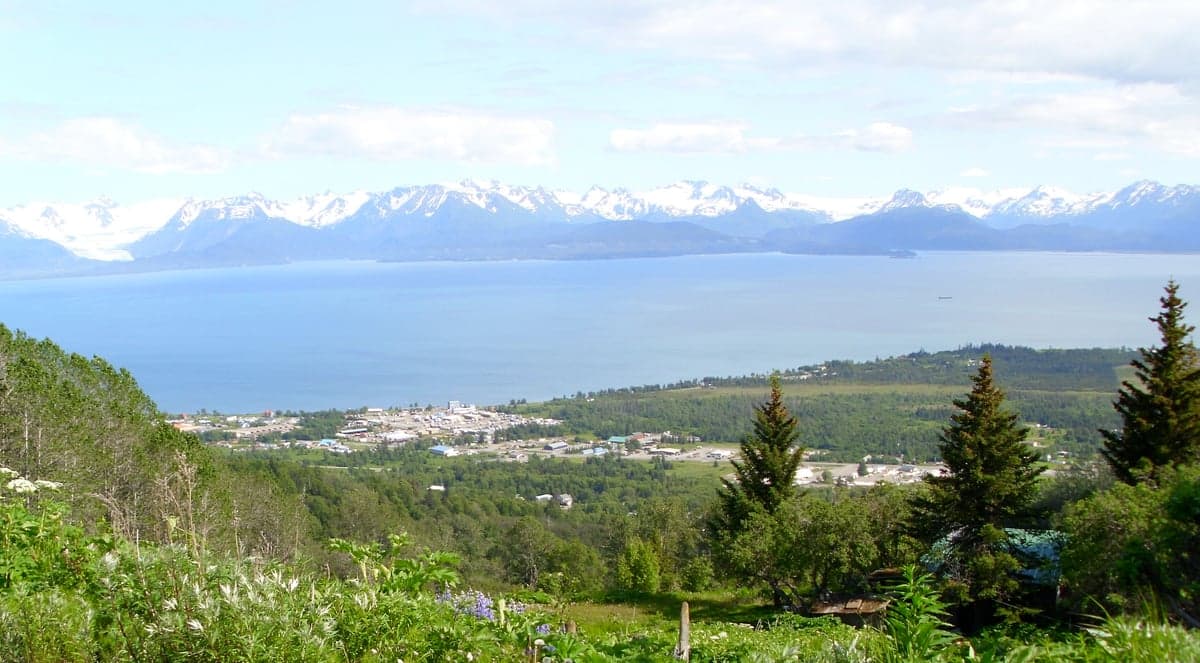
Photo: Wikipedia
Strategic Assessment of Kachemak, AK
Workable tactical position. Some exposure to population density or targets, but generally defensible in a crisis.
What does the Strategic Assessment tell us?
Our Strategic Assessment grades tactical survivability of an area. Major population centers, military targets, fallout zones, natural disasters, and border exposure all drive risk — lower exposure means a more defensible position in a crisis.
This is heavily inspired by Joel Skousen's Strategic Relocation book. Highly recommended you checkout the book ($)What does this tell us?
Our Strategic Assessment grades tactical survivability of an area. Major population centers, military targets, fallout zones, natural disasters, and border exposure all drive risk — lower exposure means a more defensible position in a crisis.
This is heavily inspired by Joel Skousen's Strategic Relocation book. Highly recommended you checkout the book ($)Strategic Pillars

Key Distances
Regional Safe Places
Below is our recommended "safe zones" in Alaska and the surrounding area based on our strategic heuristics. For most people, it's unrealistic to live in a “safe zone” full-time due to work, family or other personal reasons. They tend to be more rural. However, many of these areas are perfect for second homes and retreat properties that double as a vacation home or even a short-term rental.
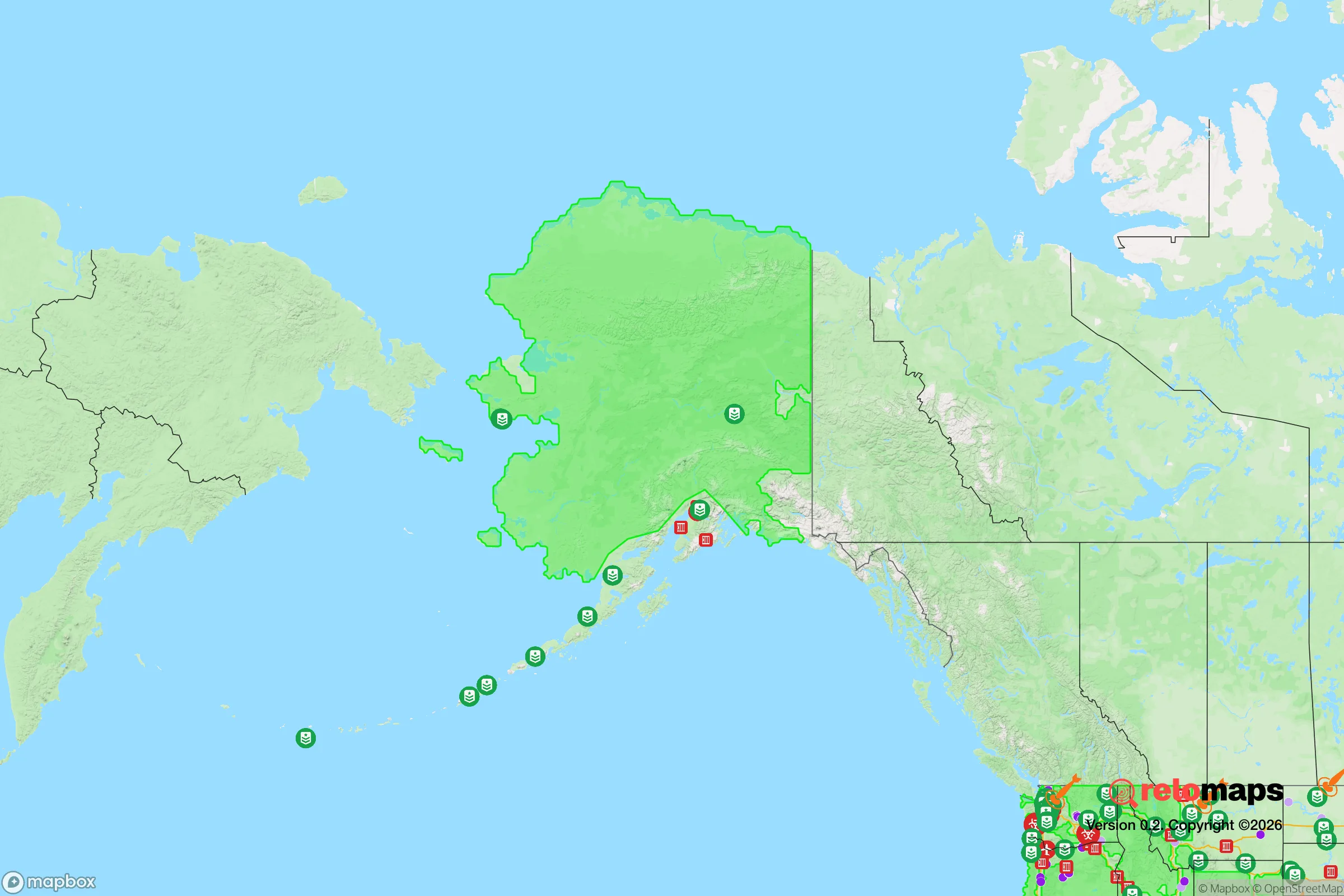
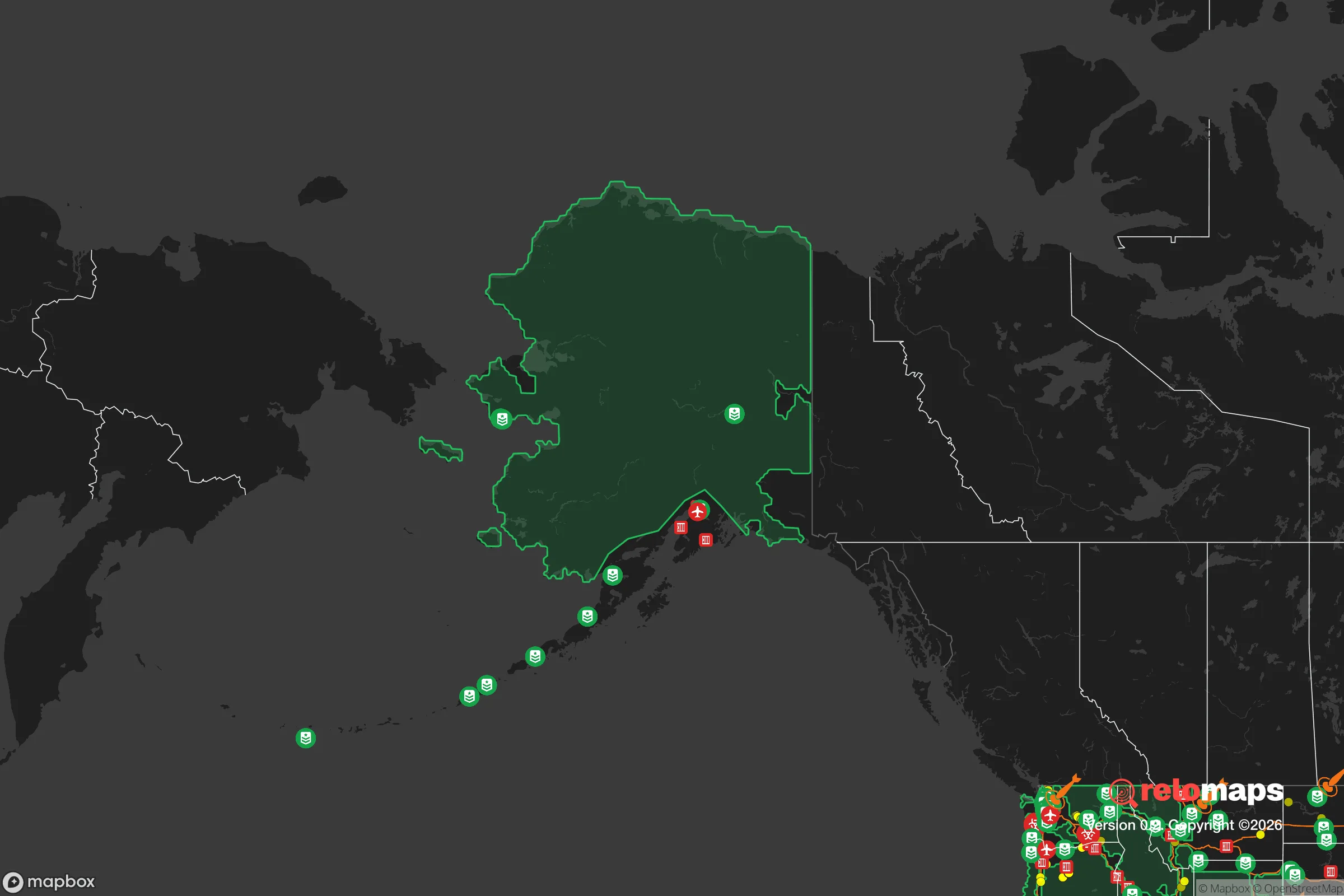


Important Note: For informational purposes only. This does not mean nothing bad ever happens in the green zones. Please use common sense. This is based on public data and modeled with AI. We tried to take a conservative approach but mistakes happen. We update this regularly as new information becomes available.
Solar Generator Recommendations
Backup power matters more here than in safer locations. We've picked three solar generators across budgets and capacity tiers — start with the budget unit if you only need a few essentials, or step up if you want to run a fridge and HVAC for days at a time.

Jackery Portable Power Station Explorer 300
Budget OptionPower on the Go: Weighing only 11 lbs, it's convenient to set up and store with book-sized foldable solar panels

BLUETTI Portable Power Station AC180
Designed for both indoor and outdoor scenarios, AC180 is highly capable as it has a robost capacity and continuous output power.

EF ECOFLOW DELTA Pro Ultra Power Station
Upgraded PickEcoFlow DELTA Pro Ultra is a whole-home energy system designed to grow with your family. Integrated with the Smart Home Panel 2, it scales to meet your evolving energy needs — keeping your home powered, intelligent, and secure through every stage of life.
We earn a commission, at no additional cost to you.
Strategic Assessment Analysis
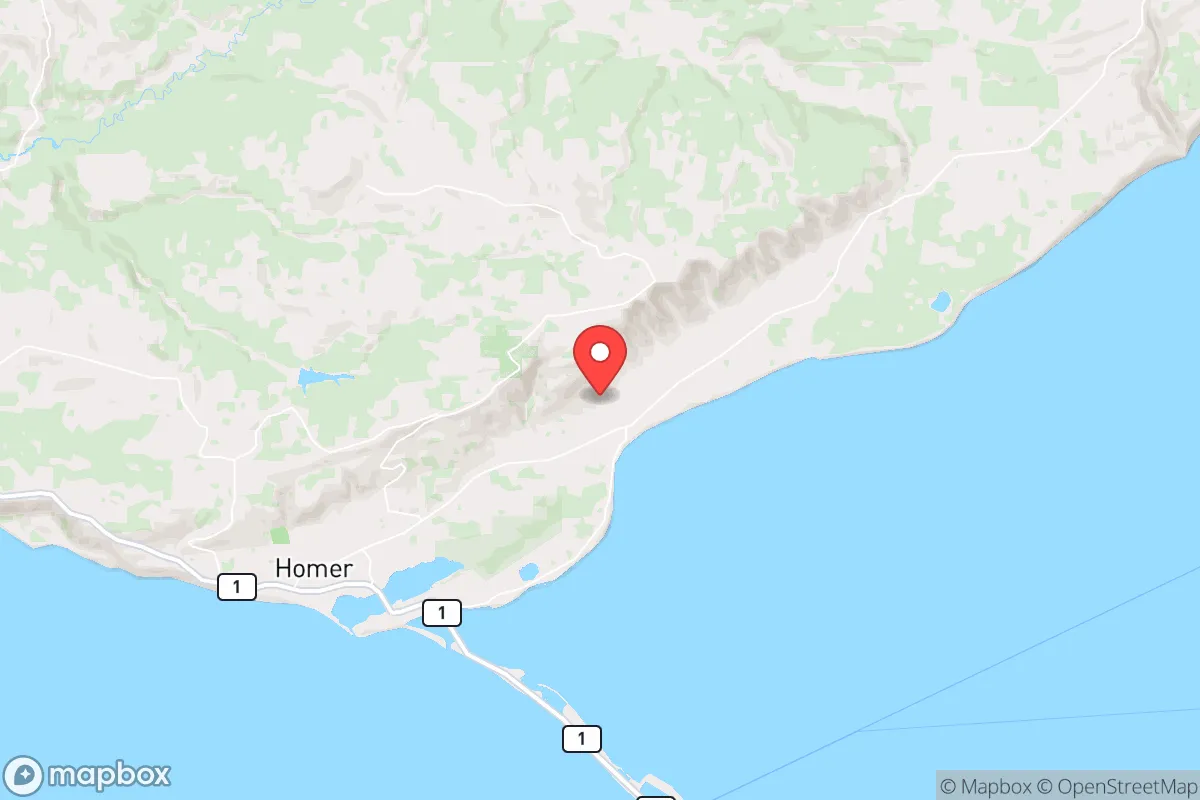
Kachemak, Alaska, sits on the southern edge of the Kenai Peninsula, offering a strategic combination of geographic isolation and practical access that makes it a serious contender for those prioritizing long-term resilience. This small, unincorporated community—roughly 500 year-round residents—is positioned about 5 miles east of Homer, placing it far from any major metropolitan target zone while still within reach of essential supplies and medical care. For a relocator operating from a prepper or survivalist mindset, Kachemak’s location provides a buffer against the cascading effects of civic unrest, mass casualty events, or infrastructure collapse that would cripple larger population centers like Anchorage, which sits 225 miles to the north. The area’s low population density, combined with its access to the Gulf of Alaska and the surrounding Kenai Mountains, creates a natural fortress that is difficult to approach by land and offers multiple escape routes by sea or air if needed.
Geographic position and natural advantages for long-term security
Kachemak’s primary strategic asset is its position on the western shore of Kachemak Bay, a deep-water inlet shielded by the Kenai Mountains to the east and the Cook Inlet to the west. This geography creates a natural choke point: the only road access is via the Sterling Highway, which runs through Homer and then east toward Soldotna and Anchorage. In a scenario where civil order breaks down, this single road can be monitored or blocked with minimal effort, giving residents a significant defensive advantage. The surrounding terrain is rugged, with dense spruce forests, steep hillsides, and tidal flats that make off-road movement difficult for any large group. The bay itself provides a reliable source of seafood—salmon, halibut, clams, and crab—year-round, and the local climate, while wet and cool, supports hardy gardens and small-scale livestock. The area’s proximity to the Katmai National Park and the Alaska Maritime National Wildlife Refuge also means vast tracts of uninhabited land to the south and west, offering potential retreat options if Kachemak itself becomes compromised. For a relocator concerned about being near fallout dangers, Kachemak’s distance from any nuclear power plants, major military bases, or industrial targets is a clear positive—the nearest significant infrastructure is the Port of Anchorage, which is over 200 miles away and unlikely to be a primary strike target in a limited conflict.
Risks, exposures, and proximity to fallout-relevant landmarks
No location is without vulnerabilities, and Kachemak has several that a strategic relocator must weigh. The most immediate risk is seismic activity: the area sits within the Alaska-Aleutian subduction zone, capable of generating magnitude 8+ earthquakes and subsequent tsunamis. Kachemak Bay’s shape can amplify tsunami waves, and low-lying coastal properties are at risk. The 1964 Good Friday earthquake, which devastated parts of the Kenai Peninsula, is a historical reminder that infrastructure can be wiped out in minutes. Additionally, the community’s reliance on the Sterling Highway for resupply means that a major earthquake or landslide could cut off road access for weeks, forcing dependence on air or sea transport. For those concerned about fallout from a nuclear event, Kachemak’s prevailing winds come from the southwest, which would carry fallout from any detonation in the Pacific Northwest or Asia across the Gulf of Alaska—but the distance and dilution make acute exposure unlikely. The nearest military installation of note is Joint Base Elmendorf-Richardson in Anchorage, a potential target in a major conflict, but again, the 225-mile separation provides substantial buffer. More pressing for daily resilience is the area’s exposure to winter storms and heavy snowfall, which can knock out power lines and make travel hazardous. The local power grid is fed by the Kenai Peninsula’s hydroelectric and natural gas plants, but these are vulnerable to seismic damage and fuel supply disruptions. For a relocator, the key takeaway is that Kachemak’s risks are primarily natural rather than man-made, which is preferable for those preparing for societal collapse—you can plan for earthquakes and storms, but you cannot predict the behavior of a desperate population fleeing a city.
Practical resilience for a relocator: food, water, energy, and defensibility
For a survivalist-minded individual or family, Kachemak offers a strong foundation for self-sufficiency, but it requires upfront investment. Fresh water is abundant: the area receives over 60 inches of precipitation annually, and numerous creeks and streams drain from the mountains into the bay. A simple rainwater catchment system or a well can provide year-round supply, though filtration is necessary due to potential contamination from wildlife and tidal saltwater intrusion. Food security is excellent for those willing to work for it. The bay’s fisheries are world-class, and residents can legally harvest salmon, halibut, and shellfish with a state fishing license. Moose and black bear hunting are common in the surrounding forests, and small-scale gardening is feasible during the short but intense growing season (May to September). However, the soil is thin and acidic, so raised beds and greenhouse structures are recommended for reliable vegetable production. Energy is a weak point: the local grid is reliable by Alaska standards, but a prepper should plan for off-grid backup. Solar panels are viable during the long summer days, but winter brings only 6-7 hours of weak daylight, making wind or micro-hydro a better bet for year-round power. The community’s defensibility is high due to its low population and limited access points. Neighbors tend to be independent-minded and self-reliant, which aligns with a conservative ethos of mutual aid rather than government dependency. That said, the area is not a fortress—there are no gated communities or organized militias—so personal security relies on situational awareness and good relationships with nearby homesteaders. For a relocator, the practical takeaway is that Kachemak rewards preparation: stockpile fuel, tools, and medical supplies before moving, because local stores are limited and supply chains are fragile.
The overall strategic picture for Kachemak is one of high potential paired with moderate risk. It is not a bug-out location for someone looking to disappear entirely—it is a working community where resilience is built through daily effort and local knowledge. For a conservative-leaning individual concerned about the trajectory of the country—whether from economic collapse, political unrest, or mass casualty events—Kachemak offers a realistic path to self-reliance without the extreme isolation of interior Alaska. You are far enough from Anchorage to avoid the fallout of urban chaos, but close enough to access medical care, hardware stores, and air transport if needed. The trade-offs are real: harsh winters, seismic danger, and a high cost of living for imported goods. But for those who value independence, preparedness, and a community that shares those values, Kachemak stands out as a strategic relocation option that balances security with practicality. The key is to move with eyes open, build relationships early, and treat the location as a base for long-term survival, not a quick fix.

* Values derived from national, state, county, city and local statistics and may differ in a specific area. Last updated: 2026-04-19T19:25:26.000Z
Narrative content on this page is AI-generated and may contain mistakes. Verify any details that matter before acting on them.
ReloMaps may earn a commission from affiliate links at no extra cost to you.

