
Photo by Braden Jarvis on Unsplash
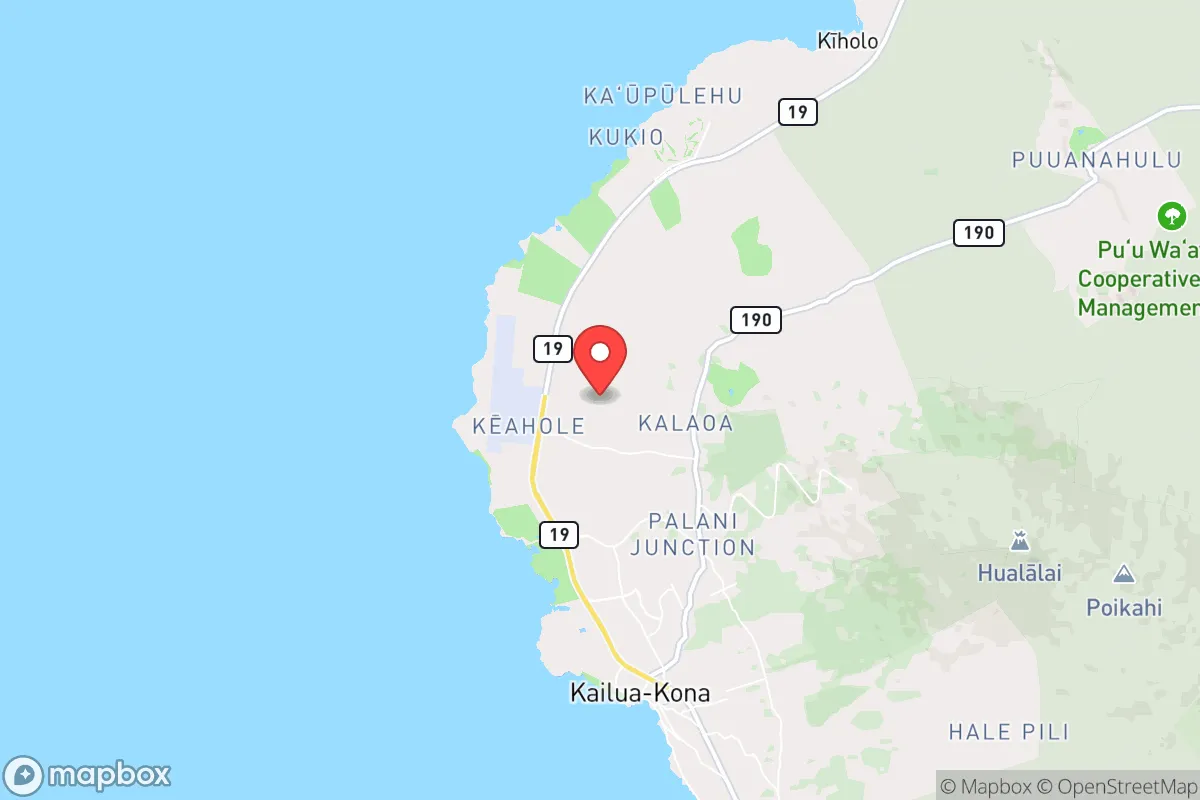
Personal Sovereignty in Kaiminani, HI
Moderate friction. Expect trade-offs in some aspect of personal liberty and independence.
What does Personal Sovereignty tell us?
Personal Sovereignty measures your capacity for self-reliance and independence with minimal government friction. Higher scores mean fewer barriers between you and the way you want to live... but it assumes you have the space you need and good neighbors.
What does this tell us?
Personal Sovereignty measures your capacity for self-reliance and independence with minimal government friction. Higher scores mean fewer barriers between you and the way you want to live... but it assumes you have the space you need and good neighbors.
State Policy
Energy independence: Importer (2% of energy produced in-state)
Personal Liberty
Homesteading

Personal Liberty Analysis
Kaiminani, a newer master-planned community on the Big Island of Hawaiʻi, offers a unique but complex environment for personal sovereignty. While the area provides a physical buffer from mainland chaos and a climate conducive to self-reliance, it operates under the state of Hawaiʻi's heavy regulatory umbrella, which significantly constrains individual autonomy. For the prepper or liberty-minded individual, Kaiminani presents a trade-off: a high degree of physical security and community design versus a legal and political climate that is often hostile to the core tenets of personal freedom. Understanding this tension is critical before making a strategic relocation decision.
Tax burden and regulatory posture in Hawaiʻi County
The state of Hawaiʻi imposes one of the heaviest tax and regulatory burdens in the nation, and Kaiminani is not exempt. There is no local income tax, but the state income tax is progressive and can reach 11%, one of the highest top marginal rates in the country. Property taxes in Hawaiʻi County are relatively low compared to the mainland, with a residential rate around 0.7% of assessed value, but the assessment process is opaque and can be unpredictable. The real sovereignty killer here is the General Excise Tax (GET), which is applied to nearly all business transactions, including rent and services, effectively acting as a hidden sales tax of 4.5% on everything. For a prepper trying to barter or run a side business, this tax creates a paper trail and a compliance burden that undermines off-grid economic activity. Furthermore, Hawaiʻi’s land use commission and county zoning boards exert near-total control over property use. Building permits, even for simple structures, require extensive approvals and can take months. The state’s regulatory posture is one of centralized control, making any independent construction or modification of your property a bureaucratic ordeal. This is a direct constraint on the ability to harden a home or develop a self-sufficient homestead without government oversight.
Self-defense and gun law specifics in Hawaiʻi
For those prioritizing the right to self-defense, Kaiminani and the state of Hawaiʻi represent one of the most restrictive environments in the United States. Hawaiʻi is a "may-issue" state for concealed carry, and in practice, permits are nearly impossible to obtain for ordinary citizens. The county police chief has broad discretion to deny permits, and the standard is "exceptional case," which is rarely met. Open carry is effectively banned. Furthermore, the state maintains a registry of all firearms, and the purchase of handguns is limited to one per 30-day period. Magazine capacity is restricted to 10 rounds, and certain "assault pistols" are banned by name. For the survivalist, this means the legal ability to defend your home with a standard defensive rifle or high-capacity handgun is severely curtailed. The legal climate is actively hostile to the concept of armed self-defense. While property crime is a concern in some parts of the Big Island, the legal tools to address it are minimal. The only viable workaround is to rely on long guns (rifles and shotguns) for home defense, which are less restricted but still subject to registration and the 10-round magazine limit. This is a major sovereignty red flag for anyone who views the Second Amendment as a fundamental check on government overreach.
Self-reliance and homesteading viability in Kaiminani
Kaiminani’s design as a master-planned community offers some advantages for self-reliance, but also imposes significant limitations. Lot sizes in Kaiminani are typically smaller—often 5,000 to 10,000 square feet—which is a far cry from the acreage needed for serious homesteading. The community has strict homeowners' association (HOA) covenants, conditions, and restrictions (CC&Rs) that govern everything from landscaping to the types of structures you can build. Chickens, goats, or other livestock are generally prohibited, and vegetable gardens must be kept neat and unobtrusive. Off-grid feasibility is low: the community is fully tied into county water and electrical grids, and solar panels require HOA approval. The climate is excellent for year-round growing, but the small lot size and HOA rules make true self-sufficiency impossible. For a prepper seeking to live off the land, Kaiminani is a poor fit. The better option would be a rural parcel in Puna or Kaʻū, where zoning is looser and lot sizes are larger. However, those areas come with their own risks (lava zones, flooding, and higher crime). Kaiminani offers a controlled, safe environment for a suburban prepper lifestyle—stockpiling supplies, maintaining a large garden, and having a backup generator—but it is not a homesteading location.
Personal liberties: parental rights, medical autonomy, speech, and property
On the spectrum of personal liberties, Hawaiʻi leans heavily toward state control. Parental rights are under consistent pressure: the state has mandatory vaccination requirements for school attendance (with limited exemptions), and there is a strong push for comprehensive sex education in public schools. Medical autonomy is similarly constrained. Hawaiʻi has some of the strictest prescription drug monitoring laws in the nation, and the state government has shown a willingness to mandate medical procedures during public health emergencies. Free speech is protected by the First Amendment, but the state has a history of aggressive enforcement of campaign finance and election laws that can chill political speech. Property rights are the most concerning. The state’s land use laws give the government broad power to restrict how you use your land, including the ability to condemn property for "public purposes" with minimal compensation. The county also has strict vacation rental regulations that limit your ability to generate income from your property. For the liberty-minded individual, the cumulative effect is a sense that the state is always watching and regulating. The only saving grace is the relative isolation of the Big Island, which provides a natural buffer against federal overreach and the chaos of mainland population centers.
In the final analysis, Kaiminani offers a controlled, safe, and predictable environment that may appeal to those seeking a retreat from the social and political turmoil of the mainland, but it does so at the cost of significant personal sovereignty. The tax burden is high, gun rights are nearly nonexistent, homesteading is impractical, and personal liberties are subject to state approval. Compared to a place like rural Idaho or Montana, where land is cheap, gun laws are permissive, and government is minimal, Kaiminani is a poor choice for the hardcore survivalist or liberty advocate. However, for someone who values physical safety, community stability, and a mild climate above all else, and who is willing to operate within a heavily regulated system, it can serve as a viable, if compromised, relocation option. The key is to go in with eyes wide open: you are trading autonomy for security, and the trade is heavily weighted toward the state.

* Values derived from national, state, county, city and local statistics and may differ in a specific area. Last updated: 2026-05-01T01:37:54.000Z
Narrative content on this page is AI-generated and may contain mistakes. Verify any details that matter before acting on them.
ReloMaps may earn a commission from affiliate links at no extra cost to you.

