

Photo by Braden Jarvis on Unsplash
Political ClimatePolitical Climate in Kaiminani, HI
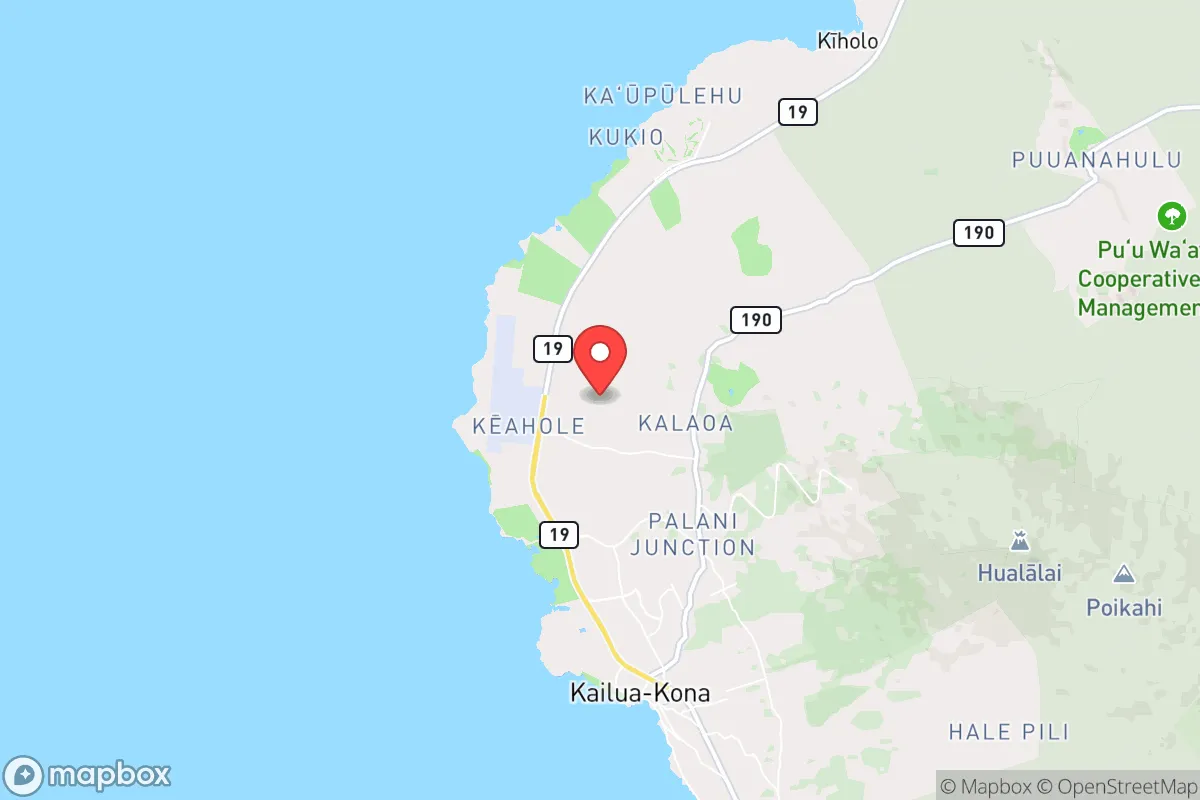
District shown is the primary district for this city’s centroid. Cities may span multiple districts.
Local Political AnalysisPolitical Analysis of Kaiminani, HI
Kaiminani leans heavily Democratic, with a Cook PVI of D+12 that puts it among the most liberal-leaning communities in Hawaii. This isn't a recent shift—it's been trending this way for decades, but the pace has accelerated noticeably since the mid-2010s. If you're used to a place where neighbors keep to themselves and local government stays out of your business, you'll find Kaiminani increasingly feels like the opposite. The local political machine here is tightly aligned with the state's dominant Democratic establishment, and that means policies that prioritize collective goals over individual choice are the norm.
How it compares
Drive twenty minutes north to Waikoloa Village, and you'll find a slightly more balanced electorate—still blue, but with a stronger libertarian streak and more pushback on zoning and tax hikes. Head south to Captain Cook, and the contrast is sharper: that area leans Republican by about 5 points, with a vocal contingent of property-rights advocates and small-business owners who view Kaiminani's progressive agenda with suspicion. Within Kaiminani itself, the divide is generational. Older residents who remember when the area was a quiet fishing community often vote more moderately, while newcomers from the mainland—especially those drawn by remote work and eco-tourism—tend to support the full progressive slate: higher taxes, stricter land-use regulations, and expanded government services. The result is a town where local elections are rarely competitive, and policy debates feel like they're already decided before they start.
What this means for residents
For anyone who values personal freedom, the practical effects are hard to ignore. Kaiminani has one of the highest effective property tax rates on the Big Island, and the county council has shown little appetite for exemptions or relief. Building permits are notoriously slow—expect six to nine months for a simple addition—because the planning department prioritizes environmental reviews and community input over individual property rights. The school board has pushed for mandatory cultural curriculum and expanded DEI programs, which some parents see as overreach into what should be family decisions. On the plus side, public services are well-funded: roads are maintained, parks are clean, and the police department is responsive. But the trade-off is a government that assumes it knows best, and that can feel suffocating if you're used to making your own choices without asking permission.
Looking ahead, the trajectory is concerning for conservatives. The county's general plan, updated in 2024, explicitly calls for "managed growth" that prioritizes affordable housing and transit-oriented development—code for tighter density controls and more restrictions on single-family lots. A proposed "vacation rental cap" would limit short-term rentals to 90 days per year, which could hammer anyone who relies on Airbnb income to afford their mortgage. State-level bills targeting gas-powered lawn equipment and mandating electric-vehicle charging in new homes are likely to pass with Kaiminani's representatives in full support. The cultural vibe is shifting too: local festivals now emphasize sustainability and indigenous rights over traditional community celebrations, and the farmers' market has become a hub for activist booths rather than just produce. If you're looking for a place where government stays small and leaves you alone, Kaiminani is heading in the wrong direction—and fast.

State Political ClimatePolitical Climate in Hawaii
State Political AnalysisPolitical Environment in the State
Hawaii has been a one-party Democratic state for decades, but don’t let the blue veneer fool you—there’s a deep, quiet conservative streak, especially among locals who value family, tradition, and private property. The state’s overall partisan lean is solidly Democratic at the presidential level (Biden won by 29 points in 2020), but the legislature and local politics are more nuanced, with many Democrats actually being quite moderate on fiscal issues. Over the last 10-20 years, the dominant coalition has been a mix of labor unions, Native Hawaiian sovereignty advocates, and mainland transplants pushing progressive social policies, while the old-guard Democratic machine has slowly ceded ground to a younger, more activist wing. The trajectory is concerning for conservatives: the state is becoming more ideologically rigid, with less tolerance for dissenting views on everything from land use to education.
Urban vs. rural divide
The political map of Hawaii is stark. Honolulu on Oahu drives the state’s progressive lean—think dense urban core, high union density, and a heavy concentration of government workers and University of Hawaii faculty. The city’s liberal tilt is amplified by transplants from the mainland, particularly in neighborhoods like Kakaako and Waikiki. Meanwhile, the Big Island (Hawaii County) is the state’s most politically divided region: the Kona side leans more conservative, with a strong ranching and agricultural base, while Hilo is a progressive stronghold with a large university presence. Maui County is a mixed bag—Kihei and Wailea are more moderate, but Kahului is union-heavy and left-leaning. Kauai is reliably Democratic but with a slower, more traditional pace. The rural areas—like Hana on Maui or Waimea on the Big Island—tend to be more conservative on social issues like gun rights and property taxes, but they’re often drowned out by the urban vote. The key takeaway: if you want a more conservative environment, look to the outer islands’ agricultural zones, not Oahu.
Policy environment
Hawaii’s policy environment is a mixed bag for conservatives. On the plus side, property taxes are among the lowest in the nation—a major draw for homeowners. But the trade-off is a crushing cost of living driven by high state income taxes (top rate of 11%) and a general excise tax that hits everything from groceries to rent. The regulatory posture is heavy: land use laws are extremely restrictive, making it hard to build new housing or start a business without years of permitting. Education policy is a flashpoint—the state has a single, centralized school district, which means no local control over curriculum or funding. In 2023, the legislature passed a bill requiring all public schools to teach “culturally responsive” standards that many conservatives see as ideological. Healthcare is heavily regulated, with a state-run insurance exchange and strict certificate-of-need laws that limit competition. Election laws are relatively open—same-day voter registration and universal mail-in ballots are the norm—which some conservatives argue reduces election integrity. The bottom line: the state offers low property taxes but high income taxes and a regulatory thicket that can feel like government overreach.
Trajectory & freedom
Hawaii is becoming less free by almost any measure. On gun rights, the state has some of the strictest laws in the nation—a 2022 law banned open carry and required a “good cause” for concealed carry permits, effectively gutting the Second Amendment after the Bruen decision. The legislature is currently considering a bill to ban “ghost guns” and raise the purchase age to 21. On parental rights, a 2023 law (SB 103) removed the requirement for schools to notify parents if a child changes their gender identity or pronouns—a direct blow to family autonomy. Medical freedom took a hit with a 2021 law mandating COVID-19 vaccines for all state employees, which was upheld by the courts. Property rights are under constant threat from the state’s powerful Land Use Commission, which can rezone land without local input. The only bright spot is a 2024 law that slightly expanded school choice by allowing charter schools to operate more independently, but it’s a drop in the bucket. The trajectory is clear: more mandates, less personal liberty.
Civil unrest & political movements
Hawaii has a history of civil unrest, but it’s often framed through a Native Hawaiian lens rather than left-right politics. The Thirty Meter Telescope protests on Mauna Kea (2019-2020) were a major flashpoint, drawing activists from across the political spectrum—some conservatives joined because they opposed government land seizures, while progressives rallied for indigenous rights. The state also has a strong sovereignty movement that occasionally flirts with secession rhetoric, though it’s mostly symbolic. On the right, there’s a small but vocal Hawaii Republican Party that focuses on tax relief and property rights, but it’s largely marginalized. Immigration politics are less heated than on the mainland because Hawaii’s geography limits illegal immigration, but the state is a sanctuary state in practice—law enforcement doesn’t cooperate with ICE. Election integrity controversies have been minimal, but the 2020 election saw a few isolated complaints about mail-in ballot security. The most visible flashpoint for a new resident would be the constant tension between development and preservation—every new housing project or hotel sparks protests from environmentalists and locals who fear change.
Projection
Over the next 5-10 years, Hawaii will likely become more progressive and less affordable. Demographic shifts are working against conservatives: the state’s native-born population is aging and declining, while in-migration from California and the Pacific Northwest brings more left-leaning voters. The legislature is expected to pass a wealth tax on high-value properties and a state-level capital gains tax, further squeezing the middle class. The housing crisis will worsen, driving more families to the mainland. The only wild card is a potential political realignment if the cost of living becomes so unbearable that voters revolt against the Democratic machine—but that’s a long shot. For a conservative moving in now, expect to find a state where your voice is increasingly marginalized, your taxes are high, and your personal freedoms are limited by government mandates. The best-case scenario is that the outer islands remain havens of traditional values, but even there, the tide is rising.
Bottom line for a new resident: If you’re a conservative considering Hawaii, you need to go in with eyes wide open. The state offers unmatched natural beauty and a strong sense of community, but it comes at the cost of high taxes, heavy regulation, and a political climate that is actively hostile to traditional values. Your best bet is to target rural areas on the Big Island or Kauai, where you’ll find like-minded neighbors and lower property taxes. But don’t expect to change the state’s direction—it’s a long, uphill battle. If you value personal freedom above all else, Hawaii may not be your paradise.
* Values derived from national, state, county, city and local statistics and may differ in a specific area. Last updated: 2026-05-01T01:37:54.000Z
Narrative content on this page is AI-generated and may contain mistakes. Verify any details that matter before acting on them.
ReloMaps may earn a commission from affiliate links at no extra cost to you.

