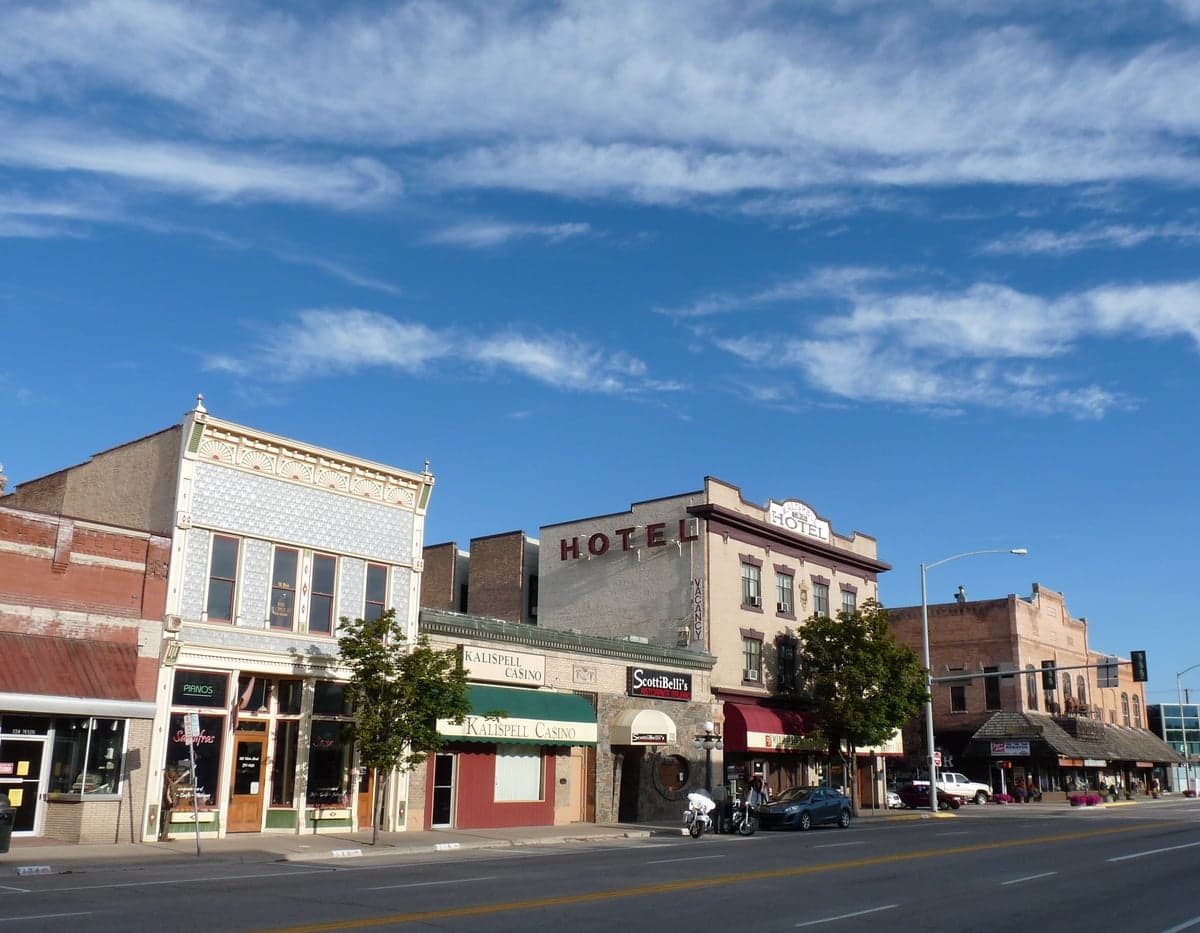
Photo: Wikipedia
Political ClimatePolitical Climate in Kalispell, MT
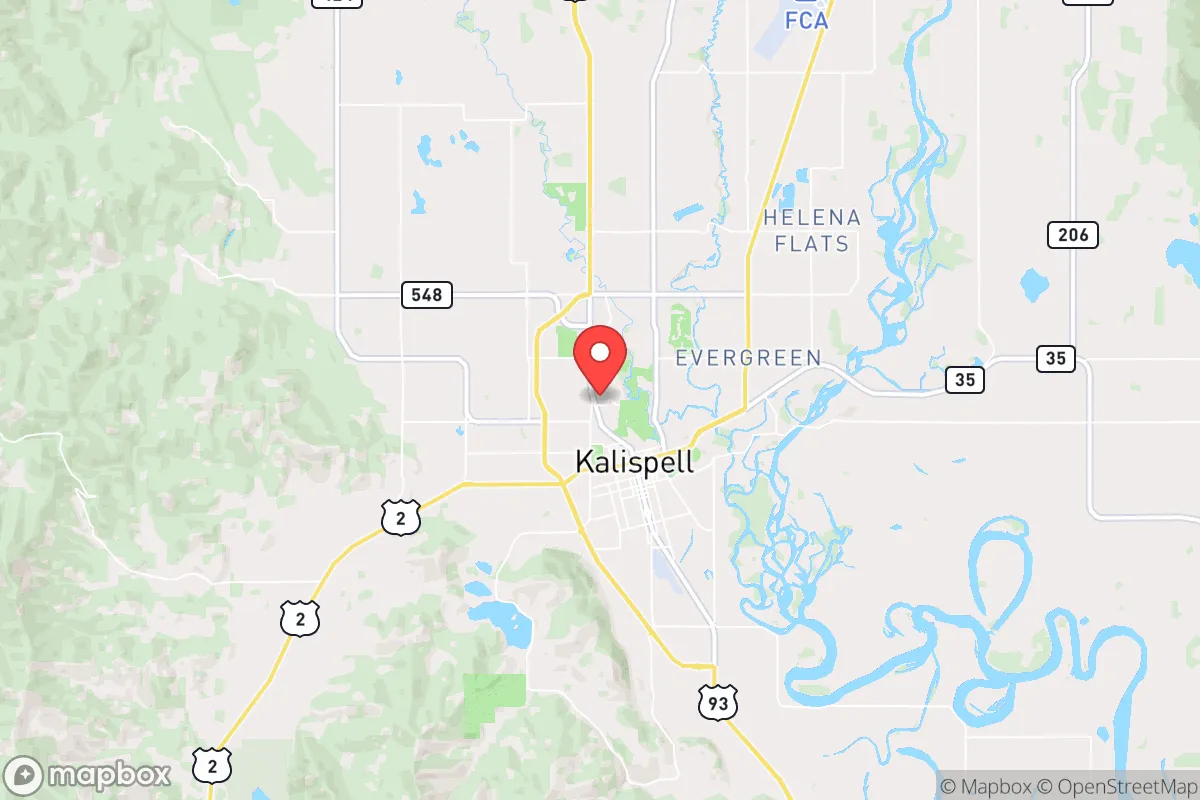
District shown is the primary district for this city’s centroid. Cities may span multiple districts.
Local Political AnalysisPolitical Analysis of Kalispell, MT
Kalispell has long been a solidly conservative community, and while the Flathead Valley still leans that way, you can feel the political ground shifting under your feet. The Cook PVI for the area sits at R+5, which tells you we’re reliably red, but that number doesn’t capture the cultural tension that’s been building over the last decade. The old-school, live-and-let-live Montana conservatism that defined this town for generations is now bumping up against a wave of newcomers from places like California and Washington, and some of them are bringing ideas that would have been laughed out of a Kalispell coffee shop ten years ago.
How it compares
If you drive an hour south to Missoula, you’re in a completely different world—that’s a deep blue college town where progressive policies are the norm. The contrast is stark. Here in Kalispell, we still have a county commission that fights for property rights and pushes back against state-level mandates, but you can see the pressure building. Places like Whitefish, just 15 miles west, have already flipped toward a more liberal-leaning, resort-town vibe, with higher taxes and more restrictive land-use rules that make it harder for locals to build or start a business. Kalispell is still holding the line, but the same forces that changed Whitefish are knocking on our door. The real worry is that as more people move here for the scenery, they’ll vote to change the very character that made them come in the first place.
What this means for residents
For those of us who’ve been here a while, the biggest concern is government overreach creeping into everyday life. We’ve seen it with zoning battles, where new regulations make it tougher to run a small shop out of your garage or build a fence without a dozen permits. There’s also a growing push from some local groups to adopt “equity” policies in schools and county hiring, which feels like a solution in search of a problem. Most folks here just want to be left alone—to hunt, fish, run a business, and raise their kids without a bureaucrat telling them how to do it. The recent fights over library materials and school curriculum aren’t just noise; they’re a sign that some people want to import the same top-down control that’s ruining other states. If you value personal freedom and local control, you need to pay attention to who’s running for city council and school board, because that’s where the real battles are happening.
On the cultural side, Kalispell still feels like a place where a handshake matters and neighbors help each other haul firewood. The gun culture is strong, and the Second Amendment isn’t up for debate here. But there’s a quiet worry that the next election cycle could bring a wave of progressive candidates funded by out-of-state money, promising “change” that really means more taxes, more restrictions, and less freedom. The long-term trajectory depends on whether the people who love this town for its independence will stay engaged, or whether they’ll let the newcomers turn Kalispell into another over-regulated mountain town that’s lost its soul. For now, it’s still a good place to live, but you’ve got to keep your eyes open.

State Political ClimatePolitical Climate in Montana
State Political AnalysisPolitical Environment in the State
Montana has long been a reliably Republican state at the presidential level, voting for the GOP candidate in every election since 1968 except for 1992, but the real story is the internal tension between a deeply libertarian, individualistic frontier culture and a growing influx of out-of-state transplants, many from blue states, who are slowly shifting the political center of gravity in certain pockets. The dominant coalition remains conservative, anchored by ranchers, farmers, and resource-extraction workers, but the state’s 10-20 year trajectory shows a clear trend: the old-school, live-and-let-live Montana is being challenged by a more progressive, government-oriented vision, particularly in and around Bozeman and Missoula. If you’re looking for a place where personal freedom and limited government are still the default, Montana still fits the bill, but you need to know where the lines are drawn.
Urban vs. rural divide
The political map of Montana is a textbook case of the urban-rural split. The western third of the state, dominated by the Rocky Mountain front, contains the two major population centers: Missoula and Bozeman. Missoula, home to the University of Montana, is a reliably blue island in a red sea, consistently voting Democratic by double digits in statewide races. Bozeman, once a conservative ranching town, has transformed into a progressive-leaning tech and outdoor recreation hub, fueled by an influx of Californians and Coloradans; Gallatin County, which includes Bozeman, flipped from red to purple in the 2010s and now often votes Democratic in close races. In contrast, the eastern two-thirds of the state—places like Billings, Great Falls, and the Hi-Line—remain deeply conservative. Billings, the largest city, is a Republican stronghold, and rural counties like Petroleum, Garfield, and Carter routinely deliver 80-90% of their votes to GOP candidates. The divide isn’t just about geography; it’s about culture. In Missoula and Bozeman, you’ll find bike lanes, farmers markets, and a growing regulatory appetite. In the rest of the state, you’ll find pickup trucks, church potlucks, and a deep suspicion of government telling you what to do with your land.
Policy environment
Montana’s policy environment is still broadly favorable to conservatives, but the cracks are showing. The state has no sales tax, a flat income tax rate of 5.9% (recently lowered from 6.75% under the 2021 tax reform), and relatively low property taxes compared to the coasts. The regulatory posture is generally light, especially for agriculture and energy—Montana is a major coal, oil, and natural gas producer, and the state government has resisted federal overreach on public lands management. Education policy is a mixed bag: Montana has a robust school choice movement, with charter schools and a new Education Savings Account program passed in 2023, but the state teachers’ union remains powerful, and curriculum battles over critical race theory and gender ideology have been heated in districts like Missoula County Public Schools. On healthcare, Montana expanded Medicaid under the Affordable Care Act in 2015, a decision that remains controversial among conservatives, but the state has also passed laws protecting medical freedom, including a 2021 ban on vaccine passports and a 2023 law prohibiting discrimination against unvaccinated individuals. Election laws are solid: Montana has voter ID requirements, no same-day registration, and a ban on ballot harvesting, though the 2020 election saw a surge in mail-in voting that many conservatives view with skepticism. The state also has a strong initiative process, which has been used to enact conservative priorities like the 2021 law requiring parental notification for minors seeking abortions.
Trajectory & freedom
Montana is at a crossroads on personal freedom. On the positive side, the state has been a leader in protecting gun rights: in 2021, Governor Greg Gianforte signed a constitutional carry law, allowing permitless concealed carry, and in 2023, the legislature passed a law prohibiting state and local enforcement of federal gun regulations that violate the Second Amendment. Parental rights have also been strengthened: the 2021 Parental Rights in Education Act requires schools to notify parents of any curriculum involving sexuality or gender identity, and a 2023 law bans transgender athletes from competing in girls’ sports. On medical autonomy, Montana passed a 2021 law prohibiting employers from mandating COVID-19 vaccines, and a 2023 law protects the right to refuse any medical treatment. However, there are concerning trends. The state’s property rights are under threat from a growing “land use planning” movement in progressive counties; Gallatin County has imposed strict growth regulations that limit new housing construction, driving up prices and reducing individual freedom to build on private land. Taxation is also creeping upward: while the income tax rate was lowered, property taxes have risen sharply in high-demand areas like Bozeman and Missoula, fueled by inflated home values and local government spending. The biggest red flag is the influence of out-of-state money: groups like the Montana Conservation Voters and the ACLU of Montana are pushing for more government control over land, water, and energy, and they’ve had success in local elections in Missoula and Bozeman.
Civil unrest & political movements
Montana is not a hotbed of civil unrest, but there have been flashpoints. The most visible was the 2020-2021 protests in Missoula over racial justice and police reform, which included a controversial effort to defund the police that ultimately failed. On the right, the Montana Freedom Caucus, a group of hardline conservative legislators, has been active in pushing back against vaccine mandates and election integrity concerns. The state has seen a surge in “county supremacy” movements, particularly in rural areas like Lincoln County and Sanders County, where local officials have passed resolutions declaring their counties “Second Amendment sanctuaries” and refusing to enforce certain state or federal laws. Immigration politics are relatively quiet, as Montana has a small foreign-born population, but there have been tensions over the resettlement of refugees in Missoula and Billings, with some residents expressing concerns about strain on public services. Election integrity remains a hot-button issue: the 2020 election saw a massive increase in mail-in voting, and while no widespread fraud was proven, many conservatives remain skeptical of the process. The state’s Republican Party has pushed for stricter voter ID laws and a ban on ballot drop boxes, but these efforts have been stymied by Democratic Governor Steve Bullock’s vetoes before Gianforte took office. A new resident would notice the political polarization most acutely in the local media: the Missoulian and Bozeman Daily Chronicle lean left, while the Billings Gazette and Great Falls Tribune are more centrist, and talk radio is overwhelmingly conservative.
Projection
Over the next 5-10 years, Montana is likely to become more politically competitive, but not necessarily more liberal. The in-migration pattern is the key driver: people are moving to Montana from California, Washington, and Oregon for lower taxes and more freedom, but they’re also bringing their voting habits with them. Gallatin County is already purple, and Missoula County is solidly blue; if these trends continue, the state could flip to a toss-up in presidential elections within a decade. However, the rural counties are not going anywhere—they’re growing slowly but remain deeply conservative, and the state’s legislative districts are drawn to give rural areas disproportionate power. The real battleground will be the state legislature and the governor’s mansion. If Democrats can win the governorship in 2028, expect a push for Medicaid expansion permanence, renewable energy mandates, and stricter gun control. If Republicans hold the line, Montana will remain a beacon of limited government. The wildcard is the state’s housing crisis: if property taxes and land-use regulations continue to rise, it could spark a backlash that strengthens the libertarian wing of the GOP. For a new resident, the bottom line is this: Montana is still a great place for someone who values personal freedom, low taxes, and a hands-off government, but you need to choose your county carefully. Stick with the rural areas or the conservative suburbs of Billings and Great Falls, and you’ll find the Montana of your grandparents. Move to Bozeman or Missoula, and you’ll find a state that’s changing fast—and not necessarily for the better.
For a conservative individual or family considering relocation, Montana offers a strong foundation of gun rights, parental rights, and low taxes, but the political climate is increasingly fractured along urban-rural lines. The practical takeaway: if you want the full Montana experience of freedom and self-reliance, look at towns like Kalispell, Helena, or Miles City, where the culture is still rooted in independence and the government stays out of your way. Avoid the progressive enclaves unless you’re prepared for higher costs, more regulation, and a political environment that feels more like Portland than the Last Best Place. The state’s trajectory is uncertain, but for now, Montana remains one of the best bets in the West for someone who wants to be left alone.
* Values derived from national, state, county, city and local statistics and may differ in a specific area. Last updated: 2026-04-30T08:13:00.000Z
Narrative content on this page is AI-generated and may contain mistakes. Verify any details that matter before acting on them.
ReloMaps may earn a commission from affiliate links at no extra cost to you.

