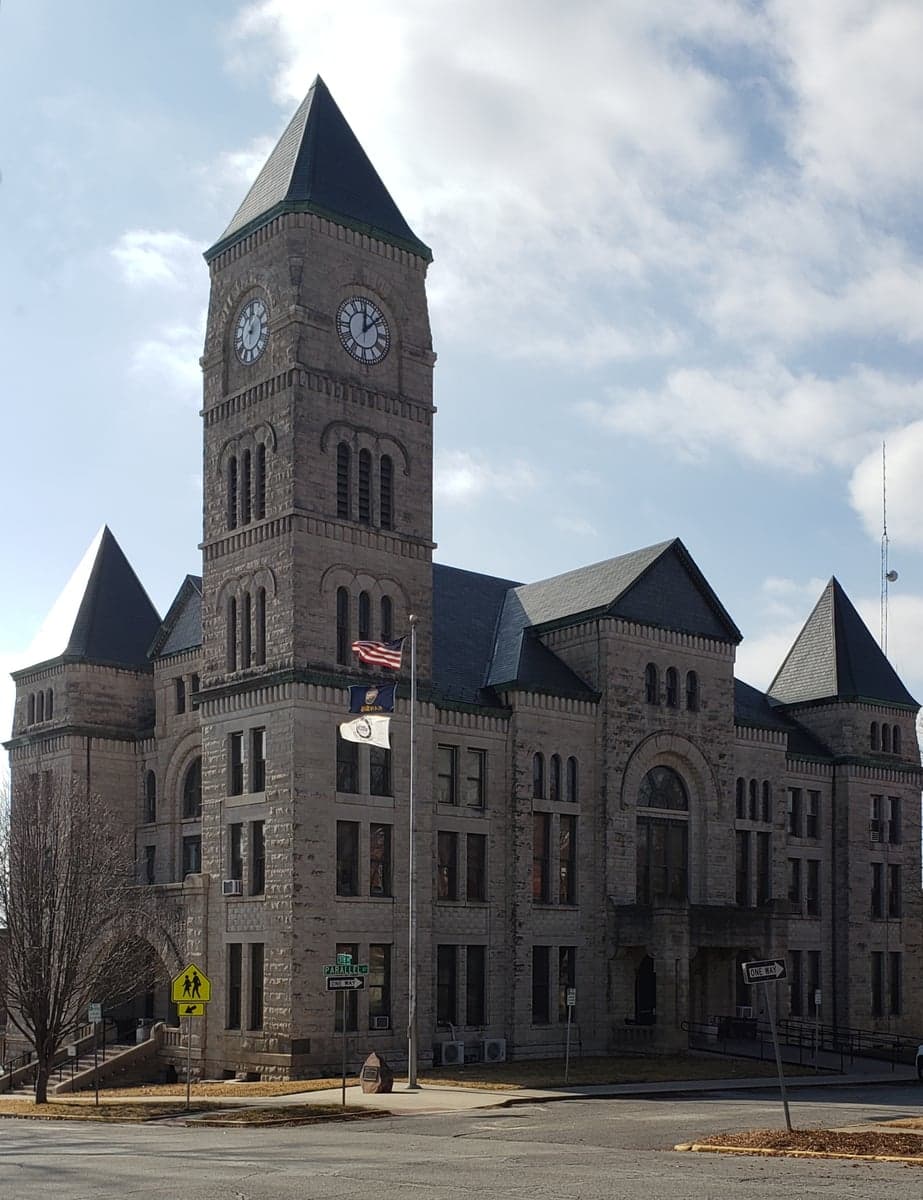
Photo: Wikipedia
Quality of Life in Atchison County
A livable area that tracks near national norms for affordability, walkability, and neighborhood health.
What does Quality of Life tell us?
Quality of Life measures an area by evaluating factors like cost of living, nearby amenities, country club access, airport proximity, socioeconomic signals and neighborhood character. For large states, this is a general average — quality of life can vary dramatically between metro areas, suburbs, and rural communities within the same state.
What does this tell us?
Quality of Life measures an area by evaluating factors like cost of living, nearby amenities, country club access, airport proximity, socioeconomic signals and neighborhood character. For large states, this is a general average — quality of life can vary dramatically between metro areas, suburbs, and rural communities within the same state.
Cost of Living
40% below national average
147%
The Real Cost of Living in Atchison County for 2026
| Tier | Individual | Family (4) |
|---|---|---|
| Survival | $12k | $23k |
| Comfortable | $29k | $42k |
| Luxury | $98k+ | $152k+ |
| Elite (Top 5%) | $116k+ | $179k+ |
Quality-of-Life Analysis
Atchison County, Kansas, offers a broad spectrum of quality-of-life options, from the historic river-town bustle of its county seat to the quiet solitude of unincorporated prairie hamlets. With a cost of living index of 60—well below the national average of 100—the county attracts a mix of retirees seeking affordability, remote workers drawn to low housing costs, and agricultural families rooted in generational land. The median home value of $147,900 and median rent of $756 create a clear divide: compact, walkable neighborhoods in town versus sprawling acreages in the countryside, each with distinct trade-offs in convenience and space.
Largest town(s) & population centers
Atchison (pop. ~10,800) is the county's undisputed hub and the only incorporated city with a full suite of urban amenities. Daily life here revolves around the historic downtown along the Missouri River, with locally owned shops, the Amelia Earhart Birthplace Museum, and Benedictine College anchoring a small but active cultural scene. The average commute of roughly 22 minutes reflects the town's compact layout—most errands are a short drive or bike ride. Housing in Atchison leans toward older Victorian and Craftsman homes, with median values near the county average; renters find the $756 median rent affordable compared to Kansas City (45 minutes south). The town draws professionals employed at the college, the local hospital, and manufacturing plants like MGP Ingredients, as well as retirees who value walkable blocks and river views.
Smaller towns & rural pockets
Beyond Atchison, the county's smaller communities offer a quieter, more agrarian rhythm. Effingham (pop. ~540) centers on a grain elevator and a single main street, with housing prices often 15–20% below the county median—think $110,000 for a three-bedroom ranch. Lancaster (pop. ~270) and Muscotah (pop. ~170) are unincorporated hamlets where daily life means driving 15–20 minutes to Atchison for groceries or medical care. The unincorporated area of Arrington is little more than a crossroads with a handful of farmsteads, appealing to those who prioritize land over proximity. These pockets attract families seeking low property taxes (Kansas's statewide rate is roughly 1.3% of assessed value) and hobby farmers who want acreage for horses or hay without the premium of suburban subdivisions.
Cost & lifestyle range
The cost spread across Atchison County is stark. At the low end, a fixer-upper in rural Effingham or Lancaster can sell for under $80,000, with property taxes often below $1,200 annually—ideal for cash buyers or those with modest retirement savings. At the high end, riverfront homes in Atchison's historic district (e.g., along North 2nd Street) command $250,000–$350,000, offering Victorian architecture and walkable access to the riverfront trail. Renters see a similar gap: a one-bedroom apartment in Atchison averages $650, while a rural rental with land in the Shannon area might run $850–$1,000. Utility costs are slightly below the Kansas average due to the county's temperate climate, but rural residents pay more for well maintenance and septic systems. Amenities follow the same gradient—Atchison has a hospital, a YMCA, and a public library, while smaller towns rely on volunteer fire departments and a single gas station.
This county suits people who value affordability and space over urban density. Retirees on fixed incomes often settle in Atchison for its services and social opportunities, while remote workers and young families gravitate to the cheaper rural pockets for acreage and quiet. Agricultural families remain the backbone, with the county's 400+ farms producing corn, soybeans, and cattle. For anyone seeking a low-cost, low-stress lifestyle with the Missouri River as a backdrop, Atchison County delivers a clear choice: town convenience or country solitude, both at a fraction of the national average.

Crime in Atchison County
Crime rates similar to the national median for U.S. locations.
Violent CrimeViolent Crime Analysis
Property CrimeProperty Crime Analysis
Crime Analysis
Atchison County, Kansas, presents a mixed safety picture where property crime rates significantly exceed both state and national averages, while violent crime hovers near the Kansas state figure. The county’s overall crime landscape is shaped by its small-town character, with the city of Atchison as the primary population center, alongside smaller communities like Effingham, Lancaster, and Huron. Understanding the specific crime dynamics in these areas is essential for anyone considering relocation to this northeastern Kansas region.
Crime in context
Atchison County’s violent crime rate of 447.8 incidents per 100,000 residents is notably higher than the Kansas state average of roughly 395 per 100,000 and well above the national median of approximately 380 per 100,000. Property crime in the county stands at 1,806.8 per 100,000, a figure that exceeds both the Kansas average (around 2,100 per 100,000) and the national rate (approximately 1,950 per 100,000). These numbers place Atchison County in a higher-risk tier compared to many rural Kansas counties. The city of Atchison, as the county seat and largest municipality, accounts for the majority of reported incidents, particularly property crimes like theft and burglary. Smaller towns such as Effingham and Lancaster report far fewer incidents, but their low population bases can make per-capita rates volatile from year to year. The county’s proximity to the Kansas City metropolitan area, about 45 miles south, means some property crime may be linked to transient offenders moving along the US-73 and US-59 corridors.
What residents experience
Residents of Atchison County commonly report that property crime—especially vehicle break-ins, shed burglaries, and theft from unlocked homes—is the most tangible safety concern in daily life. The city of Atchison, home to Benedictine College and a historic downtown, sees periodic spikes in vandalism and theft, particularly near the college campus and along Commercial Street. In contrast, the unincorporated areas and villages like Huron and Muscotah experience very low violent crime, though agricultural theft (fuel, tools, livestock) is a recurring issue. The county’s judicial system, overseen by the 1st Judicial District, has historically taken a moderate approach to sentencing, but residents express frustration that progressive-leaning policies in nearby Wyandotte County (Kansas City, KS) sometimes result in offenders cycling back into Atchison County after short sentences. This cross-jurisdictional effect is a concern for local law enforcement, who note that property crime recidivism is higher when offenders face lenient treatment in neighboring urban courts. The Atchison County Sheriff’s Office maintains a visible presence in rural areas, but response times can exceed 20 minutes in the far eastern parts of the county near the Missouri border.
Neighborhood-level variation
Safety varies noticeably within Atchison County. The city of Atchison’s west side, near the river and older industrial zones, sees higher rates of reported theft and occasional aggravated assault, while the east side and areas around Benedictine College are generally safer due to campus security patrols and a higher concentration of owner-occupied homes. Effingham, with a population under 600, consistently reports the lowest crime rates in the county, making it a preferred choice for families seeking a quiet, low-crime environment. Lancaster and Huron also maintain low incident counts, though their remote locations mean residents rely heavily on neighborly watchfulness rather than rapid police response. For those considering a move, the safest housing options are typically found in the smaller towns or on the outskirts of Atchison city limits, where property crime rates drop by an estimated 30-40% compared to the downtown core. Prospective residents should also note that the county’s lack of a major urban center means most crime is opportunistic rather than organized, and proactive measures like outdoor lighting and neighborhood watch participation are highly effective deterrents.
* Values derived from national, state, county, city and local statistics and may differ in a specific area. Last updated: 2026-05-29T10:03:32.000Z
Narrative content on this page is AI-generated and may contain mistakes. Verify any details that matter before acting on them.
ReloMaps may earn a commission from affiliate links at no extra cost to you.

