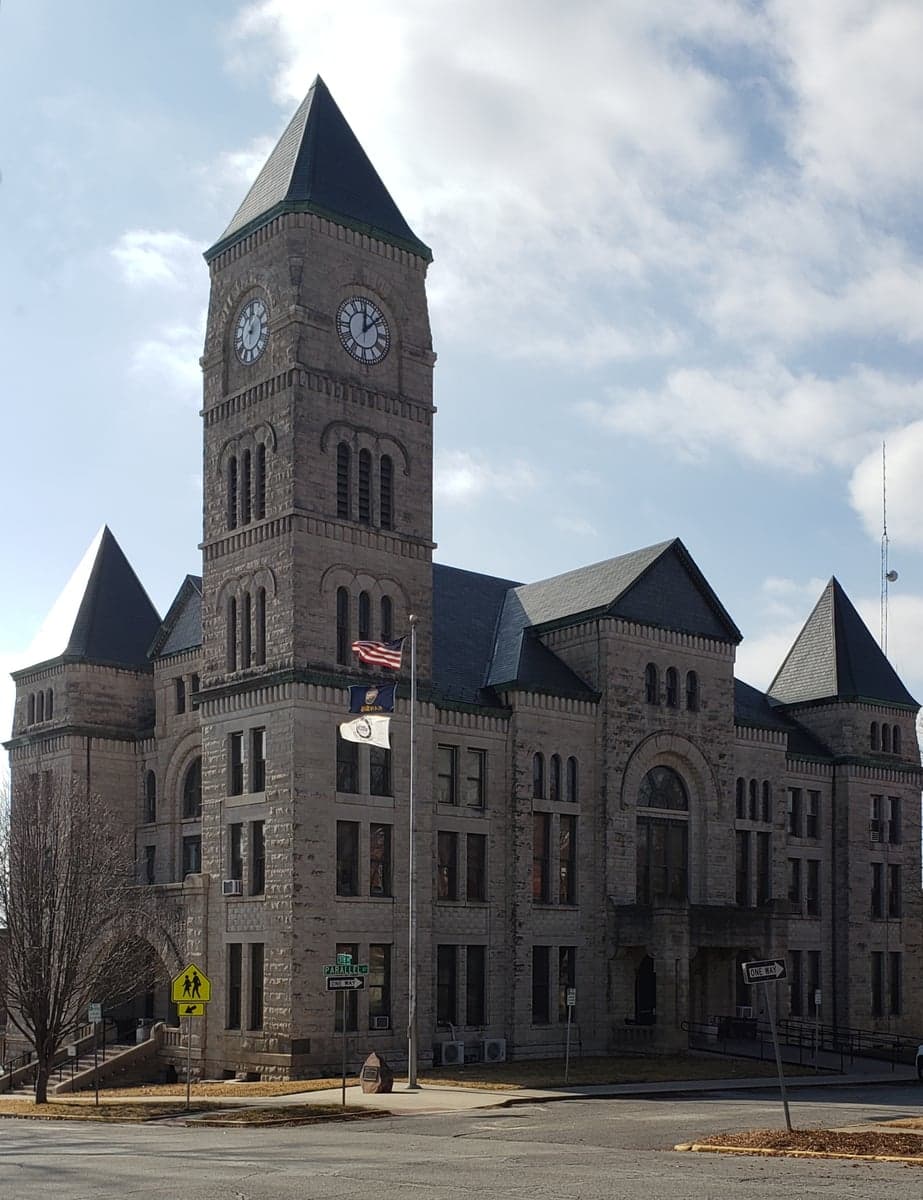
Photo: Wikipedia
Personal Sovereignty in Atchison County
Viable for self-reliance. Generally workable, though some barriers may limit total independence.
What does Personal Sovereignty tell us?
Personal Sovereignty measures your capacity for self-reliance and independence with minimal government friction. Higher scores mean fewer barriers between you and the way you want to live... but it assumes you have the space you need and good neighbors.
What does this tell us?
Personal Sovereignty measures your capacity for self-reliance and independence with minimal government friction. Higher scores mean fewer barriers between you and the way you want to live... but it assumes you have the space you need and good neighbors.
State Policy
Energy independence: Self-sufficient (80% of energy produced in-state)
Personal Liberty
Homesteading

Personal Liberty Analysis
Atchison County, Kansas, offers a notably high degree of personal sovereignty compared to the coastal and urban centers many readers are looking to exit, but it is not a libertarian free-for-all. The county’s rural character and small-town governance create a lighter regulatory touch than what you’d find in Johnson County or the Kansas City metro, yet state-level preemptions and county zoning still impose real constraints. For the single individual or parent prioritizing autonomy—especially from a survivalist or prepper perspective—this area presents a mixed picture: strong on self-defense and property rights, but with tax and zoning policies that require careful navigation. The key is understanding where the county’s local ordinances diverge from the state’s generally conservative framework.
Tax burden and regulatory posture: how Atchison County compares to surrounding areas
Kansas’s state income tax is a flat 5.7% as of 2026, which is moderate but not negligible—especially for those earning income from remote work or side hustles. Atchison County itself levies a mill levy of roughly 85 mills on property, which translates to about $1,200 annually on a $150,000 home. That’s higher than neighboring Doniphan County (around 70 mills) but lower than Leavenworth County (over 100 mills). The real regulatory win here is the absence of county-level building codes outside the city limits of Atchison and Effingham. If you buy raw land in rural areas like Muscotah or Cummings, you can build a shed, a cabin, or even a shipping container home without pulling a permit—something impossible in most of Douglas County. However, the county does enforce a subdivision regulation that requires a minimum of 5 acres for any new lot split, which can frustrate those wanting to buy a small parcel and go off-grid. The state’s business climate is generally pro-growth, with no corporate income tax on pass-through entities, but the county’s planning department has a reputation for slow processing on variance requests. For a prepper, the takeaway is: buy land in the unincorporated townships—Lancaster and Mount City are particularly lax—and avoid the city limits of Atchison proper, where a 2019 zoning update added restrictions on accessory structures and livestock.
Self-defense and gun law specifics: what the Second Sanctuary status means for you
Atchison County is a Second Amendment Sanctuary, a designation passed by the county commission in 2021 that formally opposes any state or federal infringements on the right to keep and bear arms. In practice, this means local law enforcement will not enforce any future red-flag laws or magazine bans that might pass in Topeka or Washington. Kansas is already a constitutional carry state—no permit needed to carry a concealed firearm—and Atchison County’s sheriff’s office is known for issuing concealed carry permits (still useful for reciprocity) within 30 days. The gun culture here is robust: you’ll find shooting ranges in Effingham and Horton, and private land is plentiful for target practice. For parents, this is a place where you can teach your kids firearm safety without fear of social stigma or legal overreach. The only real limitation is that the city of Atchison has a municipal ordinance prohibiting discharge of firearms within city limits (except at approved ranges), so if you live in town, you’ll need to drive 10 minutes out to the countryside. The county’s stance on self-defense extends to castle doctrine and stand-your-ground laws, both of which are codified in Kansas statute. There is no duty to retreat in your home, vehicle, or place of business. For the prepper mindset, this is a critical factor: you are legally empowered to defend your family and property without the legal jeopardy you’d face in states like California or New York.
Self-reliance and homesteading viability: lot sizes, zoning, and off-grid feasibility
Homesteading in Atchison County is viable but requires strategic land selection. The county’s zoning code divides land into agricultural (A), rural residential (RR), and suburban (SR) districts. In the A district, which covers most of the county outside the towns, you can keep livestock, build a barn, and drill a well without a county permit. The minimum lot size for a dwelling in the A district is 5 acres, but you can find parcels as small as 1 acre in the RR district near Lancaster—though those often come with covenants that restrict off-grid power. Off-grid solar is legal statewide, but the county requires a building permit for any electrical system over 10 kW, and the local utility, Evergy, has a net-metering cap that limits how much you can sell back. Rainwater collection is unrestricted, and composting toilets are allowed under the state’s alternative wastewater system rules. The real challenge is water: the Missouri River aquifer provides reliable groundwater in the eastern part of the county, but areas west of Muscotah have lower yields, and drilling a well can cost $8,000–$12,000. For those wanting to live completely off-grid, the unincorporated areas around Cummings and Mount City are the best bets—no HOA, no city water hookup requirement, and minimal county oversight. The county’s planning department does require a septic system permit, but they accept DIY designs if you follow the state’s standard specifications. Compared to the Austin city limits, where off-grid living is effectively banned, Atchison County is a breath of fresh air—but you still need to do your due diligence on parcel-specific restrictions.
Personal liberties: parental rights, medical autonomy, speech, and property
Parental rights in Kansas are strong, with a 2023 law requiring school districts to notify parents of any curriculum changes related to sexuality or gender identity. Atchison Public Schools and the smaller districts in Effingham and Horton have complied without controversy, and the county’s school board meetings are generally low-drama affairs. Medical autonomy is more nuanced: Kansas has no vaccine mandate for adults, but the state’s health department does require certain immunizations for school attendance (with religious and medical exemptions available). The county’s two hospitals—Atchison Hospital and the smaller clinic in Effingham—are not known for pushing experimental treatments, and the local medical community is generally respectful of patient choice. On speech, the county is a free-speech zone in practice: you can fly a Gadsden flag, a Trump flag, or a Christian flag on your property without pushback. The city of Atchison has a sign ordinance that restricts political signs to 60 days before an election, but enforcement is lax. Property rights are the crown jewel here: Kansas has a strong right-to-farm law that protects agricultural operations from nuisance lawsuits, and the county’s planning department rarely initiates code enforcement unless a neighbor complains. For a prepper, this means you can stockpile supplies, build a root cellar, or install a backup generator without fear of government intrusion. The only real threat to property rights is the county’s ability to impose a special assessment for road improvements—something that happened in 2022 to landowners along 222nd Road, who were billed $3,000 each for gravel upgrades. Always check the county’s five-year road plan before buying.
Overall, Atchison County offers a level of personal sovereignty that ranks in the top 20% of U.S. counties for those with a survivalist or conservative mindset. The tax burden is manageable, the gun laws are among the most permissive in the nation, and the regulatory environment for homesteading is favorable—especially if you avoid the city limits of Atchison. The county’s biggest weakness is its lack of a strong local prepper community or organized mutual-aid networks, which you’ll find in places like Linn County or the Flint Hills. But for a single individual or a family looking to buy land, build a self-sufficient homestead, and live without constant government overreach, Atchison County is a solid, under-the-radar choice. The key is to buy in the unincorporated townships—Muscotah, Cummings, Mount City, and Lancaster—and to budget for the upfront costs of well drilling and septic installation. If you can handle that, you’ll find a place where your freedom is respected, your family is safe, and your property is truly your own.

* Values derived from national, state, county, city and local statistics and may differ in a specific area. Last updated: 2026-05-29T10:03:32.000Z
Narrative content on this page is AI-generated and may contain mistakes. Verify any details that matter before acting on them.
ReloMaps may earn a commission from affiliate links at no extra cost to you.

