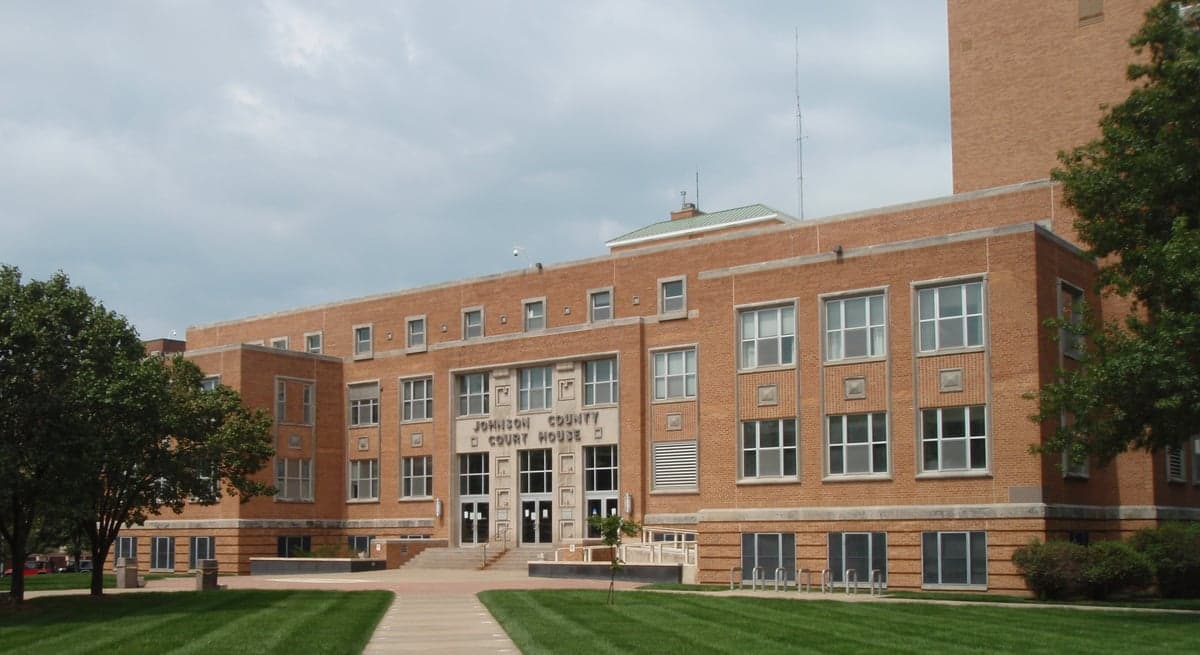
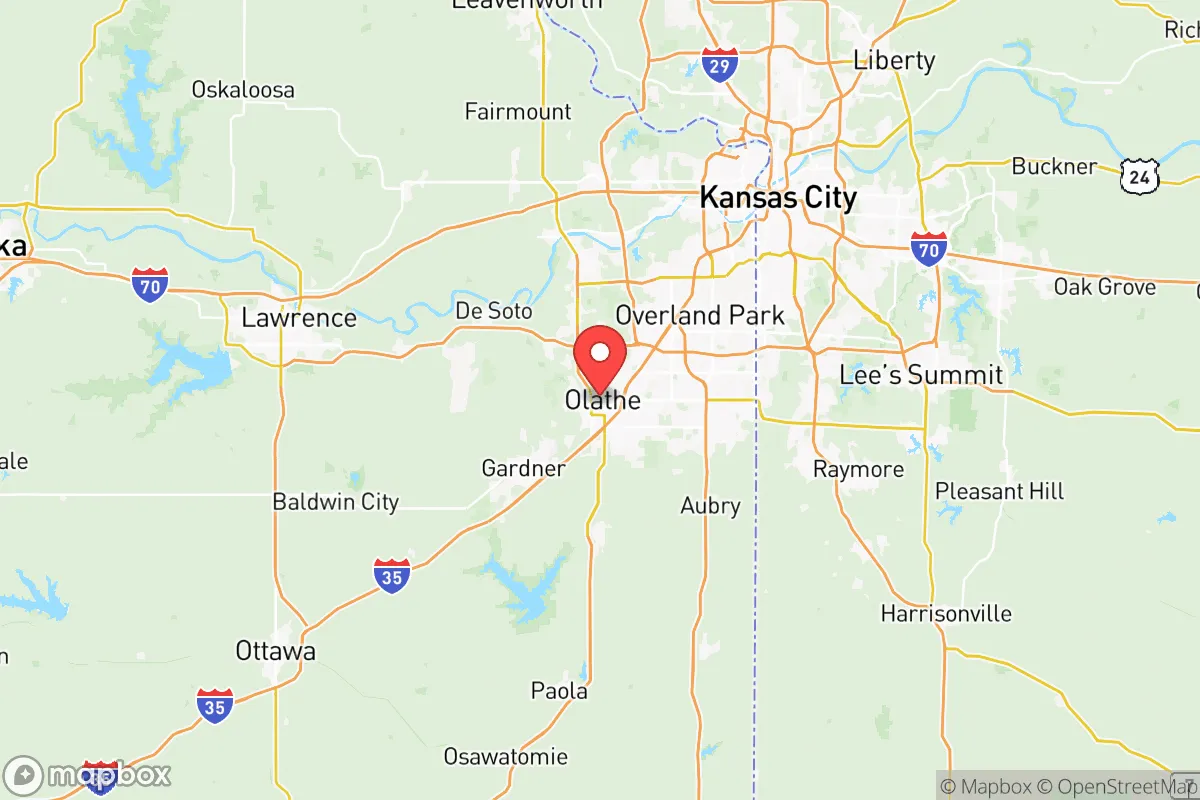
Photo: Wikipedia
Political ClimatePolitical Climate in Johnson County
Showing district-level results — no local-only data available.
Local Political AnalysisPolitical Analysis of Johnson County
Johnson County has shifted noticeably left in recent years, now carrying a Cook Partisan Voting Index of D+2, which is a far cry from the reliably red bastion it was even a decade ago. This puts it in stark contrast with the rest of Kansas, which sits at R+9, meaning the county is now a full 11 points more liberal than the state as a whole. If you’ve lived here as long as I have, you’ve watched the old conservative strongholds in places like Overland Park and Leawood slowly give way to a more progressive, urban-minded electorate, while the rural edges still hold the line.
How it compares
The political divide within Johnson County is as much geographic as it is ideological. The northern and central suburbs—think Prairie Village, Mission, and Roeland Park—are now reliably blue, with precincts often voting 60-70% Democratic in recent cycles. These areas have seen an influx of younger professionals and transplants from places like California and Illinois, bringing with them a preference for bigger government and more social programs. Meanwhile, the southern and western parts of the county, particularly Olathe, Gardner, and Spring Hill, still lean red, though even there the margins are tightening. The swing precincts are often found in the middle-ring suburbs like Lenexa and Shawnee, where you’ll see a mix of longtime residents and new arrivals. Compared to the rest of Kansas, Johnson County is an island of blue in a sea of red, and that tension is only growing as the state legislature in Topeka pushes back against local ordinances on things like mask mandates and zoning laws.
What this means for residents
For those of us who value personal freedom and limited government, the shift is concerning. The county commission and many city councils have adopted a more activist posture, pushing policies that can feel like government overreach—think strict COVID-era mandates, higher property taxes to fund social initiatives, and land-use regulations that prioritize dense development over traditional neighborhoods. If you’re a conservative, you’ll find yourself increasingly out of step with local leadership, especially in the northern cities. The school boards have also become a battleground, with some districts adopting curriculum changes that prioritize ideological agendas over academic rigor. On the flip side, if you lean left, you’ll appreciate the county’s investment in public transit, bike lanes, and affordable housing programs. But for anyone who just wants to be left alone to raise a family and run a business, the growing bureaucracy can feel like a thumb on the scale.
Culturally, Johnson County is becoming less distinct from the Kansas City metro as a whole. The old “JoCo” identity—quiet, conservative, family-focused—is fading. You’ll see more pride flags, more “In This House We Believe” signs, and more local ordinances that tell you how to run your property or business. The policy distinctions are real: while the rest of Kansas has kept taxes relatively low and regulations light, Johnson County has embraced a more interventionist approach, especially in health and housing. If you’re considering a move here, know that the political climate varies block by block. You can still find your tribe in the southern exurbs, but the county as a whole is trending in a direction that many longtime residents find unsettling.

State Political ClimatePolitical Climate in Kansas
State Political AnalysisPolitical Environment in the State
Kansas is a solidly Republican state with a Cook PVI of R+9, but don’t let that number fool you into thinking it’s a monolith. Over the last 20 years, the state has swung from a reliably conservative stronghold into a battleground between traditional prairie populism and a more aggressive, freedom-oriented conservative movement, punctuated by a brief but painful experiment with moderate Republican governance under Governor Sam Brownback’s tax-cutting experiment and its subsequent repeal. The dominant coalition today is a mix of rural conservatives, suburban fiscal hawks, and a growing libertarian-leaning wing that prioritizes individual liberty over government intervention, but the state’s political trajectory is anything but settled.
Urban vs. rural divide
The political map of Kansas is a textbook study in the urban-rural chasm. The eastern third of the state, anchored by the Kansas City metro area, is the primary engine of Democratic votes. Johnson County, the state’s wealthiest and most populous county, has been trending blue for a decade—it voted for Joe Biden in 2020 and has sent Democrats to the state legislature in recent cycles. Overland Park and Olathe are the epicenters of this shift, where educated suburbanites have pushed the county from reliably red to a competitive purple. Meanwhile, Wyandotte County (Kansas City, KS) is a deep blue stronghold, driven by a diverse, working-class population. On the flip side, the rest of the state is overwhelmingly red. Western Kansas, from Hays to Garden City, votes Republican by margins of 70-80%, driven by agricultural interests, strong gun culture, and a deep skepticism of federal overreach. Wichita, the largest city, is a mixed bag—Sedgwick County leans Republican overall, but the city itself has a sizable moderate and Democratic presence, especially in the core. The real story is the rural exodus: as small towns like Colby and Liberal depopulate, their political weight diminishes, while the suburbs of Johnson County gain influence, slowly nudging the state’s overall partisan balance leftward.
Policy environment
Kansas’s policy environment is a mixed bag for conservatives. On the positive side, the state has a flat income tax rate of 5.7% (as of 2025), no inheritance tax, and a relatively low property tax burden compared to coastal states. The state’s regulatory posture is generally business-friendly, with right-to-work laws on the books and a tort reform system that limits lawsuit abuse. However, the Brownback tax cuts of 2012-2017, which slashed income taxes to near-zero for pass-through entities, were largely repealed after they blew a hole in the budget, leading to school funding crises and a temporary sales tax hike. That episode left a scar—many conservatives now view tax policy with skepticism, wary of overpromising. On education, Kansas has a mixed record: school choice is limited compared to states like Florida, though charter schools exist and homeschooling is lightly regulated. Healthcare is a flashpoint—the state expanded Medicaid under Governor Laura Kelly in 2020, a move that many conservatives opposed as a government overreach, but it’s now the law of the land. Election laws are solidly conservative: voter ID is required, and the state has purged inactive voters from rolls, though it hasn’t gone as far as Georgia or Texas in restricting mail-in voting. Overall, the policy environment is conservative but not radical—a place where you can keep more of your money, but the government still has a noticeable hand in your life.
Trajectory & freedom
On the freedom front, Kansas is a tale of two trends. On the positive side, the state has expanded Second Amendment rights significantly. In 2021, Kansas became a constitutional carry state, meaning no permit is required to carry a concealed firearm—a major win for personal liberty. The state also has strong castle doctrine and stand-your-ground laws. Parental rights have been bolstered by recent legislation requiring school districts to notify parents of any changes to a student’s health or well-being, a direct response to the transgender activism that has swept other states. On the downside, the state’s tax burden, while lower than many, is still higher than neighboring states like Texas or Oklahoma, and the sales tax on groceries (6.5% state rate, plus local add-ons) is a regressive hit on low-income families. Medical autonomy took a hit with the 2022 abortion referendum, where Kansans voted overwhelmingly to protect abortion access in the state constitution—a shocking defeat for pro-life advocates that showed the limits of conservative power in a purple-ish state. Property rights are generally strong, with no statewide rent control and relatively few zoning restrictions outside of Johnson County. The overall trajectory is one of cautious expansion of personal freedom, but with significant pushback from the urban and suburban centers.
Civil unrest & political movements
Kansas has not seen the level of civil unrest seen in coastal states, but it has its flashpoints. The 2022 abortion referendum sparked massive protests and counter-protests in Topeka and Overland Park, with both sides turning out in force. The state has a small but vocal progressive activist scene in Lawrence (home to the University of Kansas) and Kansas City, KS, which has organized around racial justice and LGBTQ+ issues. On the right, the Kansas Republican Party has been riven by infighting between the mainstream establishment and a more populist, Trump-aligned wing, with groups like the Kansas Conservative Action Network pushing for stricter immigration enforcement and election integrity measures. Immigration politics are relatively quiet compared to border states—Kansas has no sanctuary cities, and the state’s agricultural sector relies heavily on immigrant labor, creating a pragmatic tension. Election integrity controversies have been minimal, though the 2020 election saw some localized disputes over mail-in ballot procedures. The most visible flashpoint for a new resident would likely be the culture war in schools—debates over library books, curriculum, and transgender policies have erupted in school board meetings across Johnson County and Wichita, reflecting the national divide.
Projection
Over the next 5-10 years, Kansas is likely to become more politically competitive, not less. The in-migration pattern is key: people are moving to the Kansas City suburbs from blue states like California and Illinois, bringing more moderate or even left-leaning views. Johnson County will continue to trend blue, potentially flipping the state’s 2nd Congressional District (currently held by a Republican) and making statewide races tighter. The rural areas will continue to shrink and harden their conservatism, but they won’t be able to offset the suburban shift indefinitely. The state’s tax and regulatory environment will likely remain conservative, but expect more fights over school choice, Medicaid expansion, and abortion access. The biggest wildcard is the state’s budget—if the economy slows, the flat tax may come under pressure, and conservatives will have to decide whether to cut services or raise taxes. A new resident moving in now should expect a state that is still fundamentally conservative in its culture and laws, but one where the political ground is shifting under their feet. The days of Kansas as a rock-ribbed Republican lock are fading; it’s becoming a genuine battleground.
For a conservative-leaning individual or family, Kansas offers a solid foundation: low taxes, strong gun rights, and a culture that values self-reliance. But you’ll need to be strategic about where you settle. If you want a reliably conservative environment, look to the rural counties or the Wichita suburbs. If you’re okay with a more mixed political climate, Johnson County offers excellent schools and economic opportunity, but you’ll be living in a purple area where your values will be contested. The bottom line: Kansas is a good place to build a life, but it’s not a conservative utopia. You’ll have to engage, vote, and maybe even run for school board to keep it moving in the right direction.
* Values derived from national, state, county, city and local statistics and may differ in a specific area. Last updated: 2026-05-12T01:03:12.000Z
Narrative content on this page is AI-generated and may contain mistakes. Verify any details that matter before acting on them.
ReloMaps may earn a commission from affiliate links at no extra cost to you.

