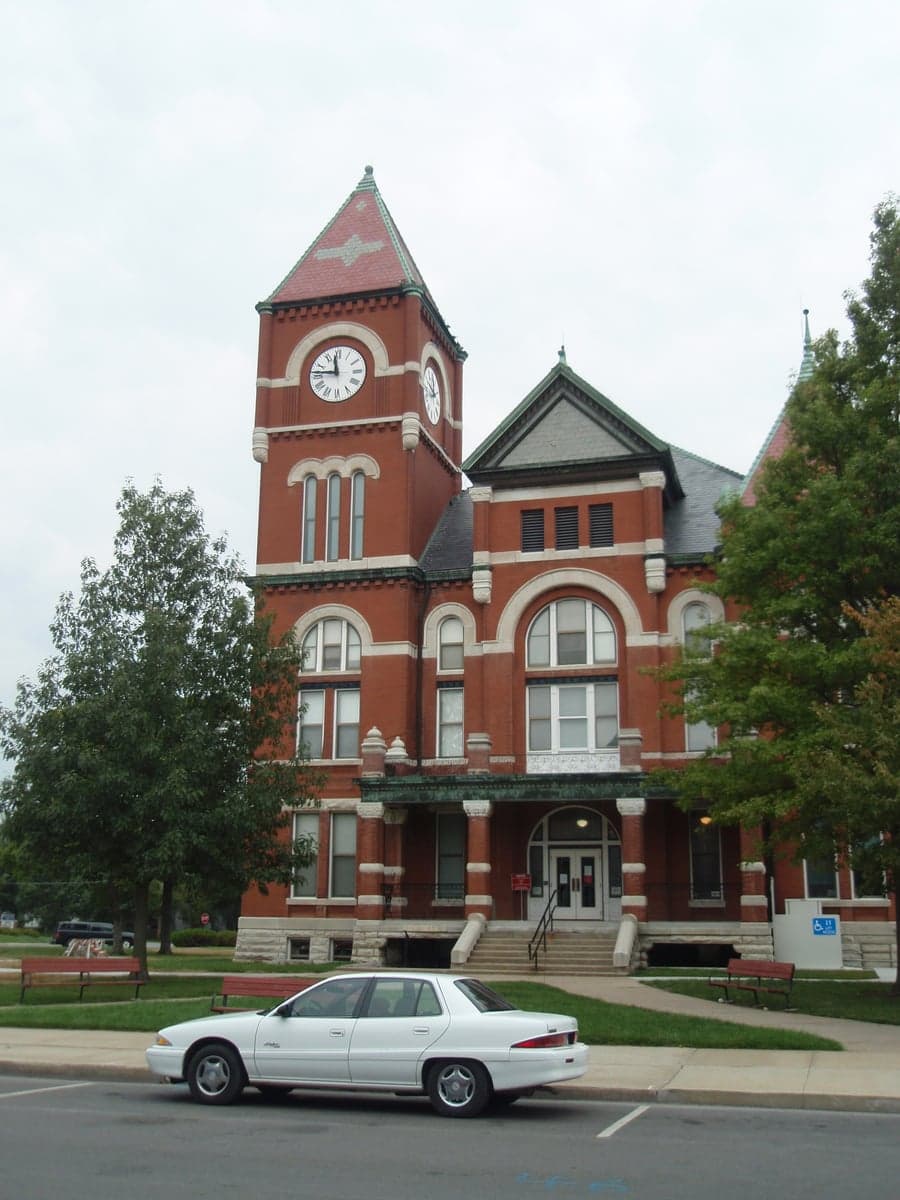
Photo: Wikipedia
Demographics of Miami County
Affluence Level in Miami County
A middle-class area roughly in line with national averages across income, home values, education, and employment.
People of Miami County
Miami County, Kansas, today is a predominantly white, rural-suburban county of 34,625 residents, characterized by a strong sense of local identity, a deeply rooted agricultural and small-town heritage, and a population that is significantly less diverse than the national average. With 91% of residents identifying as white and a foreign-born population of just 0.5%, the county retains a demographic profile shaped by its 19th-century settlement patterns. Its distinctive identity is marked by a blend of historic river towns like Paola and Osawatomie, a growing commuter population drawn by its proximity to the Kansas City metro area, and a conservative-leaning political culture that values self-reliance and community ties.
Settlement & growth (pre-1960)
The land that is now Miami County was originally home to the Osage and Kansa (Kaw) nations, who used the area for hunting and seasonal habitation. The county's name itself derives from the Miami people, a Native American tribe forcibly relocated to the region from the Great Lakes area in the 1820s and 1830s as part of the federal Indian Removal policy. The Miami tribe established a reservation along the Marais des Cygnes River, but by the 1850s, pressure from white settlers and the passage of the Kansas-Nebraska Act led to the tribe's further displacement, with many members eventually moving to Oklahoma. This early period left little permanent Native American population in the county; today, the Native American share of the population is negligible.
The first major wave of American settlement began in the 1850s, driven by the promise of fertile farmland and the opening of the Kansas Territory to homesteaders. The earliest permanent white settlers were largely of Anglo-American and Scots-Irish stock, migrating from the Upper South (Kentucky, Tennessee, Missouri) and the Ohio River Valley. They were drawn by the availability of cheap land under the Preemption Act and later the Homestead Act of 1862. These pioneers established the county's first towns, including Paola (founded 1855), which became the county seat, and Osawatomie (1854), a key stop on the Underground Railroad and the site of a famous 1856 skirmish during the "Bleeding Kansas" conflict. The town of Louisburg (1855) also emerged as a farming and trading center. These early settlers were primarily subsistence farmers and small-scale livestock raisers, and their cultural imprint—a strong work ethic, Protestant religious affiliation, and suspicion of centralized authority—remains a core part of the county's character.
A second, smaller wave arrived in the 1860s and 1870s, consisting of German and Irish immigrants who came to work on the expanding railroads and to take up farming. The Missouri Pacific and Leavenworth, Lawrence & Galveston railroads laid tracks through the county, connecting towns like Paola and Osawatomie to regional markets. German farmers, in particular, settled in the rural areas around Fontana and Hillsdale, establishing prosperous dairy and grain operations. Irish immigrants concentrated in the railroad towns, working as laborers and later as small business owners. By 1880, the county's population had swelled to over 12,000, and the agricultural economy—corn, wheat, and livestock—was firmly established.
The period from 1900 to 1960 saw slow, steady growth and demographic consolidation. The county's population peaked at around 19,000 in 1900 and then plateaued, as many young people left for urban jobs in Kansas City. The Dust Bowl and Great Depression of the 1930s hit the region hard, but the county's diversified agriculture (including the rise of soybean farming) helped it weather the crisis better than the more arid western plains. No major new immigrant groups arrived during this period; the population remained overwhelmingly white and native-born. The construction of the Hillsdale Lake reservoir in the 1970s (authorized by Congress in the 1960s) would later become a major recreational asset, but the county's demographic story through the mid-20th century was one of stability, not transformation.
Modern era (post-1965)
The 1965 Hart-Cellar Act, which dramatically reshaped U.S. immigration patterns, had almost no direct impact on Miami County. The county's foreign-born population today stands at just 0.5%, far below the national average of roughly 14%. Unlike the booming suburbs of Johnson County to the north, Miami County did not attract significant numbers of immigrants from Asia, Latin America, or Africa. The small Hispanic population (3.9%) is the county's largest minority group, and it has grown modestly since the 1990s, primarily through domestic migration from other parts of Kansas and the Southwest rather than direct immigration. These Hispanic residents are dispersed throughout the county, with small concentrations in Paola and Osawatomie, where they work in agriculture, construction, and service industries.
The most significant demographic shift in the post-1965 era has been domestic: the gradual suburbanization of the county's northern and eastern edges. As the Kansas City metropolitan area expanded southward, Miami County began attracting white, middle-class families seeking larger lots, lower taxes, and a slower pace of life. Towns like Louisburg and Spring Hill (the latter straddling the Miami-Johnson county line) have seen the most growth, with new subdivisions and retail development catering to commuters who work in Overland Park, Olathe, and Kansas City proper. This influx has slightly increased the county's college-educated share (now 32.1%) and median household income, but it has not significantly altered the racial composition, as the newcomers are overwhelmingly white. The county's Black population remains very small at 1.1%, and East/Southeast Asian and Indian-subcontinent communities are minuscule (0.2% and 0.3%, respectively), concentrated in a handful of professional households in the newer subdivisions.
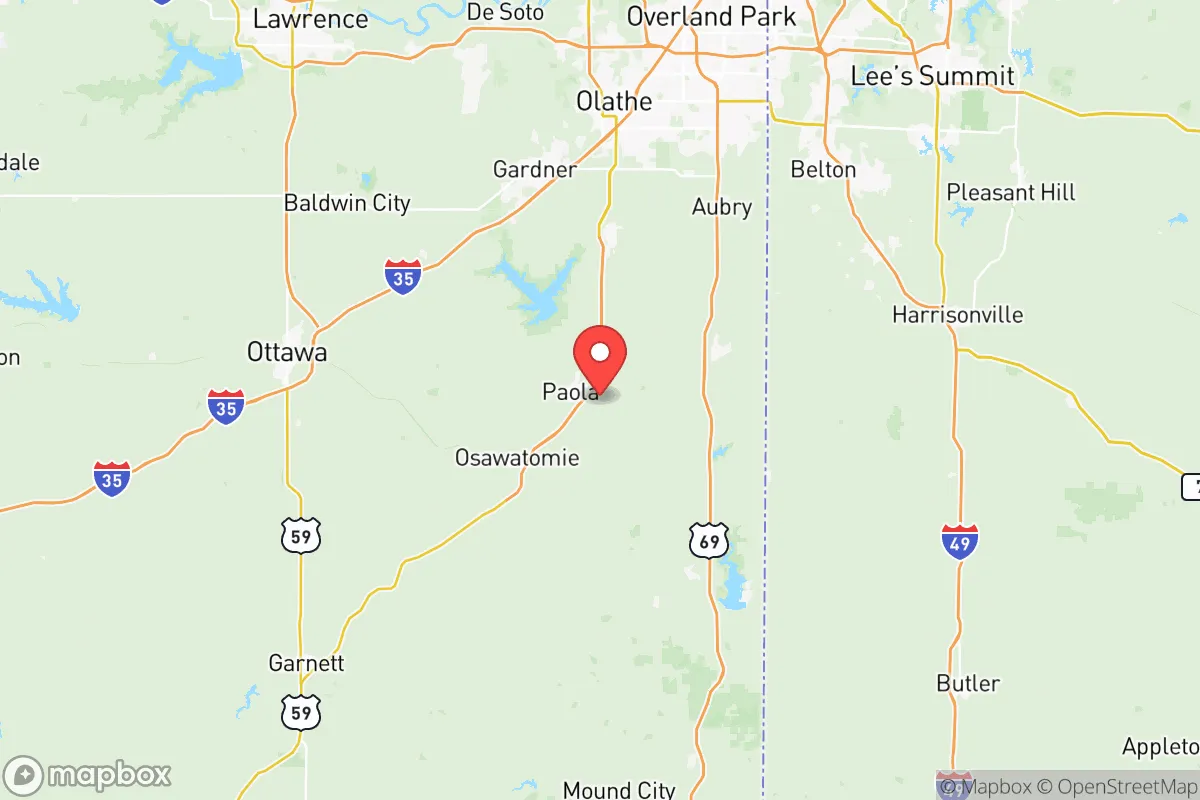
Suburbanization has also created a cultural divide within the county. The older river towns—Paola and Osawatomie—retain a more traditional, working-class character, with aging housing stock, local manufacturing jobs (e.g., the Paola-based cement plant and Osawatomie's state hospital), and a slower pace of change. In contrast, the northern tier around Louisburg and Spring Hill is increasingly oriented toward the Kansas City metro, with newer schools, chain retail, and a more transient population. This dynamic has fueled local debates over growth management, school funding, and the preservation of rural character.
The future
Miami County's population is projected to continue growing slowly, driven by continued spillover from the Kansas City metro area. The county's population has risen from roughly 28,000 in 2000 to 34,625 today, and this trend is likely to persist as Johnson County becomes more built out and expensive. The new residents will almost certainly be predominantly white and native-born, maintaining the county's current racial profile. The Hispanic share may inch upward (perhaps to 5-6% by 2040) through natural increase and continued domestic migration, but the county is unlikely to become a destination for international immigrants given its lack of established ethnic enclaves, limited public transit, and distance from major immigration gateways.
The cultural identity of the county is evolving in two directions simultaneously. The northern, suburbanizing corridor is becoming more politically moderate and oriented toward the amenities of the Kansas City metro, while the southern and central parts of the county—around Paola, Osawatomie, and Fontana—remain deeply conservative and agrarian in outlook. This internal tension will likely define the county's politics and community life over the next decade. For a newcomer, the choice of where to live within Miami County is a meaningful one: the northern towns offer convenience and newer infrastructure, while the southern towns offer a quieter, more historically rooted experience.
What kind of place is Miami County becoming? It is becoming a more internally differentiated county—part exurban bedroom community, part traditional farm-and-small-town heartland. For a family or individual moving in now, the county offers a safe, affordable, and community-oriented environment with strong schools in the northern districts and a slower, more self-reliant lifestyle in the south. It is not a place of rapid demographic change or cultural diversity, but rather a place where the values of the 19th-century settlers—hard work, neighborliness, and local control—still hold considerable sway, even as the county's economy and social life become more closely tied to the expanding Kansas City region.

* Values derived from national, state, county, city and local statistics and may differ in a specific area. Last updated: 2026-10-12T21:54:16.000Z
Narrative content on this page is AI-generated and may contain mistakes. Verify any details that matter before acting on them.
ReloMaps may earn a commission from affiliate links at no extra cost to you.

