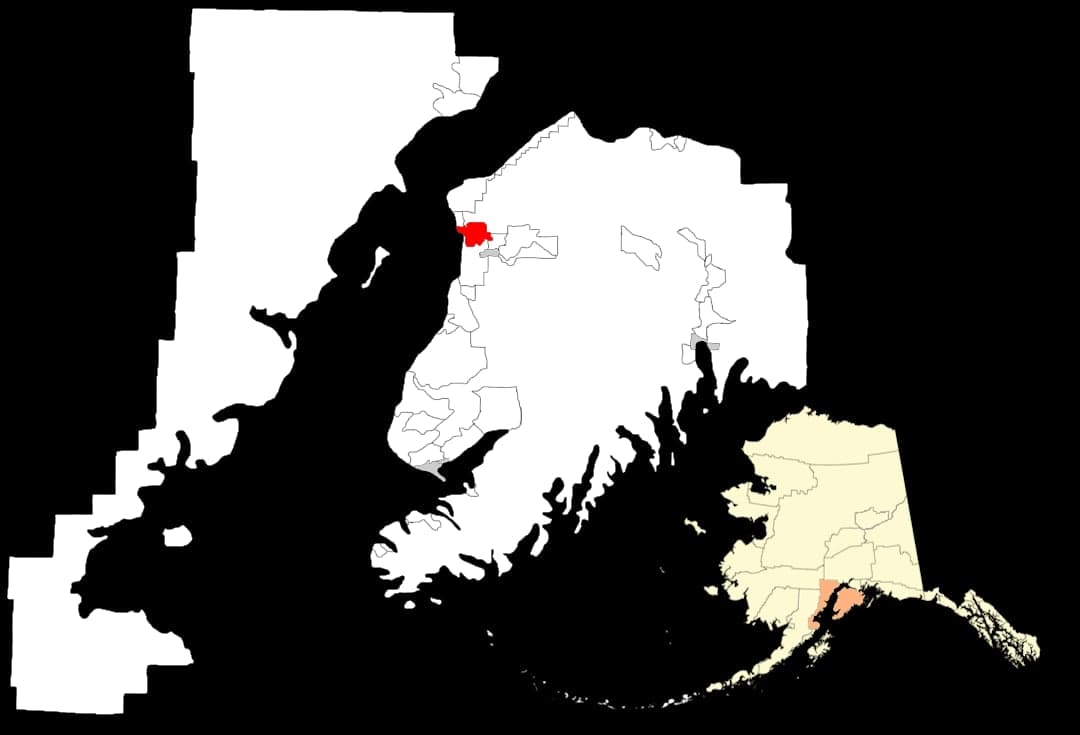
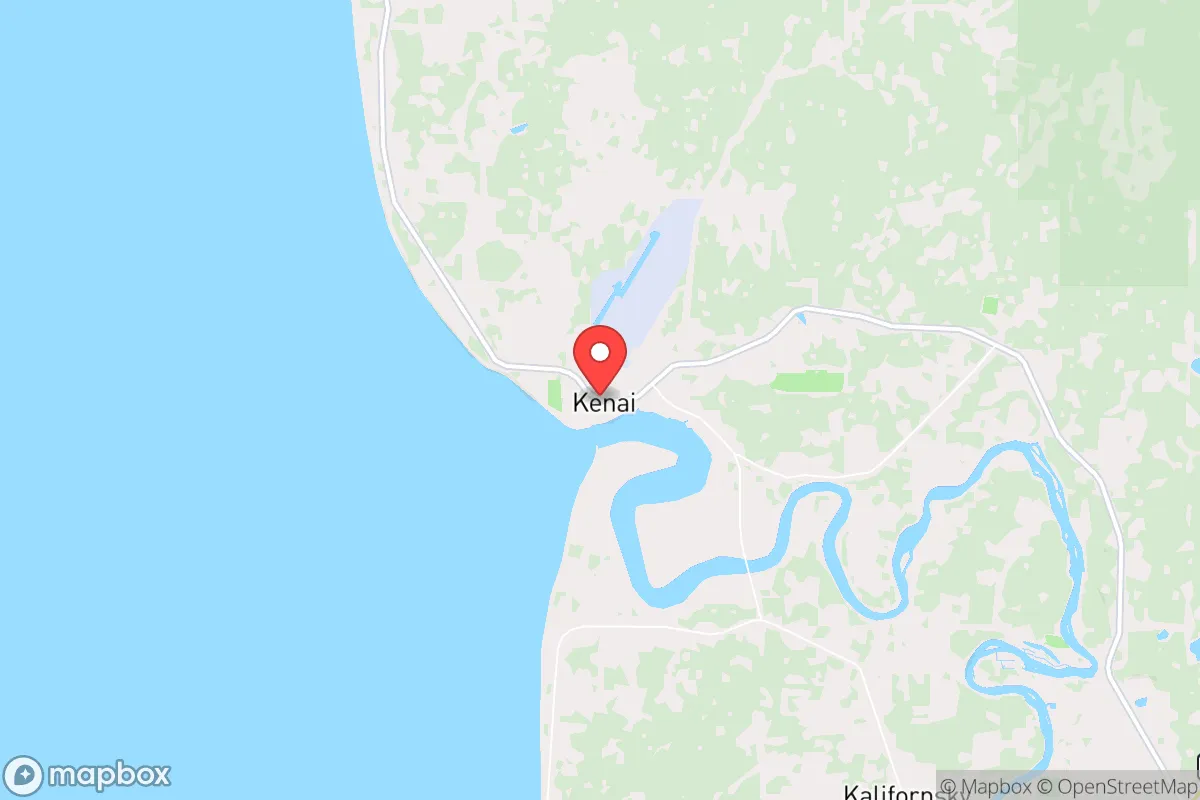
Photo: Wikipedia
Political ClimatePolitical Climate in Kenai, AK
District shown is the primary district for this city’s centroid. Cities may span multiple districts.
Inherited from parent state — no local data available.
Local Political AnalysisPolitical Analysis of Kenai, AK
Kenai has long been a solidly conservative community, and that hasn't changed much despite some national trends. The Cook Partisan Voting Index (PVI) for the area sits at R+6, meaning it votes about six points more Republican than the national average. That’s not a surprise to anyone who’s lived here for a while—this is a place where people value self-reliance, local control, and keeping government out of your business. The political lean here is steady, not swinging hard in either direction, but there’s a quiet concern among long-time residents about outside influences creeping in, especially from Anchorage or the Lower 48 transplants who don’t always understand the local way of life.
How it compares
Compared to the rest of the Kenai Peninsula, Kenai itself is actually a bit more moderate than some of its neighbors. Head south to Homer, and you’ll find a much more progressive vibe—think art galleries, organic farms, and a vocal environmentalist crowd. Up north in Soldotna, it’s more of a mixed bag, with a growing number of younger families who lean left on social issues but still want low taxes. But Kenai? It’s the old guard. The fishing industry, oil and gas workers, and folks who’ve been here for generations keep the politics grounded in conservative values. The contrast with Homer is stark—you’ll hear people joke that Homer is “the Berkeley of Alaska,” and it’s not far off. Kenai residents tend to see that as a cautionary tale of what happens when progressive policies take hold: higher costs, more regulations, and a loss of the freedom to live your life without a permit or a fee.
What this means for residents
For the average person living in Kenai, the political climate means you can generally expect a government that stays out of your way. Property taxes are low, there’s no state income tax, and the local city council tends to focus on practical stuff like road maintenance and public safety rather than social experiments. That said, there’s a growing unease about federal overreach—especially when it comes to land use, fishing quotas, and environmental regulations that feel like they’re written by people who’ve never set foot in Alaska. If you’re someone who values the Second Amendment, you’ll find Kenai is a place where that right is respected, not debated. And if you’re worried about schools pushing a certain agenda, the local school board has historically been more focused on academics and local control than national trends. But keep an eye on the city council elections—there’s been a slow push from younger, more progressive candidates, and while they haven’t won yet, the margins are getting tighter.
One thing that sets Kenai apart culturally is its deep connection to subsistence and commercial fishing. This isn’t just a hobby; it’s how a lot of families put food on the table and make a living. Any policy shift that threatens that—whether it’s stricter catch limits, new taxes on gear, or federal restrictions on river access—is met with serious pushback. The local attitude is pretty straightforward: we know how to manage our own resources, and we don’t need bureaucrats from Juneau or Washington telling us how to do it. That independent streak runs deep, and it’s why Kenai has stayed conservative even as other parts of Alaska have drifted. If you’re thinking about moving here, just know that this is a place where your neighbor will help you fix your truck, but they’ll also expect you to mind your own business. It’s a good trade-off for most folks who value freedom over convenience.

State Political ClimatePolitical Climate in Alaska
State Political AnalysisPolitical Environment in the State
Alaska has long been a unique political beast — a state where libertarian-leaning independence, resource extraction, and a deep distrust of federal overreach have historically created a solidly Republican lean, but with a populist, anti-establishment streak that makes it less predictable than the Deep South. Over the last 10-20 years, the state has shifted from reliably red to a more volatile purple-red, driven by an influx of out-of-state transplants, a growing urban progressive base in Anchorage, and a rural Native population that votes pragmatically rather than ideologically. The 2024 presidential election saw Alaska go +13 for Trump, down from +15 in 2020 and +19 in 2016, signaling a slow but real erosion of the GOP’s dominance — though the state remains one of the most conservative in the nation on fiscal and energy policy.
Urban vs. rural divide
The political map of Alaska is a textbook case of the urban-rural chasm. Anchorage, home to roughly 40% of the state’s population, is the epicenter of the state’s leftward drift. The city’s Assembly is now controlled by a progressive coalition, and in 2024, Anchorage’s House districts split roughly 50-50 between Democrats and Republicans, a stark contrast to the rest of the state. Juneau, the capital, is even more reliably blue, driven by state government employees and a strong environmentalist presence. Meanwhile, the Matanuska-Susitna Borough (the “Valley”) — encompassing towns like Wasilla and Palmer — is the state’s conservative heartland, voting +35 for Trump in 2024 and serving as a bastion of gun rights, homeschooling, and anti-tax sentiment. Fairbanks is a swing area, with its military and university populations creating a mixed bag, while the Kenai Peninsula (think Soldotna and Homer) leans conservative but with a strong libertarian and commercial fishing influence. The rural North Slope Borough and Nome area vote heavily Democratic due to Native corporation interests and federal subsidies, but they are culturally conservative on social issues. The divide isn’t just red vs. blue — it’s Anchorage vs. everywhere else, with the Valley acting as the state’s political counterweight.
Policy environment
Alaska’s policy environment is a mixed bag for a conservative. On the plus side, there is no state income tax and no state sales tax — a massive freedom win. The Permanent Fund Dividend (PFD) is a unique check every resident gets from oil revenues, and it’s a sacred cow that keeps the populace engaged in fiscal policy. The state’s regulatory posture on energy and mining is among the most permissive in the nation, with the Alaska Industrial Development and Export Authority (AIDEA) actively backing resource projects like the Willow Project on the North Slope. However, education policy is a growing concern: the state’s Foundation Formula for school funding has been flat for years, and the Alaska Education Association (the teachers’ union) wields outsized influence in Anchorage and Juneau, pushing for more centralized control and higher spending. On healthcare, Alaska has a Medicaid expansion under the Affordable Care Act, which was accepted by then-Governor Bill Walker in 2015 — a move that still rankles fiscal conservatives. Election laws are relatively clean: Alaska uses a top-four primary system and ranked-choice voting (RCV), passed by ballot initiative in 2020. RCV is deeply unpopular among conservatives, who see it as a tool to dilute their voting power, and there’s a strong grassroots push to repeal it. The state also has no voter ID law at the polls, which is a red flag for election integrity advocates.
Trajectory & freedom
Alaska is in a tug-of-war between expanding and contracting personal liberty. On the freedom-positive side, the state has some of the strongest gun rights in the nation — no permit required for concealed carry, no magazine limits, and a constitutional carry law that has been on the books since 2003. In 2024, the legislature passed SB 89, which prohibits state and local law enforcement from enforcing any future federal gun bans, a direct nullification-style move. Parental rights are also strong: Alaska has no mandatory vaccine requirements for school attendance, and HB 105 (2023) expanded access to homeschooling and correspondence programs. However, the progressive tide is visible. In 2023, Anchorage passed a transgender “sanctuary” ordinance that prohibits police from cooperating with federal immigration enforcement in certain cases, and the city’s school board has pushed for comprehensive sex education that includes gender identity topics — a flashpoint for conservative parents. The state’s Board of Game has been increasingly influenced by animal rights activists, leading to tighter restrictions on predator control and trapping, which angers rural subsistence hunters. The biggest threat to freedom is the state’s fiscal dependence on oil — as production declines, the pressure to impose an income tax or cut the PFD grows, which would be a major loss of personal economic liberty.
Civil unrest & political movements
Alaska has a history of low-grade civil unrest, mostly centered on resource extraction and Native land rights. The Arctic National Wildlife Refuge (ANWR) drilling debate has been a perennial flashpoint, with environmental activists from the Lower 48 frequently clashing with local pro-development groups. In 2021, the “Save the Arctic” protests in Anchorage drew thousands, but they were largely outnumbered by pro-oil counter-protests from the Valley and Kenai. The Alaska Independence Party (AIP) — which once elected Governor Wally Hickel — is still active, pushing for a state referendum on secession, though it’s more of a fringe movement now. On the left, the Alaska Democratic Party has been energized by the RCV system, and groups like Alaska Action Network organize around climate and social justice issues. Immigration politics are muted — Alaska has a small foreign-born population — but the Anchorage Sanctuary City designation has created tension, with the state legislature threatening to withhold funding. Election integrity remains a hot-button issue: the 2022 U.S. House race, won by Democrat Mary Peltola under RCV, is still contested by many conservatives who believe the system allowed a minority candidate to win. You’ll see “Repeal RCV” signs in yards from Wasilla to Fairbanks.
Projection
Over the next 5-10 years, Alaska is likely to become more politically competitive, but not necessarily more liberal. The key demographic shift is the in-migration of remote workers and retirees from blue states, who are drawn by the lack of income tax and the outdoor lifestyle. These newcomers tend to be fiscally conservative but socially moderate, which could push the state toward a more libertarian, live-and-let-live posture rather than hard-right social conservatism. The Anchorage Bowl will continue to trend blue, but the Valley and Kenai will remain deeply red, and the rural Native vote could swing either way depending on energy policy. The biggest wildcard is the PFD — if oil revenues continue to decline and the dividend is cut or eliminated, expect a populist backlash that could realign the state’s politics entirely. The RCV system is likely to be repealed by 2028, given the sustained grassroots opposition. For a conservative moving in now, expect a state where your gun rights and tax freedom are secure, but you’ll need to be vigilant about school board elections and local ordinances in Anchorage. The state is still one of the freest in the Union, but the frontier spirit is slowly being chipped away by urban progressive activism.
Bottom line for a new resident: Alaska is a fantastic choice if you value low taxes, gun rights, and personal autonomy, but it’s not a conservative utopia. You’ll find your strongest allies in the Valley and Kenai, and your biggest fights in Anchorage and Juneau. The state’s trajectory is toward a more divided, competitive landscape — so get involved in local politics early, especially on school boards and the PFD fight. If you can handle the cold and the long winters, the freedom is still worth it.
* Values derived from national, state, county, city and local statistics and may differ in a specific area. Last updated: 2026-04-19T19:26:11.000Z
Narrative content on this page is AI-generated and may contain mistakes. Verify any details that matter before acting on them.
ReloMaps may earn a commission from affiliate links at no extra cost to you.

