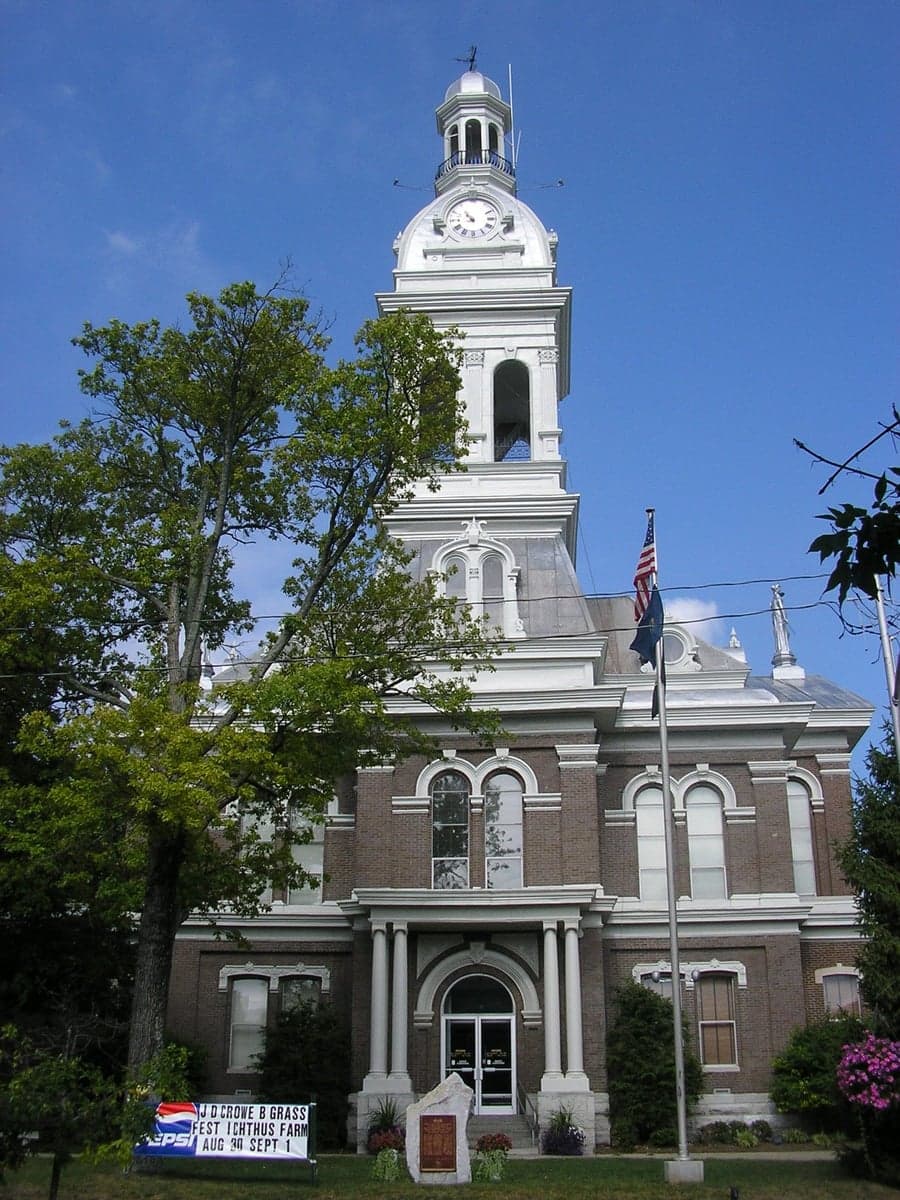
Photo: Wikipedia
Political ClimatePolitical Climate in Jessamine County
Showing district-level results — no local-only data available.
Local Political AnalysisPolitical Analysis of Jessamine County
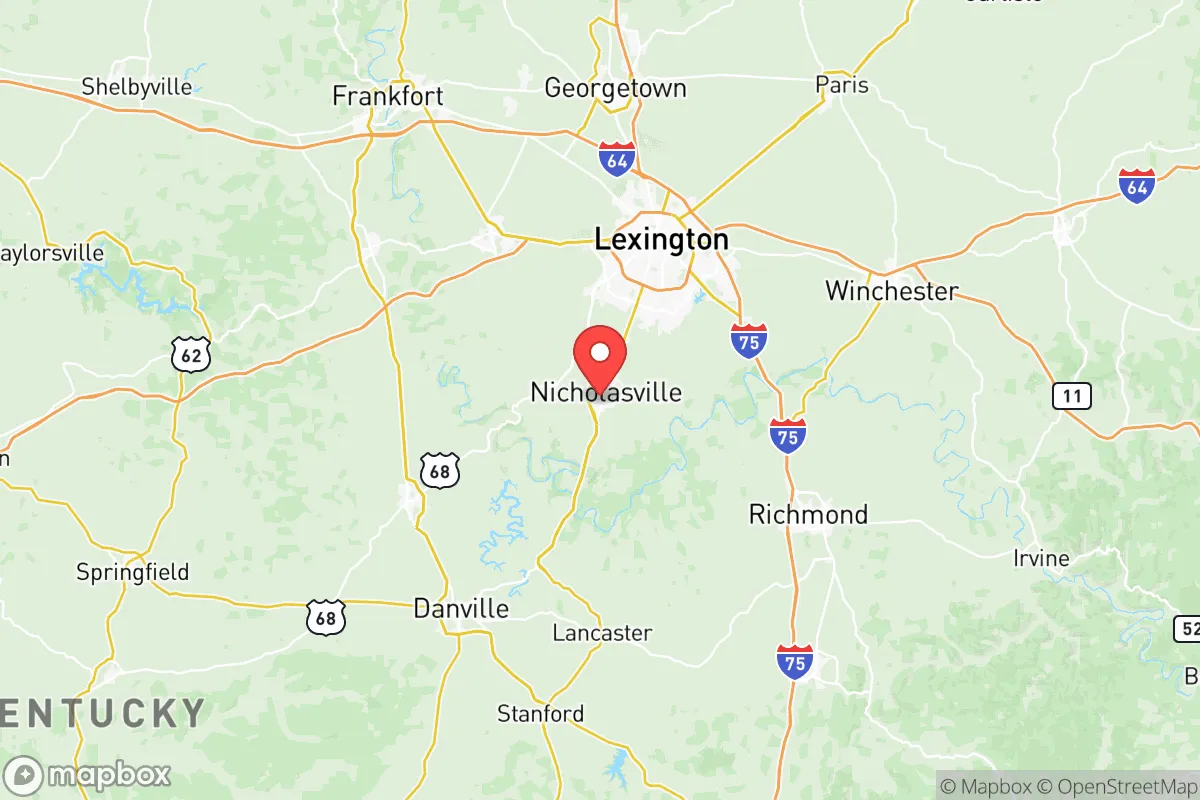
Jessamine County, Kentucky, has long been a reliably conservative area, but it's not the deep-red monolith you might expect from its rural reputation. The county leans Republican with a Cook PVI of R+7, which is notably less conservative than the statewide Kentucky average of R+15. This difference is driven largely by the growing influence of Nicholasville and the suburban spillover from Lexington, creating a more nuanced political landscape than you'd find in the surrounding counties. If you've been here a while, you've watched the old guard of traditional conservatives slowly give way to a newer, more moderate crowd, and that shift has real consequences for how things run around here.
How it compares
When you stack Jessamine County against the rest of Kentucky, the contrast is stark. The state as a whole is solidly R+15, meaning most counties are reliably red by a wide margin. But Jessamine's R+7 rating puts it in a different category—it's a swingier, more competitive place. The city of Nicholasville itself is the epicenter of this shift. While the rural precincts out toward Wilmore and High Bridge still vote heavily Republican, the precincts inside Nicholasville's city limits—especially around the new subdivisions off US-27—are where you see the blue lean. Those are the swing precincts that decide local races. In the 2024 presidential primary, for example, some Nicholasville precincts went for more moderate candidates, while the outlying areas stuck with the party line. This isn't a blue wave, but it's a clear sign that the county's political center of gravity is moving away from the traditional conservative base.
What this means for residents
For those of us who value limited government and personal freedoms, this shift is a real concern. The influx of Lexington commuters brings with it a more progressive mindset on issues like zoning, taxes, and local regulations. You're starting to see more talk about "smart growth" policies that sound a lot like government overreach—mandates on housing density, bike lanes, and even talk of a local income tax to fund them. The county's conservative majority still holds the line on most issues, but the margin is shrinking. In the 2023 school board elections, for instance, a slate of candidates backed by the local teachers' union nearly flipped a seat in Nicholasville, pushing for curriculum changes that many of us see as a step toward government telling parents what their kids can learn. The rural precincts held, but it was closer than it should have been. If you're looking to escape the kind of heavy-handed governance you see in Lexington or Louisville, Jessamine County still offers a refuge, but you need to keep an eye on the local elections—that's where the real fight for your rights is happening.
Culturally, Jessamine County still feels like Kentucky—church on Sunday, hunting season is a big deal, and people wave at you on the back roads. But the policy battles are heating up. The county's fiscal court has resisted most progressive tax hikes, but the pressure is mounting from the growing suburban population. The real test will come in the next few years, as the county decides whether to embrace the kind of growth that brings more government control or stick with the rural, hands-off approach that made this place worth living in. For now, if you're a conservative who values personal liberty, Jessamine County is still a good bet—but don't take it for granted. The fight for the soul of this place is just getting started.

State Political ClimatePolitical Climate in Kentucky
State Political AnalysisPolitical Environment in the State
Kentucky is a deeply red state with a Cook PVI of R+15, meaning it votes about 15 points more Republican than the national average in presidential elections. The dominant coalition is a mix of rural conservatives, evangelical Christians, and working-class voters who have shifted rightward over the past two decades, particularly as the Democratic Party’s national brand has moved left on cultural and economic issues. While Kentucky was once a competitive swing state—voting for Bill Clinton twice—it has not backed a Democrat for president since 1996, and the GOP now holds supermajorities in both chambers of the state legislature, all but one of the state’s six U.S. House seats, and both U.S. Senate seats. The trajectory over the last 10-20 years has been a steady march rightward, accelerated by the collapse of the old Blue Dog Democrat coalition in rural areas and the growing cultural conservatism of the state’s suburban and exurban voters.
Urban vs. rural divide
The political map of Kentucky is a textbook study in urban-rural polarization. The state’s two major population centers—Louisville (Jefferson County) and Lexington (Fayette County)—are the only reliably blue areas, with Louisville voting about 60% Democratic and Lexington around 55-58% Democratic in recent cycles. These cities are home to the University of Louisville, the University of Kentucky, and a growing professional class that leans left on social issues. But outside those two islands, the state is overwhelmingly red. Northern Kentucky’s suburbs—like Florence, Covington, and Independence—have shifted rightward as the Cincinnati metro’s influence has waned and local voters have embraced GOP cultural conservatism. The state’s third-largest city, Bowling Green, is a reliably red stronghold, anchored by Western Kentucky University but surrounded by deeply conservative Warren County. The Appalachian counties in eastern Kentucky—like Pikeville, Hazard, and Prestonsburg—were once Democratic bastions but have flipped hard red, often voting 70-80% Republican as coal culture and gun rights have become defining issues. The western part of the state, including Paducah and Murray, is similarly conservative, with only the occasional college town like Richmond (home to Eastern Kentucky University) showing any blue tint. The rural-urban divide is stark: Louisville and Lexington account for about 25% of the state’s population but produce nearly all of its Democratic votes, while the other 75% of the state is solidly Republican.
Policy environment
Kentucky’s policy environment is aggressively conservative, with a strong emphasis on limited government, low taxes, and cultural traditionalism. The state has a flat income tax that was recently cut from 5% to 4% in 2023, with a path to eventually eliminate it entirely. Property taxes are among the lowest in the nation, and there is no estate tax. The regulatory posture is business-friendly, with right-to-work laws and a tort reform system that caps non-economic damages in medical malpractice cases. On education, Kentucky has a robust school choice movement: the legislature passed a charter school law in 2017 (though implementation has been slow), and in 2022 it created education opportunity accounts that allow parents to use state funds for private school tuition, tutoring, and other expenses. The state also passed a parental rights bill in 2023 that requires schools to notify parents about curriculum changes and prohibits instruction on sexual orientation and gender identity in elementary grades. On healthcare, Kentucky expanded Medicaid under the Affordable Care Act in 2014, but the state has since imposed work requirements (currently tied up in court) and has not pursued a state-based exchange. Election laws are moderately restrictive: voter ID is required, early voting is limited to three weeks, and absentee voting requires an excuse. The state also passed a 2021 law that shortened the absentee application window and banned ballot harvesting. Overall, the policy environment is one of the most conservative in the South, with a clear emphasis on parental rights, tax relief, and limited government intervention.
Trajectory & freedom
Kentucky has been moving decisively toward greater personal freedom, particularly in the areas of gun rights, parental rights, and economic liberty. In 2019, the state passed constitutional carry, allowing law-abiding citizens to carry concealed firearms without a permit. In 2021, it passed a Second Amendment sanctuary law that prohibits state and local law enforcement from enforcing federal gun laws that violate the Kentucky Constitution. On parental rights, the 2023 law mentioned above (HB 470) gives parents explicit authority over their children’s education and medical decisions, and a 2022 law banned transgender athletes from competing in girls’ sports. On medical autonomy, Kentucky passed a near-total abortion ban in 2019 (triggered into effect after Dobbs), with exceptions only to save the mother’s life. The state has also resisted federal vaccine mandates, with the legislature passing a 2021 law that allows workers to claim religious or medical exemptions from employer vaccine requirements. On property rights, Kentucky is a strong right-to-farm state, with laws protecting agricultural operations from nuisance lawsuits. The only area where freedom has arguably contracted is on marijuana: Kentucky remains one of the few states with no legal medical or recreational cannabis, though a limited medical program was signed into law in 2023 and will take effect in 2025. The trajectory is clearly toward more individual liberty, with the legislature consistently passing bills that expand gun rights, parental authority, and economic freedom.
Civil unrest & political movements
Kentucky has seen relatively little civil unrest compared to other states, but there have been notable flashpoints. The 2020 protests in Louisville following the death of Breonna Taylor were the most significant, with weeks of demonstrations, property damage, and a heavy police presence. The city’s Democratic mayor and governor Andy Beshear (a Democrat) were criticized by conservatives for not doing enough to restore order, and the unrest contributed to a backlash that helped Republicans flip several legislative seats in the 2020 election. The state has a strong Second Amendment movement, with groups like the Kentucky Gun Owners Association holding regular rallies at the state capitol. There is also a growing school choice movement, with parents organizing to push for expanded charter schools and education savings accounts. Immigration politics are relatively quiet, as Kentucky has a small foreign-born population (about 4%), but there have been local controversies over sanctuary city policies in Louisville, which the state legislature has tried to preempt with a 2023 law banning sanctuary policies. Election integrity has been a hot topic: the 2020 election saw no major scandals in Kentucky, but the legislature passed a 2021 law tightening absentee voting rules and banning ballot drop boxes. There is no serious secession or nullification rhetoric, but the state has a strong tradition of states’ rights advocacy, particularly around gun laws and federal overreach. Overall, the political climate is stable, with most activism coming from conservative grassroots groups pushing for more freedom, not from left-wing movements.
Projection
Over the next 5-10 years, Kentucky is likely to become even more conservative, driven by two key demographic trends. First, in-migration from blue states—particularly from California, Illinois, and Ohio—is accelerating, with counties like Boone, Kenton, and Warren seeing significant population growth. These newcomers tend to be conservative-leaning, often moving for lower taxes, less regulation, and a more family-friendly culture. Second, the state’s rural and exurban areas are growing faster than its urban cores, with Louisville and Lexington losing population to surrounding counties like Oldham, Shelby, and Jessamine. This will further dilute the Democratic vote in the cities and strengthen the GOP’s hold on the legislature. The only wild card is the growing influence of the state’s universities and the professional class in Lexington and Louisville, which could create a more competitive environment in those cities over time. But statewide, the GOP supermajority is likely to persist, and the policy environment will continue to shift rightward—expect further income tax cuts, expanded school choice, and more Second Amendment protections. The biggest risk for conservatives is complacency: if the state becomes too red, there is a danger of internal factionalism between establishment Republicans and more populist, libertarian-leaning elements. But for a new resident moving in now, the projection is clear: Kentucky will remain one of the most reliably conservative states in the country, with a government that respects personal freedom and limits its own reach.
For a new resident, the bottom line is that Kentucky offers a political environment where your rights are respected, your taxes are low, and your voice matters. The state is not perfect—the marijuana laws are frustrating, and the urban-rural divide can feel like two different worlds—but if you value gun rights, parental authority, and limited government, you will feel at home. The key is to choose your location wisely: if you want a conservative community, look at Bowling Green, Paducah, or the northern Kentucky suburbs. If you need urban amenities but want to stay in a red county, Richmond or Owensboro are solid options. Avoid Louisville and Lexington if you want to avoid progressive politics. Kentucky is a state that rewards those who do their homework, and the political climate is a major reason why people are moving here in record numbers.
* Values derived from national, state, county, city and local statistics and may differ in a specific area. Last updated: 2026-05-27T20:12:11.000Z
Narrative content on this page is AI-generated and may contain mistakes. Verify any details that matter before acting on them.
ReloMaps may earn a commission from affiliate links at no extra cost to you.

