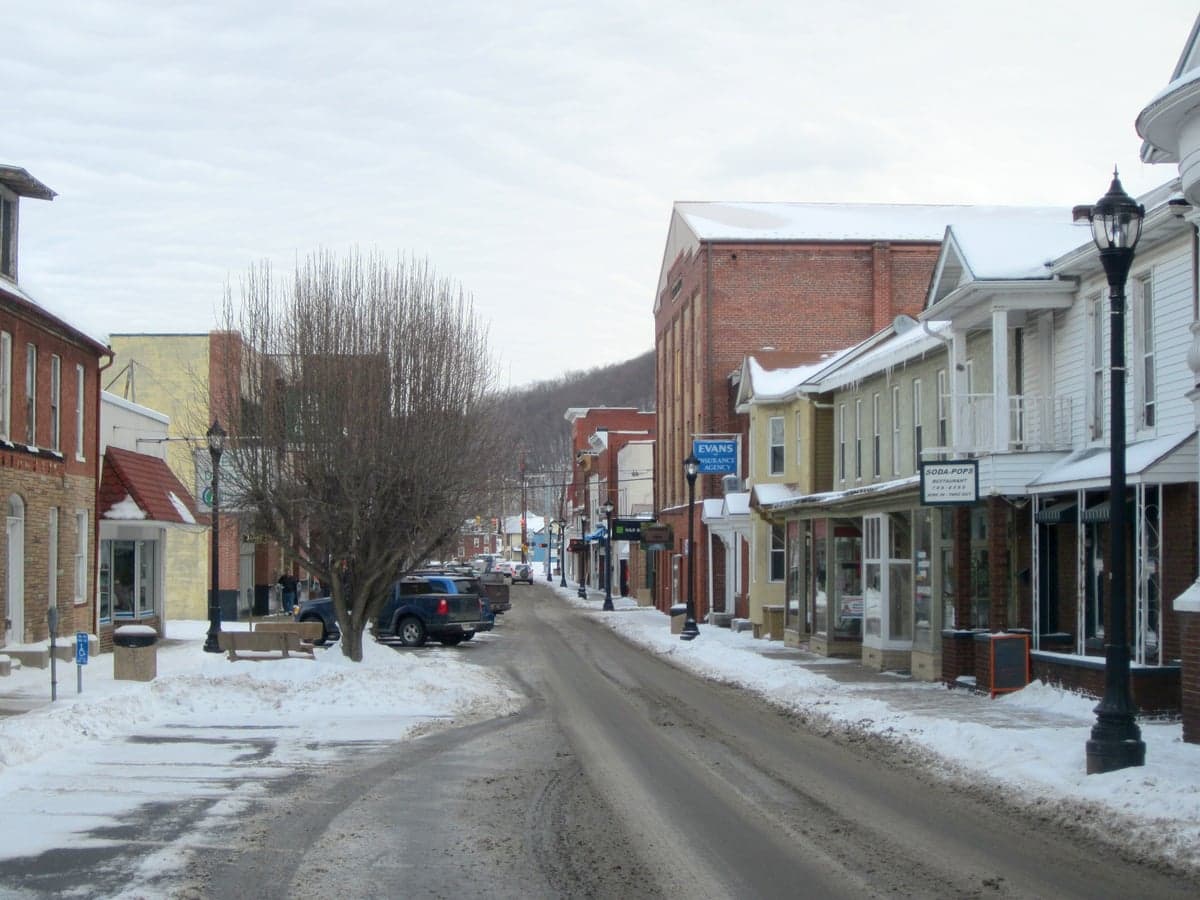
Photo: Wikipedia
Political ClimatePolitical Climate in Keyser, WV
District shown is the primary district for this city’s centroid. Cities may span multiple districts.
Local Political AnalysisPolitical Analysis of Keyser, WV
Keyser, West Virginia, sits in a deeply conservative pocket of the state, and that’s not changing anytime soon. The Cook PVI of R+20 tells you the math, but the real story is in the culture—this is a place where folks still believe in minding your own business and keeping the government out of your backyard. Over the last decade, the area has held steady, even as some nearby towns like Cumberland, Maryland, just across the river, have started leaning more progressive. Keyser hasn’t budged, and that’s a point of pride for most of us who’ve lived here long enough to remember when things were simpler.
How it compares
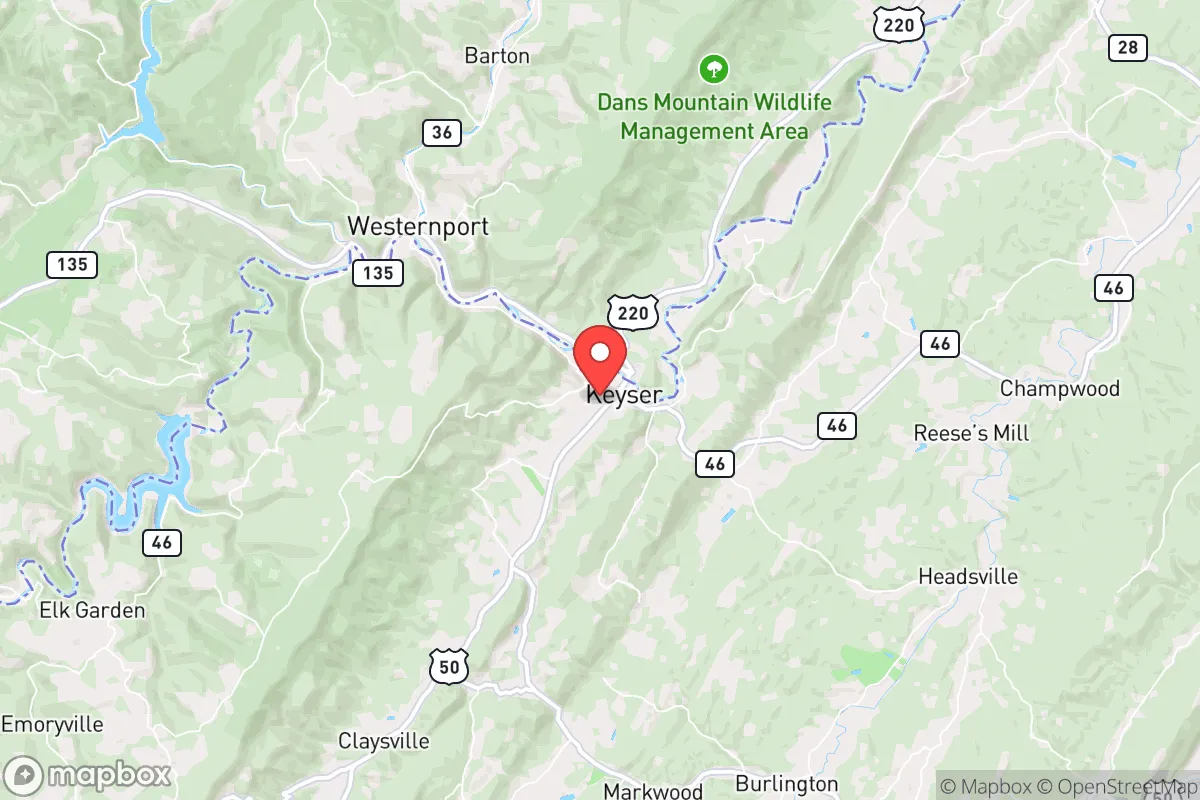
Drive ten miles north into Cumberland, and you’ll feel the shift—Maryland’s politics bleed in, with more blue-leaning policies on taxes and local spending. Head south toward Moorefield or east into Winchester, Virginia, and you’re back in solid red territory, but Keyser sits right on that border. It’s a conservative island in a state that’s already pretty red, surrounded by places that are starting to flirt with progressive ideas. That R+20 rating isn’t just a number; it means local elections here rarely see a serious challenge from the left, and the county commission stays focused on keeping regulations light and property taxes low. Compared to Morgantown or Charleston, which have their own liberal bubbles, Keyser feels like a throwback—and most residents prefer it that way.
What this means for residents
For the people living here, the political climate translates directly into daily life. You don’t see the kind of government overreach that’s creeping into bigger cities—no heavy-handed zoning rules, no mandates that tell you how to run your small business or what you can do on your own land. The local schools still teach traditional values, and the Second Amendment isn’t debated; it’s assumed. That said, there’s a quiet worry among long-time residents that the pressure from outside—especially from folks moving in from D.C. or Baltimore looking for cheap land—could shift things. If that happens, you’ll see more regulations, higher taxes, and a loss of the freedom that makes Keyser worth living in. For now, though, the community holds the line, and most of us are keeping a close eye on any candidate who talks about “progress” without defining what they’re willing to give up.
Culturally, Keyser stands out for its no-nonsense approach to policy. There’s no push for bike lanes or public art projects funded by tax hikes—the money goes to roads, emergency services, and keeping the town running. The biggest political fights here are usually about school funding or whether to allow a new gas station, not the kind of culture-war stuff you see on national news. But that’s changing slowly. A few years back, there was a push to add more diversity programs in the local schools, and it got shut down fast by parents who saw it as unnecessary government meddling. That’s the Keyser way: if it ain’t broke, don’t fix it, and if someone tries to fix it for you, you push back. Looking ahead, the real test will be whether the town can keep that independent spirit as the state and country drift leftward. If the next decade brings more mandates from Charleston or Washington, you can bet Keyser will be one of the last places to go along quietly.

State Political ClimatePolitical Climate in West Virginia
State Political AnalysisPolitical Environment in the State
West Virginia has long been one of the most reliably Republican states in the nation, but that wasn’t always the case. As recently as the 1990s, it was a Democratic stronghold at the state and local level, but a massive realignment over the past 20 years has flipped it deep red. In 2024, Donald Trump carried the state by nearly 40 points, and Republicans now hold supermajorities in both chambers of the legislature, the governor’s office, and every statewide elected position. The shift is driven by cultural conservatism, union-member disillusionment with national Democrats, and a fierce independence that resents federal overreach. If you’re looking for a place where traditional values still hold sway and the government isn’t constantly meddling in your life, West Virginia is about as solid as it gets.
Urban vs. rural divide
The political map of West Virginia is surprisingly simple: the rural areas are overwhelmingly red, and the few small cities lean blue but are too weak to matter. Charleston, the capital and largest city, is the only real Democratic holdout, with Kanawha County voting blue in recent presidential races by slim margins. Morgantown, home to West Virginia University, is a liberal island in a sea of red, driven by the academic and student population. Huntington and Wheeling are more purple but still tilt Republican in statewide races. The real action is in the rural counties: Mingo, Logan, McDowell, and Wyoming in the southern coalfields routinely deliver 75-80% of their votes to Republicans. The eastern panhandle, including Berkeley and Jefferson counties, has seen an influx of former D.C. area residents, and while they’re more moderate than the rest of the state, they still vote reliably red. The divide isn’t about policy—it’s about culture. Rural West Virginians see the cities as out of touch with their way of life, and they vote accordingly.
Policy environment
West Virginia’s policy environment is aggressively pro-business and pro-liberty, with a strong emphasis on limiting government reach. The state has no personal income tax on Social Security benefits, and in 2023, Governor Jim Justice signed a bill that will phase out the state’s personal income tax entirely by 2026, dropping the rate from 6.5% to 3.99% and eventually to zero. Property taxes are among the lowest in the nation, and there’s no estate or inheritance tax. The regulatory climate is light—permitting for new businesses is streamlined, and the state has a right-to-work law that bans mandatory union dues. On education, West Virginia has a robust school choice program: the Hope Scholarship, enacted in 2021, gives families roughly $4,600 per child to use for private school, homeschooling, or tutoring. The state also passed a Parents’ Bill of Rights in 2022, requiring schools to notify parents about curriculum changes and medical services. Healthcare is a mixed bag—Medicaid expansion under the ACA was accepted, but the state has resisted further federal mandates. Election laws are solid: voter ID is required, early voting is available, and there’s no same-day registration. The state also has a constitutional carry law (permitless carry for firearms) that went into effect in 2016. For a conservative, this is a policy paradise.
Trajectory & freedom
West Virginia is becoming more free, not less, and the trend is accelerating. The 2021 passage of the Hope Scholarship was a landmark win for educational freedom, and the income tax phase-out is a massive step toward fiscal liberty. On gun rights, the state has been a leader: constitutional carry was passed in 2016, and in 2023, the legislature passed a law prohibiting state and local enforcement of federal gun regulations that don’t have a state equivalent—a direct challenge to federal overreach. Parental rights were strengthened with the 2022 Parents’ Bill of Rights, and in 2024, the state passed a law banning gender transition procedures for minors, a move that drew national attention but was widely supported locally. Medical autonomy is respected—there’s no vaccine mandate for state employees, and the legislature has repeatedly blocked attempts to impose mask or lockdown mandates. Property rights are strong, with a 2023 law limiting the ability of local governments to impose zoning restrictions that infringe on private property use. The only area where freedom is arguably shrinking is in the realm of abortion: the state passed a near-total ban in 2022 with limited exceptions, which aligns with the conservative majority but does represent a restriction on personal choice. Overall, the trajectory is toward greater individual liberty, especially in education, taxation, and self-defense.
Civil unrest & political movements
West Virginia is not a hotbed of civil unrest, but it has a proud history of political activism, mostly on the conservative side. The 2018 teachers’ strike was a rare moment of left-leaning protest, but it was about pay and benefits, not culture war issues. Since then, the dominant political movements have been pro-life, pro-gun, and pro-school choice. The state has seen organized opposition to federal overreach, including a 2023 resolution calling for a constitutional convention to limit federal power. There’s no sanctuary city movement—in fact, the legislature passed a law in 2023 requiring local law enforcement to cooperate with federal immigration authorities. Election integrity is a live issue: in 2020, the state’s Republican secretary of state implemented strict ballot security measures, and in 2024, the legislature passed a law requiring all ballots to be hand-counted in future elections, a move that has drawn both praise and criticism. You won’t see large-scale protests or riots here—the culture is too independent and self-reliant for that. But you will find a population that is deeply skeptical of federal authority and willing to push back when they feel their rights are threatened.
Projection
Over the next 5-10 years, West Virginia will likely become even more conservative and more free. The income tax phase-out will attract retirees and remote workers from high-tax states like New York and California, but the influx will be modest—the state’s population is still declining overall. The eastern panhandle, particularly Jefferson County, will see the most growth, bringing in more moderate conservatives who may push for slightly more government services, but they won’t flip the state blue. The coal industry will continue to shrink, but natural gas and renewable energy (especially wind and solar in the mountainous regions) will provide economic diversification. The biggest wildcard is the opioid crisis, which has devastated many communities and could drive out-migration if not addressed. But culturally, the state is solidifying its identity as a bastion of traditional values and limited government. If you move here now, expect to find a place that values your freedom to live as you see fit, with minimal interference from the state or federal government.
For a conservative looking to relocate, West Virginia offers a rare combination: low taxes, strong gun rights, school choice, and a culture that respects personal independence. The politics are stable and predictable—you won’t see sudden shifts toward progressive policies. The downsides are real: a struggling economy in some areas, a drug crisis, and limited job opportunities outside of healthcare, energy, and education. But if your priority is living in a state that respects your rights and doesn’t try to micromanage your life, West Virginia is one of the best bets in the country. Just be prepared for a slower pace of life and a climate that’s more rugged than you might expect.
* Values derived from national, state, county, city and local statistics and may differ in a specific area. Last updated: 2026-05-01T05:18:21.000Z
Narrative content on this page is AI-generated and may contain mistakes. Verify any details that matter before acting on them.
ReloMaps may earn a commission from affiliate links at no extra cost to you.

