Photo: Wikipedia
Personal Sovereignty in Kiryas Joel, NY
Moderate friction. Expect trade-offs in some aspect of personal liberty and independence.
What does Personal Sovereignty tell us?
Personal Sovereignty measures your capacity for self-reliance and independence with minimal government friction. Higher scores mean fewer barriers between you and the way you want to live... but it assumes you have the space you need and good neighbors.
What does this tell us?
Personal Sovereignty measures your capacity for self-reliance and independence with minimal government friction. Higher scores mean fewer barriers between you and the way you want to live... but it assumes you have the space you need and good neighbors.
State Policy
Energy independence: Importer (12% of energy produced in-state)
Personal Liberty
Homesteading

Personal Liberty Analysis
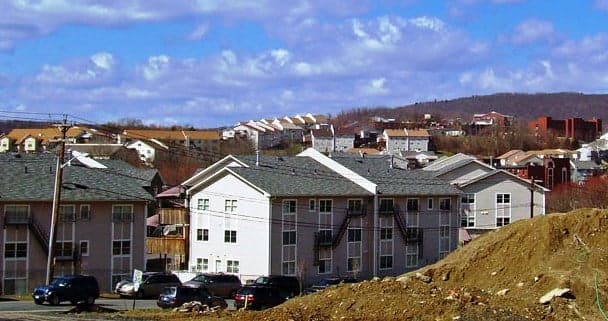
Kiryas Joel, a densely populated Hasidic village in Orange County, presents a unique and paradoxical environment for personal sovereignty. While the community’s strong internal social structure and religious autonomy create a powerful buffer against many forms of government overreach, the individual’s ability to act independently—especially in a survivalist or prepper context—is heavily constrained by state-level mandates and the village’s own high-density, collectivist design. For a single individual or family seeking maximum personal latitude, the trade-offs here are extreme: you gain a fiercely protected cultural bubble, but you lose nearly all the physical and legal space for self-reliant action.
Tax burden and regulatory posture: a high-cost, high-control environment
New York State’s tax and regulatory climate is among the most restrictive in the nation, and Kiryas Joel is fully subject to it. The state’s personal income tax rates range from 4% to 10.9%, and property taxes in Orange County are well above the national average—often exceeding $8,000 annually on a modest home. For a prepper or conservative-minded individual, this represents a significant drain on resources that could otherwise go toward self-sufficiency investments like land, supplies, or off-grid infrastructure. The regulatory posture is equally burdensome: New York imposes strict building codes, environmental review processes, and land-use regulations that make any kind of independent construction or modification a bureaucratic ordeal. The village itself, governed by a religious council, adds another layer of community-specific rules that prioritize communal conformity over individual experimentation. If you value the ability to modify your property without permits or to keep your tax dollars for your own preparedness projects, this is a hostile jurisdiction.
Self-defense and gun law specifics: severe restrictions on the right to keep and bear arms
New York’s gun laws are among the most restrictive in the country, and Kiryas Joel offers no relief. The state requires a permit to purchase a handgun, a separate permit to carry one concealed (now issued under a “may-issue” standard that gives local authorities broad discretion), and a background check for all firearm transfers, including private sales. The SAFE Act of 2013 banned many semi-automatic rifles commonly used for home defense and hunting, and magazine capacity is capped at ten rounds. For a survivalist, this is a critical vulnerability: you cannot legally maintain a robust armory for self-defense against civil unrest or government overreach. The local sheriff’s office in Orange County is generally more supportive of Second Amendment rights than downstate jurisdictions, but they are still bound by state law. In practice, this means that any prepper living in Kiryas Joel must either comply with onerous licensing and registration requirements or risk legal jeopardy. The community’s own cultural norms, which emphasize non-violence and reliance on community elders for dispute resolution, further discourage an armed self-defense mindset. For anyone who views firearm ownership as a fundamental pillar of personal sovereignty, this is a deal-breaker.
Self-reliance and homesteading viability: lot sizes, zoning, and off-grid feasibility
Kiryas Joel is one of the most densely populated municipalities in the United States, with a population density exceeding 20,000 people per square mile. Lot sizes are tiny—often less than a quarter-acre—and zoning is strictly residential, with no allowances for agricultural use, livestock, or commercial workshops. Off-grid living is effectively impossible: the village is fully connected to municipal water, sewer, and electric grids, and any attempt to install solar panels, rainwater collection, or a composting toilet would require permits that are almost never granted for single-family homes. The local zoning code is designed to maximize housing density for the growing Hasidic population, not to accommodate individual self-sufficiency. For a prepper or homesteader, this is the antithesis of a viable location. There is no space for a garden large enough to provide meaningful food, no room for a workshop to repair gear, and no legal path to disconnect from the grid. Even if you could afford a larger property in the surrounding Town of Monroe, the same state-level restrictions on water rights, septic systems, and building codes apply. The only realistic path to self-reliance here is to rely on the community’s own mutual-aid networks—which are strong, but which also demand conformity and participation in the community’s religious and social life.
Personal liberties: parental rights, medical autonomy, speech, and property
New York State has aggressively expanded government authority over personal liberties in recent years. Parental rights are under constant pressure: the state mandates comprehensive sex education in public schools, has removed parental opt-outs for certain health services, and allows minors to consent to mental health treatment without parental notification. For a conservative parent, this is a direct threat to the ability to raise children according to one’s own values. Medical autonomy is similarly constrained: New York imposed one of the nation’s strictest COVID-19 vaccine mandates, including for children in school, and maintains a heavily regulated healthcare system that limits access to alternative or experimental treatments. Freedom of speech is legally protected, but the state’s hate speech and harassment laws are broad, and social media platforms—which are the primary public square—are subject to state pressure to censor content. Property rights are the most compromised: New York’s rent stabilization laws, environmental regulations, and eminent domain powers give the government extensive control over what you can do with your land. In Kiryas Joel specifically, the village’s own religious governance adds another layer: community norms strongly discourage public dissent, criticism of religious leaders, or any behavior that might embarrass the community. For a survivalist who values the ability to speak freely, make independent medical decisions, and control their own property, this is a suffocating environment.
Overall, Kiryas Joel offers a peculiar and limited form of personal sovereignty. The community’s insularity provides a powerful shield against many forms of state and federal overreach—the village largely governs itself, and its residents are insulated from the cultural pressures of mainstream society. But that shield comes at the cost of individual autonomy. You cannot own guns freely, you cannot homestead, you cannot opt out of state mandates, and you cannot dissent without social consequences. For a prepper or conservative individual seeking maximum personal sovereignty, Kiryas Joel is a poor choice. The state of New York as a whole ranks near the bottom for personal freedom indices, and this village, for all its unique character, does not escape that reality. If your priority is to be left alone to live your own life on your own terms, you would be far better served by a low-density, low-regulation state in the South or Mountain West—where taxes are lower, gun laws are more permissive, and you can actually own enough land to be self-sufficient.

* Values derived from national, state, county, city and local statistics and may differ in a specific area. Last updated: 2026-05-01T08:55:00.000Z
Narrative content on this page is AI-generated and may contain mistakes. Verify any details that matter before acting on them.
ReloMaps may earn a commission from affiliate links at no extra cost to you.

