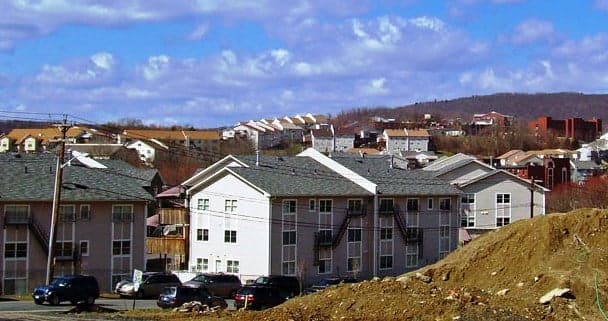
Photo: Wikipedia
Political ClimatePolitical Climate in Kiryas Joel, NY
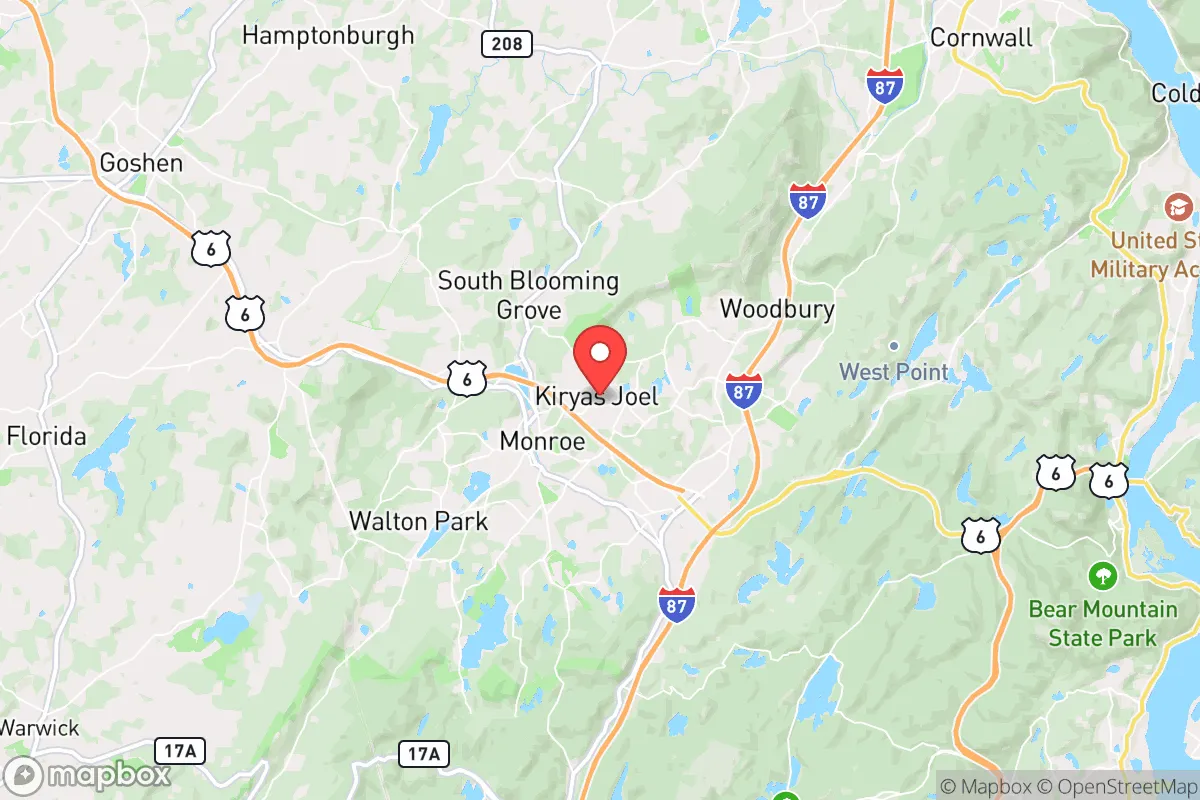
District shown is the primary district for this city’s centroid. Cities may span multiple districts.
Local Political AnalysisPolitical Analysis of Kiryas Joel, NY
Kiryas Joel is a unique political outlier in New York’s Hudson Valley, and if you’ve lived here as long as I have, you know it’s not your typical D+2 district. The Cook PVI of D+2 suggests a slight Democratic lean overall, but that number is misleading when you zoom in on this village. In reality, Kiryas Joel is overwhelmingly conservative—socially, culturally, and in its voting patterns—driven by the Satmar Hasidic community’s strong emphasis on religious tradition, family values, and limited government interference. The real story is how this local conservatism clashes with the broader Orange County and state-level trends, which have been shifting leftward in recent years. That tension is something every resident here feels, and it’s only getting sharper.
How it compares
Drive 15 minutes west to Monroe or 20 minutes north to Middletown, and you’ll see a completely different political landscape. Those towns lean more moderate-to-liberal, especially as New York City commuters and younger families move in, bringing progressive views on taxes, housing, and social issues. Kiryas Joel, by contrast, votes reliably for Republican candidates who champion religious liberty, school choice, and local control—even when the surrounding county swings blue. In the 2024 election, for example, Kiryas Joel precincts gave Donald Trump over 90% of the vote, while nearby areas like the Village of Monroe barely hit 50%. That’s a stark divide, and it means our representatives in Albany often don’t reflect our values. The state government’s push for mandates on vaccine requirements, housing density, and curriculum standards feels like a direct assault on how we raise our families and run our community. It’s not just about party labels; it’s about whether the government trusts us to make our own decisions.
What this means for residents
For those of us living here, the political climate translates into daily friction. You see it in the constant battles over zoning laws—Albany wants to force higher-density housing and “affordable” units that would change the character of our village, while we push back to preserve our tight-knit, religiously observant neighborhoods. It shows up in school funding fights, where our private yeshivas get little state support, yet we’re taxed to fund public schools we don’t use. The biggest red flag is the creeping progressive agenda on parental rights: state laws that override how we teach our children about health, history, and family life. If you value personal freedoms—like choosing your own healthcare, educating your kids without government interference, or practicing your faith openly—Kiryas Joel is a stronghold, but it’s under constant pressure. The long-term trend is concerning: each election cycle brings more state-level mandates that chip away at local autonomy.
Culturally, Kiryas Joel stands apart in one more way: we don’t just vote conservative—we live it. There’s no debate here about “woke” policies or critical race theory in schools because our community runs on Torah law and communal consensus, not Albany’s diktats. That’s a double-edged sword, though. Our insularity means we sometimes miss out on state resources or political alliances that could protect us. Looking ahead, I see two paths: either we organize better to elect local leaders who will fight for our rights, or we watch the state erode the very freedoms that make this village a sanctuary. For now, the fight is real, and it’s personal.

State Political ClimatePolitical Climate in New York
State Political AnalysisPolitical Environment in the State
New York State has long been a Democratic stronghold, but the reality on the ground is far more complex than the statewide numbers suggest. The state has voted for every Democratic presidential nominee since 1988, with margins exceeding 20 points in recent cycles, but this is almost entirely driven by New York City and its immediate suburbs. Over the past 10-20 years, the state has shifted sharply left on cultural and economic issues, driven by a progressive supermajority in Albany that has little incentive to moderate. For a conservative-leaning individual or family, the key takeaway is that your experience will vary dramatically depending on whether you land in Manhattan, Buffalo, or the Hudson Valley.
Urban vs. rural divide
The political map of New York is a tale of two states. New York City — specifically Manhattan, Brooklyn, and the Bronx — is the engine of the state’s Democratic dominance, routinely delivering 70-80% of the vote for Democratic candidates. The city’s five boroughs alone account for roughly 40% of the state’s total vote, meaning statewide elections are effectively decided before the rest of the state weighs in. The immediate suburbs — Nassau County on Long Island and Westchester County north of the city — have trended blue over the last decade, though they still contain pockets of Republican strength, particularly in Suffolk County’s eastern towns and Rockland County’s Orthodox Jewish communities. Upstate, the picture flips dramatically. Erie County (Buffalo) and Monroe County (Rochester) are Democratic-leaning due to their urban cores, but the vast rural expanse — the Adirondacks, the Southern Tier, the Finger Lakes region — votes heavily Republican. Allegany County and Lewis County routinely give Republicans 65-70% of the vote. The divide is so stark that some upstate counties have discussed secession or joining Pennsylvania, though nothing serious has materialized. The practical effect: if you live in Albany or Syracuse, you’re in a blue island surrounded by red countryside.
Policy environment
New York’s policy environment is among the most progressive in the nation, and it has become more so since Democrats gained a supermajority in both legislative chambers in 2019. The state has the highest combined state and local tax burden in the country, with income tax rates topping 10.9% for top earners and property taxes that are among the highest nationally — particularly in Westchester and Nassau counties. The regulatory posture is aggressive: New York has a strict rent control regime in New York City, a statewide ban on fracking, and some of the nation’s toughest environmental regulations under the Climate Leadership and Community Protection Act. Education policy is dominated by the teachers’ unions, with per-pupil spending exceeding $25,000 in many districts, yet student outcomes in urban areas remain poor. Healthcare is heavily regulated, with the state expanding Medicaid eligibility and implementing a public option for health insurance. Election laws have been loosened significantly: no-excuse absentee voting, early voting, and automatic voter registration are now law. The state also passed the New York Health Act (single-payer) through the Assembly multiple times, though it has stalled in the Senate. For a conservative, the policy environment feels like a constant push toward higher taxes, more regulation, and less local control.
Trajectory & freedom
New York is becoming less free by almost any measure, and the trend has accelerated since 2020. On gun rights, the state passed the SAFE Act in 2013, which banned assault weapons and high-capacity magazines, and then the Concealed Carry Improvement Act in 2022, which effectively ended public carry by requiring “good moral character” and banning guns in a long list of “sensitive locations.” The Supreme Court struck down the old carry law in NYSRPA v. Bruen, but the state immediately passed a replacement that is being challenged in court. On parental rights, the state passed the Gender Expression Non-Discrimination Act (GENDA) and has mandated that schools allow students to use bathrooms and pronouns matching their gender identity without parental notification. The state also passed a law requiring all public schools to teach “inclusive” sex education, which many parents find objectionable. On medical autonomy, New York expanded abortion access to the point of allowing late-term abortions and requiring private insurance to cover them at no cost. On property rights, the state’s rent stabilization laws have been tightened, making it harder for landlords to evict or raise rents. The Green Light Law allows undocumented immigrants to obtain driver’s licenses, and the state is a “sanctuary” jurisdiction that limits cooperation with federal immigration enforcement. The trajectory is clear: more state control, less individual liberty.
Civil unrest & political movements
New York has been a flashpoint for political activism on both sides. The Black Lives Matter protests in summer 2020 were massive, particularly in New York City and Buffalo, where a police incident involving an elderly man being shoved led to widespread demonstrations. The state responded with the Police Reform and Reinvention Collaborative, which required every local police department to develop a reform plan or risk losing state funding. On the right, the Second Amendment sanctuary movement has spread to dozens of upstate counties, with local sheriffs refusing to enforce the new concealed carry restrictions. The New York State Rifle & Pistol Association remains a powerful lobbying force. Immigration politics are a constant source of tension: New York City’s sanctuary policies have led to a surge of migrants bused from Texas, straining shelters and schools. The state’s Green Light Law has been a particular flashpoint, with some county clerks refusing to process applications. Election integrity controversies have been relatively muted compared to other states, but the 2020 election saw a surge in mail-in voting that raised concerns about ballot harvesting in New York City. A new resident would notice the constant political tension, especially in the city, where protests and counter-protests are common.
Projection
Over the next 5-10 years, New York’s political trajectory is likely to continue leftward, but with growing resistance from upstate and suburban voters. Demographic trends are working against conservatives: New York City continues to attract young, progressive transplants, while rural areas are losing population. The state’s high taxes and regulatory burden are driving out middle-class families, particularly from Long Island and Westchester, who are moving to Florida, Texas, and the Carolinas. This out-migration is likely to accelerate, further concentrating political power in the city. However, there are countervailing forces: the Supreme Court’s conservative majority may strike down more of New York’s gun laws and could limit the state’s ability to regulate interstate commerce. The state’s fiscal situation is precarious, with a massive pension liability and a shrinking tax base, which could force a reckoning. A new resident moving in now should expect to see continued progressive governance in Albany, with occasional victories for conservatives in court. The practical reality is that if you want a conservative environment, you’ll need to live in a rural county or a red-leaning suburb like Staten Island or parts of Suffolk County, and you’ll still be subject to state-level policies you likely oppose.
For a conservative-leaning individual or family considering New York, the bottom line is this: the state’s political climate is hostile to your values, but the degree of hostility varies enormously by location. If you choose to move here, you’ll be paying high taxes, dealing with a heavy regulatory hand, and living under laws that prioritize progressive social policies. Your best bet is to target a red-leaning upstate county like Livingston County or Ontario County, where local government is more aligned with your views, and accept that state-level politics will be an ongoing battle. If you can’t stomach that, you’re better off looking at a state like Florida or Texas, where the political environment is more consistently aligned with conservative principles.
* Values derived from national, state, county, city and local statistics and may differ in a specific area. Last updated: 2026-05-01T08:55:00.000Z
Narrative content on this page is AI-generated and may contain mistakes. Verify any details that matter before acting on them.
ReloMaps may earn a commission from affiliate links at no extra cost to you.

