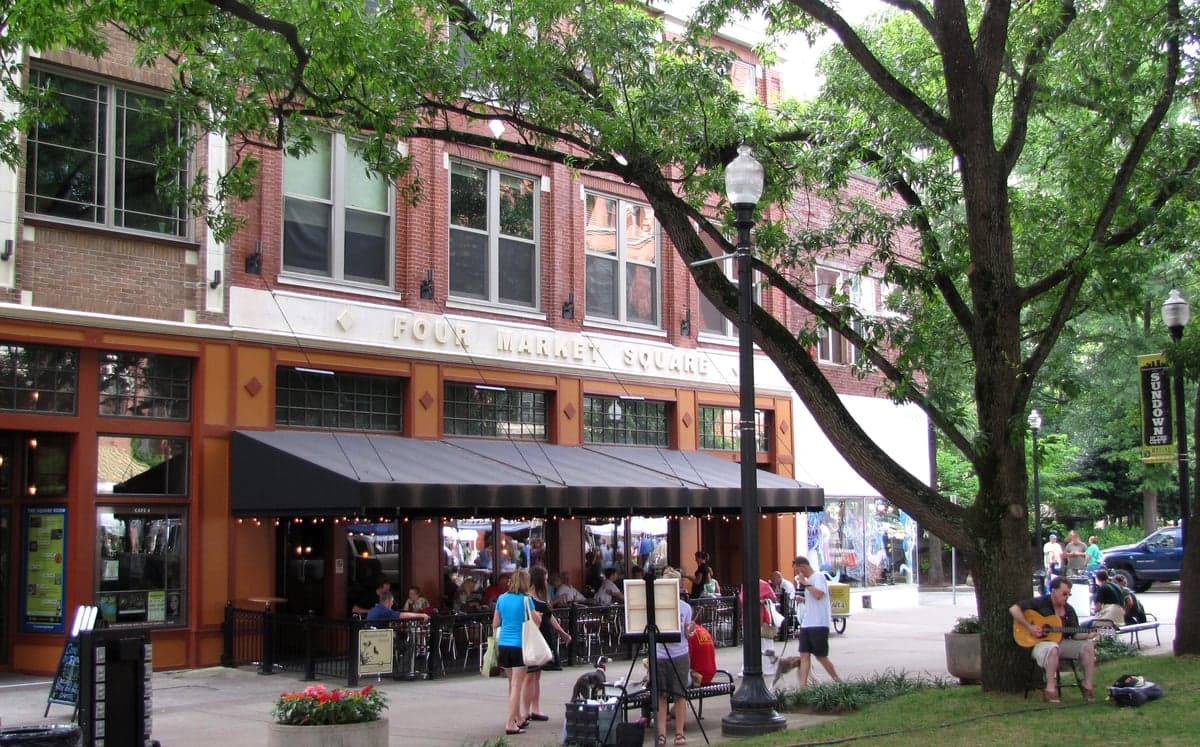
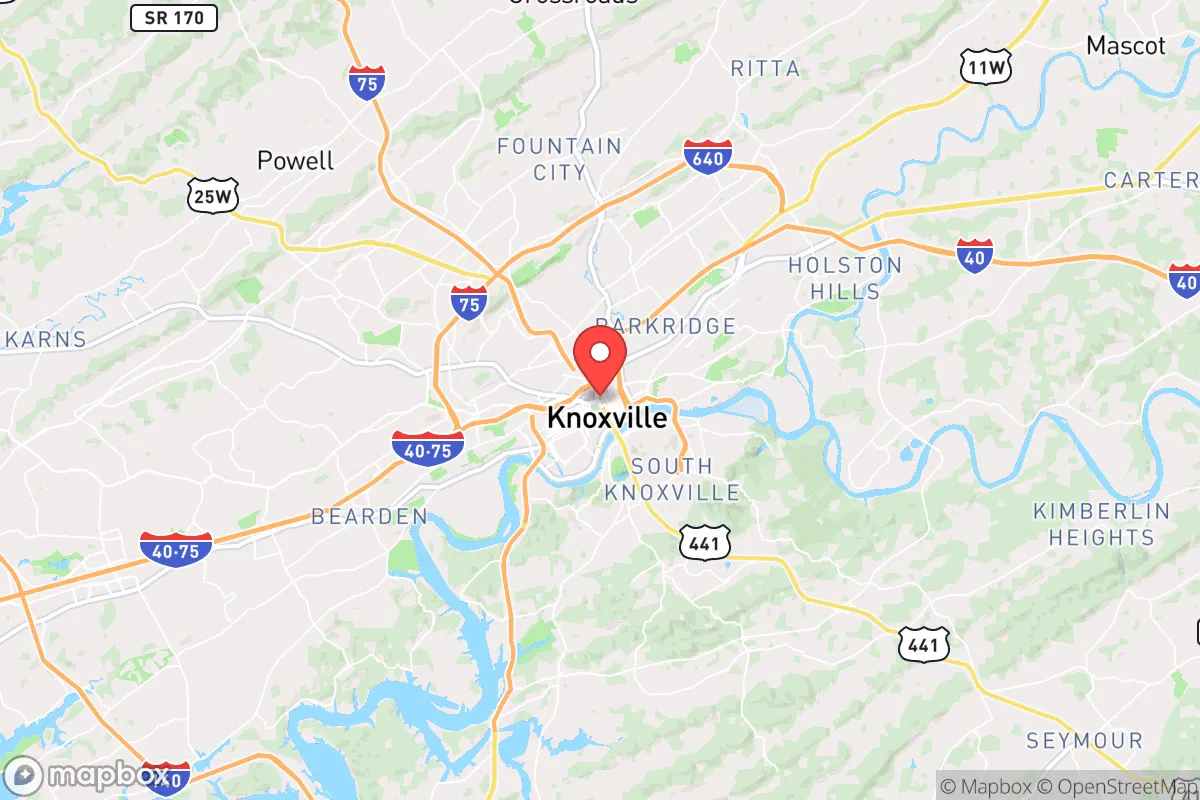
Photo: Wikipedia
Quality of Life in Knoxville, TN
Above-average quality of iife. The area offers a reasonable cost of living, decent mobility, and a mix of neighborhood amenities.
What does Quality of Life tell us?
Quality of Life blends cost of living, nearby amenities, socioeconomic signals, and neighborhood character. City-level scores represent the whole municipality; individual neighborhoods can differ.
What does this tell us?
Quality of Life blends cost of living, nearby amenities, socioeconomic signals, and neighborhood character. City-level scores represent the whole municipality; individual neighborhoods can differ.
Cost of Living
12% below national average
The Real Cost of Living in Knoxville, TN for 2026
| Tier | Individual | Family (4) |
|---|---|---|
| Survival | $18k | $33k |
| Comfortable | $42k | $61k |
| Luxury | $92k+ | $143k+ |
| Elite (Top 5%) | $123k+ | $190k+ |
83%
The Area Signal
A metric tracking the socioeconomic signals of the area.


Hobbies
Explore the areaGroceries
4 within 10 miles
Gas
0 within 10 miles
Hospital
3 within 20 miles
Airport
BNA — Nashville International
Post Office
USPS — Knoxville, TN
Critical Amenities
Quality-of-Life Analysis
Knoxville, Tennessee, offers a quality of life defined by a lower cost of living than the national average, attracting a diverse mix of University of Tennessee students, young professionals, and families seeking a balance of urban amenities and outdoor access. The city’s overall cost of living index sits at 88 (where 100 equals the U.S. average), making it notably more affordable than peer cities like Nashville or Asheville. This economic accessibility, combined with a median home value of $214,000 and a median rent of $1,116, draws residents who prioritize financial breathing room without sacrificing access to a mid-sized city’s cultural and recreational offerings.
How housing costs and affordability compare to nearby cities
Knoxville’s housing market remains a key draw, with a median home value roughly 30% below the national median and significantly lower than Nashville’s median of around $450,000 or Asheville’s $400,000-plus. The median rent of $1,116 is also well under the national average of roughly $1,400, making it feasible for renters to live in walkable neighborhoods like the Old City or Fourth and Gill. The average commute time of 20.4 minutes is shorter than the U.S. average of 26 minutes, reducing transportation costs and daily stress. However, property taxes in Knox County are moderate—around $2,200 annually on a median-priced home—while Tennessee’s lack of a state income tax further boosts take-home pay for workers. For comparison, nearby Maryville and Oak Ridge offer even lower home prices (around $250,000 and $200,000, respectively), but with fewer job centers and entertainment options.
What daily life is like for families and professionals
Daily life in Knoxville revolves around a compact downtown core, the University of Tennessee campus, and the Tennessee River waterfront. The city’s public school system, Knox County Schools, serves roughly 60,000 students with magnet programs at L&N STEM Academy and Bearden High School, though families often supplement with private options like Webb School of Knoxville. Amenities include the Knoxville Museum of Art, the Tennessee Theatre for live performances, and the 1,000-acre Ijams Nature Center for hiking and paddling. The city’s food scene has grown significantly, with James Beard-recognized chefs at places like A Dopo Sourdough Pizza and Emilia. For professionals, major employers include the University of Tennessee, Oak Ridge National Laboratory (20 minutes west), and healthcare systems like Covenant Health. The rhythm is slower than Nashville but faster than most small towns, with a strong emphasis on college sports (Tennessee Volunteers football) and outdoor recreation on the nearby Smoky Mountains.
Knoxville is best suited for those who want a lower cost of living without sacrificing access to a university town’s energy, outdoor recreation, and a growing job market. It appeals particularly to remote workers, early-career professionals, and families who value a short commute and affordable housing over the higher salaries and higher costs of larger metros. Retirees on fixed incomes also find the tax-friendly environment and mild four-season climate attractive. However, those seeking a dense urban experience or high-end cultural amenities may find Knoxville too quiet or limited in nightlife and fine dining. For the majority of movers, the city’s combination of affordability, short commute, and proximity to the Great Smoky Mountains creates a compelling quality-of-life equation.

Crime in Knoxville, TN
Higher crime rates than 68% of comparable U.S. locations.
Violent CrimeViolent Crime Analysis
Property CrimeProperty Crime Analysis
Crime Analysis
Knoxville, Tennessee, reports a violent crime rate of 684.3 incidents per 100,000 residents and a property crime rate of 2,356.4 per 100,000, placing it well above both state and national averages. These figures indicate that safety is a significant concern for anyone considering a move to the city. The data suggests that Knoxville faces challenges common to many larger metropolitan areas, where higher population density and socioeconomic factors can drive crime rates upward.
Crime in context
Knoxville's violent crime rate of 684.3 per 100,000 is roughly double the national average of approximately 380 per 100,000 and significantly higher than the Tennessee state average of about 630 per 100,000. Property crime, at 2,356.4 per 100,000, also exceeds the national benchmark of roughly 1,950 per 100,000. These numbers place Knoxville among the higher-crime cities in Tennessee, comparable to Memphis and Chattanooga in overall risk. A contributing factor is the progressive judicial philosophy prevalent in Knox County, where district attorneys and judges have increasingly emphasized diversion programs and reduced sentencing for non-violent offenders. While intended to reduce recidivism, this approach has been criticized for placing more criminals back on the street, undermining public safety and victim justice.
What residents experience
Residents report that property crimes like vehicle break-ins, package theft, and home burglaries are the most common safety issues, particularly in neighborhoods near the University of Tennessee campus and downtown. Violent crime, while less frequent, is concentrated in specific corridors such as Magnolia Avenue, parts of East Knoxville, and the Western Avenue corridor. Many locals avoid walking alone after dark in these areas. The city's response has included increased police patrols in high-crime zones, but the effectiveness is hampered by a justice system that many residents feel prioritizes offender rehabilitation over victim protection. The perception of leniency has led to community frustration, with some neighborhoods forming watch groups to supplement official efforts.
Neighborhood-level variation is stark. Areas like Sequoyah Hills, West Hills, and Farragut report crime rates 60-70% lower than the city average, offering a much safer living environment. In contrast, downtown and central neighborhoods like Mechanicsville and Lonsdale see elevated rates of both violent and property crime. Prospective residents should research specific ZIP codes and consult local crime maps, as safety can change dramatically within a few blocks. The overall picture is one of a city with serious crime challenges, particularly in its urban core, where progressive judicial policies have contributed to a revolving-door justice system that many argue fails to adequately protect the public.
* Values derived from national, state, county, city and local statistics and may differ in a specific area. Last updated: 2026-04-15T23:51:31.000Z
Narrative content on this page is AI-generated and may contain mistakes. Verify any details that matter before acting on them.
ReloMaps may earn a commission from affiliate links at no extra cost to you.

