Photo: Wikipedia
Political ClimatePolitical Climate in Knoxville, TN
District shown is the primary district for this city’s centroid. Cities may span multiple districts.
Local Political AnalysisPolitical Analysis of Knoxville, TN
Knoxville has long been a reliably conservative stronghold, and that hasn’t changed much despite some national trends. The Cook PVI of R+17 tells you the real story here: this area leans heavily Republican, and it’s not a fluke. You’ll see it in local elections, in the way folks talk about taxes and regulations, and in the general distrust of big government solutions. That said, there’s been a noticeable shift in the city proper over the last decade or so, especially as younger professionals and out-of-state transplants have moved in. The core of Knoxville is still solidly red, but you can feel a little more tension around issues like zoning, development, and public spending than you would have twenty years ago.
How it compares
If you drive just a few miles outside the city limits, you’ll find places like Farragut, Maryville, and Oak Ridge that are even more conservative than Knoxville itself. Those towns have held the line on property taxes, kept school boards focused on basics, and generally resisted the kind of progressive social experiments you see in bigger cities. On the flip side, Knoxville’s own downtown and the areas around the University of Tennessee campus have gotten noticeably more liberal, especially on cultural issues. You’ll see more pride flags, more bike lanes, and more talk about “equity” in city planning than you would in, say, Alcoa or Lenoir City. The contrast is real, and it’s something long-time residents keep an eye on. The surrounding counties—Knox, Blount, Loudon—still vote overwhelmingly Republican, but the city council races have gotten tighter, and that’s worth watching.
What this means for residents
For most folks living here, the political climate means you can still run a small business without drowning in red tape. Property taxes are reasonable compared to Nashville or Chattanooga, and there’s no city income tax. The local government has generally kept its hands off personal freedoms—no mask mandates that lasted forever, no heavy-handed business closures during the pandemic, and a real reluctance to impose new fees or regulations on homeowners. That’s the good part. The concerning part is the slow creep of progressive ideas into city hall. You’re seeing more talk about “affordable housing mandates” and “complete streets” policies that sound nice but often mean more government control over how you use your own property. If you value being left alone to live your life, Knoxville still delivers, but you have to stay engaged. The long-term trend is toward more regulation, not less, and that’s something to keep an eye on.
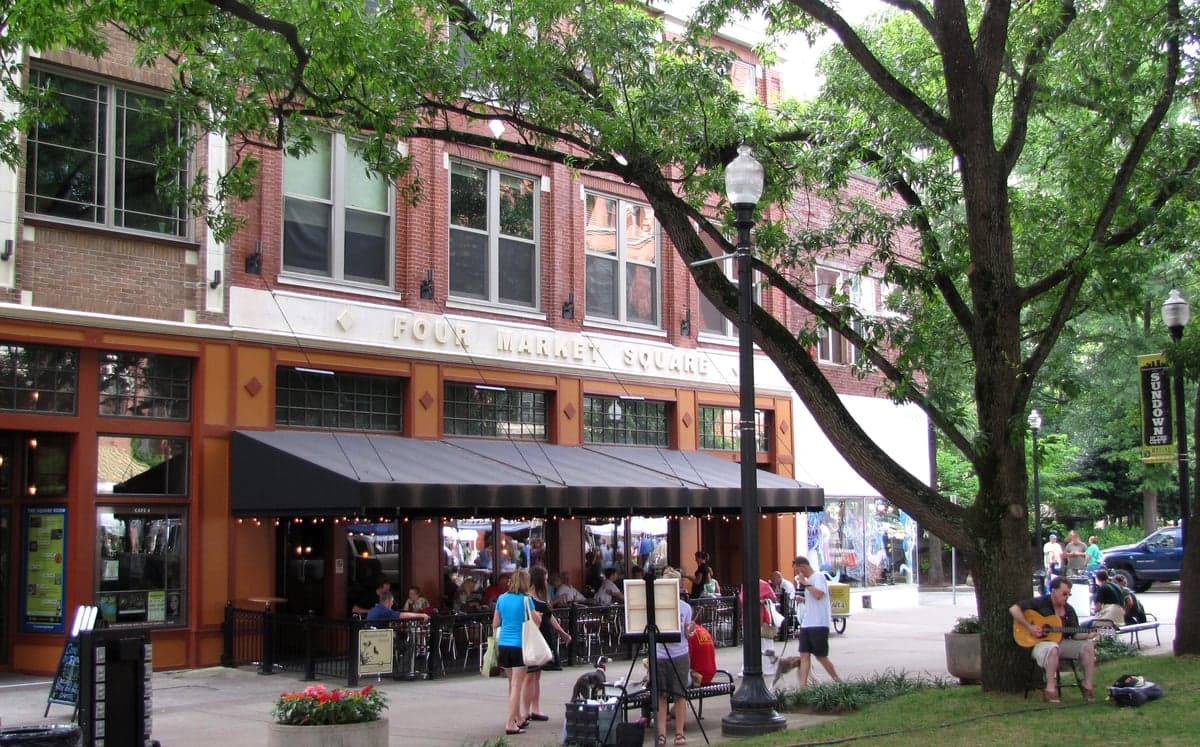
Culturally, Knoxville is still a place where people wave at neighbors and church attendance is high, but the downtown scene has gotten more polished and, frankly, more expensive. The old “scruffy city” vibe is fading, replaced by breweries and boutique hotels that cater to tourists and newcomers. That’s fine, but it brings with it a certain political flavor—more emphasis on “sustainability,” more bike lanes, more talk about “inclusivity” that sometimes feels like code for pushing a progressive agenda. The good news is that the state legislature in Nashville is firmly conservative and has preempted a lot of local overreach, like when they blocked Knoxville from passing its own rental inspection ordinance a few years back. So while the city might lean a little left on cultural issues, the state keeps the worst instincts in check. For now, Knoxville remains a place where you can enjoy the benefits of a growing city without sacrificing your freedoms, but you’ve got to stay involved to keep it that way.

State Political ClimatePolitical Climate in Tennessee
State Political AnalysisPolitical Environment in the State
Tennessee has been a reliably red state for decades, but the nature of that conservatism has shifted significantly. The state leans Republican by about 14 points in presidential elections, with the 2024 cycle seeing Donald Trump win by roughly 30 points. Over the last 10-20 years, the dominant coalition has moved from a more traditional, business-friendly conservatism to a populist, culturally conservative one, driven by explosive growth in the Nashville suburbs and a hardening of rural and exurban counties. The state legislature has become one of the most aggressively conservative in the country, particularly on social and cultural issues.
Urban vs. rural divide
The political map of Tennessee is a study in stark contrasts. The three major metros — Nashville, Memphis, and Chattanooga — are blue islands in a deep red sea. Nashville (Davidson County) has become a progressive stronghold, voting for Biden by 40 points in 2020 and continuing to trend left as it attracts a wave of out-of-state transplants. Memphis (Shelby County) is the state’s most reliably Democratic area, driven by a large African American population and a strong union presence. Chattanooga (Hamilton County) is more of a purple battleground, having voted for Trump by only 6 points in 2020, but its suburbs are rapidly reddening. The real story is the exurban and rural explosion. Counties like Williamson (south of Nashville) and Rutherford (southeast of Nashville) are among the fastest-growing in the nation and have become deeply conservative, with Williamson County voting +30 for Trump. Meanwhile, rural West Tennessee counties like Weakley and Gibson have moved from blue-dog Democrat to solidly Republican over the last two decades. The divide isn’t just urban vs. rural—it’s also between the booming, transplant-heavy suburbs and the slower-growing, native-population rural areas.
Policy environment
Tennessee’s policy environment is one of the most conservative in the nation, and it’s been getting more so. The state has no income tax on wages, a major draw for high-earners and retirees. Sales tax is high (around 9.5% in most counties), but the overall tax burden remains low. The regulatory posture is aggressively pro-business, with a right-to-work law and a tort reform system that caps non-economic damages. On education, the state has expanded school choice significantly, including the 2023 law creating Education Savings Accounts (ESAs) for all students, not just low-income ones. This is a major win for parental rights. Healthcare policy is mixed: the state did not expand Medicaid under the ACA, but it has a robust private insurance market. Election laws have tightened, with voter ID requirements and restrictions on absentee voting. The state also passed a constitutional carry law in 2021, allowing permitless carry of handguns. On social issues, the legislature has been aggressive: a near-total abortion ban (triggered in 2022), a ban on gender-affirming care for minors (2023), and a law requiring schools to notify parents of any changes to a student’s mental or physical health (the “Parental Bill of Rights,” 2023).
Trajectory & freedom
Tennessee is clearly trending more free in the sense of personal liberty on guns, taxes, and parental rights, but less free in terms of medical autonomy and speech. The 2021 constitutional carry law was a landmark expansion of Second Amendment rights. The 2023 ESA law gave parents unprecedented control over their children’s education. However, the 2023 ban on gender-affirming care for minors and the 2022 abortion ban represent significant contractions of medical freedom. The state has also seen a crackdown on public protest, with a 2021 law increasing penalties for blocking highways and a 2023 law making it a felony to camp on state property (targeting homeless encampments). On speech, the state passed a law in 2022 requiring public universities to report on “intellectual diversity” and prohibiting mandatory diversity statements. The overall trajectory is toward a more libertarian-conservative model on economics and guns, but a more interventionist one on social and medical issues. A new resident should expect this tension to continue.
Civil unrest & political movements
Tennessee has seen its share of political flashpoints. The most visible was the 2023 Nashville Covenant School shooting and the subsequent protests at the state capitol, where activists (including the “Tennessee Three” lawmakers) were expelled for disrupting proceedings. This event galvanized both gun control advocates and Second Amendment supporters. There have been periodic protests over abortion rights, particularly after the 2022 Dobbs decision, but they have been small and localized. Immigration politics are less heated than in border states, but there is a growing movement in rural counties to pass sanctuary city bans and to push for stricter enforcement. The state has no sanctuary cities, and the legislature passed a law in 2019 requiring local law enforcement to cooperate with ICE. Election integrity has been a hot topic, with the state creating a Division of Election Integrity in 2022 to investigate voter fraud claims. There is no serious secessionist or nullification movement, but there is a strong strain of “Tennessee exceptionalism” in rural areas. A new resident will notice that political signs and bumper stickers are common, especially in rural and suburban areas, and that political conversations are more direct and less guarded than in other parts of the country.
Projection
Over the next 5-10 years, Tennessee will likely become more conservative, but in a different way. The in-migration from California, Illinois, and New York is accelerating, and these newcomers tend to be more libertarian-leaning on economics and guns but less culturally conservative. This will create a tension within the Republican coalition. The Nashville suburbs will continue to grow and become more politically active, potentially pushing the state toward a more “country club” conservatism. However, the rural and exurban areas are also growing, and they are more populist and culturally conservative. The state legislature will likely remain solidly Republican, but the internal fights will be over school choice funding, property tax caps, and the role of the state in local land use. The biggest wild card is the 2026 gubernatorial election, which will set the tone for the next decade. Expect continued fights over medical freedom, particularly around vaccine mandates and gender-affirming care. A new resident moving in now should expect a state that is politically stable but internally dynamic, with a growing divide between the transplant-heavy suburbs and the native rural areas.
Bottom line for a new resident: Tennessee is a safe bet if you want low taxes, strong gun rights, and a government that is generally hands-off on your wallet and your family. You’ll find a state that is culturally conservative but not oppressive, with a vibrant economy and a growing population. The trade-off is that the state is increasingly interventionist on social and medical issues, and the political climate can be intense, especially in the suburbs. If you’re a conservative who values economic freedom and parental rights above all else, you’ll feel right at home. If you’re looking for a more libertarian or moderate environment, you’ll want to look closely at the specific county you choose—Williamson County is very different from Shelby County, and Hamilton County is a purple battleground that could go either way in the next decade.
* Values derived from national, state, county, city and local statistics and may differ in a specific area. Last updated: 2026-04-15T23:51:31.000Z
Narrative content on this page is AI-generated and may contain mistakes. Verify any details that matter before acting on them.
ReloMaps may earn a commission from affiliate links at no extra cost to you.

