Photo: Wikipedia
Personal Sovereignty in Kodiak, AK
Strong independent fundamentals that actively favor personal liberty and low regulation.
What does Personal Sovereignty tell us?
Personal Sovereignty measures your capacity for self-reliance and independence with minimal government friction. Higher scores mean fewer barriers between you and the way you want to live... but it assumes you have the space you need and good neighbors.
What does this tell us?
Personal Sovereignty measures your capacity for self-reliance and independence with minimal government friction. Higher scores mean fewer barriers between you and the way you want to live... but it assumes you have the space you need and good neighbors.
State Policy
Energy independence: Net exporter (350% of energy produced in-state)
Personal Liberty
Homesteading

Personal Liberty Analysis
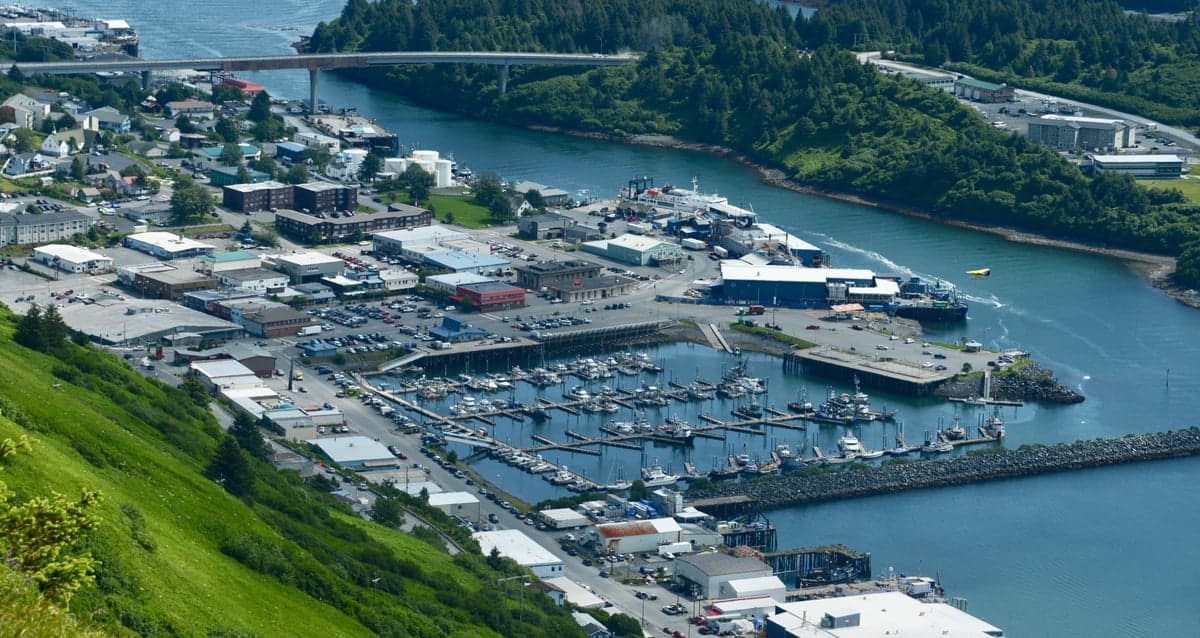
Kodiak, Alaska offers a level of personal sovereignty that is increasingly rare in the Lower 48, making it a serious consideration for those prioritizing autonomy over convenience. The island’s remote geography, small population (roughly 13,000 in the borough), and Alaska’s constitutional protections create an environment where government overreach is less intrusive than in most states. For the survivalist or prepper mindset, Kodiak represents a strategic outpost where self-reliance isn’t just a philosophy—it’s a daily necessity. However, the trade-offs are real: extreme isolation, limited infrastructure, and a climate that demands resilience. This analysis breaks down the key sovereignty factors for single individuals and parents evaluating a move to the Emerald Isle.
Tax burden and regulatory posture: Alaska’s constitutional shield
Alaska’s tax structure is the single strongest pillar of personal sovereignty in Kodiak. The state has no state income tax, no state sales tax, and no property tax on primary residences—a trifecta that leaves more money in your pocket and less in government coffers. The Kodiak Island Borough does levy a modest property tax (roughly 1.5% of assessed value) on commercial and non-primary residential properties, but this is far lower than the 2-3% rates common in blue states. The Permanent Fund Dividend, an annual payment to every resident from oil revenues, adds a direct financial benefit to staying put. Regulatory posture is equally favorable: Alaska’s constitution explicitly protects the right to keep and bear arms, and the state has a strong tradition of resisting federal overreach. For parents, this means fewer mandates on school curricula and vaccination requirements compared to states like California or New York. The borough’s zoning is minimal, with no county-level building codes in unincorporated areas—a stark contrast to the permitting nightmares of the Lower 48. The trade-off is that Kodiak’s isolation means you’re largely on your own for services; the government won’t bail you out, but it also won’t get in your way.
Self-defense and gun law specifics: Alaska’s constitutional carry and stand-your-ground
Alaska is one of the most firearm-friendly states in the nation, and Kodiak reflects that ethos fully. The state has constitutional carry without a permit for anyone 21 or older who can legally possess a firearm, and open carry is unrestricted. There is no state-level waiting period, no magazine capacity limit, and no firearm registration. The stand-your-ground law is robust: you have no duty to retreat before using deadly force in any place you are lawfully present. For parents, this means you can legally defend your home and family without fear of prosecution for a “duty to retreat” violation. The Kodiak Police Department is small (about 20 officers), and response times in remote areas can exceed an hour—making personal firearms a practical necessity, not just a right. Bear defense is a real concern; .44 Magnum revolvers or 12-gauge slug guns are common carry items. The state also allows the use of suppressors for hunting, and there are no restrictions on AR-15s or other “assault weapons.” For the prepper, Kodiak’s gun laws are a green light: you can stockpile, train, and carry without bureaucratic interference. The only caveat is federal law still applies (e.g., NFA items require tax stamps), but Alaska’s state-level protections are as strong as any in the country.
Self-reliance and homesteading viability: Lot sizes, zoning, and off-grid feasibility
Kodiak’s zoning and land-use policies are a dream for those seeking self-sufficiency. The borough’s comprehensive plan allows for rural residential lots as small as 1 acre, but many parcels outside city limits are 5-40 acres, with no minimum lot size in unzoned areas. Off-grid living is not just legal—it’s the norm. There are no state or local mandates requiring grid connection; you can install solar panels, wind turbines, or a hydro system without permits. Rainwater collection is legal and common, and composting toilets are accepted. The Kodiak Soil and Water Conservation District offers guidance on septic systems, but enforcement is lax compared to the Lower 48. For parents, this means you can raise children with hands-on skills—gardening, hunting, fishing, and woodworking—without government interference in your lifestyle. The island’s commercial fishing industry provides a ready market for surplus catch, and the Alaska Department of Fish and Game issues generous bag limits for salmon, halibut, and deer. The biggest challenge is the cost of shipping building materials and fuel; a 40-foot container from Seattle runs about $5,000. But for those willing to invest, Kodiak offers a genuine homesteading opportunity that’s all but extinct in the contiguous states.
Personal liberties: Parental rights, medical autonomy, speech, and property
Alaska’s constitution and political culture strongly protect individual liberties, and Kodiak is no exception. Parental rights are robust: the state has no mandatory vaccination laws for school attendance (parents can opt out for any reason), and there is no state-level mask or vaccine mandate for children. Homeschooling is unrestricted, with no notification requirements or curriculum oversight—you simply file an intent to homeschool and teach as you see fit. Medical autonomy is similarly strong: Alaska does not have a state-level vaccine passport system, and the state’s health department has limited authority to impose quarantines without a court order. The Kodiak Island Borough has no local health mandates beyond basic sanitation codes. Free speech is protected by the state constitution’s explicit guarantee, and there are no hate speech laws or “misinformation” panels. Property rights are sacred: Alaska’s constitution prohibits the taking of private property for economic development, and the state has a strong tradition of defending landowners against eminent domain abuse. For the prepper, this means you can stockpile food, ammunition, and medical supplies without fear of seizure. The only real limitation is that Kodiak is a small community where social pressure can be a factor, but legal protections are solid.
In the broader landscape of American sovereignty, Kodiak stands out as a rare bastion of personal freedom. Compared to the regulatory thickets of the Pacific Northwest or the tax burdens of the Northeast, Kodiak offers a low-government, high-autonomy environment that aligns with survivalist and conservative values. The isolation is both a shield and a challenge: you won’t face government overreach, but you also won’t have a safety net. For single individuals and parents who prioritize self-reliance, Kodiak is one of the last places in the United States where you can truly live on your own terms—provided you’re prepared for the cost and the cold.

* Values derived from national, state, county, city and local statistics and may differ in a specific area. Last updated: 2026-04-19T19:29:00.000Z
Narrative content on this page is AI-generated and may contain mistakes. Verify any details that matter before acting on them.
ReloMaps may earn a commission from affiliate links at no extra cost to you.

