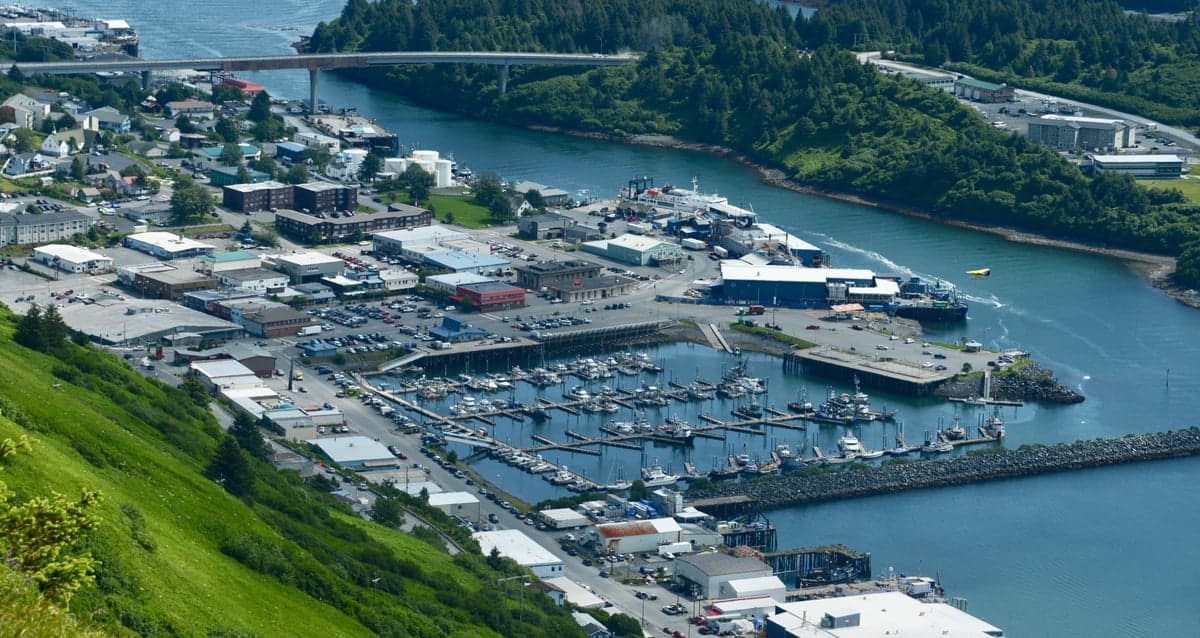
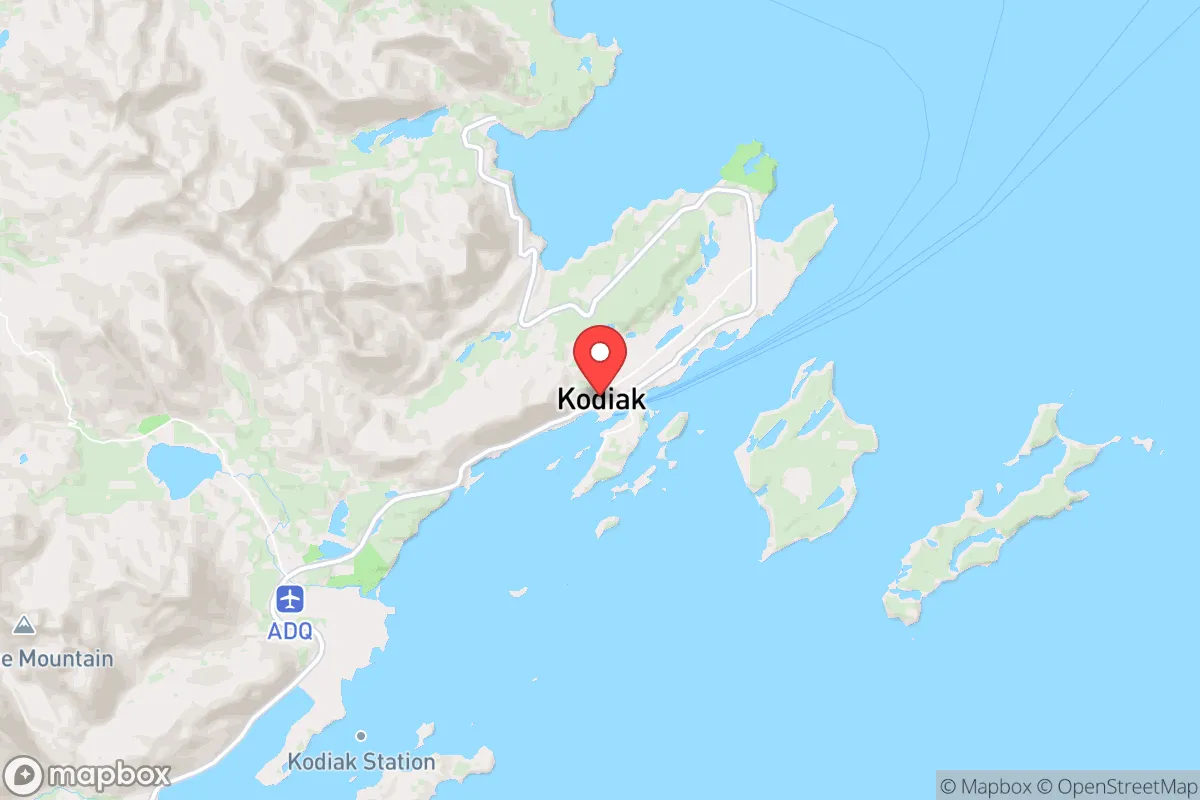
Photo: Wikipedia
Political ClimatePolitical Climate in Kodiak, AK
District shown is the primary district for this city’s centroid. Cities may span multiple districts.
Inherited from parent state — no local data available.
Local Political AnalysisPolitical Analysis of Kodiak, AK
Kodiak has long been a place where folks value their independence and self-reliance, and that’s reflected in its political leanings. The Cook PVI rating of R+6 tells you the district leans Republican, but it’s not a deep-red stronghold like you’d find in the Mat-Su Valley. Over the past decade, I’ve seen a slow but steady shift—more folks moving in from Outside, especially from places like Seattle or Portland, and they bring a different set of priorities. The old guard here, the fishermen and the Coast Guard families, still hold the line on personal freedoms and limited government, but there’s a growing undercurrent of progressive activism that’s starting to ruffle feathers.
How it compares
If you drive down to Homer or head over to Seward, you’ll find a similar mix—lots of independent-minded folks, but with a stronger libertarian streak than what you see in Anchorage. Kodiak is more conservative than Juneau, which is a government town with all the bureaucracy that implies. But compared to the rural villages out west, like Old Harbor or Akhiok, Kodiak is practically a liberal enclave. Those villages vote heavily Democratic because of tribal ties and federal funding, but they’re also fiercely protective of subsistence rights and local control. The real contrast is with the Kenai Peninsula, where places like Soldotna and Kenai are solidly red, with a much louder conservative voice. Kodiak’s R+6 puts it in a middle ground—conservative enough to feel familiar, but not so locked in that you don’t see the occasional yard sign for a progressive candidate.
What this means for residents
For those of us who’ve been here a while, the biggest concern is how the political drift affects daily life. The push for more regulations on fishing, stricter environmental rules, and the talk of expanding government programs—it all feels like a slow creep toward the kind of overreach we moved here to escape. I’ve watched the borough assembly get more divided over things like land use permits and school funding, with some members pushing for policies that sound good on paper but end up tying our hands. The real worry is that if the progressive wing gains more ground, we’ll see higher taxes, more red tape for small businesses, and a loss of the personal accountability that makes this place work. It’s not a crisis yet, but it’s a trend worth keeping an eye on.
One thing that sets Kodiak apart is the strong Coast Guard presence—about 1,500 active-duty members and their families. That community tends to lean conservative, with a focus on national security and traditional values. They’re a stabilizing force, but even they’ve noticed the cultural shift. The local schools, for instance, have started emphasizing diversity and inclusion programs that some parents see as unnecessary government intrusion into what kids should be learning. And the push for more renewable energy projects, while popular with some, has raised eyebrows over the cost and the potential for federal mandates. For now, Kodiak remains a place where you can still speak your mind without getting canceled, but the vibe is changing. If you value your freedoms and want to keep the government out of your business, this is still a good spot—but don’t take it for granted.

State Political ClimatePolitical Climate in Alaska
State Political AnalysisPolitical Environment in the State
Alaska has long been a politically unique state, leaning Republican in presidential elections but with a fiercely independent, libertarian streak that often defies national party lines. Over the past 10-20 years, the state has shifted from a reliably red stronghold to a more volatile battleground, with the 2020 election marking a narrow 10-point win for Trump over Biden—a far cry from the 30-point margins seen in the 2000s. The dominant coalition remains a mix of rural conservatives, resource-industry workers, and fiscal conservatives, but Anchorage and the Mat-Su Valley have become the key swing regions, while Southeast Alaska and the Bush have drifted leftward. For a conservative-leaning relocator, the state offers a mixed bag: low taxes and gun-friendly laws, but growing progressive influence in urban centers and a state government that has occasionally bucked conservative priorities.
Urban vs. rural divide
The political map of Alaska is starkly divided between a few urban hubs and the vast, sparsely populated rural expanse. Anchorage, home to about 40% of the state’s population, is the epicenter of political competition—its legislative districts have flipped between red and blue in recent cycles, with the 2022 governor’s race seeing a Republican win by just 3 points in the city. Fairbanks, the second-largest city, leans more conservative, anchored by military bases and the University of Alaska, but its college precincts have trended left. The Mat-Su Borough (Wasilla, Palmer) is the state’s conservative heartland, voting +30 points for Trump in 2020, driven by a mix of evangelical Christians, libertarians, and oil-and-gas workers. In contrast, Juneau and Sitka in Southeast Alaska are reliably blue, powered by government employees and environmental activists. The rural Bush—villages like Barrow (Utqiaġvik) and Bethel—votes heavily Democratic due to tribal ties and reliance on federal subsidies, but turnout is low. The real battleground is the Kenai Peninsula, where towns like Soldotna and Homer split between conservative fishermen and left-leaning artists, making it a microcosm of the state’s divide.
Policy environment
Alaska’s policy environment is a study in contrasts. On the plus side for conservatives, the state has no state income tax and no statewide sales tax, funded instead by oil revenue and the Permanent Fund Dividend (PFD)—a direct cash payment to residents that has become a sacred cow. The regulatory posture is generally business-friendly, especially for resource extraction: oil, gas, and mining companies face fewer hurdles than in the Lower 48, though the Biden administration’s restrictions on ANWR drilling have been a sore point. Education policy is mixed—Alaska has a school choice program (the Correspondence School program) that allows homeschooling with state funding, but public school performance lags nationally, and teacher unions hold significant sway in Anchorage. Healthcare is a mess: the state expanded Medicaid under the ACA in 2015, which conservatives opposed, and rural access remains poor. Election laws are relatively lax—Alaska adopted ranked-choice voting in 2020 via ballot initiative, a progressive reform that has frustrated conservatives by enabling moderate Republicans like Senator Lisa Murkowski to survive primary challenges. The state also has no voter ID law, which raises concerns about election integrity among right-leaning residents.
Trajectory & freedom
On personal liberty, Alaska is a mixed bag trending in concerning directions for conservatives. The state remains a Second Amendment haven—no permit required for concealed carry, no magazine bans, and a strong preemption law that blocks local gun control. In 2023, the legislature passed a law protecting firearm manufacturers from lawsuits, a win for gun rights. However, the trajectory on other freedoms is less rosy. The 2020 ranked-choice voting initiative was a blow to electoral freedom, making it harder for conservatives to win without moderate crossover appeal. Parental rights took a hit in 2022 when the state board of education adopted culturally responsive teaching standards that critics argue inject critical race theory into classrooms, though local districts have resisted implementation. Medical autonomy is strong—Alaska has no vaccine mandates for adults, and the 2023 legislative session killed a bill that would have required COVID shots for schoolchildren. Property rights are generally robust, but the state’s Moose Creek Dam project near Fairbanks has sparked eminent domain battles. Taxation freedom is excellent, but the PFD has been cut by governors of both parties to balance budgets, eroding a key liberty. The biggest red flag is the growing influence of federal land restrictions—60% of Alaska is federal land, and the Biden administration’s 2023 withdrawal of 16 million acres in the Western Arctic from oil leasing was seen as a federal overreach that limits state sovereignty.
Civil unrest & political movements
Alaska has seen relatively little civil unrest compared to the Lower 48, but political movements are active. The 2020 election integrity controversy was muted here, though the state GOP passed a resolution in 2021 questioning the results, and a small group of activists in Wasilla held a “Stop the Steal” rally. The left is more organized in Anchorage, where Alaska Action Network and Alaska Young Democrats have pushed for ranked-choice voting and climate activism. The Pebble Mine controversy in Bristol Bay has been a flashpoint, with environmental groups clashing with pro-mining conservatives, leading to protests in Dillingham and Anchorage. Immigration politics are less heated than in border states, but the influx of Pacific Islander and Filipino communities in Anchorage has shifted some precincts left. Secession rhetoric is rare, but the Alaska Independence Party still exists, advocating for a vote on leaving the U.S.—a fringe movement that peaked in the 1990s. The most visible flashpoint for a new resident would be the PFD debate: every year, the amount is fought over in Juneau, with conservatives pushing for a full statutory payout and progressives wanting to redirect funds to government programs. This annual battle is a microcosm of the state’s political soul.
Projection
Over the next 5-10 years, Alaska is likely to become more purple, not redder. Demographic shifts are the key driver: the state’s population is aging and shrinking (down 3% since 2020), with young people leaving for the Lower 48, while in-migration from blue states like California and Washington is bringing progressive voters to Anchorage and Juneau. The oil industry, which has historically anchored conservative politics, is in decline due to global energy transitions and federal restrictions, weakening the GOP’s donor base. The ranked-choice voting system will continue to favor moderate Republicans and Democrats, making it harder for hardline conservatives to win primaries. However, the rural Bush and Mat-Su will remain deeply red, and the state’s libertarian streak will resist major tax hikes or gun control. A new resident moving in now should expect a state where Anchorage becomes more like Portland over time—left-leaning on social issues—while the rest of the state holds the line. The wildcard is the PFD: if the fund is raided further by progressives, it could spark a conservative backlash that flips the legislature back to the right.
For a conservative relocator, Alaska offers a unique blend of low taxes, gun freedom, and wide-open spaces, but the political winds are shifting. The bottom line: if you’re moving to Wasilla, Palmer, or Fairbanks, you’ll find a community that shares your values. If you land in Anchorage or Juneau, be prepared for a more progressive environment, especially in local schools and city politics. The state’s independence means you can still live free, but you’ll need to stay engaged to keep it that way—especially on issues like ranked-choice voting repeal and federal land control. Alaska is still the Last Frontier for liberty, but the frontier is shrinking.
* Values derived from national, state, county, city and local statistics and may differ in a specific area. Last updated: 2026-04-19T19:29:00.000Z
Narrative content on this page is AI-generated and may contain mistakes. Verify any details that matter before acting on them.
ReloMaps may earn a commission from affiliate links at no extra cost to you.

