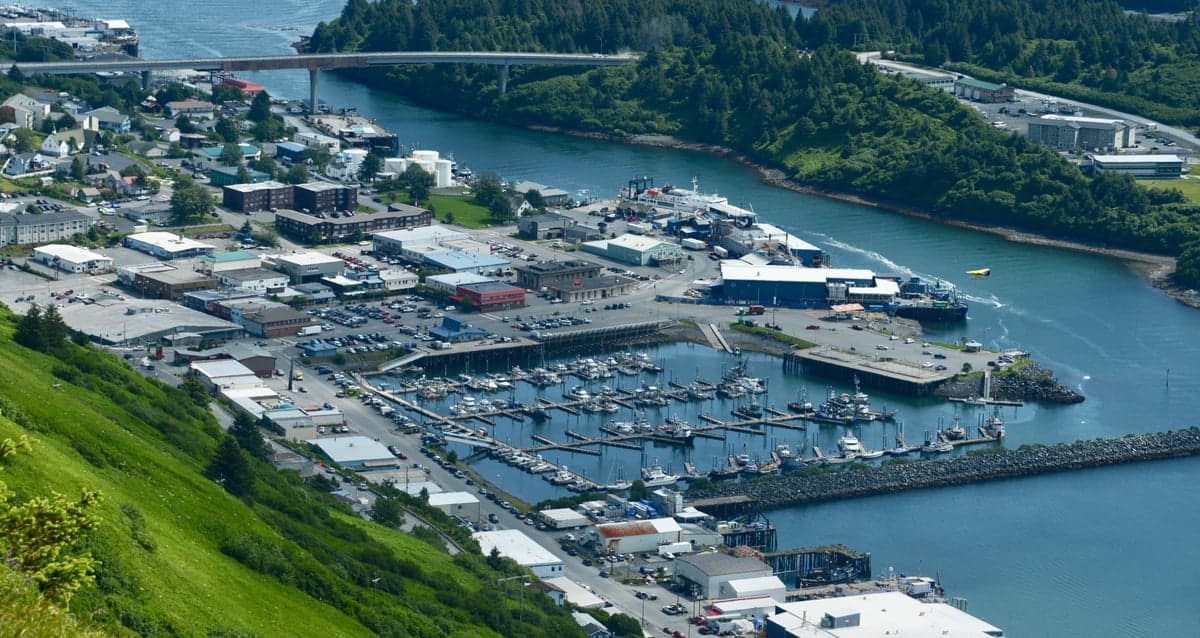
Photo: Wikipedia
Strategic Assessment of Kodiak, AK
Workable tactical position. Some exposure to population density or targets, but generally defensible in a crisis.
What does the Strategic Assessment tell us?
Our Strategic Assessment grades tactical survivability of an area. Major population centers, military targets, fallout zones, natural disasters, and border exposure all drive risk — lower exposure means a more defensible position in a crisis.
This is heavily inspired by Joel Skousen's Strategic Relocation book. Highly recommended you checkout the book ($)What does this tell us?
Our Strategic Assessment grades tactical survivability of an area. Major population centers, military targets, fallout zones, natural disasters, and border exposure all drive risk — lower exposure means a more defensible position in a crisis.
This is heavily inspired by Joel Skousen's Strategic Relocation book. Highly recommended you checkout the book ($)Strategic Pillars

Key Distances
Regional Safe Places
Below is our recommended "safe zones" in Alaska and the surrounding area based on our strategic heuristics. For most people, it's unrealistic to live in a “safe zone” full-time due to work, family or other personal reasons. They tend to be more rural. However, many of these areas are perfect for second homes and retreat properties that double as a vacation home or even a short-term rental.
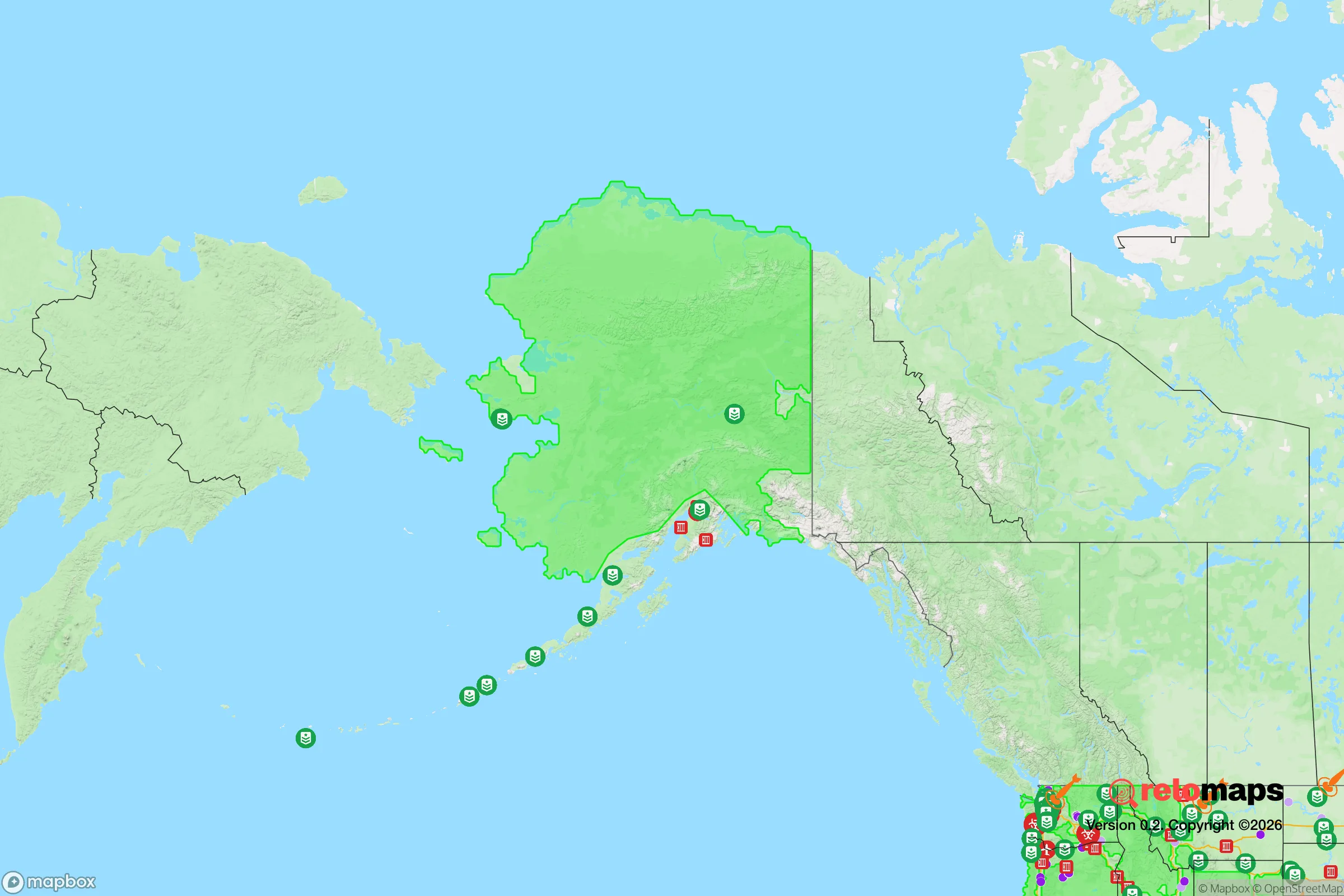
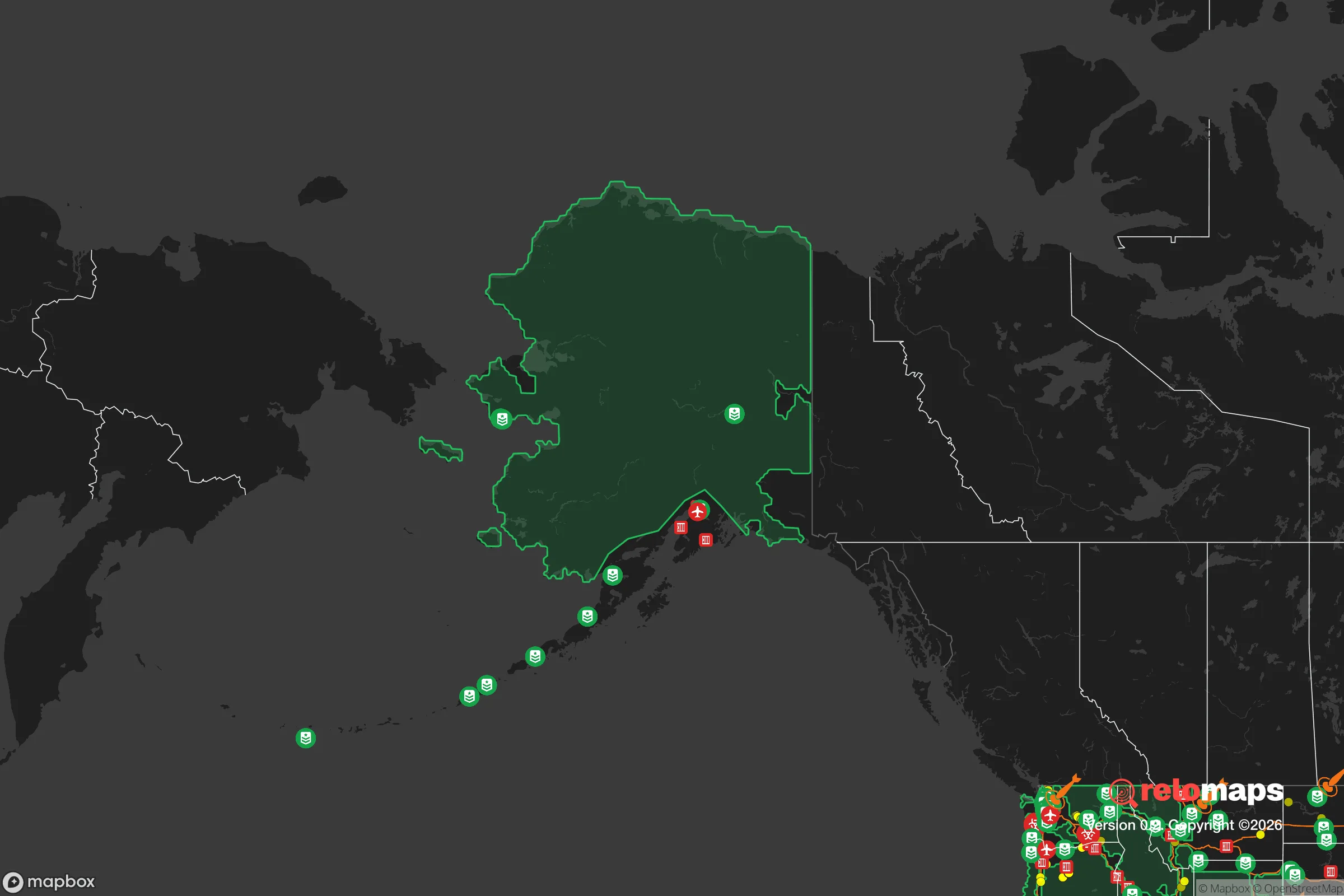


Important Note: For informational purposes only. This does not mean nothing bad ever happens in the green zones. Please use common sense. This is based on public data and modeled with AI. We tried to take a conservative approach but mistakes happen. We update this regularly as new information becomes available.
Solar Generator Recommendations
Backup power matters more here than in safer locations. We've picked three solar generators across budgets and capacity tiers — start with the budget unit if you only need a few essentials, or step up if you want to run a fridge and HVAC for days at a time.

Jackery Portable Power Station Explorer 300
Budget OptionPower on the Go: Weighing only 11 lbs, it's convenient to set up and store with book-sized foldable solar panels

BLUETTI Portable Power Station AC180
Designed for both indoor and outdoor scenarios, AC180 is highly capable as it has a robost capacity and continuous output power.

EF ECOFLOW DELTA Pro Ultra Power Station
Upgraded PickEcoFlow DELTA Pro Ultra is a whole-home energy system designed to grow with your family. Integrated with the Smart Home Panel 2, it scales to meet your evolving energy needs — keeping your home powered, intelligent, and secure through every stage of life.
We earn a commission, at no additional cost to you.
Strategic Assessment Analysis
Kodiak, Alaska, offers a strategic relocation option for those prioritizing resilience and isolation from mainland instability. Its location on Kodiak Island, roughly 250 miles southwest of Anchorage, provides a natural buffer against the cascading effects of urban collapse, mass casualty events, or widespread civil unrest. The community’s reliance on maritime access and its history of self-sufficiency—rooted in commercial fishing and a strong military presence at Coast Guard Base Kodiak—create a baseline of preparedness that few lower-48 towns can match. For a conservative-leaning individual or family seeking a defensible, low-density environment with access to abundant natural resources, Kodiak presents a compelling, if logistically challenging, option.
Geographic position and natural advantages for long-term survival
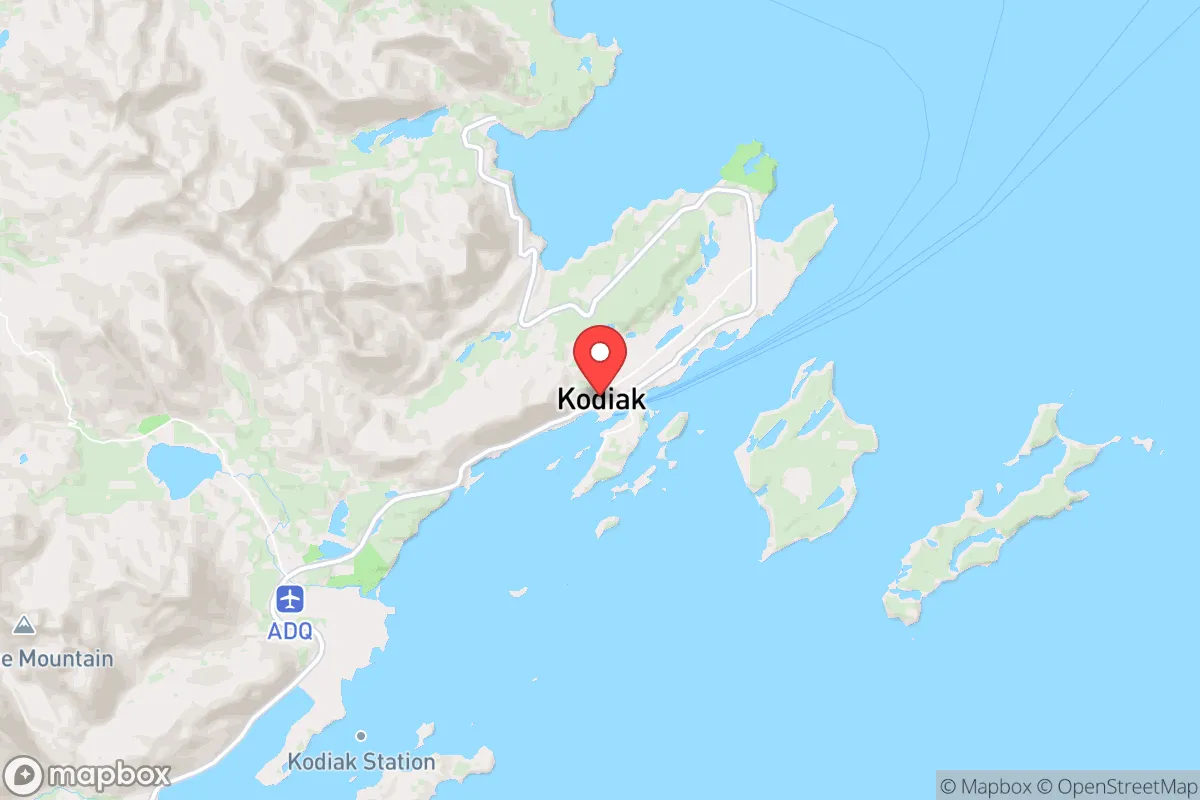
Kodiak’s primary strategic asset is its geography. The island is roughly 100 miles long and 60 miles wide, with the city of Kodiak situated on the northeastern coast. This location places it far from the major population centers of the Lower 48 and even from Anchorage, which is the nearest significant city. The surrounding waters of the Gulf of Alaska and the Shelikof Strait create a natural moat that would slow or deter any large-scale movement of people or resources during a crisis. The island’s rugged terrain—dominated by the Kodiak Archipelago’s mountains, dense forests, and tundra—further limits overland travel, making it inherently defensible. For a relocator, this means fewer vectors for disease transmission, less exposure to refugee flows, and a reduced risk of being caught in the chaos of a major metropolitan collapse. The maritime climate, while wet and windy, supports robust vegetation and wildlife, including the famous Kodiak brown bear, which signals a healthy ecosystem capable of sustaining hunting and foraging.
Risks, exposures, and proximity to fallout-relevant landmarks
No location is without vulnerabilities, and Kodiak has specific exposures that a prepper must weigh. The island sits in a seismically active zone, part of the Pacific Ring of Fire, and is at risk for earthquakes and tsunamis. The 1964 Good Friday earthquake, the most powerful recorded in North America, generated a tsunami that devastated parts of Kodiak’s waterfront. Modern building codes and early-warning systems mitigate this, but a major seismic event could disrupt infrastructure, including the port and airport, which are the only lifelines to the mainland. Additionally, Kodiak is home to the Coast Guard’s largest base, which houses a significant federal presence. While this provides security and emergency response capability, it also makes the island a potential target in a conflict scenario—though far less so than major military hubs like Joint Base Elmendorf-Richardson in Anchorage. The nearest major city, Anchorage, is 250 miles away, but its population of roughly 290,000 could become a source of displaced persons if a disaster strikes there. However, the distance and lack of road connections make a mass exodus to Kodiak unlikely. The island has no nuclear power plants or major industrial facilities that would create fallout zones, and the prevailing winds from the west would carry any distant radioactive debris away from the island. For a relocator, the key risk is natural disaster, not man-made fallout from nearby cities.
Practical resilience for a relocator: food, water, energy, and defensibility
Kodiak’s practical resilience hinges on its natural resource base and the self-reliance of its residents. The commercial fishing industry is the economic backbone, with the port of Kodiak consistently ranking among the top fishing ports in the United States by volume and value. Salmon, halibut, crab, and groundfish are abundant, and a relocator with fishing skills or the willingness to learn can secure a reliable protein source. The island also supports deer, elk, and small game, though hunting pressure is moderate. Freshwater is plentiful, with numerous lakes, rivers, and streams fed by heavy precipitation—Kodiak averages over 60 inches of rain annually. However, water treatment and storage are essential, as surface water can be contaminated by wildlife or seismic activity. Energy is a weak point. The island relies on diesel generators and a small hydroelectric plant, with electricity costs among the highest in Alaska. A prepper should plan for off-grid solar or wind systems, though the cloudy climate limits solar potential. Defensibility is strong: the island’s single road network is limited to the northeastern portion, and the only access points are the airport and ferry terminal. A small, determined group could effectively control these chokepoints. The local population is around 6,000, with a culture of self-sufficiency and firearm ownership that aligns with conservative values. The Coast Guard base provides a stabilizing influence, but its personnel are federal employees, not a local militia. For a relocator, the biggest challenge is the cost and logistics of moving supplies and establishing a homestead, as land is expensive and construction materials must be barged in.
Overall, Kodiak offers a unique strategic picture for those willing to accept its isolation and logistical hurdles. It is not a bug-out location for a weekend prepper; it is a long-term investment in a lifestyle that demands competence in fishing, hunting, and maritime survival. The island’s distance from mainland chaos, its abundant natural resources, and its small, tight-knit community make it one of the most resilient places in the United States for weathering societal collapse or major disasters. The trade-offs are real: high cost of living, limited medical facilities, and exposure to seismic events. But for a conservative individual or family who values freedom from government overreach, self-reliance, and a low-risk profile for urban fallout, Kodiak ranks as a top-tier destination. The key is to arrive prepared—with skills, supplies, and a realistic plan for integrating into a community that already knows how to survive.

* Values derived from national, state, county, city and local statistics and may differ in a specific area. Last updated: 2026-04-19T19:29:00.000Z
Narrative content on this page is AI-generated and may contain mistakes. Verify any details that matter before acting on them.
ReloMaps may earn a commission from affiliate links at no extra cost to you.

