Photo: Wikipedia
Political ClimatePolitical Climate in La Vergne, TN
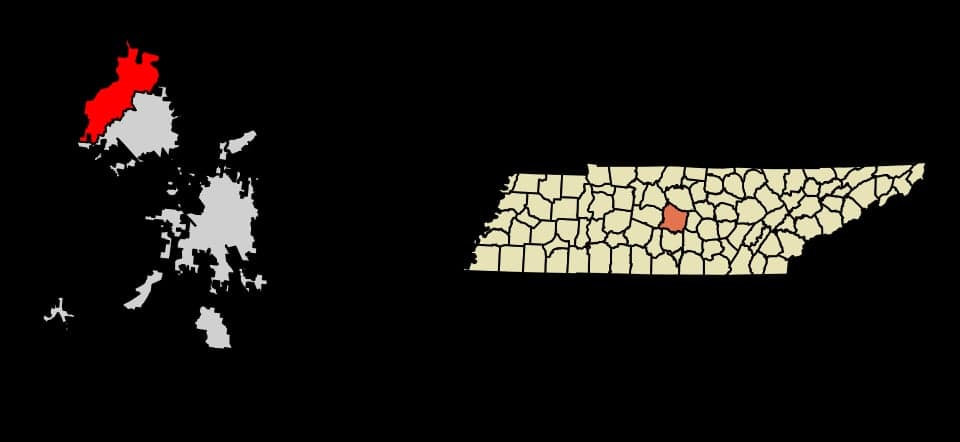
District shown is the primary district for this city’s centroid. Cities may span multiple districts.
Local Political AnalysisPolitical Analysis of La Vergne, TN
La Vergne, Tennessee, has long been a solidly conservative community, and that hasn't changed much despite some population growth. The Cook PVI of R+21 tells you the real story—this is a place where Republican candidates routinely win by comfortable margins, and the local culture reflects that. But if you've been around here as long as I have, you've noticed the political winds shifting in subtle ways, and not always for the better. The old-school, leave-us-alone conservatism that defined this town for decades is still the majority, but there's a growing undercurrent of progressive influence creeping in from Nashville, and it's worth keeping an eye on.
How it compares
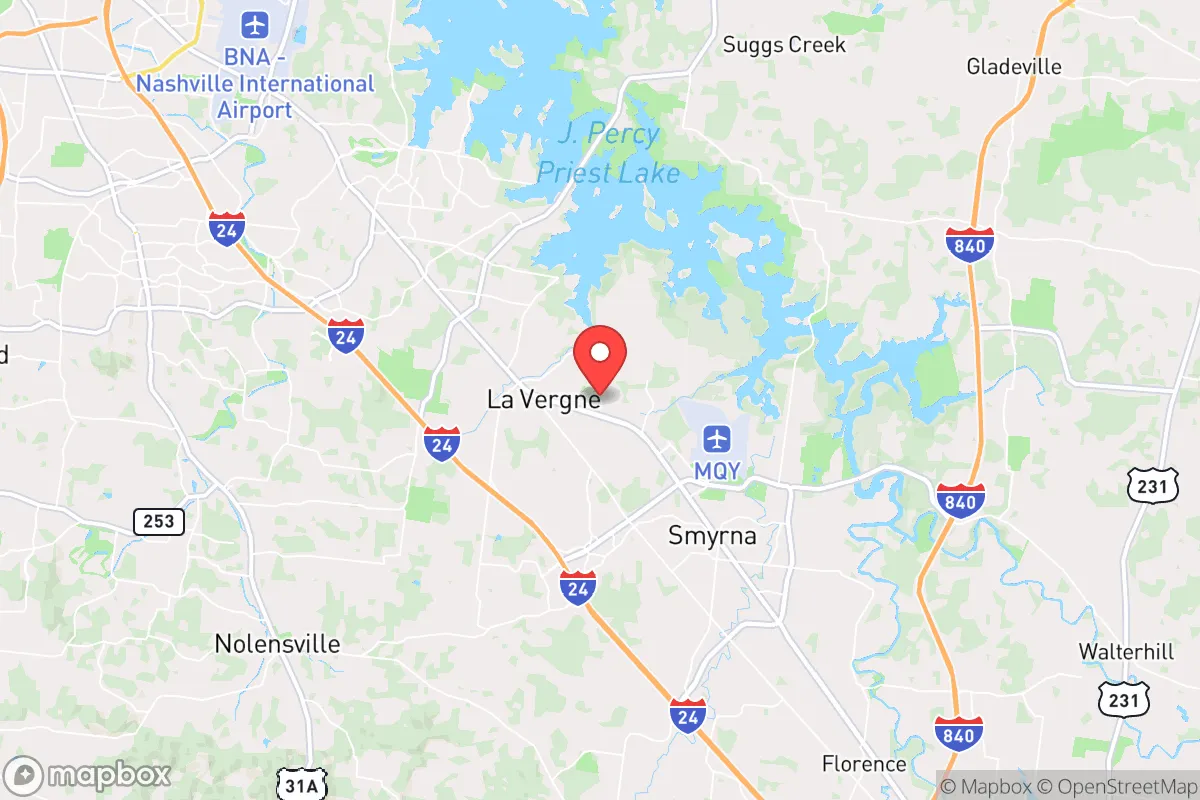
To really understand La Vergne's politics, you have to look at the map. Head north up I-24 into Nashville proper, and you're in deep blue territory—a place where taxes are higher, regulations are tighter, and the local government seems to think it knows better than you do about how to run your life. Drive south to Murfreesboro, and you'll find a more mixed bag, with a strong conservative base but a growing progressive presence, especially around the university. La Vergne sits right in the middle, but it's still firmly on the conservative side of that line. Compare us to nearby Smyrna, which leans similar but has seen more development and a slightly more moderate tilt, and you'll see La Vergne has held the line better. The R+21 rating isn't just a number—it means that in a typical election, a Republican candidate can expect to win by about 21 points more than the national average. That's a solid, reliable conservative base that hasn't been swayed by the influx of folks from California or New York who sometimes bring their big-government ideas with them.
What this means for residents
For the people who actually live here, this political climate translates into a few key things. First, you get a local government that generally stays out of your business. Property taxes are reasonable, zoning is less restrictive than in Davidson County, and there's a general attitude of "if it ain't broke, don't fix it." That's a breath of fresh air if you've ever dealt with the overreach you see in more progressive areas. Second, it means your Second Amendment rights are respected—no waiting periods, no magazine bans, no nonsense. Third, it means the school board and city council are still dominated by folks who prioritize fiscal responsibility and local control over grand social experiments. The concern, though, is that as La Vergne grows—and it is growing—there's pressure to adopt the kind of policies that have made Nashville a mess: higher impact fees, more red tape for small businesses, and a creeping acceptance of progressive social agendas. If you value your freedoms, you want to keep an eye on who's running for local office.
One thing that sets La Vergne apart from some of its neighbors is a strong sense of community self-reliance. You don't see the same level of government dependency here that you might in other parts of the state. People take care of their own property, their own families, and their own neighborhoods. The local churches and civic groups are still the backbone of social life, not some government program. That's the kind of conservative culture that's worth protecting. The trajectory is still positive, but it's not guaranteed. If you're thinking about moving here, you'll find a place that still believes in personal responsibility and limited government—just make sure you get involved locally to keep it that way.

State Political ClimatePolitical Climate in Tennessee
State Political AnalysisPolitical Environment in the State
Tennessee has been a reliably red state for decades, but the nature of that conservatism has shifted significantly. The state leans Republican by a solid margin — Donald Trump won it by 30 points in 2020 and by a similar spread in 2024 — but the coalition driving that majority has changed. Over the last 10-20 years, the old-school, moderate-to-conservative Democratic tradition of the Tennessee Valley has been replaced by a more assertive, culturally conservative Republicanism, fueled by suburban growth in the Nashville and Knoxville exurbs and a deep rural base. The state is now firmly in the GOP column, but the internal tensions between establishment business conservatives and a more populist, liberty-minded wing are real and visible.
Urban vs. rural divide
The political map of Tennessee is a study in contrasts. The major metros — Nashville, Memphis, and Chattanooga — are blue islands in a sea of red. Nashville, the state capital and economic engine, has become increasingly progressive, with a Democratic mayor and a city council that has pushed for sanctuary city policies and higher taxes. Memphis, anchored by a large African American population, is reliably Democratic and has seen its own share of progressive activism, including calls to defund the police in 2020. Chattanooga is more moderate but has trended left in recent cycles, driven by a growing tech and outdoor recreation scene. The rural and suburban areas tell a different story. Knoxville and its surrounding counties — Knox, Blount, and Sevier — are deeply red, with the University of Tennessee campus providing a small liberal pocket. The Tri-Cities region (Bristol, Johnson City, Kingsport) is among the most conservative in the state, with a strong Appalachian cultural identity. The Nashville exurbs — places like Williamson County (Franklin, Brentwood) and Rutherford County (Murfreesboro) — have become GOP strongholds, with Williamson County being one of the wealthiest and most reliably Republican counties in the nation. The divide is stark: you can drive 20 minutes from downtown Nashville and go from a city that voted 65% for Biden to a county that voted 70% for Trump.
Policy environment
Tennessee’s policy environment is broadly conservative, but with some notable nuances. The state has no state income tax, a major draw for relocators, and relies on a high sales tax (around 9.5% in most areas) to fund government. The regulatory posture is business-friendly, with right-to-work laws and a tort reform system that limits lawsuits. Education policy has been a flashpoint: the state has expanded school choice through charter schools and the Education Savings Account (ESA) program, which allows parents to use public funds for private school tuition. However, the program is currently limited to a few counties (Davidson, Shelby, and Hamilton) and has faced legal challenges. Healthcare is a mixed bag — Tennessee did not expand Medicaid under the Affordable Care Act, leaving a coverage gap for low-income adults, but the state has a robust private insurance market. Election laws are strict: voter ID is required, and the state has purged inactive voters from rolls, which critics say disenfranchises some populations but supporters argue ensures integrity. The state also has a constitutional carry law (permitless carry for handguns) and a near-total ban on abortion, with no exceptions for rape or incest, following the Dobbs decision. This is a state that leans heavily into traditional values and limited government, but the sales tax burden and lack of Medicaid expansion are real trade-offs.
Trajectory & freedom
Tennessee has been moving in a direction of expanded personal liberty in several key areas, but not without controversy. The most significant recent legislation is the Tennessee Freedom of Speech Act (2023), which prohibits public universities from requiring diversity statements or compelling speech on ideological matters. This was a direct response to perceived overreach by progressive administrators. Gun rights have been strengthened: the state passed constitutional carry in 2021, allowing any law-abiding adult to carry a handgun without a permit. Parental rights have been a major focus — the Parental Bill of Rights (2022) requires schools to notify parents about curriculum changes and gives them the right to opt their children out of lessons they find objectionable. The state also passed a law banning transgender athletes from competing in girls’ sports and restricting gender-affirming care for minors. On the other hand, the state has seen some concerning expansions of government power. The Tennessee Bureau of Investigation has been given broad authority to monitor social media for “threats,” and the state has used COVID-era emergency powers to shut down businesses and churches, though those powers have since been curtailed by the legislature. Property rights are generally strong, but local zoning in Nashville and Memphis has become more restrictive, with inclusionary zoning mandates that some see as a government overreach into housing markets. Overall, the trajectory is toward more freedom in cultural and economic matters, but the state’s willingness to use government power for public health and safety remains a point of tension.
Civil unrest & political movements
Tennessee has seen its share of political flashpoints. The most visible was the Nashville school board protests in 2021-2022, where parents clashed with administrators over critical race theory and mask mandates. These protests were organized by local conservative groups like the Tennessee Stands coalition and drew national attention. In 2023, the Covenant School shooting in Nashville sparked a massive protest movement from both sides — gun rights advocates rallied at the state capitol, while gun control groups like Moms Demand Action held counter-protests. The state legislature responded by passing a law allowing teachers to carry firearms on campus, a move that further polarized the debate. Immigration politics are less heated than in border states, but there have been localized tensions in Morristown and Shelbyville, where large immigrant populations (many from Central America and the Middle East) have led to clashes over housing and jobs. The Tennessee Three — three Democratic state representatives who were expelled for protesting gun laws on the House floor in 2023 — became a national symbol of the state’s partisan divide. Election integrity has been a recurring issue: the state passed a law in 2021 requiring absentee ballots to be notarized or signed by two witnesses, and it created a new election crime unit within the Secretary of State’s office. There has been no serious secession or nullification rhetoric, but the state has asserted its sovereignty against federal mandates, particularly on environmental regulations and immigration enforcement. A new resident would notice the strong presence of political signage, especially in rural areas, and the active involvement of churches in political life.
Projection
Over the next 5-10 years, Tennessee is likely to become more conservative in its state-level politics, but the urban-rural divide will deepen. The in-migration from California, Illinois, and New York — driven by low taxes and housing costs — is predominantly conservative-leaning, but it’s also bringing more diversity and some progressive ideas, particularly in the Nashville and Chattanooga suburbs. The state’s population is projected to grow by 10-15% by 2035, with most of that growth in the I-24 and I-40 corridors. This will likely strengthen the GOP’s supermajority in the legislature, but it could also create a new class of suburban Republicans who are more focused on economic growth than cultural wars. The biggest wildcard is the education funding lawsuit — the state is currently being sued over its school funding formula, and a court ruling could force a massive tax increase or a restructuring of the sales tax. If that happens, the state’s low-tax advantage could erode. The abortion ban will continue to be a flashpoint, with potential ballot initiatives or legislative tweaks to add exceptions. The state’s relationship with the federal government will remain adversarial, particularly on environmental and immigration issues. For someone moving in now, expect a state that is firmly red but increasingly divided between the booming, cosmopolitan cities and the rural, traditionalist countryside. The freedom you gain in taxes and gun rights will come with a trade-off in public services and infrastructure, especially in fast-growing areas like Spring Hill and Mount Juliet.
For a new resident, the bottom line is this: Tennessee offers a high degree of personal freedom — no income tax, constitutional carry, strong parental rights — but it’s not a libertarian paradise. The state government is willing to use its power to enforce cultural norms, and the sales tax burden is real. If you’re a conservative looking for a place where your values are reflected in law and your wallet is left alone, Tennessee is a strong bet. Just be prepared for the traffic in the suburbs and the politics in the cities — they’re both getting more intense.
* Values derived from national, state, county, city and local statistics and may differ in a specific area. Last updated: 2026-04-23T02:16:07.000Z
Narrative content on this page is AI-generated and may contain mistakes. Verify any details that matter before acting on them.
ReloMaps may earn a commission from affiliate links at no extra cost to you.

