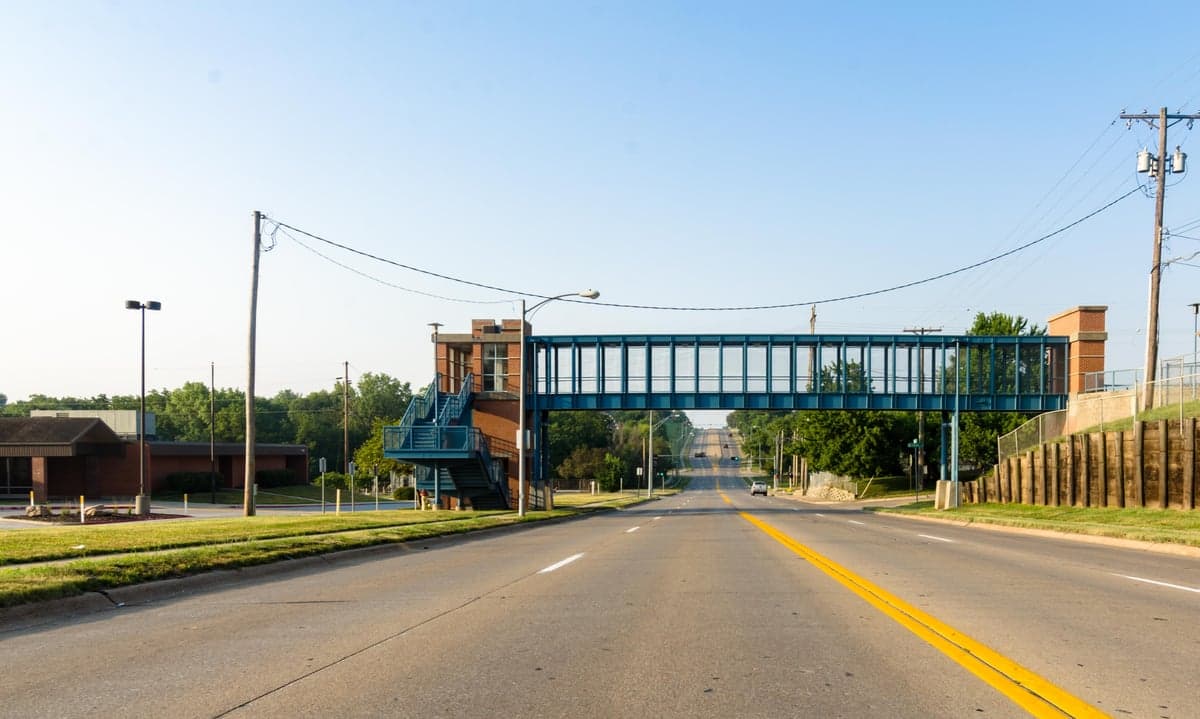
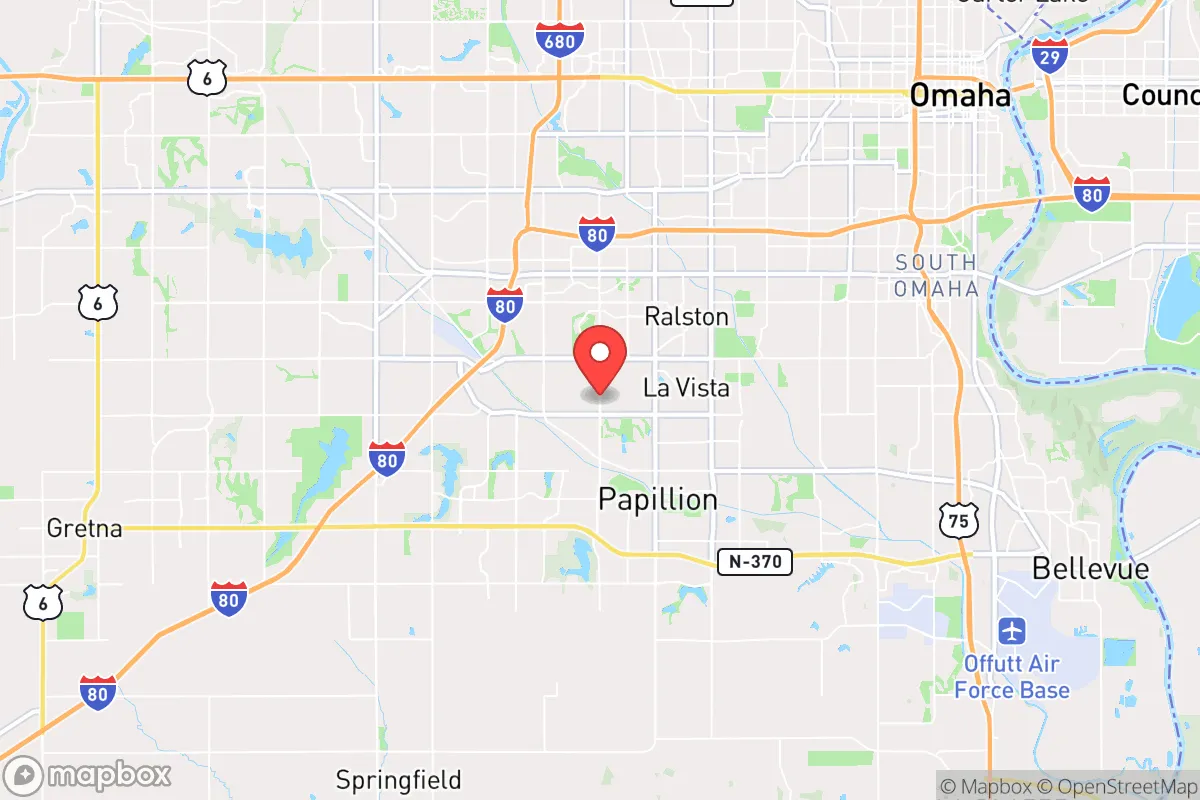
Photo: Wikipedia
Demographics of La Vista, NE
Affluence Level in La Vista, NE
A middle-class area roughly in line with national averages across income, home values, education, and employment.
People of La Vista, NE
The people of La Vista, Nebraska, today number 16,594, forming a predominantly white (77.9%) and family-oriented suburb of Omaha with a notably low foreign-born share of just 3.2%. The city’s identity is rooted in its post-war suburban expansion, attracting middle-class families seeking affordable housing and good schools, with a growing Hispanic population (11.6%) and smaller Black (4.9%) and East/Southeast Asian (1.5%) communities. La Vista is denser than many Nebraska suburbs, with a college-educated rate of 35.8% that reflects a workforce tied to Omaha’s finance, healthcare, and logistics sectors. The city’s population character is stable, family-centric, and increasingly diverse within a still-overwhelmingly white framework.
How the city was settled and grew
La Vista was not a pioneer-era settlement but a planned suburban development that incorporated in 1960, emerging from farmland south of Omaha. The original population was almost entirely white, drawn by the post-World War II housing boom and the construction of the Interstate 80 corridor, which made commuting to Omaha easy. The first major wave of residents settled in the La Vista Heights neighborhood, a collection of ranch-style homes built in the early 1960s that attracted young families from Omaha and rural Nebraska. A second wave in the 1970s and 1980s filled out Southport, a master-planned area with larger lots and cul-de-sacs, which became a magnet for white-collar workers employed at Omaha’s insurance giants like Mutual of Omaha and WoodmenLife. No significant immigrant groups arrived during this period; the city’s growth was entirely domestic, driven by the expansion of Omaha’s suburban footprint and the appeal of Sarpy County’s lower taxes compared to Douglas County.
Modern era (post-1965)
After the 1965 Immigration and Nationality Act, La Vista saw little immediate change, as the city’s housing stock and school system were not yet drawing immigrant families. The first notable non-white influx began in the 1990s, when Hispanic families—many from Mexico and Central America—moved into the Shadow Lake area, a newer development near the intersection of 84th Street and Giles Road. This neighborhood offered affordable starter homes and proximity to construction and service jobs in Omaha. By the 2000s, a small Black community had formed in the Fairview Ridge subdivision, drawn by the same factors of affordability and school quality. The East/Southeast Asian population (1.5%) is concentrated in the Briarwood district, where professional families—many employed at the University of Nebraska Medical Center or Offutt Air Force Base—settled for the top-rated La Vista Middle School. The Indian subcontinent population (0.5%) is tiny and dispersed, with no single neighborhood enclave. The foreign-born share remains low at 3.2%, reflecting La Vista’s continued reliance on domestic in-migration rather than international immigration.
The future
La Vista’s population is likely to continue its slow diversification, but the city is not homogenizing into a melting pot; instead, distinct enclaves are solidifying. The Hispanic share (11.6%) is the fastest-growing segment, driven by natural increase and continued migration from Omaha’s South 24th Street corridor, with Shadow Lake and the newer La Vista Crossing apartments absorbing most of this growth. The Black population (4.9%) is stable, with Fairview Ridge remaining a modest concentration, while the East/Southeast Asian community (1.5%) is plateauing as younger professionals move to pricier suburbs like Papillion. The Indian subcontinent population (0.5%) is too small to form an enclave and is likely to remain dispersed. Over the next 10–20 years, La Vista will become more Hispanic but will not approach the diversity of Omaha proper; the white share will decline gradually from 77.9% toward the mid-70s. The city’s housing stock—aging ranch homes in La Vista Heights versus newer builds in Southport—will create a subtle economic divide, but overall, La Vista is becoming a more ethnically varied but still predominantly white, middle-class suburb.
For someone moving in now, La Vista offers a stable, family-oriented environment with good schools and low crime, but the demographic trajectory is toward a more Hispanic-influenced community without the high immigration rates seen in larger cities. The city’s future is one of gradual diversification within a still-dominant white suburban framework, making it a safe bet for conservative-leaning families who want a quiet, affordable home base near Omaha’s job market.

* Values derived from national, state, county, city and local statistics and may differ in a specific area. Last updated: 2026-04-19T07:54:50.000Z
Narrative content on this page is AI-generated and may contain mistakes. Verify any details that matter before acting on them.
ReloMaps may earn a commission from affiliate links at no extra cost to you.

