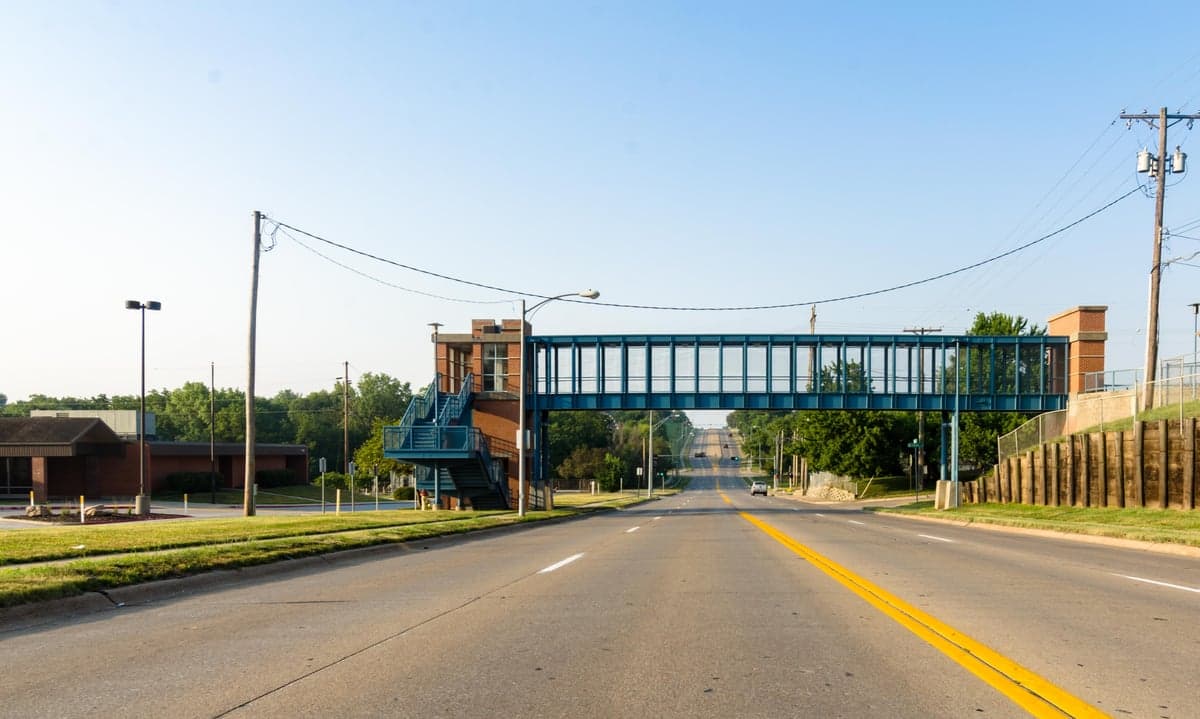
Photo: Wikipedia
Political ClimatePolitical Climate in La Vista, NE
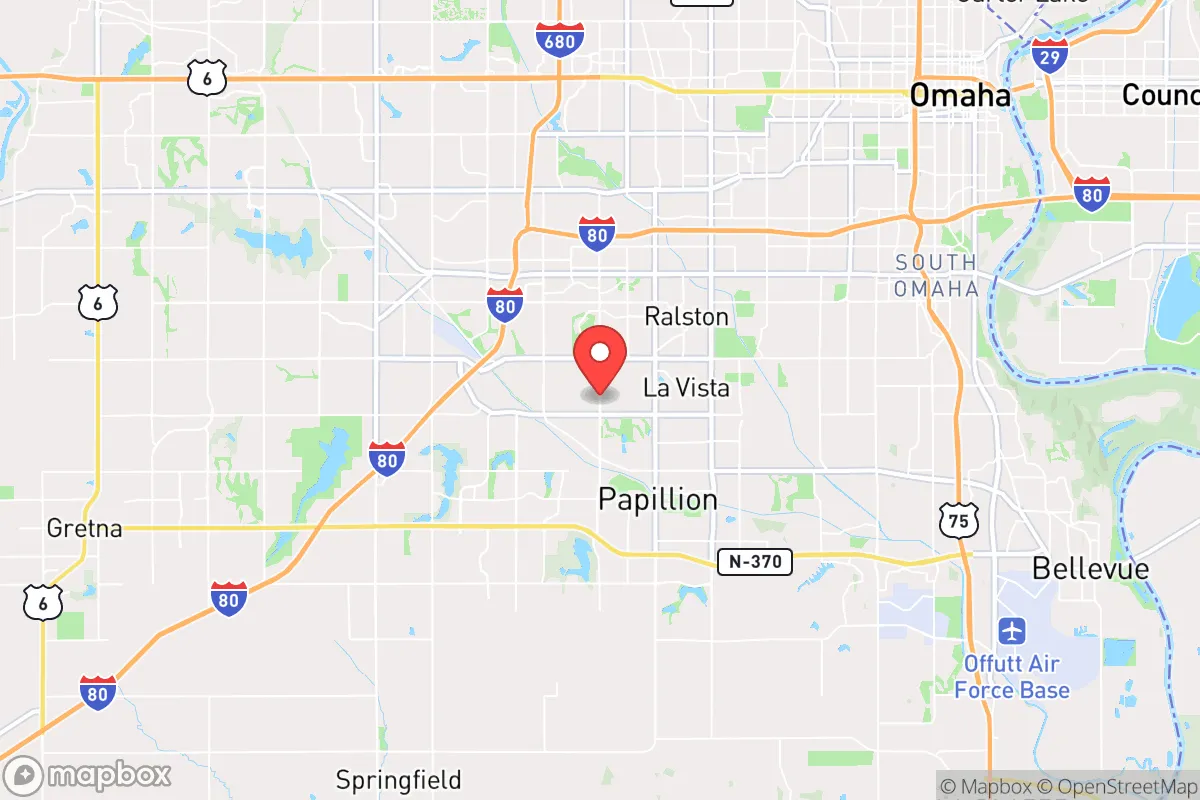
District shown is the primary district for this city’s centroid. Cities may span multiple districts.
Local Political AnalysisPolitical Analysis of La Vista, NE
La Vista, Nebraska, has long been a reliably conservative community, and that hasn't changed much despite the rapid growth around Omaha. The Cook Partisan Voting Index (PVI) of R+6 tells you the baseline: this is a place where Republican candidates can generally count on a comfortable, but not overwhelming, margin. If you look at the voting patterns over the last decade, you'll see a slight softening of that edge as more people move in from the coasts and from blue areas of the metro, but the core of La Vista still leans right on most issues, especially when it comes to taxes and local control. The trajectory is a slow, cautious shift—not a flip, but a steady pressure that has folks who've been here a while paying close attention.
How it compares
To really understand La Vista, you have to look at its neighbors. Drive five minutes north into Omaha proper, and you're in a city that votes reliably blue, with a city council that's pushed through progressive policies like paid sick leave and a higher minimum wage. That's a world away from La Vista's approach. Head west to Gretna, and you'll find a community that's even more conservative, with a stronger rural feel and a PVI that's probably closer to R+15 or R+20. La Vista sits in the middle—it's the suburban buffer zone. It's not as red as the small towns to the west, but it's a far cry from the urban politics of Omaha. This contrast is important because it means La Vista residents get the benefits of being near a big city for jobs and amenities, but they don't have to swallow the whole progressive agenda that comes with it. For now, anyway.
What this means for residents
For the average person living here, the political climate translates into a government that mostly stays out of your business. Property taxes are a constant gripe—they're high for Nebraska, and the city council is always under pressure to keep them from climbing further. But on social and cultural issues, there's a general expectation that the city won't be pushing any radical experiments. You won't see La Vista trying to defund the police or impose mask mandates that last longer than the state's. The local school board, which covers the Papillion-La Vista district, has been a battleground in recent years, with parents pushing back hard against critical race theory and gender ideology in the classroom. That's been a win for conservative families, but it's a fight that's not over. The concern among long-time residents is that as the metro area grows, the pressure from Omaha's progressive machine will only increase, and it'll take constant vigilance to keep La Vista from drifting into the same kind of overreach we see in other cities.
The cultural distinction here is that La Vista still feels like a place where people know their neighbors and expect the city to focus on basics: good roads, safe streets, and responsive police. There's no push for a city-run equity office or a "sanctuary city" resolution. The local leadership has been pragmatic, not ideological, which is a relief to most folks. But the warning signs are there—new developments are bringing in younger, more diverse populations, and the national trends are creeping in. If you're looking for a place where the government respects your rights and doesn't try to manage your life, La Vista is still a solid bet. Just keep an eye on the school board meetings and the city council elections. That's where the future of this town will be decided.

State Political ClimatePolitical Climate in Nebraska
State Political AnalysisPolitical Environment in the State
Nebraska has long been a reliably conservative state, but its political landscape is more layered than the simple "red state" label suggests. The state has voted Republican in every presidential election since 1968, and its current partisan lean is roughly +19 points Republican in federal races, driven by a deeply conservative rural expanse and a growing, but still outnumbered, Democratic stronghold in the Omaha metro area. Over the last 10-20 years, the trajectory has been one of slow, steady rightward movement in the legislature and statewide offices, punctuated by a few notable progressive wins in the state’s largest city that have created a sharp urban-rural tension.
Urban vs. rural divide
The political map of Nebraska is a textbook case of the urban-rural split. The eastern third of the state, anchored by Omaha (Douglas County) and Lincoln (Lancaster County), is the only reliably blue territory. Omaha’s 2nd Congressional District has flipped between parties in recent cycles, and in 2020 it gave Joe Biden its single electoral vote — a quirk of Nebraska’s split electoral system that makes it a perennial battleground. Lincoln, home to the University of Nebraska, leans left but is less reliably Democratic than Omaha. Outside these two metros, the state is overwhelmingly Republican. Scottsbluff in the Panhandle, Grand Island in the central Platte Valley, and Norfolk in the northeast all vote Republican by margins of 30-50 points. The rural counties along the Kansas border, like Furnas and Harlan, routinely vote 80%+ Republican. The divide is stark: you can drive 20 minutes west of Omaha and go from a district that elected a Democrat to one that hasn’t sent a non-Republican to the legislature in decades.
Policy environment
Nebraska’s policy environment is broadly conservative, but with a pragmatic, low-drama streak. The state has a unicameral, nonpartisan legislature — officially no party labels — but in practice, a conservative coalition controls the body. Income tax rates were cut in 2023 from a top rate of 6.84% to a flat 5.84%, with a path to 3.99% by 2027. Property taxes remain a perennial complaint, though the legislature has passed several rounds of relief through state-funded credits. There is no state sales tax on groceries or prescription drugs. Education policy is a flashpoint: Nebraska has a robust school choice movement, and in 2023 the legislature passed a tax-credit scholarship program for private school tuition, though it faced a veto override fight. The state also enacted a parental bill of rights in 2024, requiring schools to notify parents of curriculum changes and medical services. On healthcare, Nebraska expanded Medicaid under the Affordable Care Act via a 2018 ballot initiative, a rare progressive win that even conservative legislators have largely accepted. Election laws are moderately conservative: voter ID is required (passed in 2023), and early voting is available but not universal mail-in. The state has no sanctuary city policies, and local law enforcement cooperates with federal immigration authorities.
Trajectory & freedom
On the freedom front, Nebraska has moved in a decidedly more liberty-oriented direction over the past five years, particularly on gun rights and parental authority. In 2023, the legislature passed constitutional carry (LB 77), allowing permitless concealed carry for anyone 21 or older. The same bill preempted local gun ordinances, preventing cities like Omaha from enacting their own restrictions. On medical freedom, Nebraska was one of the first states to pass a law (LB 108, 2022) prohibiting employers and government entities from mandating COVID-19 vaccines, and it later extended that to prohibit mask and vaccine mandates in schools. The Parental Bill of Rights (LB 705, 2024) requires schools to get parental consent before administering any mental health or medical survey, and it bars schools from hiding a student’s gender identity or sexual orientation from parents. Property rights are strong: Nebraska has no statewide rent control, and the legislature has repeatedly rejected efforts to impose it. The state also passed a religious freedom restoration act (LB 670, 2023) that gives heightened legal protection to religious exercise claims. The trajectory is clearly toward more individual liberty, though the property tax burden remains a drag on that freedom.
Civil unrest & political movements
Nebraska has seen relatively little civil unrest compared to coastal states, but there have been flashpoints. In the summer of 2020, Omaha experienced several nights of protests and property damage following the George Floyd killing, including the looting of businesses along 72nd Street. The city’s police response was criticized by both sides. More recently, the political energy has shifted to the right. The Nebraska Republican Party has seen a grassroots takeover by more populist, anti-establishment factions, leading to primary challenges against incumbent legislators who voted for tax increases or against school choice. The 3 Percent of Idaho movement has a visible presence in the Panhandle, particularly around Chadron and Alliance, where "constitutional sheriff" rhetoric is common. Immigration politics are less heated than in border states, but the issue flared in 2023 when a bill to ban local "sanctuary" policies passed easily. There have been no serious secession or nullification movements, though some rural counties have passed symbolic resolutions asserting local control over federal land management. Election integrity is a live issue: the 2020 and 2022 cycles saw intense scrutiny of Douglas County’s vote-counting procedures, leading to the 2023 voter ID law and a push for hand-count audits in some rural precincts.
Projection
Over the next 5-10 years, Nebraska is likely to become more conservative, not less, driven by two demographic trends. First, the rural population is aging and shrinking, but those who remain are becoming more intensely Republican. Second, the in-migration from blue states — primarily to Omaha and Lincoln — is modest and tends to be younger and more moderate, not progressive enough to flip the state. The Omaha metro is growing, but its suburbs like Papillion and Gretna are voting more Republican as they fill with families fleeing higher taxes in other states. The legislature will likely continue to cut income taxes, expand school choice, and protect gun rights. The biggest wildcard is the property tax issue: if the state fails to deliver meaningful relief, a populist backlash could produce a primary challenge to the current conservative leadership. Expect the 2nd Congressional District to remain a toss-up, but the state as a whole will stay solidly red. A new resident moving in now should expect a state that values personal liberty, low taxes, and local control, but with a persistent tension between Omaha’s progressive lean and the rest of the state’s conservative instincts.
For a conservative individual or family considering relocation, Nebraska offers a strong package: low and falling income taxes, constitutional carry, parental rights in education, and a political culture that is serious about limiting government overreach. The trade-off is that you’ll need to accept a cold winter and a property tax system that still needs work. But if you want a state where your vote counts, your rights are respected, and your kids won’t be indoctrinated in school, Nebraska is a solid bet. Just stay out of Omaha city limits if you want to avoid the progressive politics.
* Values derived from national, state, county, city and local statistics and may differ in a specific area. Last updated: 2026-04-19T07:54:50.000Z
Narrative content on this page is AI-generated and may contain mistakes. Verify any details that matter before acting on them.
ReloMaps may earn a commission from affiliate links at no extra cost to you.

