Strategic Assessment of Ladue, MO
Meaningful friction. Expect exposure to either population pressure, blast zones, or natural disaster risk. Consider buying a retreat property.
What does the Strategic Assessment tell us?
Our Strategic Assessment grades tactical survivability of an area. Major population centers, military targets, fallout zones, natural disasters, and border exposure all drive risk — lower exposure means a more defensible position in a crisis.
This is heavily inspired by Joel Skousen's Strategic Relocation book. Highly recommended you checkout the book ($)What does this tell us?
Our Strategic Assessment grades tactical survivability of an area. Major population centers, military targets, fallout zones, natural disasters, and border exposure all drive risk — lower exposure means a more defensible position in a crisis.
This is heavily inspired by Joel Skousen's Strategic Relocation book. Highly recommended you checkout the book ($)Strategic Pillars

Key Distances
Regional Safe Places
Below is our recommended "safe zones" in Missouri and the surrounding area based on our strategic heuristics. For most people, it's unrealistic to live in a “safe zone” full-time due to work, family or other personal reasons. They tend to be more rural. However, many of these areas are perfect for second homes and retreat properties that double as a vacation home or even a short-term rental.


Important Note: For informational purposes only. This does not mean nothing bad ever happens in the green zones. Please use common sense. This is based on public data and modeled with AI. We tried to take a conservative approach but mistakes happen. We update this regularly as new information becomes available.
Solar Generator Recommendations
Backup power matters more here than in safer locations. We've picked three solar generators across budgets and capacity tiers — start with the budget unit if you only need a few essentials, or step up if you want to run a fridge and HVAC for days at a time.

Jackery Portable Power Station Explorer 300
Budget OptionPower on the Go: Weighing only 11 lbs, it's convenient to set up and store with book-sized foldable solar panels

BLUETTI Portable Power Station AC180
Designed for both indoor and outdoor scenarios, AC180 is highly capable as it has a robost capacity and continuous output power.

EF ECOFLOW DELTA Pro Ultra Power Station
Upgraded PickEcoFlow DELTA Pro Ultra is a whole-home energy system designed to grow with your family. Integrated with the Smart Home Panel 2, it scales to meet your evolving energy needs — keeping your home powered, intelligent, and secure through every stage of life.
We earn a commission, at no additional cost to you.
Strategic Assessment Analysis
Ladue, Missouri, presents a complex strategic picture for the conservative relocator seeking long-term resilience. While its immediate advantages—extreme wealth, low crime, and a highly insular community—offer a strong baseline for stability, its location within the St. Louis metropolitan area introduces significant vulnerabilities that cannot be ignored. For the prepper or survivalist, Ladue is not a retreat; it is a fortified outpost with a short logistical tether to a major urban center, demanding a clear-eyed assessment of both its defensive strengths and its exposure to cascading risks.
Geographic position and natural advantages for long-term stability
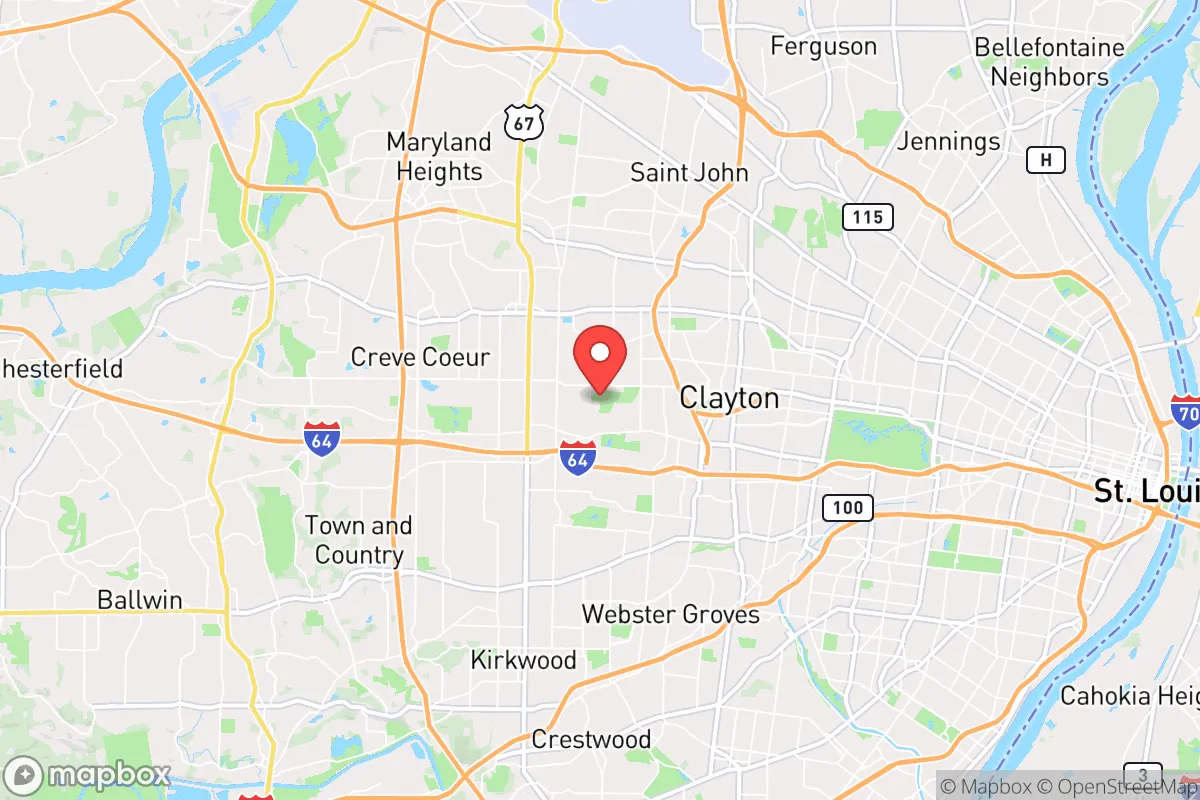
Ladue sits on the Missouri River bluffs in west-central St. Louis County, roughly 12 miles west of downtown St. Louis. Its elevation—generally 550 to 600 feet above sea level—places it well above the floodplains that plague much of the region, including nearby Chesterfield and Valley Park. The underlying geology is predominantly limestone and dolomite, providing stable foundations and minimal risk of liquefaction during seismic events, though the New Madrid Seismic Zone (250 miles south) remains a distant but real concern. The area's natural advantages are modest but real: mature oak-hickory forests offer some canopy cover and potential for foraging, and the numerous private lots (many exceeding one acre) provide space for rainwater catchment and small-scale gardening. However, the land is not self-sufficient farmland; it is manicured suburbia. The nearby Missouri River is a reliable water source, but access is controlled by private property and public parks, not by any public infrastructure designed for crisis scenarios. The climate is continental, with hot, humid summers and cold winters, meaning any long-term grid-down scenario would require robust heating and cooling solutions. For the strategic relocator, the key geographic takeaway is that Ladue offers a defensible hilltop position with decent water proximity, but it is not a remote homestead—it is a wealthy enclave embedded in a sprawling metro area.
Risks, exposures, and proximity to fallout-relevant landmarks
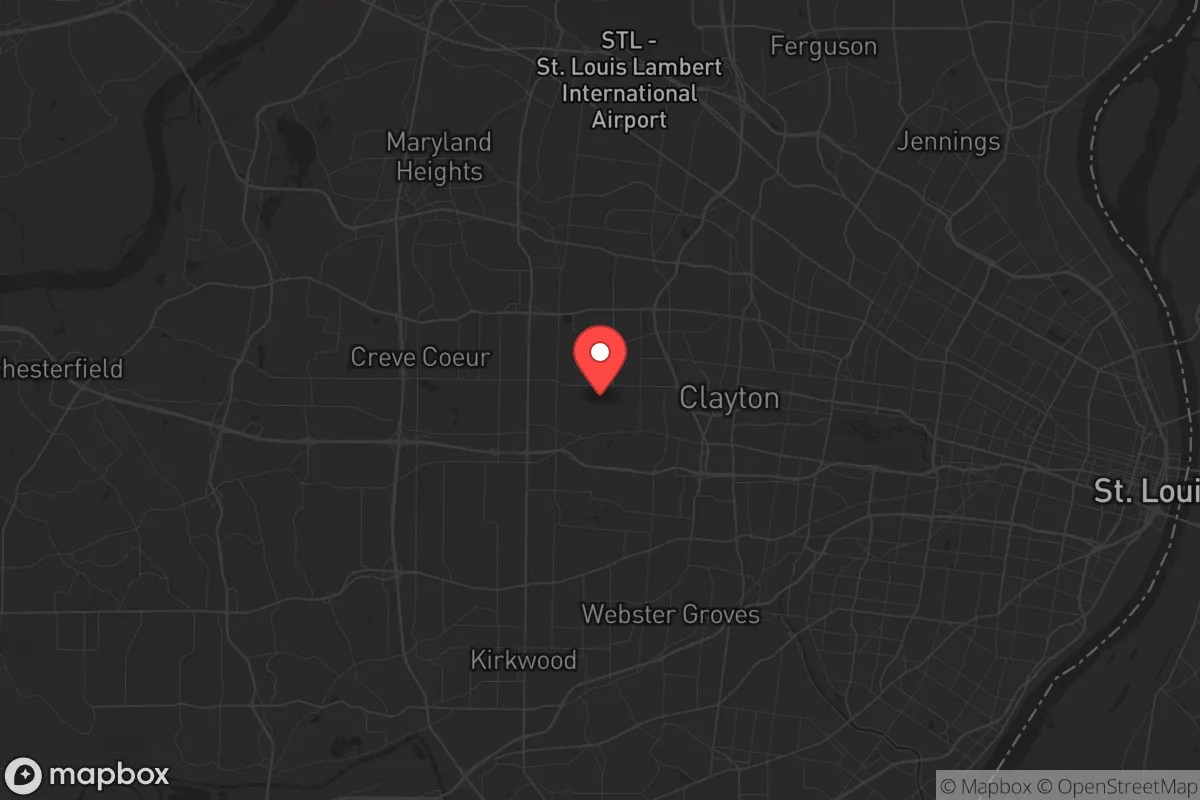
The single greatest vulnerability for Ladue is its proximity to St. Louis itself. The city is a major transportation hub—Interstate 64/US 40 runs directly through the southern edge of Ladue, and Interstates 170, 270, and 44 are all within a 10-minute drive. In a mass evacuation scenario, these arteries would become choke points, and Ladue's tree-lined streets could become dead-end traps if the exits are clogged. The area is also within the fallout zone of several high-value targets: Lambert-St. Louis International Airport (12 miles north), the Boeing defense plant in Berkeley (15 miles north), and the Scott Air Force Base (30 miles east in Illinois). A nuclear or radiological event targeting any of these could deposit significant fallout over Ladue, depending on wind direction. Additionally, the city is surrounded by densely populated suburbs—Clayton, Richmond Heights, Frontenac—meaning any civil unrest in the urban core would push displaced populations westward. The 2014 Ferguson unrest, just 10 miles north, demonstrated how quickly instability can spread into the county. For the prepper, the risk profile is clear: Ladue is a high-value, low-density target for looters during a breakdown, and its residents' visible wealth (luxury cars, large homes) makes it a magnet for organized crime or desperate mobs. The city's police force is well-funded and responsive, but in a widespread collapse, no local department can hold a perimeter against a determined influx.
Practical resilience for a relocator: food, water, energy, and defensibility
For the individual or family looking to establish a resilient household in Ladue, the practical challenges are significant but manageable with planning. Food security is the weakest link: the area has no significant agricultural production, and the nearest major grocery distribution centers are in Earth City (15 miles north) and Fenton (12 miles south). A grid-down scenario would empty shelves within 48 hours. Relocators should plan for at least a six-month supply of non-perishable food, plus seeds and tools for a substantial garden—something most Ladue homeowners' associations (HOAs) may restrict. Water is more promising: the Missouri River is accessible via Creve Coeur Lake Memorial Park (4 miles north) and the Katy Trail, but treatment would require personal filtration systems (e.g., Berkey or Sawyer) and boiling capability. The municipal water supply comes from the Missouri River via the St. Louis County Water Company, which is vulnerable to both contamination and power loss. A private well is rare in Ladue but worth investigating for any property. Energy independence is achievable: many homes have natural gas connections (useful for cooking and heating without grid power), and solar panel installations are becoming more common, though HOA approval may be required. A whole-house generator with a buried propane tank is a near-necessity for extended outages. Defensibility is Ladue's strongest suit: the city's layout—winding roads, cul-de-sacs, and large lots—creates natural chokepoints. Homes with brick construction, multiple stories, and basements offer good ballistic protection. The local police department has a reputation for rapid response, and the city's low crime rate means fewer opportunistic threats in the early stages of a crisis. However, the lack of a cohesive neighborhood watch or prepper community means relocators should plan to operate as a self-reliant unit, not as part of a larger mutual-aid network.
The overall strategic picture for Ladue is one of calculated trade-offs. It offers a high baseline of safety and comfort during normal times, with excellent schools, low crime, and a stable tax base. For the conservative relocator who values order and community insulation, it is a strong choice—provided they are not fooled by the manicured lawns into thinking it is a true retreat. The city's dependence on urban infrastructure, its proximity to high-value targets, and its visibility as a wealthy enclave make it a brittle asset in a prolonged crisis. The wise relocator will treat Ladue as a base of operations, not a final redoubt: maintain a secondary property in a more remote area (e.g., the Ozarks or southern Illinois), keep a low profile, and invest in hard infrastructure—water storage, off-grid power, and defensive capability—before the need arises. In a world of increasing uncertainty, Ladue can be a safe harbor, but only for those who see it as a starting point, not a destination.

* Values derived from national, state, county, city and local statistics and may differ in a specific area. Last updated: 2026-04-16T00:30:03.000Z
Narrative content on this page is AI-generated and may contain mistakes. Verify any details that matter before acting on them.
ReloMaps may earn a commission from affiliate links at no extra cost to you.

