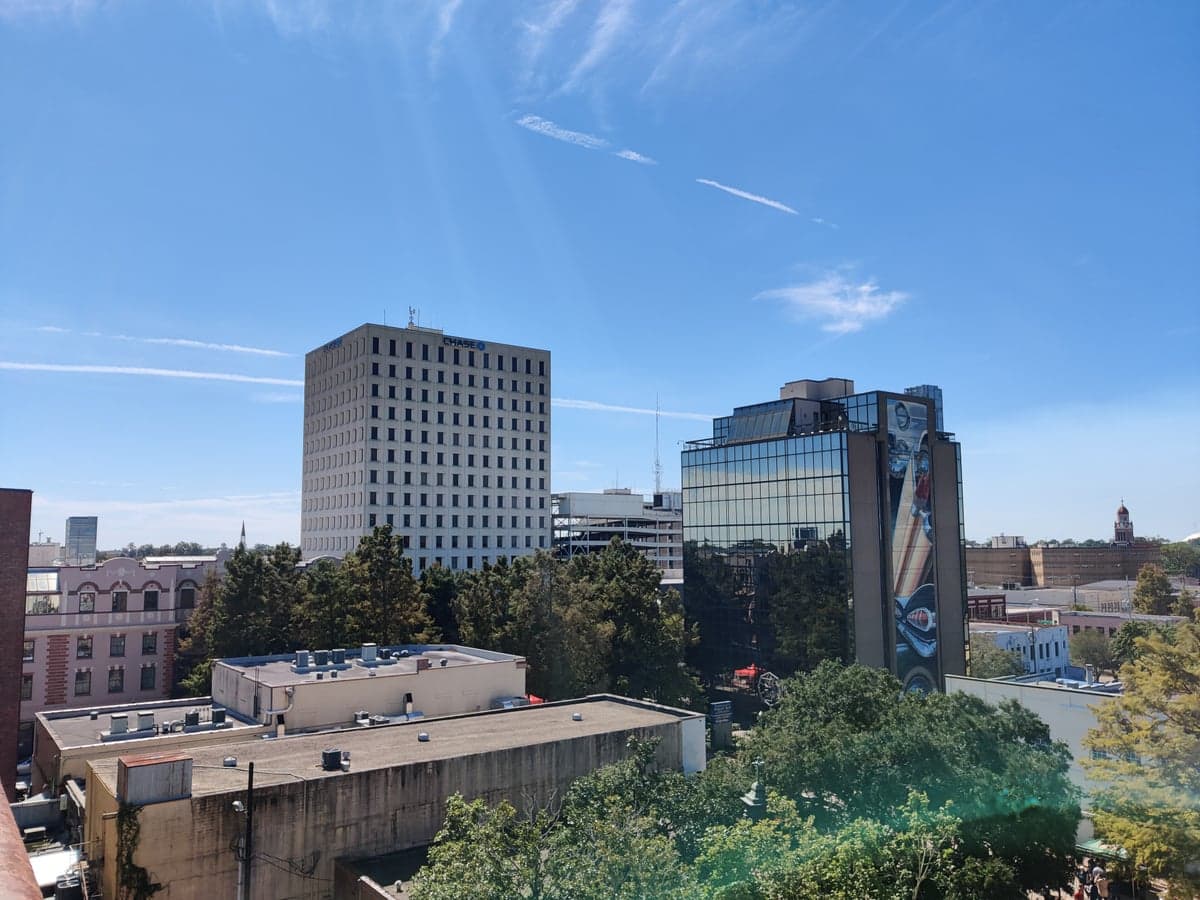
Photo: Wikipedia
Strategic Assessment of Lafayette, LA
Meaningful friction. Expect exposure to either population pressure, blast zones, or natural disaster risk. Consider buying a retreat property.
What does the Strategic Assessment tell us?
Our Strategic Assessment grades tactical survivability of an area. Major population centers, military targets, fallout zones, natural disasters, and border exposure all drive risk — lower exposure means a more defensible position in a crisis.
This is heavily inspired by Joel Skousen's Strategic Relocation book. Highly recommended you checkout the book ($)What does this tell us?
Our Strategic Assessment grades tactical survivability of an area. Major population centers, military targets, fallout zones, natural disasters, and border exposure all drive risk — lower exposure means a more defensible position in a crisis.
This is heavily inspired by Joel Skousen's Strategic Relocation book. Highly recommended you checkout the book ($)Strategic Pillars

Key Distances
Regional Safe Places
Below is our recommended "safe zones" in Louisiana and the surrounding area based on our strategic heuristics. For most people, it's unrealistic to live in a “safe zone” full-time due to work, family or other personal reasons. They tend to be more rural. However, many of these areas are perfect for second homes and retreat properties that double as a vacation home or even a short-term rental.

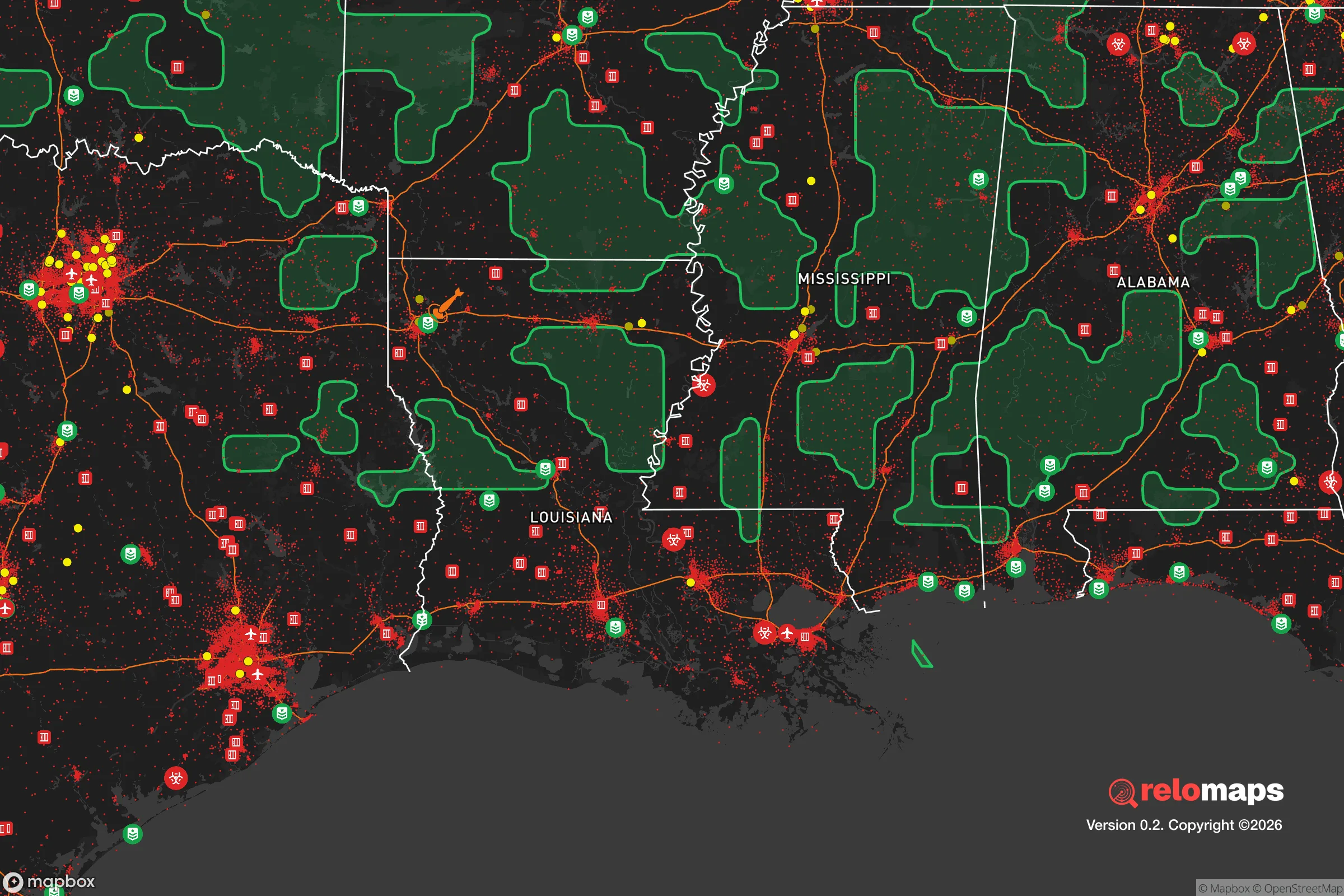


Important Note: For informational purposes only. This does not mean nothing bad ever happens in the green zones. Please use common sense. This is based on public data and modeled with AI. We tried to take a conservative approach but mistakes happen. We update this regularly as new information becomes available.
Solar Generator Recommendations
Backup power matters more here than in safer locations. We've picked three solar generators across budgets and capacity tiers — start with the budget unit if you only need a few essentials, or step up if you want to run a fridge and HVAC for days at a time.

Jackery Portable Power Station Explorer 300
Budget OptionPower on the Go: Weighing only 11 lbs, it's convenient to set up and store with book-sized foldable solar panels

BLUETTI Portable Power Station AC180
Designed for both indoor and outdoor scenarios, AC180 is highly capable as it has a robost capacity and continuous output power.

EF ECOFLOW DELTA Pro Ultra Power Station
Upgraded PickEcoFlow DELTA Pro Ultra is a whole-home energy system designed to grow with your family. Integrated with the Smart Home Panel 2, it scales to meet your evolving energy needs — keeping your home powered, intelligent, and secure through every stage of life.
We earn a commission, at no additional cost to you.
Strategic Assessment Analysis
Lafayette, Louisiana, sits at a strategic crossroads that offers genuine resilience advantages for those thinking long-term about safety and self-sufficiency. Its position roughly 50 miles inland from the Gulf Coast, combined with a robust energy infrastructure and a deeply rooted local culture, makes it a place where a prepper or survivalist can find both practical resources and a community that values independence. The city's economy is anchored by the oil and gas industry, which means a steady supply of fuel, skilled trades, and industrial know-how—assets that become critical during disruptions. For a conservative-leaning relocator worried about national instability, Lafayette provides a buffer zone: close enough to coastal resources but far enough from the immediate chaos of a major port or metropolitan meltdown.
Geographic position and natural advantages for long-term security
Lafayette's location in the heart of Acadiana gives it a distinct edge for those prioritizing self-reliance. The city sits on the Vermilion River, providing a natural water source that can be tapped for filtration or irrigation, and the surrounding region is crisscrossed with bayous and wetlands that offer both food and cover. The area's subtropical climate means a year-round growing season—critical for anyone serious about food security. You can plant citrus, figs, and vegetables nearly ten months out of the year, and the local hunting and fishing culture is not a hobby but a way of life. Louisiana's saltwater marshes and freshwater swamps within a 30-minute drive provide protein sources that won't disappear with a grocery store collapse. The terrain itself is flat and heavily wooded in places, which limits visibility from the air and makes large-scale surveillance harder—a subtle advantage if you're thinking about operational security. Lafayette is also outside the primary hurricane storm-surge zone, unlike New Orleans or Houma, which reduces the risk of catastrophic flooding that would force evacuation.
Risks, exposures, and proximity to fallout-relevant landmarks
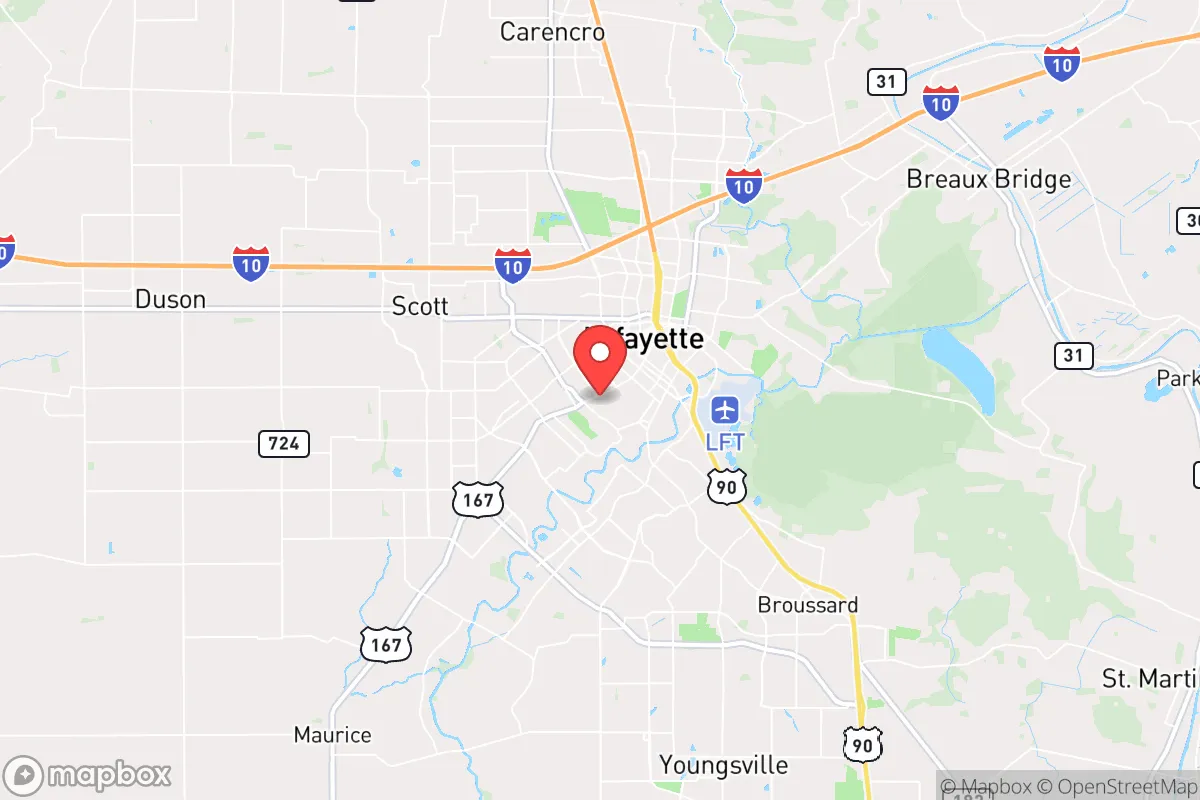
No location is without vulnerabilities, and Lafayette has several that a strategic relocator must weigh. The most obvious is its proximity to the Gulf Coast and the petrochemical corridor along the Mississippi River between Baton Rouge and New Orleans. Lafayette is roughly 140 miles from the Louisiana Offshore Oil Port (LOOP) and the massive refineries in St. Charles Parish—both high-value targets in a conflict scenario. A major strike or accident at those facilities could send a toxic plume or cause a supply chain shock that ripples into Lafayette within hours. The city itself has a small airport (LFT) and is bisected by I-10, a major evacuation route that would become a parking lot during a crisis. The presence of the University of Louisiana at Lafayette (about 19,000 students) means a dense, transient population that could become a liability during civil unrest—think looting or resource competition. On the plus side, Lafayette is not a primary military target; there are no major bases or strategic command centers nearby. The closest nuclear plant is River Bend Station near St. Francisville, about 90 miles east, which is far enough to avoid immediate fallout but close enough to warrant a potassium iodide stockpile and a wind-direction plan.
Practical resilience for a relocator: food, water, energy, and defensibility
For a single individual or family looking to hunker down, Lafayette offers a mix of strengths and weaknesses that require deliberate planning. Water is abundant but not clean: the Vermilion River and local bayous are brackish and polluted with agricultural runoff, so a high-quality reverse osmosis system or a deep well (100+ feet) is non-negotiable. The city's municipal water comes from the Chicot Aquifer, which is reliable but vulnerable to contamination from the region's heavy industrial activity. Rainwater collection is viable, given the area averages 60 inches of rain per year, but you'll need a large cistern and proper filtration. Food-wise, the local culture is a prepper's dream: rice, crawfish, and poultry are staples, and the surrounding farmland produces soybeans, sugarcane, and corn. The Lafayette Farmers Market operates year-round, and there are dozens of small-scale processors for meat and seafood. Energy is Lafayette's ace in the hole. The city sits atop the Haynesville Shale and is a hub for natural gas production, meaning fuel is cheap and plentiful even during national shortages. Solar is less effective here due to frequent cloud cover and humidity, but a small propane generator or a wood-burning stove is a practical backup. Defensibility is mixed: the flat terrain offers no natural high ground, but the dense cypress swamps to the south and east create natural barriers for anyone approaching on foot. Rural properties outside the city limits (like in Broussard or Youngsville) offer more acreage and privacy, with gravel roads and limited law enforcement response times—something to factor in if you're serious about perimeter security.
The overall strategic picture for Lafayette is one of calculated trade-offs. It is not a remote mountain redoubt, but it is a place where a prepared individual can leverage existing infrastructure—fuel, food, water access, and a self-reliant culture—to weather most disruptions. The risks from coastal petrochemical targets and hurricane season are real but manageable with proper planning: a bug-out route north toward Alexandria or east toward Mississippi, a well-stocked pantry, and a community of like-minded locals who still value neighborly mutual aid. For a conservative relocator who wants to be part of a functioning economy while maintaining the ability to disconnect and defend, Lafayette offers a rare balance. It is not a bunker, but it is a base of operations—and in a deteriorating national landscape, that may be the most realistic goal.

* Values derived from national, state, county, city and local statistics and may differ in a specific area. Last updated: 2026-05-01T19:29:10.000Z
Narrative content on this page is AI-generated and may contain mistakes. Verify any details that matter before acting on them.
ReloMaps may earn a commission from affiliate links at no extra cost to you.

