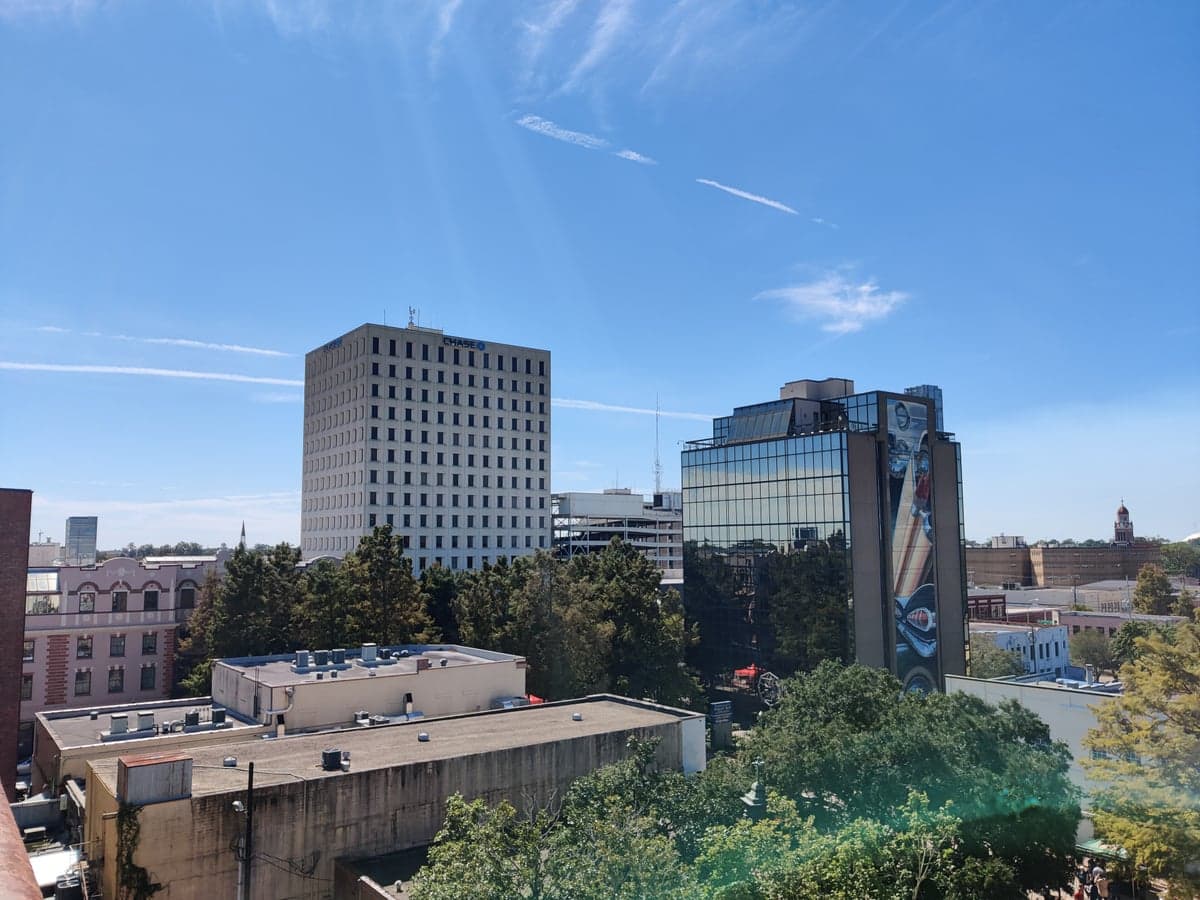
Photo: Wikipedia
Political ClimatePolitical Climate in Lafayette, LA
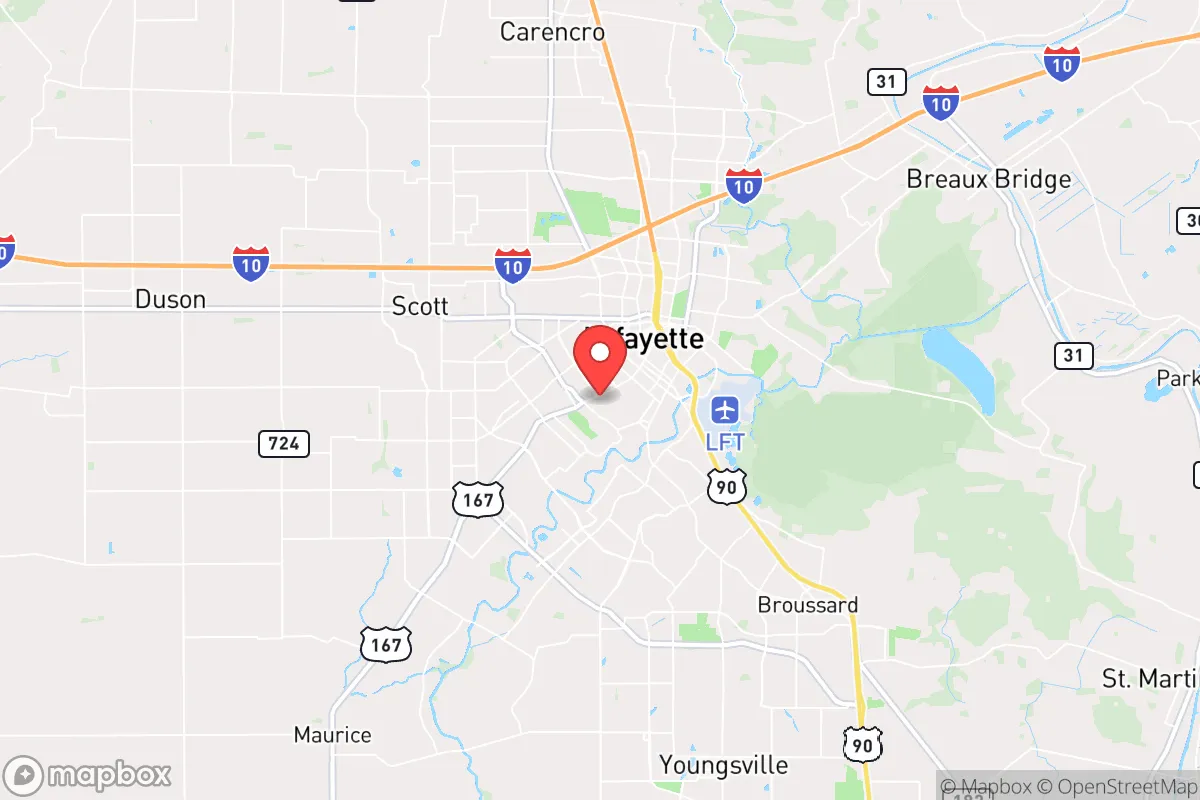
District shown is the primary district for this city’s centroid. Cities may span multiple districts.
Local Political AnalysisPolitical Analysis of Lafayette, LA
Lafayette, Louisiana, sits solidly in the conservative column, with a Cook PVI of R+22 that reflects a deep-rooted preference for limited government and traditional values. This isn't a purple area that flips back and forth; it's a place where the Republican primary is often the real contest, and where the idea of government overreach into personal freedoms—whether on business regulations, property rights, or family decisions—is met with serious skepticism. You can feel it in the local chatter at coffee shops and at the hunting camps just outside town; folks here remember when the government stayed out of your way, and they're wary of any shift toward progressive ideology that might change that.
How it compares
Drive 50 miles east to Baton Rouge, and you'll hit a more mixed political scene, with a stronger Democratic base in the city proper and a university influence that pushes things left. Head south to New Iberia or west to Lake Charles, and you're in even deeper red territory, where the R+22 number might actually look moderate. The real contrast, though, is within Lafayette Parish itself. The city of Lafayette has a slightly more moderate vibe, especially around the University of Louisiana campus, but the surrounding towns like Youngsville, Broussard, and Scott are reliably conservative. That suburban and rural ring keeps the overall tilt firmly right, and it's where you'll find the strongest pushback against any talk of raising taxes or expanding government programs.
What this means for residents
For someone living here, the political climate means a lot of practical freedom day-to-day. You don't see heavy-handed zoning rules that tell you what you can do with your own property, and the local government generally takes a hands-off approach to business. That's a big reason why Lafayette has a thriving small-business scene and a strong oil-and-gas sector—people can operate without a ton of red tape. On the flip side, there's a growing concern among long-time residents about creeping progressive influence, especially in school board decisions and local ordinances. Some folks worry that the next few years could bring more regulation on everything from energy development to how you run your household, and that's why local elections here get a lot of attention. The general feeling is that if you want to keep the government out of your life, you have to stay engaged.
Culturally, Lafayette is still very much Cajun country, which means a strong emphasis on family, community, and personal responsibility. The policy distinctions that matter most here are things like low property taxes, minimal business licensing requirements, and a general resistance to statewide mandates that feel like they're coming from Baton Rouge or Washington. There's a real sense that the area's identity is tied to self-reliance, and any move toward a more centralized, one-size-fits-all approach is seen as a threat. Looking ahead, the long-term trajectory depends on whether the conservative base stays active and organized. If the progressive trends seen in other parts of the country start to take hold here, you can bet there will be a fight. For now, Lafayette remains a place where you can still live your life the way you see fit, and that's something worth holding onto.

State Political ClimatePolitical Climate in Louisiana
State Political AnalysisPolitical Environment in the State
Louisiana has long been a reliably red state in federal elections, but its political landscape is far more nuanced than a simple partisan label suggests. The state has voted for the Republican presidential candidate in every election since 2000, with Donald Trump winning by nearly 19 points in 2024, but down-ballot races and local governance reveal a persistent Democratic presence, particularly in New Orleans and Baton Rouge. Over the last 10-20 years, the state has shifted from a competitive purple state to a solidly Republican one, driven by the suburbanization of its major metros and the realignment of white working-class voters, though the Democratic coalition remains strong among Black voters, who make up roughly a third of the electorate.
Urban vs. rural divide
The political map of Louisiana is a classic story of urban islands surrounded by a deep red rural sea. New Orleans (Orleans Parish) is the state's most reliably Democratic stronghold, routinely delivering 80%+ of its vote to Democratic candidates, powered by a large Black population and a progressive white professional class. Baton Rouge (East Baton Rouge Parish) is a battleground within the metro: the city itself leans Democratic, but the surrounding suburbs like Prairieville and Denham Springs are heavily Republican, creating a stark contrast. Lafayette and Shreveport are more moderate, with Lafayette trending redder as its oil-and-gas economy attracts conservative professionals, while Shreveport's Democratic lean is driven by its sizable Black population and unionized industrial base. The rural parishes—like Winn, LaSalle, and Beauregard—are among the most Republican in the nation, often voting 80-90% for GOP candidates. The Northshore suburbs of New Orleans, including Covington and Mandeville, have become a major Republican growth corridor as families flee Orleans Parish for lower taxes and better schools.
Policy environment
Louisiana's policy environment is a mixed bag for conservatives. On the plus side, the state has no personal property tax on vehicles or boats, and its homestead exemption shields the first $75,000 of a home's value from property tax, keeping effective rates low. The state income tax was recently flattened to a single rate of 3% (down from a progressive 6%), a major win for fiscal conservatives. However, the state's sales tax is among the highest in the nation, averaging over 9.5% when local taxes are included, which hits low-income families hardest. Education policy is a bright spot: Louisiana has a robust school choice program, including the Louisiana Scholarship Program and a thriving charter school sector, particularly in New Orleans, which has one of the highest rates of charter school enrollment in the country. On the downside, the state's healthcare system remains heavily reliant on Medicaid expansion (accepted under Governor John Bel Edwards, a Democrat), and the state has some of the highest insurance premiums in the nation. Election laws are generally conservative: voter ID is required, and early voting is limited to a seven-day window. The state does not have no-excuse absentee voting, which many conservatives see as a safeguard against fraud.
Trajectory & freedom
Louisiana has been on a clear trajectory toward greater personal freedom in several key areas, though the pace is frustratingly slow for many conservatives. The most significant recent win was the passage of constitutional carry (permitless carry of a concealed firearm) in 2024, making Louisiana the 28th state to adopt the policy. This was a major victory for Second Amendment advocates who had been pushing for it for years. On parental rights, the state passed the Parents' Bill of Rights in 2023, which requires schools to notify parents of any changes to a child's mental, emotional, or physical health, and prohibits schools from hiding information about a child's gender identity. This law was a direct response to progressive school board policies in places like New Orleans and Baton Rouge. On the economic freedom front, the state has been slowly chipping away at its notoriously complex tax code, with the 2024 flat tax reform being the biggest step in decades. However, the state still has a heavy regulatory burden, particularly in occupational licensing, which makes it harder for entrepreneurs to start businesses. Medical freedom took a hit during the COVID-19 pandemic, with New Orleans and Baton Rouge imposing some of the longest-lasting mask and vaccine mandates in the South, but the state legislature has since passed laws banning vaccine mandates for public employees and students.
Civil unrest & political movements
Louisiana has a history of political flashpoints that a new resident would notice. The most visible in recent years has been the debate over Confederate monuments and symbols, with New Orleans removing several prominent statues in 2017, sparking a fierce backlash from conservative groups across the state. The Take 'Em Down NOLA movement remains active, pushing for further removals, while rural parishes have responded by passing resolutions to protect their own monuments. Immigration politics are less heated than in border states, but the issue flared up in 2023 when Governor Jeff Landry (a Republican) deployed the Louisiana National Guard to the Texas border as part of Operation Lone Star, a move popular with conservatives. There is no sanctuary city policy in Louisiana; in fact, the state passed a law in 2024 requiring all law enforcement to cooperate with federal immigration authorities. Election integrity has been a major topic since 2020, with the state legislature passing a series of laws to tighten voter ID requirements and limit ballot drop boxes, though no widespread fraud was ever proven. The most visible political movement on the right is the Louisiana Family Forum, a Christian conservative group that has been instrumental in passing the Parents' Bill of Rights and other socially conservative legislation. On the left, the Louisiana Progress Action network organizes around criminal justice reform and Medicaid expansion.
Projection
Over the next 5-10 years, Louisiana is likely to become more solidly Republican, but not necessarily more conservative in a libertarian sense. The in-migration of retirees and remote workers from blue states like California and New York is accelerating, particularly to the Northshore suburbs and the Baton Rouge area, and these newcomers tend to be fiscally conservative but socially moderate. This could create tension with the state's more traditionalist rural base. The Democratic Party's strength will continue to be concentrated in New Orleans and Baton Rouge, but as those cities lose population to the suburbs, their political influence will wane. The biggest wild card is the state's economy: if the oil-and-gas industry continues to be targeted by federal regulations, the state's tax base could shrink, forcing tough choices on spending and taxes. A new resident moving in now should expect a state that is broadly conservative on social issues and gun rights, but still grappling with high crime rates in its major cities and a public education system that, despite school choice, ranks near the bottom nationally.
Bottom line for a new resident: If you're a conservative looking for a low-tax, gun-friendly state with a strong sense of community and a slower pace of life, Louisiana is a solid choice—just be prepared for the humidity, the high sales tax, and the fact that the politics of New Orleans and Baton Rouge can feel like a different country. You'll find your values reflected in the state legislature and the governor's office, but you'll need to stay engaged to keep it that way, especially as the suburbs grow and the culture shifts. It's a place where your vote still matters, and where conservative policies are being enacted, not just talked about.
* Values derived from national, state, county, city and local statistics and may differ in a specific area. Last updated: 2026-05-01T19:29:10.000Z
Narrative content on this page is AI-generated and may contain mistakes. Verify any details that matter before acting on them.
ReloMaps may earn a commission from affiliate links at no extra cost to you.

