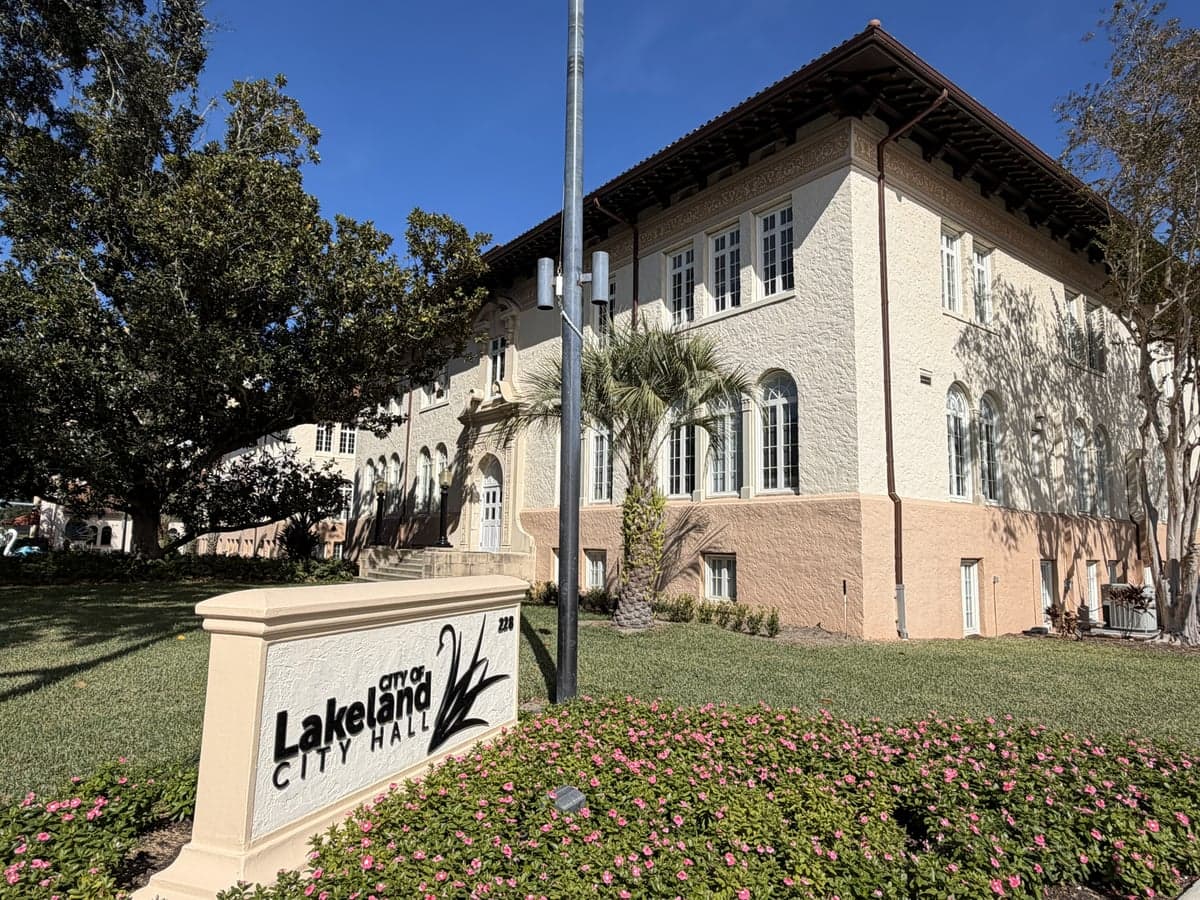
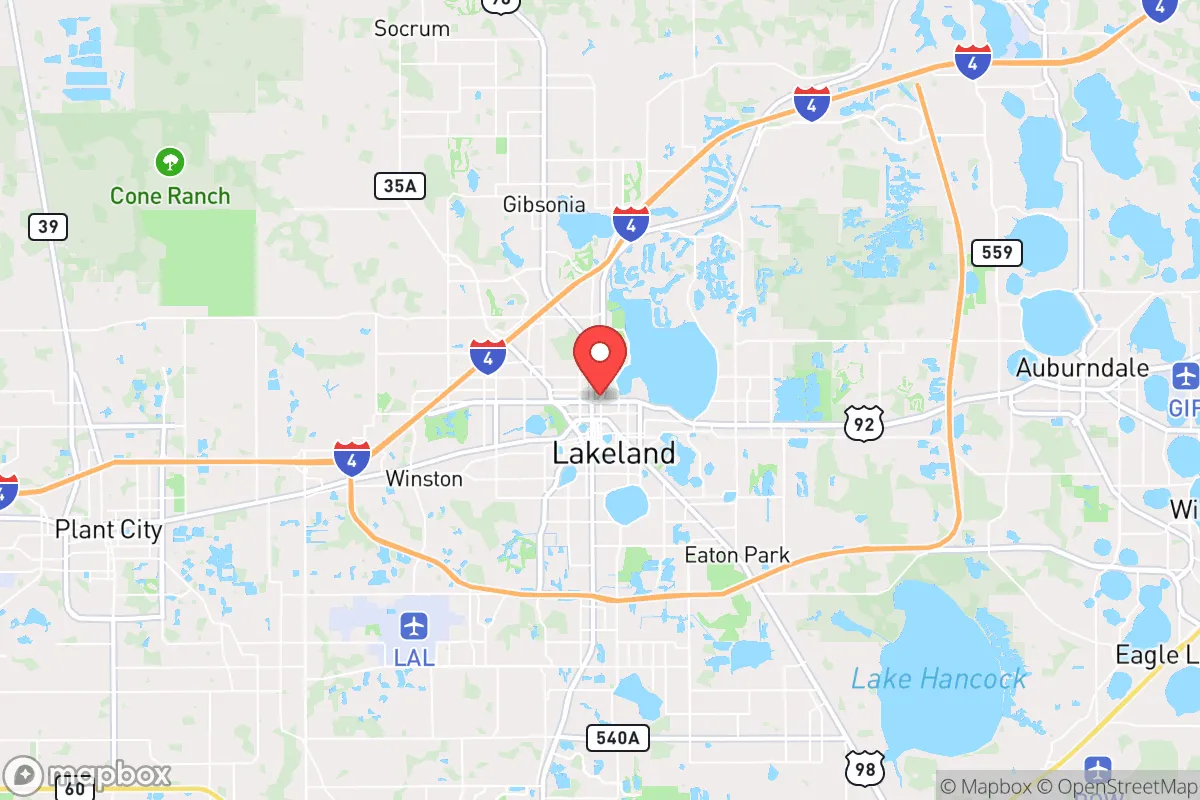
Photo: Wikipedia
Personal Sovereignty in Lakeland, FL
Viable for self-reliance. Generally workable, though some barriers may limit total independence.
What does Personal Sovereignty tell us?
Personal Sovereignty measures your capacity for self-reliance and independence with minimal government friction. Higher scores mean fewer barriers between you and the way you want to live... but it assumes you have the space you need and good neighbors.
What does this tell us?
Personal Sovereignty measures your capacity for self-reliance and independence with minimal government friction. Higher scores mean fewer barriers between you and the way you want to live... but it assumes you have the space you need and good neighbors.
State Policy
Energy independence: Importer (10% of energy produced in-state)
Personal Liberty
Homesteading

Personal Liberty Analysis
For the individual who prioritizes personal sovereignty above all else—the survivalist, the prepper, the parent who refuses to cede authority over their own household—Lakeland, Florida, presents a strategic paradox. It is a city where the state-level legal framework aggressively protects individual autonomy, yet the local municipal environment can introduce friction that demands constant vigilance. The fundamental question is not whether Florida is a sovereign-friendly state (it largely is), but whether the specific regulatory and cultural landscape of Lakeland allows you to exercise that sovereignty without undue interference from local ordinances, HOA covenants, or a growing urban bureaucracy. The answer, as with most things in a shifting world, is conditional: the state gives you a powerful shield, but the city can still chip away at its edges if you aren't careful about where you plant your flag.
Tax burden and regulatory posture: how the state and city treat your wallet and your choices
Florida’s absence of a state income tax is the bedrock of its sovereignty appeal. For a prepper or self-reliant individual, this means every dollar earned stays under your control, not funneled into a state pension system or social programs you may not support. Lakeland adds a local sales tax of 7.5% (combining state, county, and discretionary surtaxes), which is moderate by Florida standards but still a tangible cost on every purchase of gear, supplies, or building materials. Property taxes in Polk County hover around 0.85% of assessed value, which is below the national average but not negligible—a $300,000 home costs roughly $2,550 annually. The real regulatory battleground, however, is at the municipal level. Lakeland has a reputation for a relatively business-friendly permitting process, but it is not a free-for-all. Building codes are enforced, and the city has a robust code enforcement division that will cite you for overgrown lots, unregistered vehicles, or unpermitted structures. For the homesteader looking to erect a workshop, a greenhouse, or a secure storage building without a paper trail, this is a significant constraint. The state’s preemption of local gun laws (discussed below) is a major win, but on zoning and property use, the city still holds considerable sway. The regulatory posture is best described as "state-level liberty, city-level order." You have freedom from the income tax man, but you do not have freedom from the zoning inspector.
Self-defense and gun law specifics: what Florida’s preemption means for Lakeland residents
This is where Florida, and by extension Lakeland, shines for the sovereign-minded individual. Florida is a "shall-issue" state for concealed carry, and as of 2023, it became a permitless (constitutional) carry state. Any law-abiding adult 21 or older can carry a concealed firearm without a permit. This is a non-negotiable pillar of personal sovereignty. Furthermore, Florida has strong state preemption laws (Florida Statute 790.33), which explicitly forbid local governments from enacting their own gun control ordinances. This means the city council in Lakeland cannot ban magazines, restrict where you can carry in parks, or impose waiting periods beyond state law. The "Stand Your Ground" statute is fully in effect, removing any duty to retreat before using deadly force if you are in a place you have a legal right to be. For the prepper, this legal clarity is invaluable. You are not at the mercy of a local progressive city council’s whims. The only caveat is that Lakeland is not a rural frontier; it is a mid-sized city with a significant police presence. While your legal right to carry is absolute, the practical reality is that you will encounter more people, more traffic stops, and more public spaces where situational awareness is paramount. The law is on your side, but the environment demands discretion. For the survivalist, the key takeaway is that Florida’s state-level framework treats self-defense as a fundamental right, not a privilege to be administered by local bureaucrats.
Self-reliance and homesteading viability: lot sizes, zoning, and off-grid feasibility in Lakeland
Here, the gap between state-level philosophy and local reality becomes most apparent. Within the Lakeland city limits, the typical residential lot is a quarter-acre or less, and zoning is predominantly suburban. Raising chickens is generally permitted with restrictions, but larger livestock (goats, pigs) is not allowed on standard residential lots. The city’s code explicitly prohibits "nuisance" animals and has strict rules about coop placement and waste management. Off-grid living—solar panels, rainwater collection, composting toilets—is technically legal under state law, but the city’s building department will require permits and inspections for any structural changes. Lakeland Electric, the municipal utility, has a net-metering program, but going fully off-grid requires cutting ties with the grid, which can trigger legal battles over property liens and utility easements. The real opportunity for the homesteader lies in the unincorporated areas of Polk County, just outside the Lakeland city limits. Here, lot sizes of one to five acres are common, zoning is more permissive, and code enforcement is far less aggressive. Areas like Kathleen, Combee Settlement, or the rural pockets near Socrum Loop offer the space to build a workshop, store supplies, and practice a degree of self-sufficiency that is impossible within the city. For the prepper, the strategic move is clear: buy land in the county, not the city. Lakeland itself is a hub for supplies, medical care, and community, but your actual homestead should be outside its jurisdictional reach if you value true autonomy over your property.
Personal liberties: parental rights, medical autonomy, speech, and property in practice
Florida has been a national battleground for parental rights, and the current legal environment is strongly protective. The Parental Bill of Rights (Florida Statute 1014) affirms that parents have the fundamental right to direct the upbringing, education, and healthcare of their minor children. This means no mandatory masking of children without parental consent, no school-based medical screenings without opt-out, and a clear legal path to challenge school board decisions. For the parent concerned about government overreach into family matters, this is a significant safeguard. Medical autonomy for adults is more nuanced. Florida did not impose a statewide vaccine mandate for employment, and the state has laws prohibiting vaccine passports. However, emergency room protocols and public health orders can still override individual choice in declared emergencies. The state’s track record during COVID-19 was mixed—early lockdowns were imposed, but the state reopened faster than many. For the prepper, the lesson is to maintain your own medical supplies and knowledge, as the state’s commitment to medical freedom is conditional on the political climate. Free speech is robustly protected under the Florida Constitution, and the state has preempted local "hate speech" ordinances that attempt to regulate expression. Property rights are strong, with Florida being a "lien theory" state that favors the homeowner in disputes, but the specter of eminent domain for "blight" or infrastructure projects remains a threat in a growing city like Lakeland. Overall, the legal framework gives you substantial room to live according to your values, but it is not absolute—it requires active defense through voting, attending city council meetings, and staying informed.
In the final analysis, Lakeland offers a high degree of personal sovereignty relative to most of the United States, but it is not a libertarian paradise. The state-level protections on guns, taxes, and parental rights are genuine and powerful. However, the city’s zoning code, utility monopoly, and code enforcement create a ceiling on how far you can push self-reliance within the urban core. For the survivalist or prepper, the optimal strategy is to use Lakeland as a base of operations—its hospitals, hardware stores, and community networks are valuable—but to establish your actual homestead in the surrounding unincorporated county land where the regulatory leash is longer. Compared to states like California, New York, or Illinois, Lakeland is a fortress of liberty. Compared to rural Idaho or Montana, it is a managed environment. Your sovereignty here is real, but it is not automatic; it is something you must secure through deliberate property choices and constant civic engagement. The foundation is solid, but the walls are only as strong as your willingness to defend them.

* Values derived from national, state, county, city and local statistics and may differ in a specific area. Last updated: 2026-04-22T06:35:35.000Z
Narrative content on this page is AI-generated and may contain mistakes. Verify any details that matter before acting on them.
ReloMaps may earn a commission from affiliate links at no extra cost to you.

