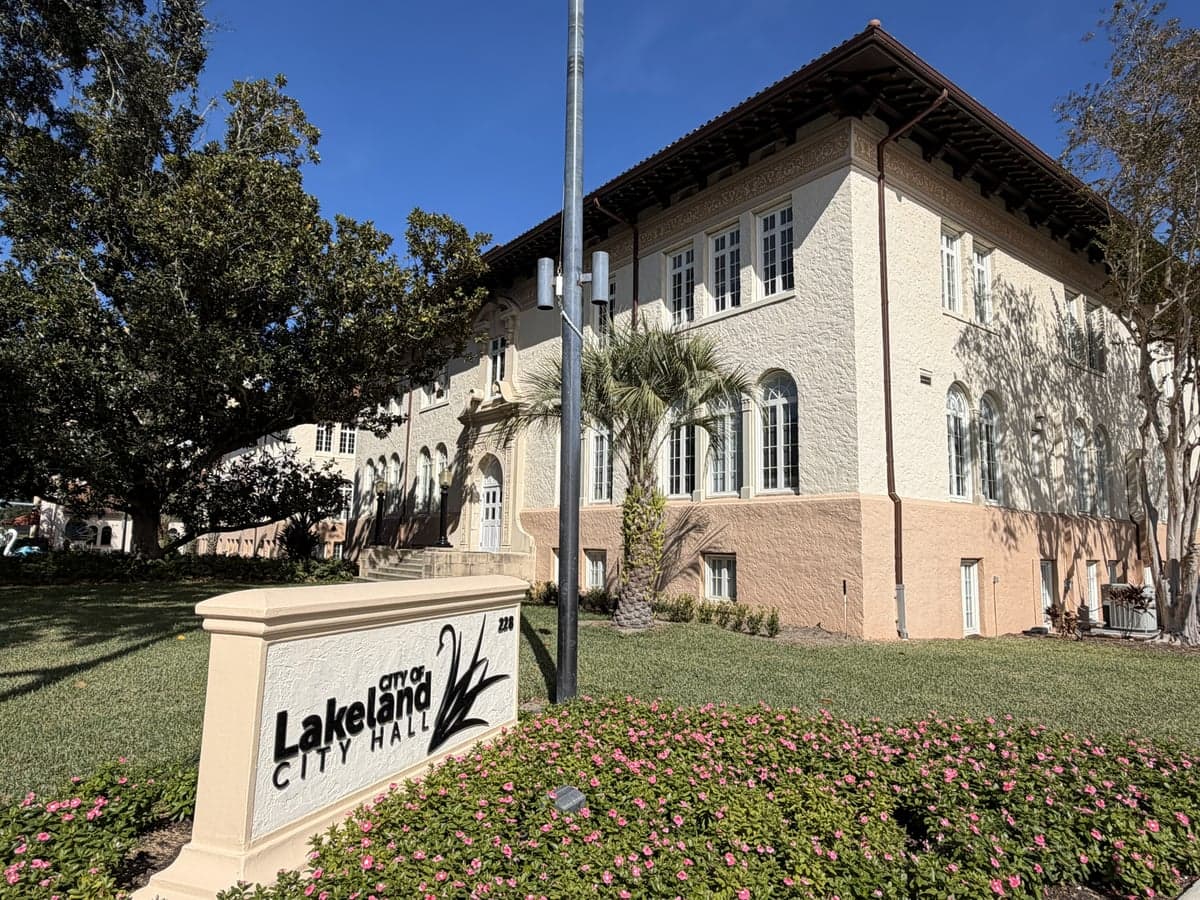
Photo: Wikipedia
Political ClimatePolitical Climate in Lakeland, FL
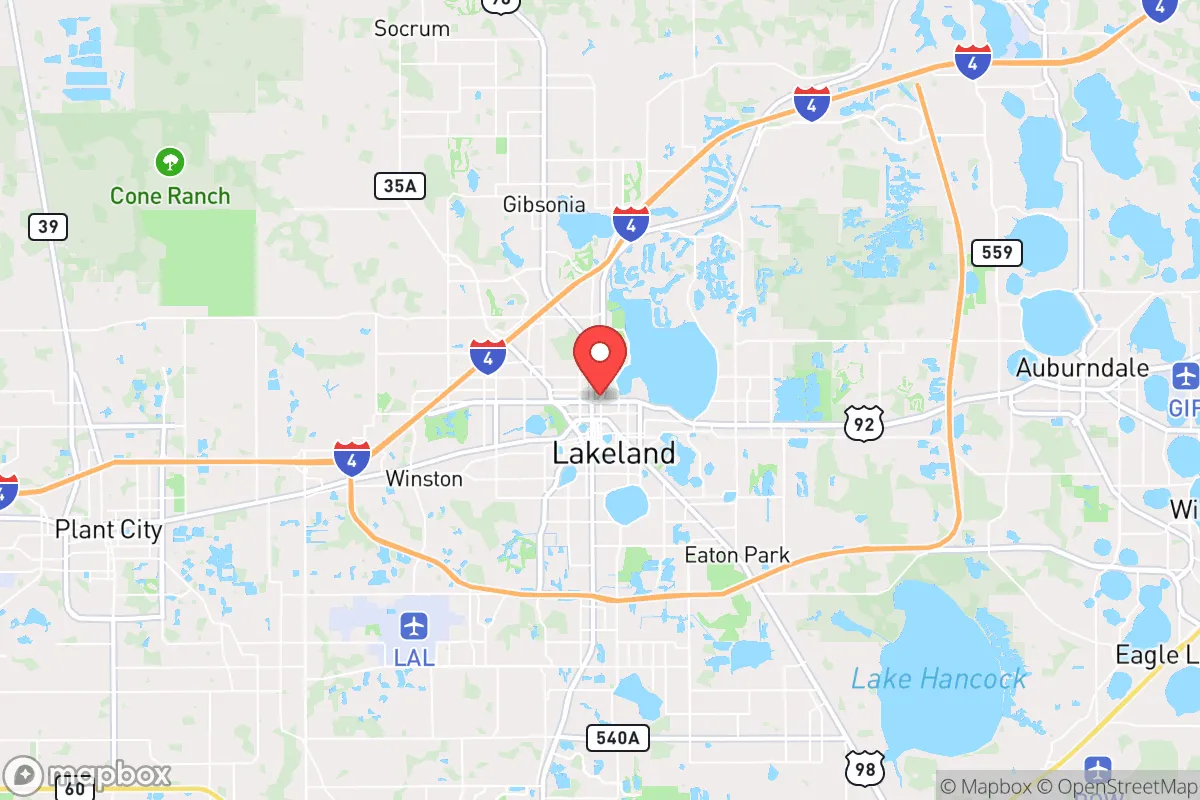
District shown is the primary district for this city’s centroid. Cities may span multiple districts.
Local Political AnalysisPolitical Analysis of Lakeland, FL
Lakeland has long been a reliably conservative stronghold in Central Florida, and that hasn't changed much. With a Cook Partisan Voting Index of R+14, the city and surrounding Polk County lean heavily Republican in most elections, and that's been the case for as long as I can remember. You'll see Trump signs in yards year-round, and local races tend to be decided in the GOP primary. That said, there's been a slow but noticeable shift in the last five or six years, especially as more folks move up from South Florida or over from the coasts. The core of Lakeland still votes red, but the margins are tightening in some precincts, particularly around the newer subdivisions and downtown condos.
How it compares
Drive twenty minutes east to Winter Haven or south to Bartow, and you're in even deeper red territory—those areas are solidly conservative, with fewer of the transplants that are starting to nudge Lakeland's politics. Head west to Tampa or north to Orlando, and you're in blue-leaning counties where progressive policies on taxes, zoning, and public health mandates are more common. Lakeland sits in a kind of buffer zone: conservative enough to keep most overreach at bay, but close enough to those big cities to feel the pressure. The contrast is starkest in local school board and county commission races, where Lakeland's candidates tend to run on limited government and parental rights, while Tampa's are pushing diversity initiatives and mask mandates. It's a reminder that where you live in Central Florida really determines how much government gets into your daily life.
What this means for residents
For the most part, Lakeland residents enjoy a lighter touch from local government compared to what you'd find in the bigger metros. Property taxes are reasonable, zoning is less restrictive, and you won't see the kind of business-killing regulations that have driven small shops out of places like Orlando. The city council and county commission have generally resisted calls for heavy-handed housing mandates or strict environmental rules that would raise costs for homeowners. That said, there are warning signs. A few recent pushes for "complete streets" policies and transit-oriented development have raised eyebrows among folks who see them as backdoor ways to increase density and government control. The school board has also seen some heated battles over curriculum transparency, with parents pushing back against materials they feel cross the line into activism. So far, common sense has mostly held the line, but it's something to keep an eye on.
One thing that sets Lakeland apart is its independent streak. Even within the conservative framework, there's a strong libertarian undercurrent—people here don't like being told what to do, whether it's by the county or the state. You see it in the resistance to mask mandates during the pandemicched, the pushback against property tax hikes, and the general skepticism of any new program that requires more paperwork or fees. Culturally, Lakeland is still a place where church potlucks and Friday night football matter more than city council resolutions. The biggest concern among long-time residents is that the influx of new people from blue states will slowly erode that character, bringing with them the same policies they fled. For now, though, Lakeland remains a place where you can live your life without too much interference, and that's exactly how most folks here want it.

State Political ClimatePolitical Climate in Florida
State Political AnalysisPolitical Environment in the State
Florida has shifted from a classic swing state to a solidly Republican-leaning powerhouse over the past decade, with a current partisan lean of roughly R+8 to R+10 in statewide elections. The dominant coalition is a mix of conservative retirees, working-class Hispanics (especially Cubans and Venezuelans in Miami-Dade), and transplants from blue states seeking lower taxes and fewer restrictions. This trajectory has been dramatic: as recently as 2012, Florida was a true toss-up (Obama won it by less than 1%), but by 2024, Donald Trump carried the state by over 13 points, and Republicans now hold supermajorities in both legislative chambers. The shift is real, durable, and accelerating.
Urban vs. rural divide
The political map of Florida is starkly divided. The major urban centers—Miami-Dade, Broward (Fort Lauderdale), and Orange County (Orlando)—remain Democratic strongholds, but even these are shifting. Miami-Dade, once a Democratic bastion, has moved rightward dramatically: in 2020, Trump lost it by only 7 points, down from Hillary Clinton’s 29-point margin in 2016. The rural Panhandle, from Pensacola to Tallahassee, is deeply red, with counties like Santa Rosa and Okaloosa routinely voting 70-80% Republican. The I-4 corridor, stretching from Tampa through Lakeland to Daytona Beach, is the traditional swing region, but it’s now leaning red thanks to conservative transplants from the Midwest and Northeast. The southwest coast, including Naples and Fort Myers, is reliably Republican, driven by affluent retirees. The real story is the suburban and exurban counties—St. Johns (St. Augustine), Collier (Naples), and Lee (Fort Myers)—which have become deep red as new residents flee high-tax states.
Policy environment
Florida’s policy environment is aggressively conservative and pro-freedom by design. There is no state income tax, a major draw for relocators. Property taxes are moderate (averaging around 0.8% of assessed value), and the state has a homestead exemption that caps annual increases for primary residences. The regulatory posture is famously business-friendly: Florida is a right-to-work state with minimal union influence, and permitting processes for construction and development are streamlined compared to the Northeast or California. On education, Governor Ron DeSantis signed the Parental Rights in Education Act (HB 1557) in 2022, which prohibits classroom instruction on sexual orientation and gender identity in grades K-3, and the Stop WOKE Act (HB 7) in 2022, which restricts critical race theory training in schools and workplaces. School choice is robust: the Family Empowerment Scholarship program provides state-funded vouchers for private school tuition, and over 1.3 million students now participate in some form of school choice. Healthcare policy is mixed: Florida did not expand Medicaid under the ACA, keeping the system leaner, but it also has a high uninsured rate (about 11%). Election laws were tightened after 2020: SB 90 (2021) added voter ID requirements, limited drop boxes, and restricted third-party ballot collection—measures critics call suppression but supporters call integrity safeguards.
Trajectory & freedom
Florida is unequivocally becoming more free in the sense of personal liberty and limited government, especially compared to the national trend. The state has expanded gun rights significantly: permitless carry (HB 543) was signed into law in 2023, allowing any law-abiding adult to carry a concealed firearm without a permit. The Second Amendment Preservation Act prohibits state and local agencies from enforcing any future federal gun bans. On parental rights, the Don’t Say Gay law (HB 1557) was expanded in 2023 to cover all grades, and the Transgender Treatment Ban (SB 254) prohibits gender-affirming care for minors, with the state threatening to revoke medical licenses for violators. Medical autonomy was bolstered by SB 988 (2023), which bans COVID-19 vaccine mandates for private employers. Property rights are strong: Florida has no statewide rent control (preempting local ordinances), and the Live Local Act (2023) preempts local zoning to allow affordable housing developments on commercial land. The only area where freedom has contracted is on abortion: a 15-week ban (HB 5, 2022) was upheld, and a 6-week ban (SB 300, 2023) is currently blocked by the state Supreme Court but expected to take effect soon. For a conservative relocator, the trajectory is overwhelmingly positive—the state is actively rolling back government overreach in nearly every domain.
Civil unrest & political movements
Florida has seen relatively little civil unrest compared to blue states. The 2020 BLM protests were smaller and shorter-lived than in Portland or Seattle, with the most notable incident being a protest in Miami that turned briefly violent but was quickly contained. The state’s political movements are dominated by organized conservative activism: the Moms for Liberty group, founded in Florida in 2021, has become a national force in school board elections, pushing for parental rights and curriculum transparency. On the left, the Dream Defenders (based in Miami) organize around racial justice and police reform, but their influence is limited. Immigration politics are a major flashpoint: Florida passed SB 1718 (2023), which requires businesses with 25+ employees to use E-Verify, bans local governments from issuing ID cards to undocumented immigrants, and makes it a felony to transport undocumented people into the state. This has led to some labor shortages in agriculture and construction, but it’s popular with the base. Election integrity remains a hot topic: the state’s Office of Election Crimes and Security, created in 2022, has prosecuted dozens of cases of alleged voter fraud, though most have been minor. A new resident would notice a palpable sense of political stability—no major protests, no sanctuary city rhetoric, and a general expectation that the state government will enforce the law.
Projection
Over the next 5-10 years, Florida will likely become even more conservative. The demographic trends are clear: the state is gaining roughly 1,000 new residents per day, most from blue states like New York, California, and Illinois. These transplants are disproportionately conservative-leaning—they’re moving for lower taxes, less crime, and more freedom. The Hispanic vote is shifting rightward: in 2024, Trump won 45% of the Hispanic vote in Florida, up from 35% in 2020, driven by Cuban and Venezuelan communities in Miami-Dade who are deeply anti-socialist. The only countervailing trend is the growth of the Orlando and Tampa metro areas, which attract younger, more diverse populations that lean slightly more Democratic, but not enough to offset the red wave elsewhere. The state legislature will likely remain under Republican supermajority control for the foreseeable future, meaning continued policy expansion on school choice, gun rights, and tax cuts. The biggest wildcard is climate change: rising sea levels and hurricane risk could eventually slow migration to coastal areas, but for now, the inland regions (like Ocala and Gainesville) are booming. A relocator moving in now should expect to find a state that is more culturally and politically aligned with the Deep South than the Sun Belt of 20 years ago.
For a new resident, the bottom line is this: Florida offers a rare combination of low taxes, strong property rights, parental control over education, and a government that actively pushes back against federal overreach. The political climate is stable and trending in a direction that favors personal freedom and limited government. If you’re moving from a high-tax, high-regulation state, you’ll find a place where your values are reflected in policy—and where the trajectory is likely to continue that way for at least the next decade. Just be prepared for hot summers, hurricane season, and a housing market that’s been squeezed by all those new arrivals.
* Values derived from national, state, county, city and local statistics and may differ in a specific area. Last updated: 2026-04-22T06:35:35.000Z
Narrative content on this page is AI-generated and may contain mistakes. Verify any details that matter before acting on them.
ReloMaps may earn a commission from affiliate links at no extra cost to you.

