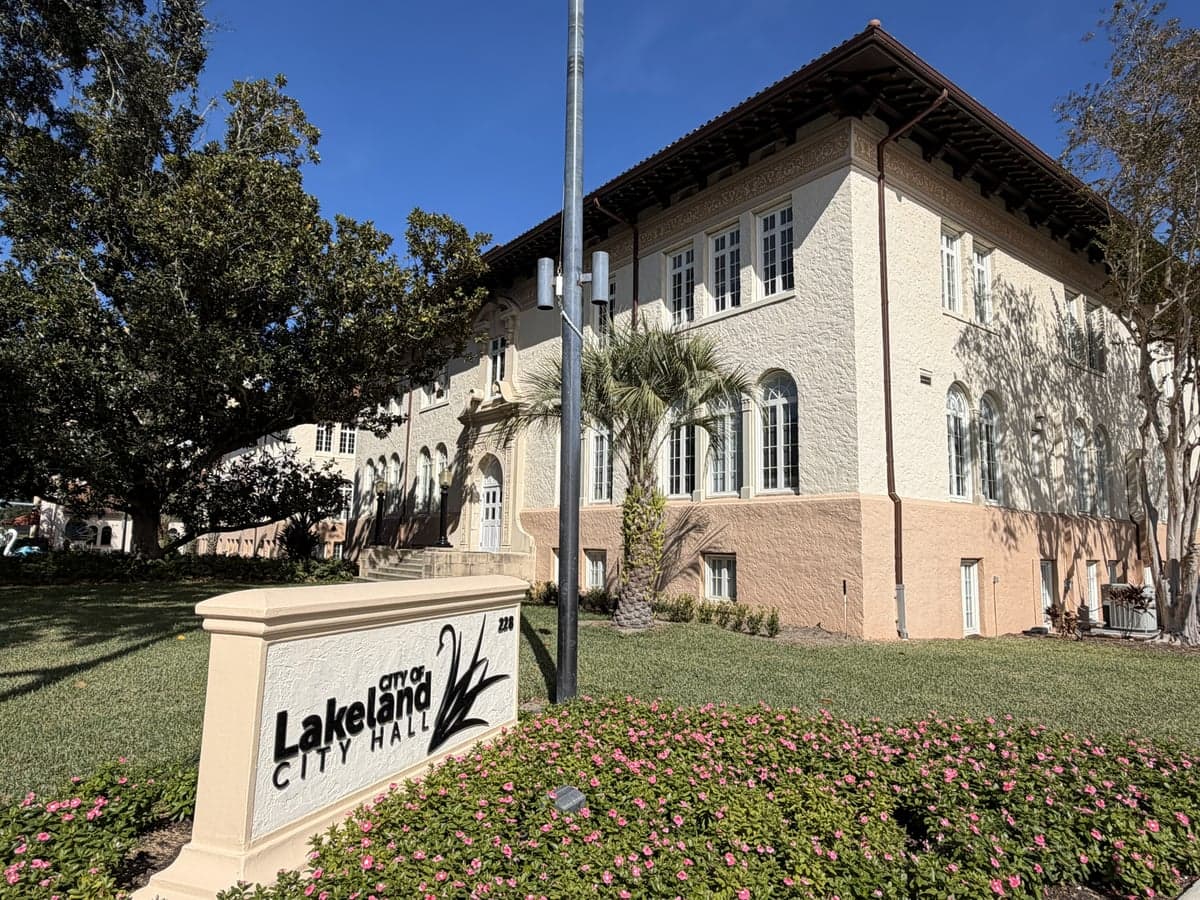
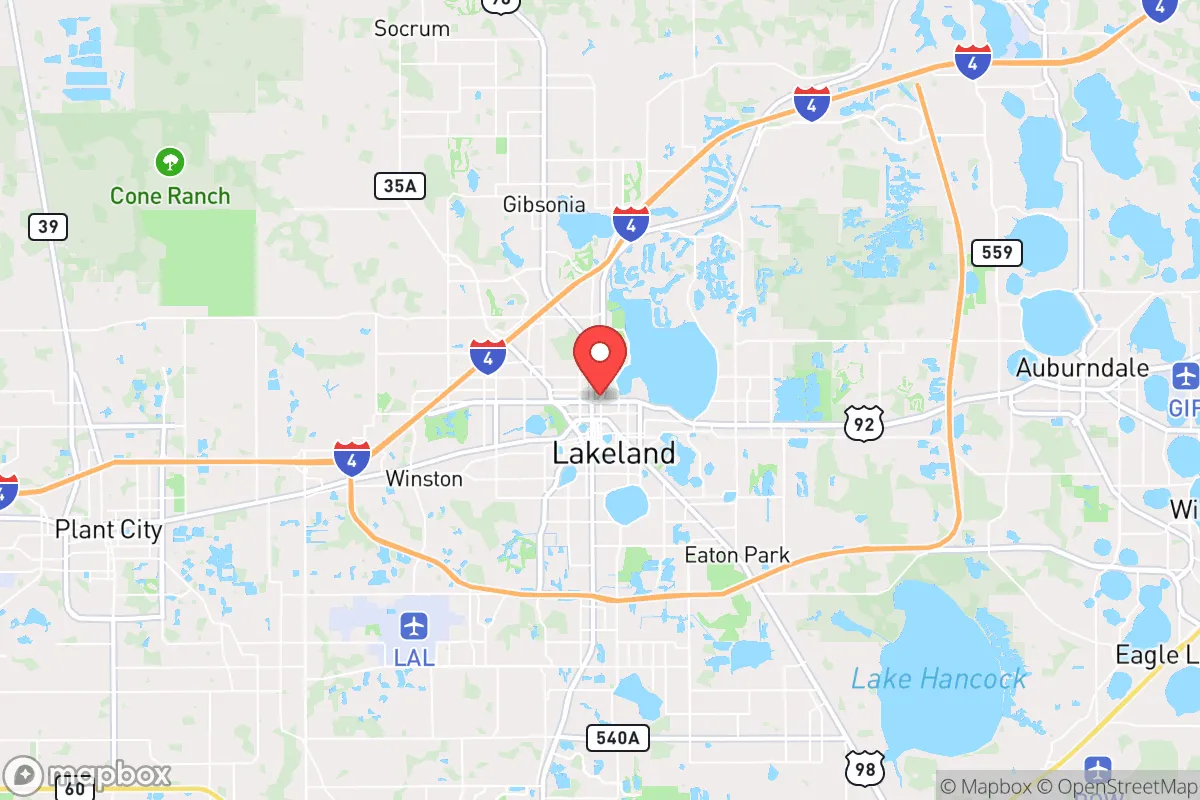
Photo: Wikipedia
Strategic Assessment of Lakeland, FL
Meaningful friction. Expect exposure to either population pressure, blast zones, or natural disaster risk. Consider buying a retreat property.
What does the Strategic Assessment tell us?
Our Strategic Assessment grades tactical survivability of an area. Major population centers, military targets, fallout zones, natural disasters, and border exposure all drive risk — lower exposure means a more defensible position in a crisis.
This is heavily inspired by Joel Skousen's Strategic Relocation book. Highly recommended you checkout the book ($)What does this tell us?
Our Strategic Assessment grades tactical survivability of an area. Major population centers, military targets, fallout zones, natural disasters, and border exposure all drive risk — lower exposure means a more defensible position in a crisis.
This is heavily inspired by Joel Skousen's Strategic Relocation book. Highly recommended you checkout the book ($)Strategic Pillars

Key Distances
Regional Safe Places
Below is our recommended "safe zones" in Florida and the surrounding area based on our strategic heuristics. For most people, it's unrealistic to live in a “safe zone” full-time due to work, family or other personal reasons. They tend to be more rural. However, many of these areas are perfect for second homes and retreat properties that double as a vacation home or even a short-term rental.

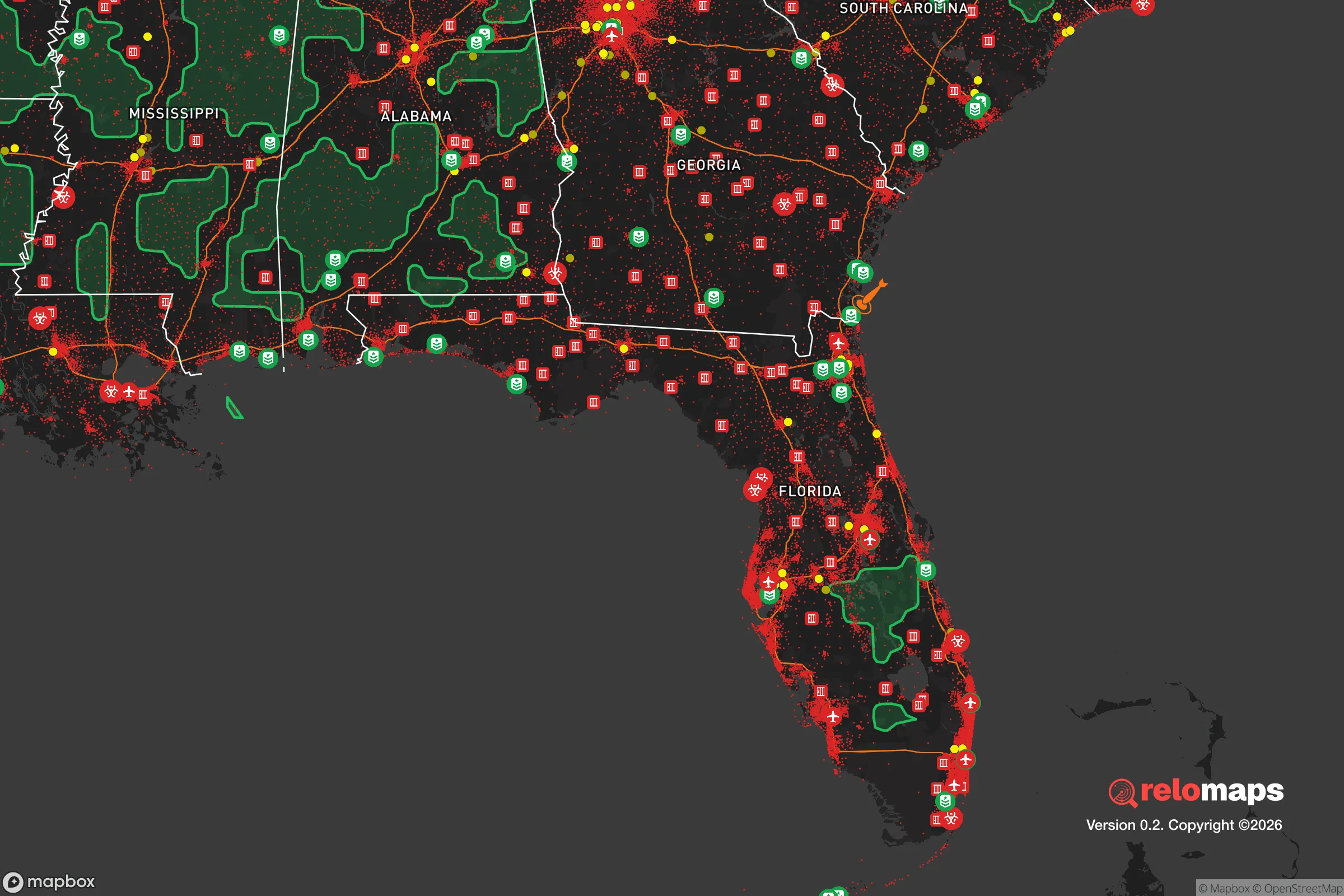


Important Note: For informational purposes only. This does not mean nothing bad ever happens in the green zones. Please use common sense. This is based on public data and modeled with AI. We tried to take a conservative approach but mistakes happen. We update this regularly as new information becomes available.
Solar Generator Recommendations
Backup power matters more here than in safer locations. We've picked three solar generators across budgets and capacity tiers — start with the budget unit if you only need a few essentials, or step up if you want to run a fridge and HVAC for days at a time.

Jackery Portable Power Station Explorer 300
Budget OptionPower on the Go: Weighing only 11 lbs, it's convenient to set up and store with book-sized foldable solar panels

BLUETTI Portable Power Station AC180
Designed for both indoor and outdoor scenarios, AC180 is highly capable as it has a robost capacity and continuous output power.

EF ECOFLOW DELTA Pro Ultra Power Station
Upgraded PickEcoFlow DELTA Pro Ultra is a whole-home energy system designed to grow with your family. Integrated with the Smart Home Panel 2, it scales to meet your evolving energy needs — keeping your home powered, intelligent, and secure through every stage of life.
We earn a commission, at no additional cost to you.
Strategic Assessment Analysis
Lakeland, Florida, sits in a geographic sweet spot that offers a surprisingly strong foundation for long-term resilience, but it demands a clear-eyed assessment of its vulnerabilities. Positioned roughly midway between Tampa and Orlando, it avoids the direct coastal exposure of either metro while still providing access to their resources. For a relocator thinking in terms of decades, not just next year, Lakeland’s inland location, robust water supply, and existing infrastructure make it a viable base of operations—provided you understand exactly what you’re signing up for.
Geographic position and natural advantages for long-term stability
Lakeland’s primary strategic asset is its location on the Florida Peninsula’s spine. At an elevation of roughly 200 feet above sea level, it sits on the Lake Wales Ridge, a sandy, well-drained geological formation that is one of the highest points in the state. This means it is effectively immune to storm surge from hurricanes—a threat that will only intensify with climate volatility. The city is named for its dozens of lakes, and that’s not a marketing gimmick. The Lakeland Chain of Lakes provides a natural freshwater reservoir that is far more reliable than the shallow aquifers near the coasts. For a prepper, this is a tangible advantage: you are not dependent on a single municipal well or a desalination plant that could be knocked offline by a storm or grid failure. The surrounding Polk County is also agricultural heartland, with citrus groves, cattle ranches, and vegetable farms that could theoretically sustain a local food supply if interstate trucking were disrupted. The climate is subtropical, meaning a year-round growing season for anyone with the land and know-how to use it.
Risks, exposures, and proximity to fallout-relevant landmarks
Here is where the analysis gets sobering. Lakeland’s inland position does not shield it from the primary threats that a conservative prepper should be tracking: civil unrest, mass casualty events, and infrastructure collapse. The city is 45 minutes from Tampa’s port and MacDill Air Force Base, and an hour from Orlando’s theme parks and international airport. In a scenario involving a major terrorist attack, electromagnetic pulse (EMP) event, or widespread civil disorder, those population centers become liability magnets. Lakeland is close enough to be affected by the fallout—literally and figuratively—of whatever happens in those metros. Refugees from Tampa and Orlando would likely flow inland along I-4, and Lakeland sits directly on that corridor. The city itself has a population of roughly 120,000, with the broader metro area pushing 700,000. That is not a small town; it is a mid-sized city with its own crime, traffic, and resource demands. Hurricane risk is real, even inland. While you won’t get storm surge, you will get damaging winds and tornadoes from the outer bands of major storms. Power outages lasting a week or more are common after a direct hit. Additionally, Florida’s aging power grid and reliance on natural gas for electricity generation make it vulnerable to both natural disasters and deliberate attacks on energy infrastructure. The state’s politics are friendly to conservative values, but that does not make it immune to the cascading failures that could follow a national crisis.
Practical resilience for a relocator: food, water, energy, and defensibility
For a single individual or family willing to put in the work, Lakeland offers a realistic path to practical resilience. Water is the strongest suit. The abundance of lakes means you can secure a property with lake access or a well, giving you an independent water source. Rainwater collection is also viable given the region’s 50+ inches of annual rainfall. Food production is feasible on a suburban lot. The growing season is long enough for multiple crop cycles, and the soil—sandy but workable—can be amended with compost. Backyard chickens are legal in most of the city and county, and larger livestock is possible on acreage in the unincorporated areas. Energy independence is more challenging. Florida’s net metering policies have been favorable for solar, but the grid is not designed for islanding (running independently). A battery backup system paired with solar panels is a solid investment, but you will need a generator for extended cloudy periods after a hurricane. Defensibility is mixed. Lakeland is not a gated fortress. The city is spread out, with a mix of older neighborhoods, suburban subdivisions, and rural tracts. For a relocator, the key is to choose a property on a dead-end road or a cul-de-sac with limited access points, ideally with a buffer of undeveloped land. The Polk County Sheriff’s Office is well-funded and generally conservative in its approach, but in a breakdown scenario, you cannot rely on them. Community is the wildcard. Lakeland has a strong church presence and a culture of neighborly self-reliance, but it is also a transient area with many retirees and newcomers. Building a trusted network of like-minded individuals will take time and deliberate effort. The local gun culture is robust, with several ranges and gun shops, and Florida’s constitutional carry law (effective July 2023) means you can defend yourself without a permit. That is a significant plus for personal security.
The overall strategic picture for Lakeland is one of calculated trade-offs. It is not a remote bunker in the mountains, and it will never be that. What it offers is a defensible inland position with abundant water, a long growing season, and proximity to two major metros that can be leveraged in good times and avoided in bad. The risks are real: hurricane damage, grid fragility, and the potential for population influx from coastal cities during a crisis. But for a conservative relocator who wants to stay in the Southeast, maintain access to jobs and healthcare, and build a resilient lifestyle without going off-grid entirely, Lakeland is one of the more viable options in Florida. The key is to buy with resilience in mind—well, lake access, solar-ready roof, defensible lot—and to invest in community relationships before you need them. If you do that, you will be better positioned than 90% of the people in the state when things go sideways.

* Values derived from national, state, county, city and local statistics and may differ in a specific area. Last updated: 2026-04-22T06:35:35.000Z
Narrative content on this page is AI-generated and may contain mistakes. Verify any details that matter before acting on them.
ReloMaps may earn a commission from affiliate links at no extra cost to you.

