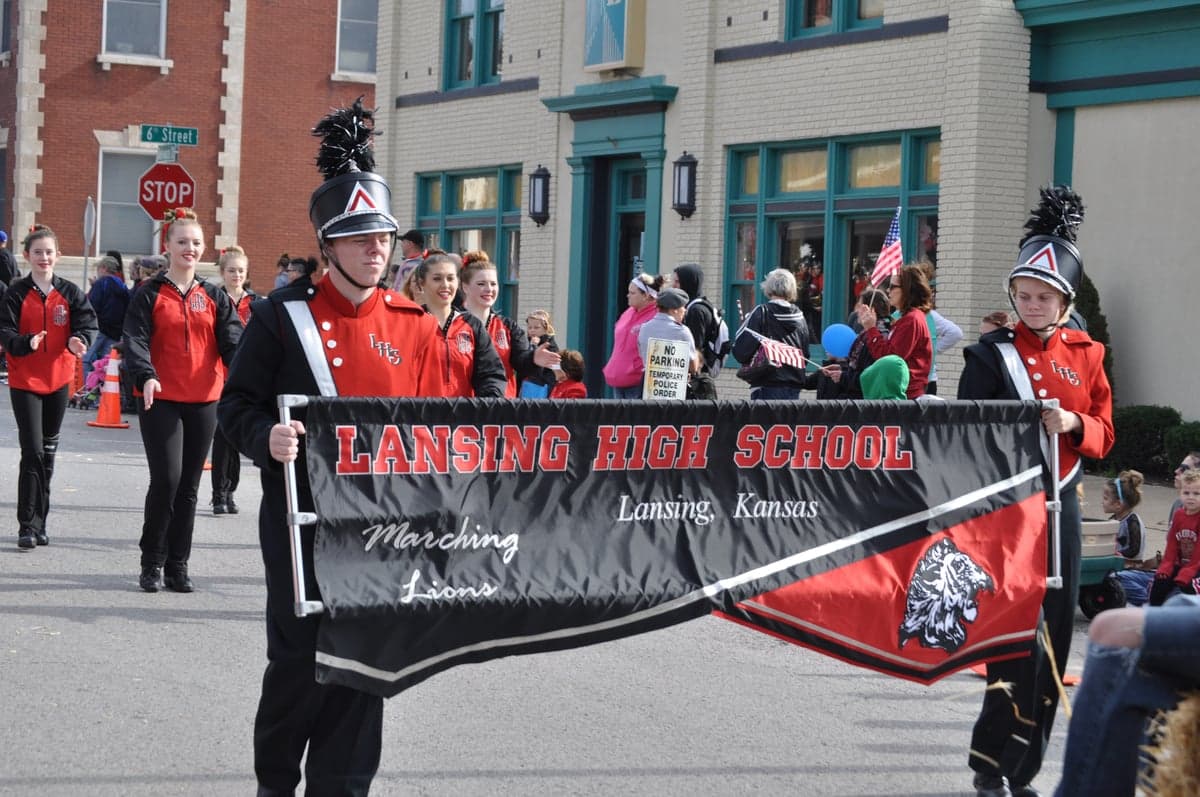
Photo: Wikipedia
Strategic Assessment of Lansing, KS
Meaningful friction. Expect exposure to either population pressure, blast zones, or natural disaster risk. Consider buying a retreat property.
What does the Strategic Assessment tell us?
Our Strategic Assessment grades tactical survivability of an area. Major population centers, military targets, fallout zones, natural disasters, and border exposure all drive risk — lower exposure means a more defensible position in a crisis.
This is heavily inspired by Joel Skousen's Strategic Relocation book. Highly recommended you checkout the book ($)What does this tell us?
Our Strategic Assessment grades tactical survivability of an area. Major population centers, military targets, fallout zones, natural disasters, and border exposure all drive risk — lower exposure means a more defensible position in a crisis.
This is heavily inspired by Joel Skousen's Strategic Relocation book. Highly recommended you checkout the book ($)Strategic Pillars

Key Distances
Regional Safe Places
Below is our recommended "safe zones" in Kansas and the surrounding area based on our strategic heuristics. For most people, it's unrealistic to live in a “safe zone” full-time due to work, family or other personal reasons. They tend to be more rural. However, many of these areas are perfect for second homes and retreat properties that double as a vacation home or even a short-term rental.
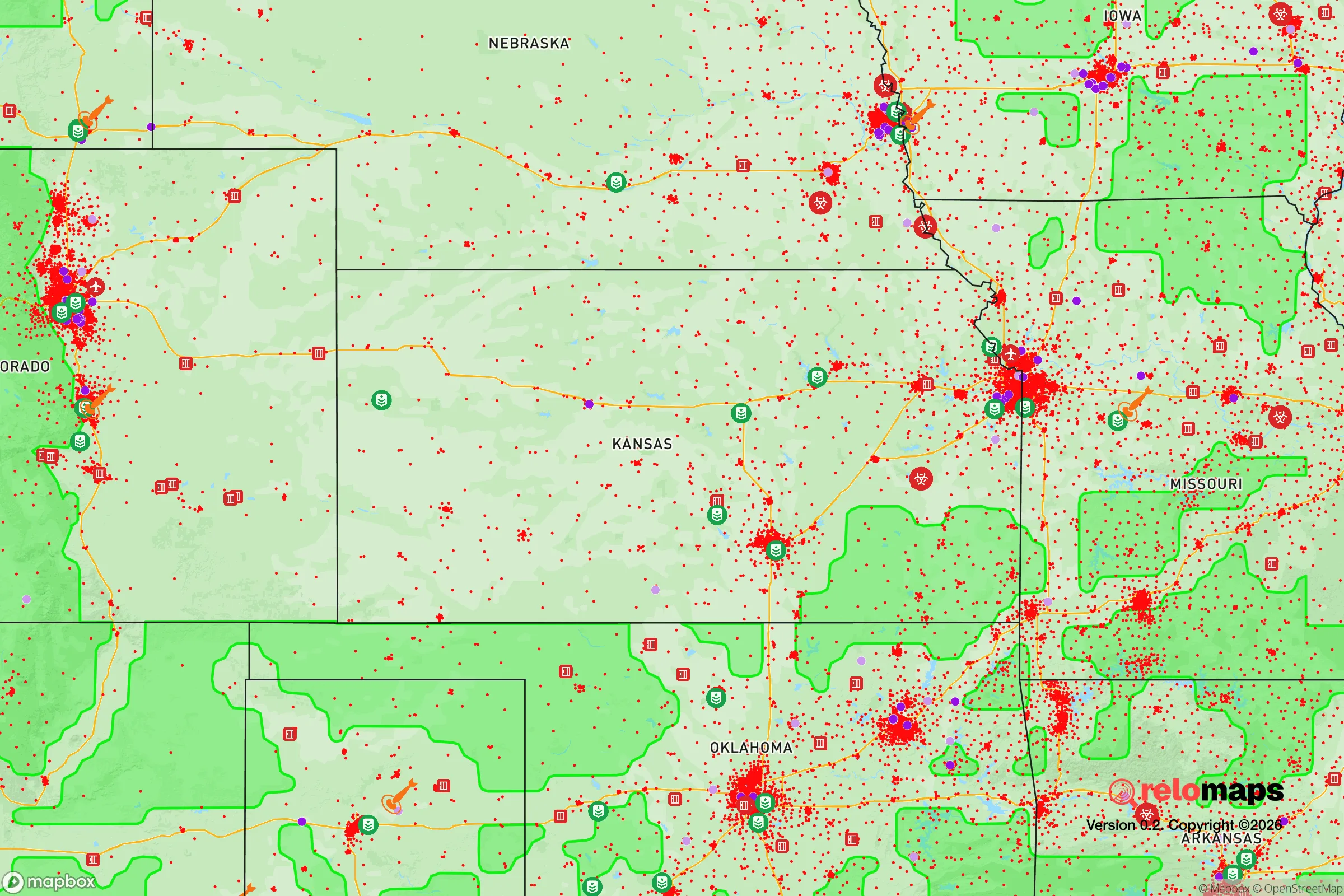
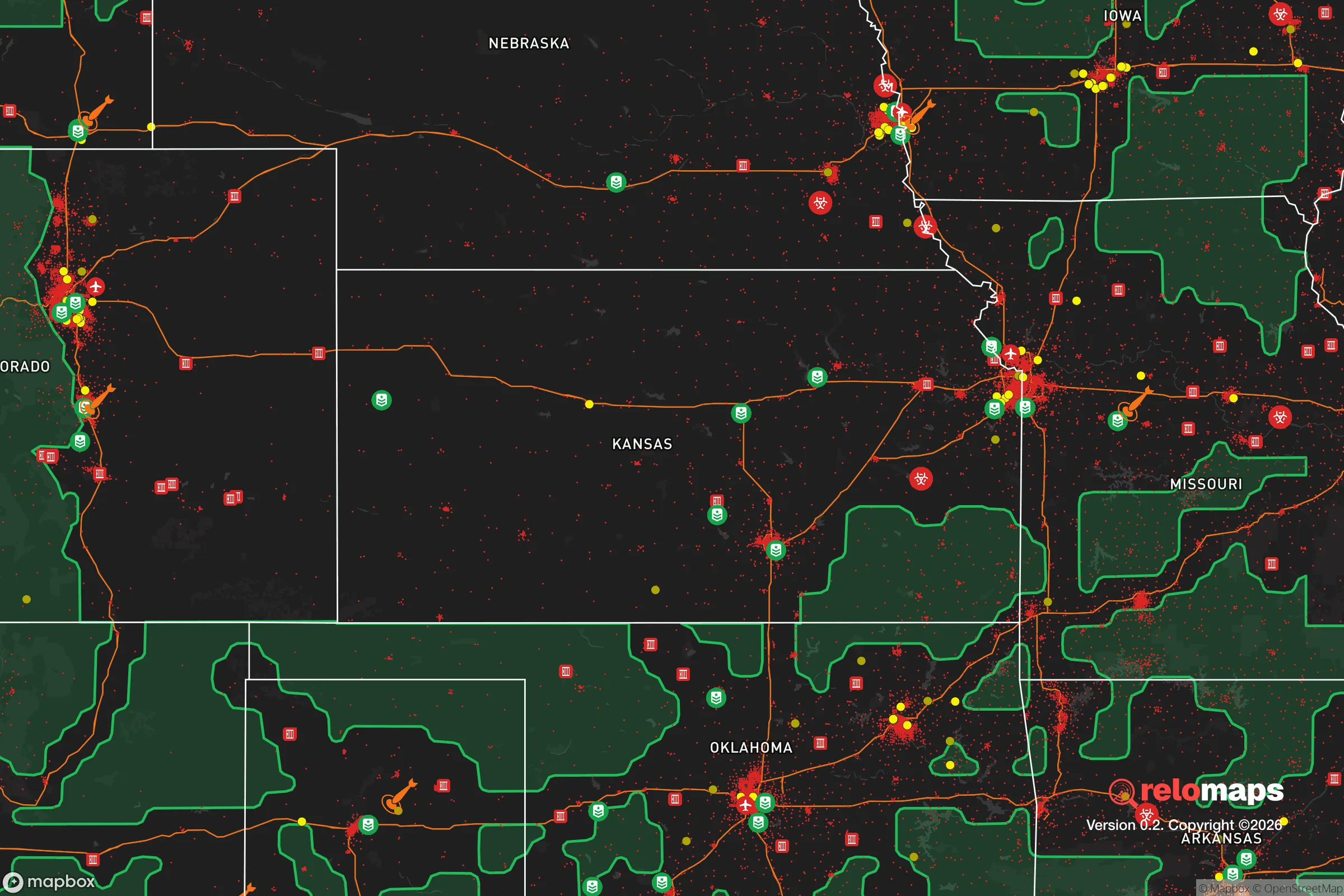


Important Note: For informational purposes only. This does not mean nothing bad ever happens in the green zones. Please use common sense. This is based on public data and modeled with AI. We tried to take a conservative approach but mistakes happen. We update this regularly as new information becomes available.
Solar Generator Recommendations
Backup power matters more here than in safer locations. We've picked three solar generators across budgets and capacity tiers — start with the budget unit if you only need a few essentials, or step up if you want to run a fridge and HVAC for days at a time.

Jackery Portable Power Station Explorer 300
Budget OptionPower on the Go: Weighing only 11 lbs, it's convenient to set up and store with book-sized foldable solar panels

BLUETTI Portable Power Station AC180
Designed for both indoor and outdoor scenarios, AC180 is highly capable as it has a robost capacity and continuous output power.

EF ECOFLOW DELTA Pro Ultra Power Station
Upgraded PickEcoFlow DELTA Pro Ultra is a whole-home energy system designed to grow with your family. Integrated with the Smart Home Panel 2, it scales to meet your evolving energy needs — keeping your home powered, intelligent, and secure through every stage of life.
We earn a commission, at no additional cost to you.
Strategic Assessment Analysis
Lansing, Kansas, sits in a precarious but potentially advantageous position for those prioritizing long-term resilience and strategic relocation. While its proximity to Kansas City and the Missouri River corridor presents clear risks in a national crisis scenario, the town’s specific geography, local governance, and existing infrastructure offer a mixed bag for a survivalist-minded relocator. The key is understanding that Lansing is not a remote bunker—it’s a suburban-rural hybrid that could serve as a staging ground or a fallback position, provided you account for its vulnerabilities and leverage its overlooked strengths.
Geographic position and natural advantages for long-term security
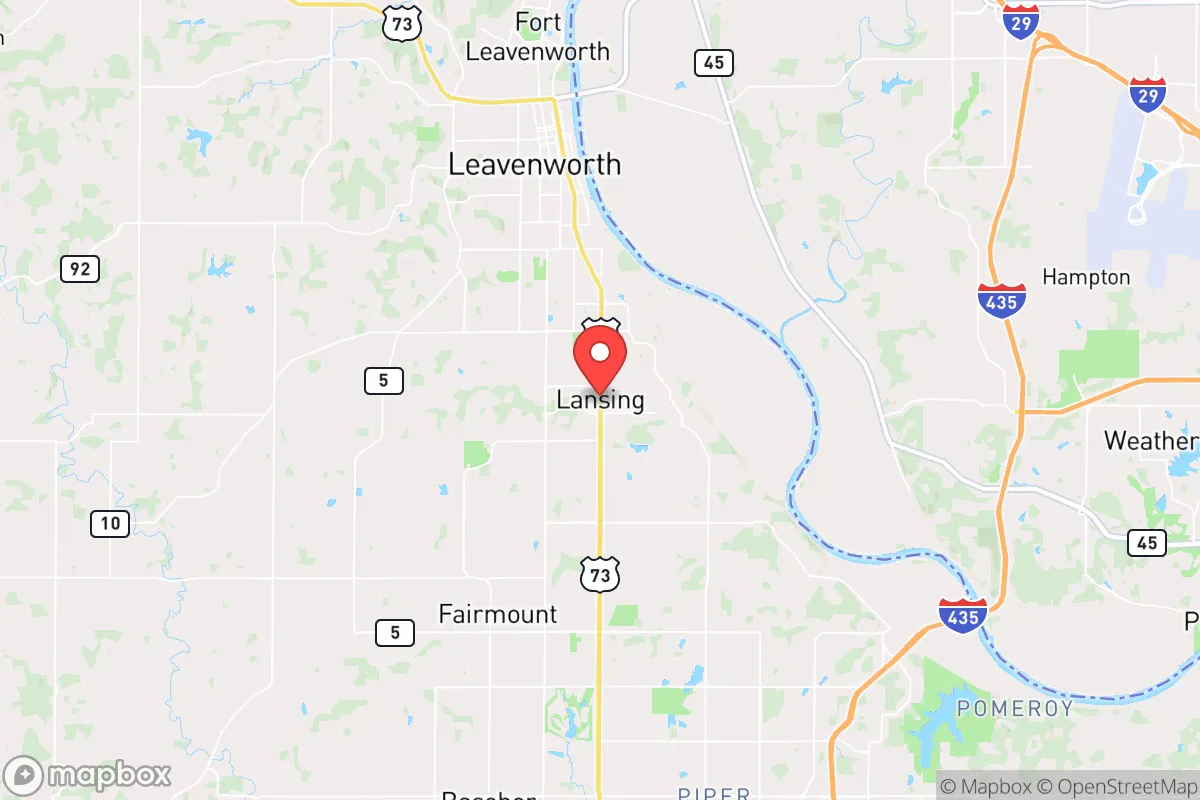
Lansing’s location in Leavenworth County, roughly 25 miles northwest of downtown Kansas City, places it at the edge of the metropolitan sprawl rather than in its core. This buffer zone is critical: you’re close enough to access urban resources (medical, industrial, logistical) during stable times, but far enough that a sudden evacuation or grid-down scenario wouldn’t trap you in the city’s chaos. The Missouri River forms the county’s eastern border, providing a natural barrier and a potential water source, though it also concentrates traffic and infrastructure along the I-435 and US-73 corridors. The terrain is rolling hills with mixed hardwood forest and agricultural land—not mountainous, but offering decent cover and drainage. The area’s average annual rainfall of about 38 inches supports reliable groundwater and surface water, a significant advantage over drier western Kansas. For a prepper, this means you can reasonably dig a well, maintain a pond, or rely on rainwater catchment without fighting extreme drought. The soil is fertile enough for small-scale agriculture, though you’ll need to amend it for high-yield gardening. The biggest natural plus is the absence of major seismic, hurricane, or wildfire threats—your primary environmental risks are tornadoes (common but survivable with a basement) and occasional flooding along the river bottoms.
Risks, exposures, and proximity to fallout-relevant landmarks
Here’s where the analysis gets sobering. Lansing’s most glaring vulnerability is its proximity to Fort Leavenworth, the U.S. Army’s premier military installation for leadership training and detention. The fort sits less than five miles east of downtown Lansing, and while it’s a source of local economic stability, it’s also a high-value target in any conflict involving state actors or large-scale civil unrest. A conventional strike or even a cyber-induced accident at the fort’s ammunition depots or fuel storage could render large portions of Leavenworth County uninhabitable for weeks. Additionally, the Lansing Correctional Facility, a maximum-security state prison, is located within city limits. In a breakdown of civil order, a prison with thousands of inmates becomes a liability—either as a target for outside groups or as a source of escapees. You need to plan for the possibility of the prison being compromised and the surrounding area becoming a no-go zone. Further out, the Kansas City metropolitan area (population 2.2 million) is a double-edged sword: it provides economic opportunity now, but in a mass-casualty event or pandemic scenario, it becomes a massive drain on resources and a vector for disease and violence. The I-70 and I-35 corridors, both within 30 minutes of Lansing, are likely chokepoints for refugee flow. If you’re serious about resilience, you’ll want to stockpile supplies for at least 90 days of self-sufficiency, because outside help will be slow or nonexistent if the regional grid goes down.
Practical resilience for a relocator: food, water, energy, and defensibility
For a single individual or family looking to establish a sustainable foothold, Lansing offers a mixed but workable foundation. Water is the first priority: the city’s municipal supply comes from the Missouri River, treated at a plant that could be knocked offline by flooding or sabotage. A private well is your best bet, and the water table in Leavenworth County is generally accessible at depths of 50–150 feet. If you’re on city water, install a high-capacity Berkey or similar gravity filter and store at least 55 gallons per person. Food production is feasible: the growing season runs April through October, and you can raise chickens, goats, or rabbits on a standard suburban lot (check local zoning—Lansing allows backyard poultry with restrictions). Community gardens exist but are small; you’ll likely need to buy or lease a few acres outside city limits for serious production. The energy picture is decent: net metering is available through Evergy, so solar panels with battery backup are a viable investment. Natural gas is piped to most homes, but a propane tank and a dual-fuel generator give you redundancy. For defensibility, Lansing’s layout is a concern. The town is bisected by US-73 and KS-7, both four-lane roads that funnel traffic. Your best bet is a property on a dead-end road or cul-de-sac near the western or southern edges of town, where you have rural buffer and fewer ingress points. The local sheriff’s office is responsive but small—during a regional emergency, you cannot rely on them for protection. Neighborhood watch and mutual-aid groups exist but are informal; you’ll want to build relationships with like-minded neighbors before any crisis. The Lansing Community Center and local churches could serve as rally points, but don’t assume they’ll be operational. Finally, medical resilience is a weak spot: the closest hospital is Saint John Hospital in Leavenworth (level III trauma center), but it’s small and could be overwhelmed. Stock trauma kits, antibiotics (fish-mox or vet-grade, if you’re comfortable), and learn basic suturing and splinting.
The overall strategic picture for Lansing is one of calculated trade-offs. You gain proximity to a major metro’s resources without being inside the blast radius of its worst-case scenarios. You have water, decent soil, and a climate that supports year-round habitation. But you also inherit the risks of a military base, a maximum-security prison, and a regional population that will look to your area as a refuge when things go sideways. For a conservative-leaning relocator who values self-reliance and community but isn’t ready to go full off-grid in the Dakotas, Lansing is a viable intermediate option—provided you treat it as a base to be hardened, not a sanctuary to be taken for granted. The smart move is to buy property with a well, install solar, and build a network of trusted neighbors before you need them. If you do that, Lansing can be a solid fallback position. If you don’t, it’s just another suburb with a prison next door.

* Values derived from national, state, county, city and local statistics and may differ in a specific area. Last updated: 2026-05-03T13:32:33.000Z
Narrative content on this page is AI-generated and may contain mistakes. Verify any details that matter before acting on them.
ReloMaps may earn a commission from affiliate links at no extra cost to you.

