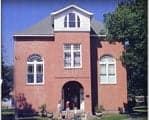
Photo: Wikipedia
Personal Sovereignty in Larimore, ND
Viable for self-reliance. Generally workable, though some barriers may limit total independence.
What does Personal Sovereignty tell us?
Personal Sovereignty measures your capacity for self-reliance and independence with minimal government friction. Higher scores mean fewer barriers between you and the way you want to live... but it assumes you have the space you need and good neighbors.
What does this tell us?
Personal Sovereignty measures your capacity for self-reliance and independence with minimal government friction. Higher scores mean fewer barriers between you and the way you want to live... but it assumes you have the space you need and good neighbors.
State Policy
Energy independence: Net exporter (500% of energy produced in-state)
Personal Liberty
Homesteading

Personal Liberty Analysis
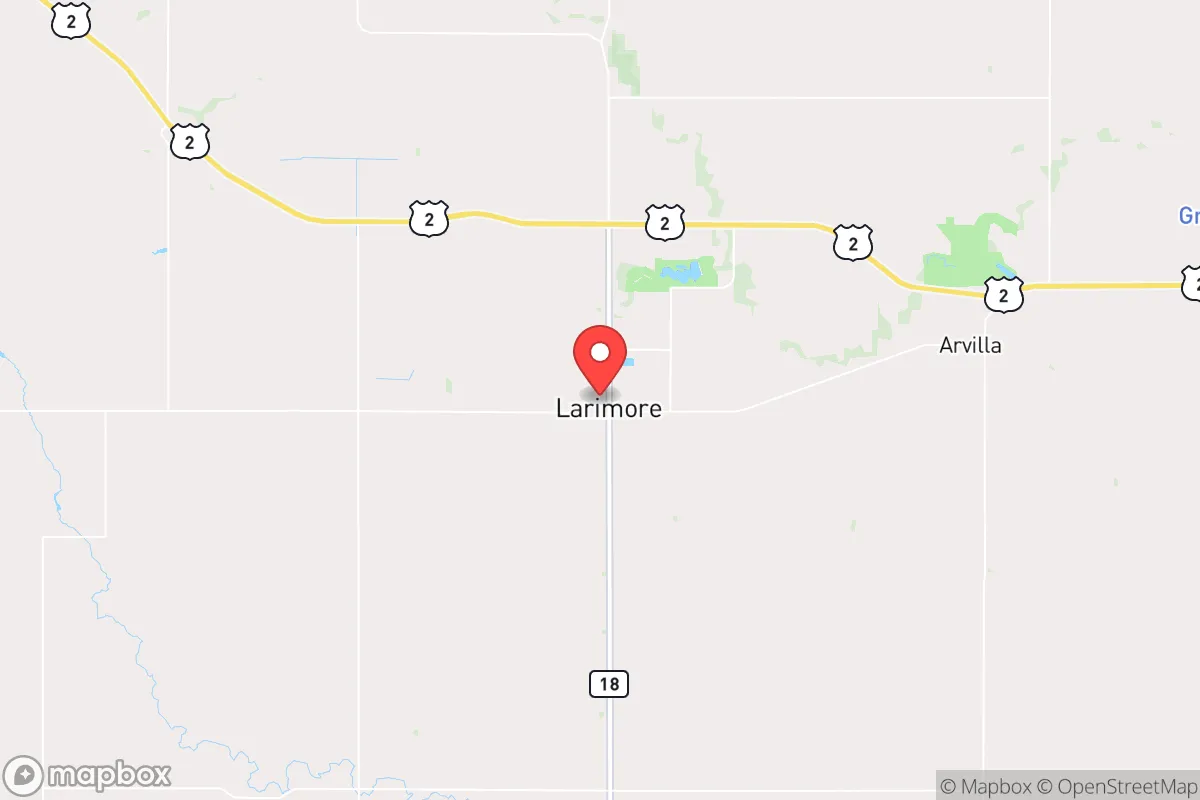
Larimore, North Dakota, offers a personal sovereignty environment that stands in stark contrast to the high-regulation, high-tax corridors of the coasts. For the individual or family operating from a survivalist or prepper mindset, this small Grand Forks County town represents a pocket where the state’s constitutional carry laws, low tax burden, and permissive land-use codes create a foundation for genuine self-reliance. While no location is immune from federal overreach, Larimore’s local governance and North Dakota’s statutory framework tilt heavily toward individual autonomy, making it a serious consideration for those prioritizing freedom of action over access to urban amenities.
Tax burden and regulatory posture: how North Dakota compares to high-tax states
North Dakota’s tax structure is a primary draw for those seeking to minimize government extraction from their labor and assets. The state imposes no personal income tax, a fact that immediately puts thousands of dollars back into the pockets of residents compared to states like California, New York, or Minnesota. Property taxes in Grand Forks County are moderate, with effective rates typically hovering around 1.0% to 1.2% of assessed value, though this varies by school district and local levies. For a survivalist household, this means more capital retained for land acquisition, supplies, and infrastructure rather than funding state programs. The regulatory posture in Larimore is equally favorable: the city and county maintain minimal zoning restrictions outside of incorporated limits, and there is no state-level building code enforcement in rural areas. Business licensing is straightforward, and the state’s oil-and-agriculture heritage has fostered a culture that resists burdensome environmental and land-use regulations. Compared to states like Colorado or Washington, where permitting processes can stretch for months, North Dakota’s approach is refreshingly hands-off.
Self-defense and gun law specifics: constitutional carry and castle doctrine in practice
For the prepper or survivalist, North Dakota’s firearm laws are among the most protective of individual rights in the nation. The state has constitutional carry for both residents and non-residents, meaning no permit is required to carry a concealed handgun. This is not a “shall-issue” system with bureaucratic hurdles—it is a right exercised without government permission. The state also maintains a strong castle doctrine with no duty to retreat in any place where a person is lawfully present. This extends to vehicles and workplaces, not just the home. Stand-your-ground protections are codified in statute, and use of deadly force is presumed justified if an intruder has unlawfully and forcibly entered a dwelling. Magazine capacity restrictions, “assault weapon” bans, and waiting periods are nonexistent. For those concerned about federal overreach, North Dakota has passed a Second Amendment Preservation Act that prohibits state resources from being used to enforce federal firearm laws deemed unconstitutional. In Larimore, local law enforcement is generally supportive of gun rights, and the rural environment means shooting on private property is a normal part of life, not a cause for neighbor complaints.
Self-reliance and homesteading viability: lot sizes, zoning, and off-grid feasibility
Larimore’s rural character makes it a strong candidate for those pursuing self-sufficiency. Within the city limits, standard residential lots range from a quarter-acre to half-acre, but the real opportunity lies just outside town. Unincorporated Grand Forks County land is available in parcels from 1 to 40 acres, with prices significantly lower than in the eastern or western parts of the state. Zoning in the county is minimal: there are no prohibitions on keeping chickens, goats, or even larger livestock on parcels of a few acres. Off-grid living is legally feasible, though North Dakota does require a septic system permit from the county health department. Solar panels and wind turbines are not restricted by state law, and the county does not impose building codes on agricultural or rural residential structures. Water access is a consideration—most rural properties rely on wells, which are permitted but not prohibitively expensive to drill. The growing season is short (roughly 120 frost-free days), but cold-hardy crops and greenhouse techniques can extend production. For the prepper, the ability to store food, maintain a private water supply, and operate independently of municipal utilities is not just tolerated—it is the norm.
Personal liberties: parental rights, medical autonomy, speech, and property
North Dakota has taken a strong stance on several fronts that matter to those concerned with government overreach. Parental rights in education are explicitly protected under state law, with a 2021 statute requiring school districts to notify parents of any curriculum changes involving sexuality or gender identity and to obtain parental consent before administering surveys on sensitive topics. Homeschooling is straightforward: parents need only file a simple notice of intent and provide a basic education plan; no standardized testing requirements or home visits apply. Medical autonomy is another area where North Dakota diverges from more restrictive states. There is no state-level vaccine mandate for adults, and the legislature has passed laws prohibiting discrimination against the unvaccinated in employment and public accommodations. COVID-era emergency orders were limited and short-lived compared to states like Michigan or New York. Free speech protections are robust, with no hate speech laws that criminalize political or religious expression. Property rights are secured by a strong eminent domain statute that requires just compensation and a demonstrated public use—private economic development takings are prohibited. For the survivalist, this means the government is less likely to seize land for a private developer’s project, a common concern in other regions.
In the broader context of American personal sovereignty, Larimore, ND, ranks among the most favorable locations for those prioritizing autonomy. The combination of constitutional carry, no income tax, minimal zoning, strong parental rights, and a culture of self-reliance creates an environment where government intrusion is the exception, not the rule. While no place is a perfect fortress against federal overreach, North Dakota’s legislative track record and the practical realities of rural life in Larimore offer a level of personal sovereignty that is increasingly rare in the United States. For the individual or family serious about living free from the creeping constraints of modern governance, this is a location worth a hard look.

* Values derived from national, state, county, city and local statistics and may differ in a specific area. Last updated: 2026-04-19T07:19:21.000Z
Narrative content on this page is AI-generated and may contain mistakes. Verify any details that matter before acting on them.
ReloMaps may earn a commission from affiliate links at no extra cost to you.

