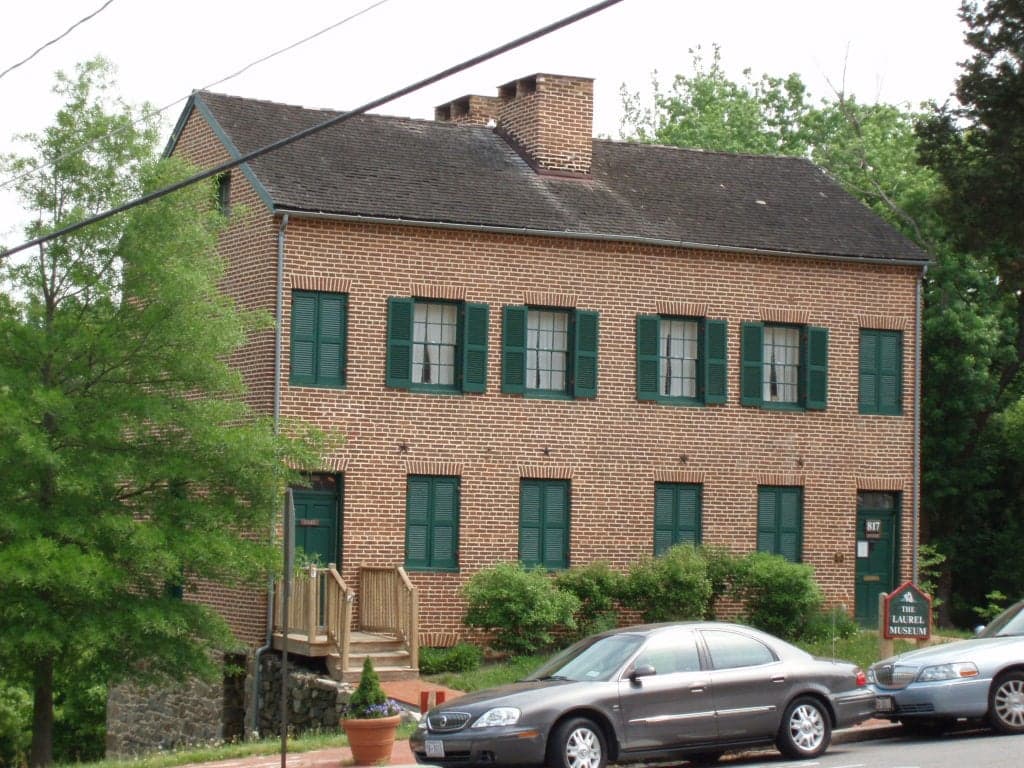
Photo: Wikipedia
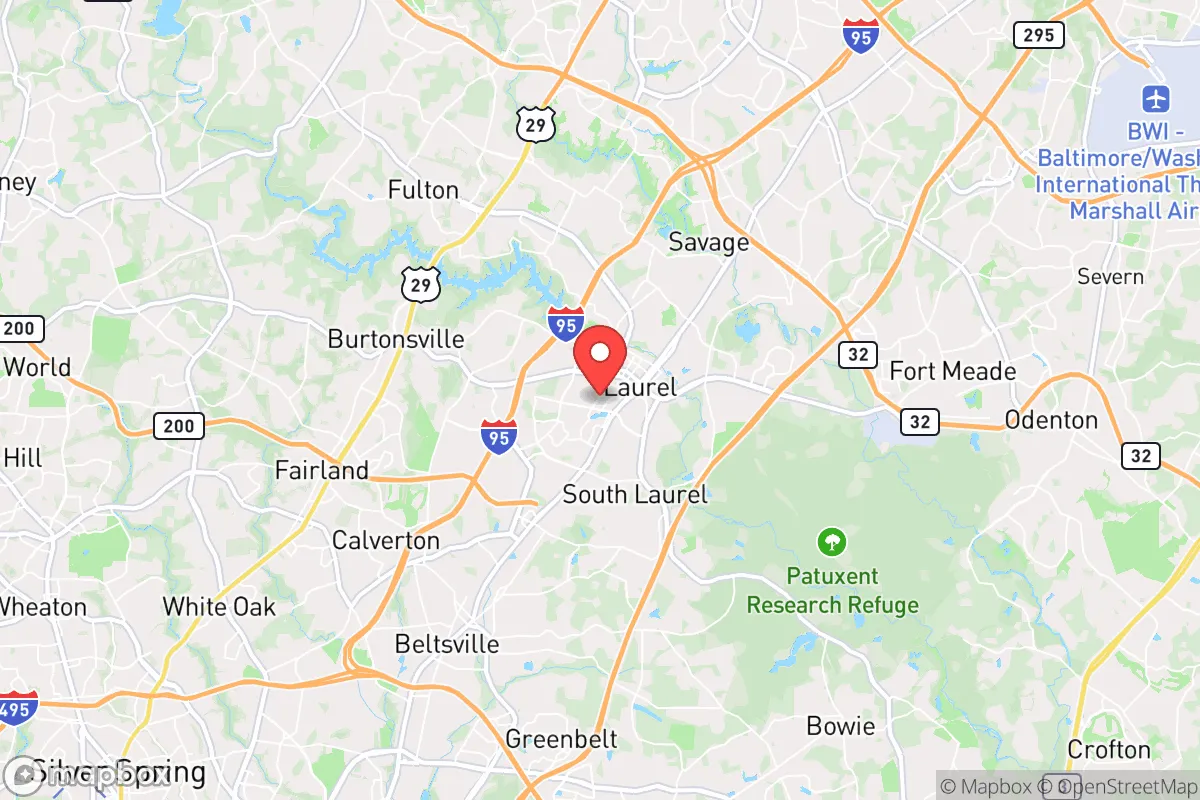
Personal Sovereignty in Laurel, MD
Viable for self-reliance. Generally workable, though some barriers may limit total independence.
What does Personal Sovereignty tell us?
Personal Sovereignty measures your capacity for self-reliance and independence with minimal government friction. Higher scores mean fewer barriers between you and the way you want to live... but it assumes you have the space you need and good neighbors.
What does this tell us?
Personal Sovereignty measures your capacity for self-reliance and independence with minimal government friction. Higher scores mean fewer barriers between you and the way you want to live... but it assumes you have the space you need and good neighbors.
State Policy
Energy independence: Importer (8% of energy produced in-state)
Personal Liberty
Homesteading

Personal Liberty Analysis
Laurel, Maryland, presents a challenging environment for personal sovereignty, where state-level policies significantly constrain individual autonomy despite the city's own moderate local governance. For those prioritizing self-reliance, gun rights, and minimal government overreach, Laurel sits within a state that consistently ranks among the most restrictive in the nation for personal liberties. The trade-off is access to federal employment and proximity to Washington, D.C., but the cost is a legal and regulatory framework that actively limits the kind of independent, survivalist-minded lifestyle many conservative-leaning individuals and families seek.
Tax burden and regulatory posture: How Maryland's fiscal policies affect your autonomy
Maryland's tax structure is a major drag on personal sovereignty. The state imposes a progressive income tax with rates ranging from 2% to 5.75%, and Laurel residents also pay a county income tax of 3.2% in Prince George's County, bringing the combined top marginal rate to nearly 9%. Property taxes are similarly aggressive: the state rate is 0.112%, but Prince George's County adds roughly 0.96%, plus city taxes in Laurel itself, pushing effective rates above 1.1% of assessed value annually. Sales tax is 6%, applied to most goods and some services. This creates a high baseline cost of living that reduces disposable income for prepping supplies, land purchases, or emergency savings. The regulatory posture is equally burdensome. Maryland has a strict vehicle emissions testing program, a state-run health insurance exchange with individual mandate penalties (though the federal penalty is now $0, the state still enforces its own), and extensive environmental regulations that can complicate property modifications. For a prepper, this means less money and more bureaucratic hurdles to building self-sufficiency.
Self-defense and gun law specifics: What you can and cannot own in Laurel
Maryland's gun laws are among the most restrictive in the country, and Laurel residents must navigate a dense web of regulations. The state requires a Handgun Qualification License (HQL) to purchase a handgun, which involves fingerprinting, a background check, and a four-hour training course. Long gun purchases require a 7-day waiting period, and all firearm transfers go through a licensed dealer. Maryland bans "assault weapons" by name, including popular AR-15 and AK-47 platforms, and magazines are capped at 10 rounds for long guns and 10 rounds for handguns. Concealed carry is "may issue" in practice, though a 2022 Supreme Court ruling (NYSRPA v. Bruen) forced the state to loosen its "good and substantial reason" requirement. As of 2025, the Maryland State Police still process permits with a 90-day average wait, and applicants must complete a 16-hour training course. Stand-your-ground laws do not exist in Maryland; the state imposes a "duty to retreat" in public spaces before using deadly force, except inside your own home. Castle doctrine applies only to your dwelling, not your vehicle or property. For a survivalist, this means self-defense options are severely limited compared to states like Texas or Florida, and legal self-defense scenarios are narrowly defined.
Self-reliance and homesteading viability: Lot sizes, zoning, and off-grid feasibility in Laurel
Laurel's suburban character makes traditional homesteading difficult. The city is largely built out with single-family homes on lots averaging 0.25 to 0.5 acres, and zoning codes in Prince George's County restrict agricultural uses. Chickens are allowed in Laurel, but only hens (no roosters) and with a permit; goats, pigs, and larger livestock are prohibited on residential lots under 2 acres. Rainwater harvesting is legal but limited to 500 gallons of storage without a permit, and any system must be disconnected from the public water supply. Solar panels are permitted but subject to homeowner association (HOA) restrictions in many neighborhoods, and net metering is available but with caps. Off-grid living is effectively impossible within city limits: the county requires connection to public water and sewer for any habitable structure, and composting toilets are not recognized as a primary sanitation solution. For those seeking true self-reliance, Laurel is a stepping stone at best. The nearest viable land for a homestead is in Carroll County or Frederick County, about 45-60 minutes north, where lot sizes of 2-5 acres are common and zoning is more permissive. Within Laurel, the best a prepper can do is a suburban garden, a backup generator, and a deep pantry.
Personal liberties: Parental rights, medical autonomy, speech, and property rights
Maryland's approach to personal liberties is mixed but leans restrictive. Parental rights are under active debate: the state passed a law in 2023 requiring school districts to adopt policies on gender identity that can override parental notification, and a 2024 bill sought to expand this further. Medical autonomy is limited by the state's vaccine mandates for school attendance (though religious exemptions exist) and a strict prescription drug monitoring program. Speech is protected under the First Amendment, but Maryland has a "false light" privacy law that can be used to sue for defamation, and the state's hate crime statute covers speech deemed to incite violence. Property rights are constrained by Maryland's strong eminent domain powers and environmental regulations. The state's Critical Area Law restricts development within 1,000 feet of tidal waters, and Prince George's County has its own stormwater management requirements that can add thousands to any construction project. For a conservative individual, the most concerning trend is the erosion of parental authority in education and healthcare decisions, combined with a regulatory environment that treats property as a privilege rather than a right.
Overall, Laurel offers a low-to-moderate level of personal sovereignty compared to other regions. It is more restrictive than most of the South or Midwest but less so than states like California or New York. For a survivalist or prepper, the city's main advantage is its proximity to federal jobs and infrastructure, which can fund a retreat elsewhere. The disadvantages—high taxes, strict gun laws, limited homesteading potential, and encroaching government overreach into family matters—make it a poor long-term base for those seeking true autonomy. If you must live in the D.C. corridor, Laurel is a tolerable compromise, but the strategic move for a sovereignty-minded individual is to treat it as a temporary staging ground while securing property in a more liberty-friendly state like West Virginia or Pennsylvania.

* Values derived from national, state, county, city and local statistics and may differ in a specific area. Last updated: 2026-04-22T02:20:32.000Z
Narrative content on this page is AI-generated and may contain mistakes. Verify any details that matter before acting on them.
ReloMaps may earn a commission from affiliate links at no extra cost to you.

